

The lightest silk isn’t always the best choice for lingerie. For the Bellevue camisole, Newell slip skirt and Richdale tap shorts, the recommended silk weight is 16 to 25 momme, a useful reference when choosing lightweight silk for lingerie making, rather than a rule for every design. Stretch and weave matter too: they influence how a fabric moves, feels and drapes against the body.
It’s easy to focus on softness or sheen, but the right fabric also depends on the garment’s shape and finish. A fluid nightie, softly gathered babydoll and bias-cut slip each place different demands on fabric.
This guide explains how to weigh stretch against drape, what silk-like fabrics may offer, and how satin can shape the look and feel of babydolls and nighties. Compare practical fabric characteristics to make a considered choice for your design.
Key Takeaways
- Match stretch to the garment’s cut and intended fit, considering how the fabric behaves across and along its grain.
- Look beyond the label when assessing silk-like fabrics: weave, sheerness and hand all influence comfort and drape.
- Choose satin with the desired surface lustre and movement in mind, especially for flowing babydolls and nighties.
- Distinguish charmeuse, chiffon, habotai and georgette by their texture and drape to narrow the options for your design.
1. Choosing lingerie fabric by stretch, weight, and direction of stretch
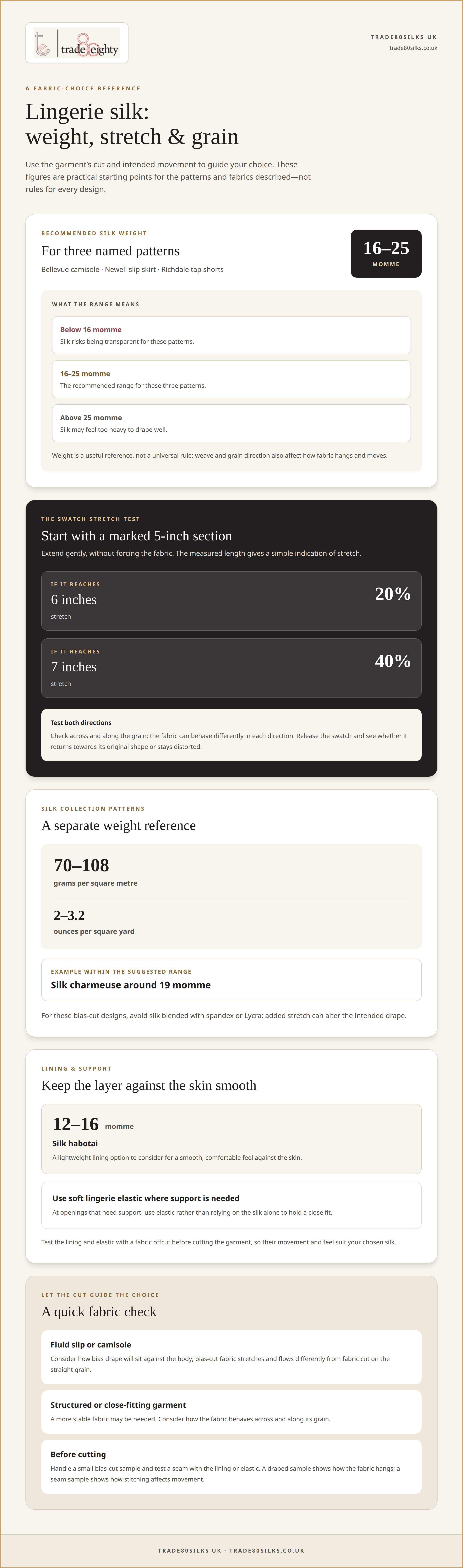
For the Bellevue camisole, Newell slip skirt and Richdale tap shorts, a suitable silk weight is 16 to 25 momme. Below 16 momme, silk risks being transparent for these patterns; above 25 momme, it may feel too heavy to drape well. This range offers a practical starting point, not a universal rule for every lingerie design.
Weight alone doesn’t determine the result. The weave affects how silk hangs, while grain direction changes how it moves: bias-cut fabric stretches and flows differently from fabric cut on the straight grain. For a fluid slip or camisole, consider how the bias drape will sit against the body. A structured or close-fitting garment may need a more stable fabric.
Assess stretch with a simple swatch test. Mark a 5-inch section, then extend it gently without forcing it: if it reaches 6 inches, it has 20% stretch; at 7 inches, it has 40%. Test both across and along the grain, since a fabric can behave differently in each direction. This helps you judge whether it will suit the garment’s fit and movement.
For the Silk Collection patterns, the recommended weight is 70-108 grams per square metre, equivalent to 2-3.2 ounces per square yard. Silk charmeuse around 19 momme is one example within the suggested range. Avoid silk blended with spandex or Lycra for these bias-cut designs, as stretch can alter the intended drape.
For lining, choose a lightweight, smooth fabric that sits comfortably against the skin; silk habotai, generally 12-16 momme, is one option to consider. Pair it with soft lingerie elastic at the openings that need support, rather than relying on the silk alone to hold a close fit. Test the elastic and lining with a fabric offcut before cutting the garment, so their movement and feel suit your chosen silk.
2. Lightweight silk-like fabric for lingerie
Silk organza generally weighs 4 to 6 momme, making it a fine, sheer option for decorative details. Use it as an overlay on a babydoll, or introduce it in a panel or soft frill, where its transparency adds visual texture without replacing the main fabric. Its crisp character creates a different effect from a fluid silk layer.
Silk is a fibre; satin describes a weave, so they aren’t opposing choices. Silk can be woven as satin, combining a smooth feel with a lustrous face. Compared with a stretch knit, woven silk usually has less built-in give and can be slippery to handle, particularly on the bias. Its appeal lies in its tactile quality and fluid drape; the trade-off is that it needs more careful cutting and stitching.
To assess stretch and recovery, cut an offcut and gently extend it across and along the grain. Release it and see whether it returns towards its original shape or stays distorted. This helps distinguish useful give from fabric that may loosen during wear. Test a seam sample too, since stitching can restrict movement even when the cloth itself stretches.
Woven silk gains movement when cut on the bias, but drape still depends on the weave, not weight alone. Handle a small bias-cut sample before committing to a garment; its hanging line will reveal more than a flat swatch. Knit fabrics behave differently, and denier can help indicate their structure.
A 45-denier knit is highly stable and may suit supportive bra cups, while lighter knits lend themselves to less structured lingerie. For a babydoll, combine a stable main fabric with a sheer organza overlay; for a close-fitting design, consider how knit recovery affects the fit. If the design calls for a distinctive combination of textures, explore fabric options for lingerie as part of developing the concept.
3. Satin for babydolls and nighties
Satin is a considered choice when a babydoll or nightie calls for a luminous surface and fluid movement. The term describes a weave, not a fibre, so satin can be made from silk or another material. Silk charmeuse, for example, uses a satin weave to create a high shine and liquid-like appearance. The fibre and fabric weight still influence the finished garment’s feel and drape.
For a simple nightie, smooth satin lets the fabric’s lustre take centre stage. A babydoll offers more scope for contrast: pair a satin body with sheer panels or a softly gathered overlay. Light Cream Mirror Satin has a shiny mirror-satin face and a matte reverse, offering two distinct surfaces to consider within one garment.
Before cutting, examine both sides under the lighting in which the garment will be worn. Check how the face reflects light, whether the reverse feels suitable against the skin, and how the fabric falls when held from one corner. A draped sample can show whether a nightie will skim the body or create a more sculptural silhouette.
Next, sew a small seam sample using the intended needle, thread and seam finish. Satin’s smooth surface can shift during sewing, so support the layers evenly and avoid pulling them through the machine. Test a narrow hem on an offcut too. The finish should lie flat without making a lightweight skirt edge feel stiff.
For a babydoll with gathered sections, test how the satin gathers before assembling the garment. If the folds look bulky, reduce the fullness or confine the gathers to a smaller area, such as the bust or a panel seam. For a nightie with a clean, uninterrupted line, use the test drape to judge whether the fabric’s sheen and fall suit the intended shape.
4. What is the difference between silk charmeuse, chiffon, habotai and georgette for lingerie?
Silk charmeuse is the most lustrous option in this group. Its satin weave creates a glossy face and a fluid, liquid-like drape, while the reverse is typically less shiny. It generally weighs 12 to 30 momme, so the particular fabric’s weight affects its opacity and body. For a flowing nightie, charmeuse offers softness and movement; it also has enough strength for lingerie.
Chiffon is sheer and airy, with a lightweight, transparent appearance. Silk chiffon generally weighs 6 to 8 momme, making it useful for overlays, sleeves or panels on a babydoll. Its fine, slippery structure can be more delicate to cut and sew than a firmer fabric. Use it where transparency is part of the design, rather than expecting it to provide coverage on its own.
Habotai, also called habutai, has a smoother, simpler surface than chiffon or georgette. Silk habotai generally weighs 12 to 16 momme, although it is available in several weights. This makes it a versatile consideration for linings or lightweight nightwear, depending on its opacity and handle. Compare the specific cloth in natural light, as the same fabric name can describe different weights.
Georgette has a finely pebbled surface and a soft, fluid fall, giving lingerie a more textured appearance than charmeuse. Unlike charmeuse’s satin sheen, its surface diffuses light; its slight texture can also make it feel less slippery to handle. For a babydoll, georgette can add movement without a glossy finish, while chiffon creates a more transparent effect. Drape each fabric over a form or sample pattern piece to assess its fall and coverage together.
Choose by the garment’s finish: charmeuse for lustre, chiffon for sheerness, habotai for a smooth lightweight hand, or georgette for subtle texture. If your design needs a considered fabric direction, discuss a bespoke fabric commission.
Trade80Silks UK
Trade80Silks UK supplies premium silk and natural fabrics for designers and manufacturers choosing materials for lingerie. Turn to its selection when you’re weighing surface, texture and drape, or developing a design that calls for a more individual fabric direction. The range includes Crinkle Silk Satin (#167), Printed Silk Organza (PS PEG 5), Printed Tulle (PS PET 3x) and Printed Silk Devore' (PS CP8), offering different possibilities for a garment’s finish and decorative detail.
For a project that needs a fabric concept tailored to its design, bespoke fabric commissions provide a route to explore custom options. Share the garment type, desired handle and visual effect to shape the discussion around the material requirements. Contact Trade80Silks UK to discuss your lingerie fabric project.
Shape your fabric direction
A considered design brief can turn the choice of lightweight silk for lingerie making into a clear creative direction. Before developing a piece, decide what you want its silhouette to express: a close, smooth line, soft movement, or a play of opaque and sheer surfaces. These intentions guide fabric selection and give the garment a coherent character from first sketch to finished seam.
Trade80Silks UK’s Crinkle Silk Satin (#167), Printed Silk Organza (PS PEG 5) and Printed Tulle (PS PET 3x) offer distinct starting points for exploring surface and transparency. Consider how each might contribute to your design, whether as a principal fabric or a considered detail, and how it complements the intended form.
When you’re ready to develop a fabric direction for your lingerie project, contact Trade80Silks UK about lingerie fabrics. Let your next design begin with a material choice that feels true to your vision.
Frequently Asked Questions
What lightweight silk fabrics are best for lingerie making?
For lightweight silk for lingerie making, choose the fabric according to the garment’s purpose and finish. Charmeuse can form a smooth main piece, while a sheer fabric can add a contrasting detail. For a matching set, lay the fabrics together and assess their colour, surface and feel as a combination. A small sample of the paired materials can help you judge whether they create the look you want.
Where can I buy lightweight silk fabric for lingerie in the UK?
Trade80Silks UK supplies fabrics to designers and manufacturers, with purchases available through its online shop and showroom. It’s a UK source to consider for lightweight silk for lingerie making, especially if you’re selecting material for a specific design. Browse the fabric options with your pattern and intended finish in mind, so you can focus on the qualities that matter for your garment.
How much does lightweight silk fabric cost per metre in the UK?
Per-metre cost depends on the specific fabric and its construction, so compare the exact material you intend to use rather than assuming all lightweight silks cost alike. Silk charmeuse, sheer silk and decorative fabrics have different characteristics and are distinct choices. For Trade80Silks UK materials, consult the relevant online product listing for its current per-metre price before planning your fabric requirements.
How do you cut and sew slippery lightweight silk fabric?
Cut slippery silk in a single layer on a smooth surface, securing the pattern with weights rather than shifting pins across the cloth. Use sharp shears or a rotary cutter, then handle each piece gently. Before assembling the lingerie, sew an offcut using the intended needle, thread and seam finish. Guide the fabric evenly through the machine without pulling, then check that the seam lies flat.


