

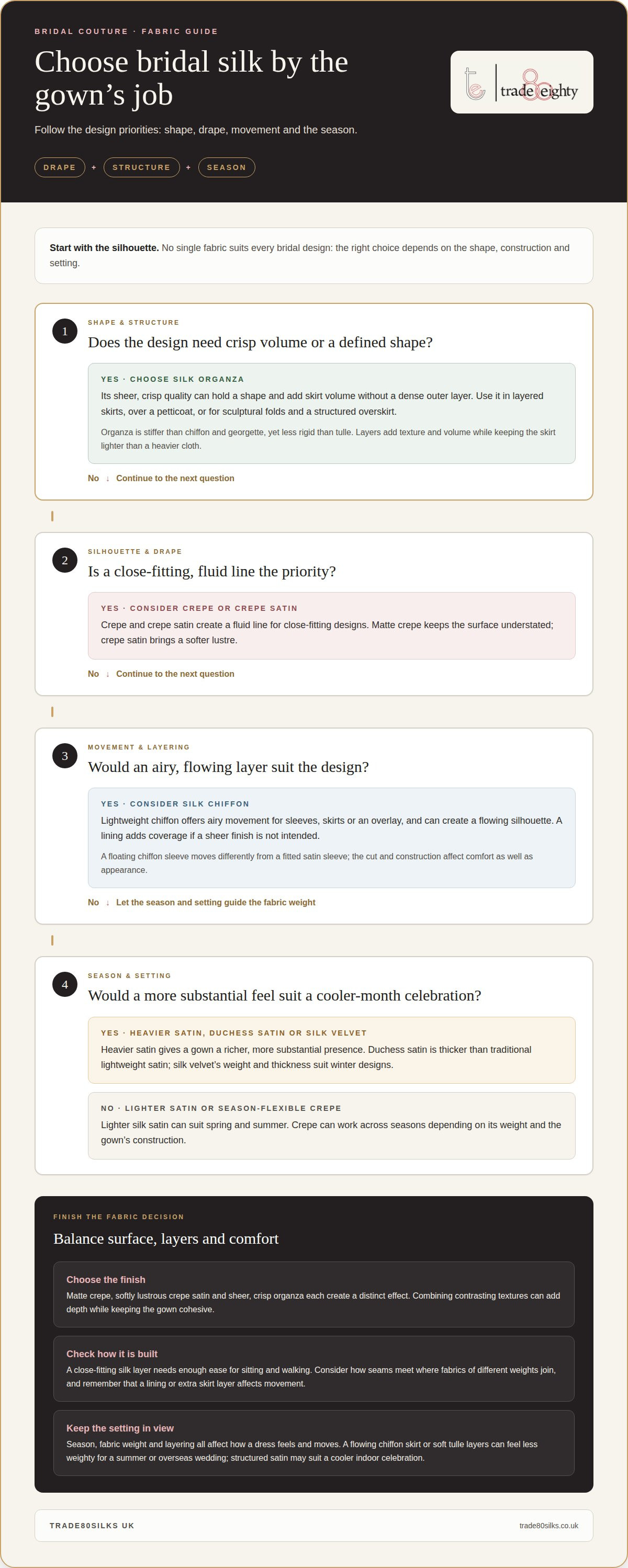
The best silk for bridal couture depends on the silhouette, construction and setting, not on one universally suitable fabric. Crepe and crepe satin create a fluid line for close-fitting designs, while organza adds crisp structure and volume without the density of heavier cloth. Lighter layers may feel less weighty for a summer wedding; heavier satin gives a gown a richer presence for cooler-month celebrations.
The finish matters as much as the silhouette. Matte crepe, softly lustrous crepe satin and sheer, crisp organza each create a distinct effect. Combining them can add contrast while keeping the gown cohesive.
Choosing between fabrics means balancing drape, structure, sheen and comfort. This guide explains what each contributes, how fabrics can work together and how the season can inform your choice. Use it to match material to design, from softly skimming lines to sculptural skirts, while keeping the finished gown’s character in view.
Key Takeaways
- Match the fabric to the silhouette you want, weighing fluid drape against a more defined shape.
- Combine contrasting silk textures thoughtfully to create depth while keeping the gown visually cohesive.
- Use organza when you want crisp volume and structure without relying on a heavier fabric.
- Let the wedding season guide fabric weight and layering, so the gown’s finish and feel suit the setting.
Combining different silk fabrics in one wedding dress
A wedding dress can combine fabrics, with each serving a different purpose. For example, pair a smooth silk satin bodice with a chiffon overskirt to balance a defined shape with airy movement. Silk chiffon can also suit transparent sleeves, while organza adds crisp layers. Depending on the cut, finish and amount used, the contrast can feel dramatic or understated.
Construction affects comfort as well as appearance. A close-fitting silk layer needs enough ease for sitting and walking; a floating chiffon sleeve moves differently from a fitted satin sleeve. For a bespoke design, consider how seams meet where fabrics of different weights join. A lighter overlay can lift a fuller skirt, while an additional layer may change how freely it moves.
There is no single typical UK price per metre for bridal-quality silk. Cost varies with the silk, weave, finish and weight, so compare a fabric’s qualities with the design rather than relying on a general figure.
There is no standard amount of silk for a bespoke wedding dress. The pattern, fabric width, silhouette and number of layers determine the required length. A full skirt or overskirt needs a different calculation from a minimal slip dress.
Silk can be dyed to create a custom-coloured dress. Test a small swatch first, since the weave and weight affect how silk responds to dye. Choose accessories to complement the finish: understated jewellery can suit lustrous satin, while a veil can echo a sheer chiffon layer.
Silk wrinkles readily, can snag during sewing and may shrink when washed; sunlight can also weaken it. Water can leave marks, so protect the gown from spills and avoid rubbing stains into the fibres. Follow the garment’s care instructions, then store it clean and dry, away from direct sunlight. Fine pins and sharp needles help reduce snags during construction, and gentle handling protects delicate surfaces.
Silk organza for structure, petticoats and texture
Silk organza brings a crisp, sheer quality to bridal construction. Its fine, firm surface can hold a shape while allowing light through, making it useful for adding skirt volume without a dense outer layer. Compared with chiffon and georgette, organza creates a more structured silhouette. It is stiffer than both, yet less rigid than tulle, helping designers choose their preferred degree of definition.
For a classic ballgown, organza can form layered skirts or sit over a petticoat to create a lifted outline. Each layer adds texture and volume, while the fabric’s lightness helps avoid the feel of a heavier skirt. Organza can also create sculptural folds, softly projecting sleeves or a structured overskirt. Pairing a fitted bodice with an organza skirt gives a clear contrast between close tailoring and airy movement.
Silk organza’s combination of strength and transparency makes it useful beyond skirts. Carefully placed bodice layers can add shape while preserving a delicate finish. At the hem, firmer organza can support a fuller line; as an overlay, it introduces a subtle change in texture. The result depends on the fabric’s weight and how the layers are arranged, allowing the design to remain softly flowing or become more dramatic.
Embellishment adds another dimension: silk organza can be embroidered or decorated with beading and appliqués. These details sit against its sheer surface, creating contrast without concealing the fabric entirely. For a printed finish, Printed Silk Organza offers a further design direction, while plain organza can keep a minimal silhouette in focus. Consider how the chosen surface, structure and layers work together before settling the dress’s final form.
Choosing bridal silk according to the season
Seasonal choice involves more than warmth: fabric weight and layering affect how a wedding dress feels and moves. For a summer ceremony, lightweight silk chiffon offers an airy, flowing option for sleeves, skirts or an overlay. Its soft movement creates an effortless silhouette, while a lining adds coverage if a sheer finish is not intended.
Spring and summer can also suit lighter silk satin, whose smooth surface brings subtle lustre without the fuller presence of a heavier weave. Crepe is adaptable across seasons, depending on its weight and the gown’s construction. For example, a simple crepe dress keeps the fabric’s soft texture central rather than relying on multiple layers.
For autumn and winter weddings, heavier satin or layered lace can create a more substantial feel, particularly in a formal venue. Duchess satin is thicker than traditional lightweight satin, making it a richer option for cooler months. Silk velvet adds a soft touch and lustre; its weight and thickness suit winter designs, including vintage-inspired gowns.
Consider the setting as well as the season. A flowing chiffon skirt or soft tulle layers can feel less weighty for a summer or overseas wedding, while a structured satin silhouette may suit a cooler indoor celebration. Silk is breathable and can warm or cool the wearer as the body requires, but construction also affects comfort: a fitted bodice, lining and number of skirt layers all influence movement.
Match the fabric’s weight and finish to the season, then consider how the silhouette will be worn. For a spring wedding, silk chiffon over a lined base can combine a light, elegant appearance with coverage. For a winter ceremony, silk velvet or heavier satin creates a more enveloping effect. The best silk for bridal couture is the fabric that supports the design and suits its setting.
Lightweight silk chiffon suits an airy overlay, while lightweight satin works for warmer-season gowns; a lining adds coverage. Heavier satin offers a more substantial option for cooler-season designs.
Silk Types: Structure, Drape, Sheen, Weight and Durability
Compare bridal silks by the effect they create, not by fibre name alone. Satin describes a weave, not a fibre, and can be made from silk, polyester or blended fibres. Silk satin feels smooth and luminous, while silk chiffon is light and airy, making it suitable for flowing overlays. These differences shape a gown’s outline, movement and finish.
For a softly sculpted silhouette, silk crepe and crepe satin offer a weighted, flowing drape. Their finishes differ: crepe is matte and textured, while crepe satin has more lustre. Both suit close-fitting cuts, bias styles and draped details. A French chiffon layer over crepe satin can soften its sheen while retaining a gentle reflection.
When a design calls for stronger definition, compare organza with heavier options such as mikado. Organza is sheer and crisp, adding volume with a lighter feel. Mikado is heavier and more structured, suiting a defined skirt or bodice. Ziberline and mikado share a subtle texture that catches the light; both can support bows, pleats and gathered trains.
Durability and handling matter, too. Silk satin is described as durable, but pure silk can be delicate and crease more readily than man-made alternatives. Chiffon’s fluidity suits billowing sleeves and flowing skirts, though its lighter structure will not create the sharply defined shape of mikado. Choose according to the gown’s construction and the movement its wearer needs.
Assess the fabric’s surface, weight and drape together: a fitted bodice may benefit from structure, while a skirt may need fluidity or volume. If the design combines finishes, consider how each silk will look beside the others under light. Explore silk fabric options for inspiration when refining the material direction of a bridal design.
Trade80Silks UK
Trade80Silks UK supplies premium silk and natural fabrics to designers and manufacturers, supporting material choices for bridal designs. Turn to its fabric selection when you’re weighing surface, drape and structure across a gown, or considering how contrasting textiles might work together.
Crinkle Silk Satin (#167), Printed Silk Organza (PS PEG 5), Printed Tulle (PS PET 3x) and Printed Silk Devore' (PS CP8) offer different directions for texture and finish. For a project that calls for a more individual textile concept, bespoke fabric commissions can help bring a considered design direction into the material itself.
Contact Trade80Silks UK to discuss fabric choices for your bridal couture project.
Shape a clear direction for your bridal design
Before choosing a fabric, write a short material brief describing the gown’s intended character. Note whether the design should feel restrained or expressive, how the wearer wants to move and which details should stand out in photographs. This gives the fabric choice a clear purpose beyond appearance alone.
The best silk for bridal couture is the one that serves the design’s priorities. As a next step, bring together a sketch, notes on the wedding setting and a clear sense of the finish you want. These references help focus decisions about the fabric’s contribution to the finished piece, so a beautiful surface does not distract from the overall design.
For a considered conversation about materials for your bridal project, contact Trade80Silks UK about bridal silk. A thoughtful fabric direction can give your design a confident starting point and leave room for its distinctive details to emerge.
Frequently Asked Questions
Which silk fabrics are best for bridal couture, such as duchess satin, mikado, charmeuse and organza?
The right choice depends on the gown’s silhouette and finish. Duchess satin creates a fuller feel for cooler-season designs, while mikado suits a sharply defined shape. Organza adds sheer structure to layered details, and charmeuse offers a fluid, lustrous surface for a softer line. If the design combines fabrics, consider how they will meet at seams and move together.
Where can bridal designers and dressmakers buy silk fabric in the UK?
UK bridal designers and dressmakers can source fabrics from Trade80Silks UK, which supplies premium silk and natural fabrics to designers and manufacturers. Purchases can be made online or through its showroom. This gives professionals a route to explore fabric options for a particular design, whether they’re sourcing material for a single couture commission or developing a wider collection.
How can you identify high-quality silk and distinguish it from synthetic satin?
Satin describes a weave, not a fibre, so it may be silk, polyester or a blend. Silk has natural softness, a gentle sheen and graceful drape; silk satin is smooth and luminous.
How do silk and silk blends compare with alternatives such as polyester satin and mikado for bridal couture?
Silk offers softness, a gentle sheen and graceful drape. Polyester satin is a lower-cost, wrinkle-resistant and durable alternative, but it is less breathable. Mikado is heavier and more structured, and is commonly made from silk or a silk blend.
What silk weight or momme is suitable for bridal gowns, veils and lining?
For bridal veils, the recommended silk weight is 3.5 to 6 momme; cathedral-length veils suit 3.5 to 4.5 momme. The material gives no specific weight for gowns or linings.
How much silk fabric is typically needed for a bespoke wedding dress?
There is no standard amount: the pattern, fabric width, silhouette and number of layers determine the required length. A full skirt or overskirt needs a different calculation from a minimal slip dress.


