

The base cloth shapes the embroidery as much as the motif does. For custom embroidered tulle fabric, a professional can help you choose between open mesh and a sheer woven base, then specify composition, width and colour to suit the design and its intended use.
It’s understandable to focus first on the colour and pattern: these give the fabric its character. Yet the mesh, the embroidery’s scale and density, and the placement of a border or repeat all influence how the finished cloth looks and drapes.
This guide explains how those choices come together, from selecting and customising plain tulle to developing an embroidered design. You’ll learn what details to share with a specialist, which decisions shape the result, and how Trade80Silks UK’s bespoke fabric commissions can support a considered design brief.
Key Takeaways
- Choose the tulle base with its intended drape and the embroidery’s weight in mind; width and composition shape how the design can be used.
- Plan colour as part of the design, considering how the ground fabric and thread work together.
- A professional can develop a motif and placement around plain tulle, helping turn a visual brief into a coherent fabric design.
- Printed Tulle ( PS PET 3x ) and bespoke fabric commissions offer a natural starting point for exploring a distinctive finish with Trade80Silks UK.
Fabric composition and width
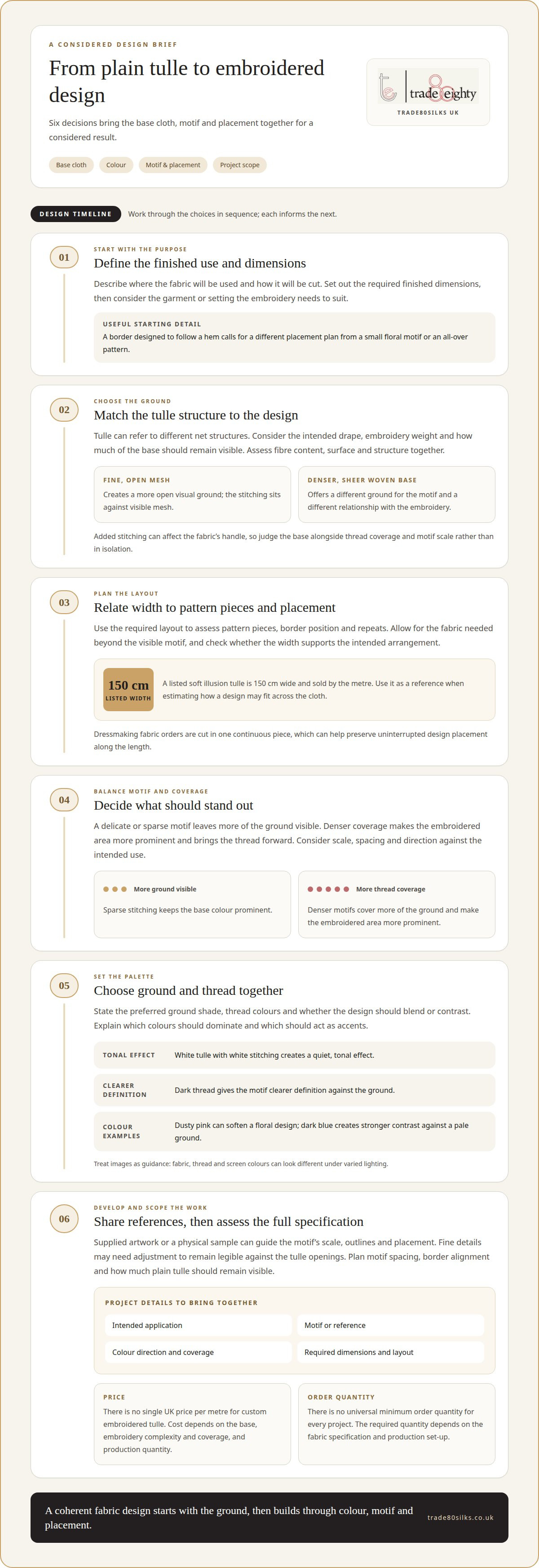
Start by defining the fabric’s intended role, then consider its composition and width. Tulle can refer to different net structures, so choose a base that suits both the embroidery and its intended use. Fine, open mesh creates a different visual ground from a denser, sheer woven fabric. Consider the base alongside thread coverage, motif scale and desired drape, rather than treating composition as an isolated choice.
Composition influences how the cloth responds to embroidery. Assess the fibre content, surface and structure, and consider how added stitching may affect the fabric’s handle. A delicate motif leaves more of the ground visible, while denser coverage makes the embroidered area more prominent. These factors help identify a suitable base without assuming all tulle behaves alike.
Width is equally practical. A listed soft illusion tulle is 150 cm wide and sold by the metre. That measurement gives a useful reference when estimating how a design might fit across the cloth. The professional relates width to the planned pattern pieces, border placement and repeat, allowing for the fabric needed beyond the visible motif.
Before production, set out the required finished dimensions and how the fabric will be cut. Dressmaking fabric orders are cut in one continuous piece, which can help preserve uninterrupted design placement along the length. Use the intended layout to consider where motifs sit, how borders align and whether the width supports the arrangement.
For custom embroidered tulle fabric, begin by defining the finished application and preferred mesh or sheer woven ground. Develop the composition and width around that purpose, balancing openness, coverage and design scale. A useful brief might describe a narrow embroidered border, a central motif or an all-over pattern, giving the technical choices a clear creative direction.
Colour options
Choose the ground colour and embroidery thread together. White tulle with white stitching creates a quiet, tonal effect, while dark thread gives the motif clearer definition. Dusty pink can soften a floral design; dark blue creates stronger contrast against a pale ground. These are design examples, not fixed colour rules.
Develop the palette around the intended visual effect. The ground may blend into a garment or setting, drawing attention to the stitching. Alternatively, contrasting thread can outline petals, leaves or a decorative border. A pale floral motif on dark blue, for example, reads differently from the same motif stitched in a matching shade.
Colour decisions also depend on the amount of embroidery. Sparse stitching leaves more tulle visible, keeping the base colour prominent. Dense motifs cover more of the ground and bring the thread colour forward. Consider both elements together, then balance them to suit the artwork and placement.
Make the colour brief practical: name the preferred ground shade, identify the thread colours, and explain whether the design should blend or contrast. A reference image can convey a mood, while precise colour descriptions clarify the direction. If the motif includes several shades, note which should dominate and which should be accents.
Interpret colour references carefully: fabric, thread and images can look different under varied lighting and across screens. Use the brief to guide colour development rather than treating a reference image as an exact textile match. This is particularly helpful for coordinated floral work, where the ground, petals and leaves need to read as one considered composition.
For a tailored palette, develop a bespoke fabric colour brief that sets out the ground shade, thread colours and desired contrast.
Professional customisation of plain tulle
Begin with the intended use and a clear design brief. Assess the plain tulle’s structure, then plan how the embroidery will sit across its surface. A small floral motif, for example, needs different placement from a border designed to follow a hem. The brief can also specify colour, coverage and preferred fabric dimensions.
There is no single UK price per metre for custom embroidered tulle. Cost depends on the selected base, the embroidery’s complexity and coverage, and the production quantity. A simple repeated motif differs from a dense design with several elements, so assess the complete specification before pricing.
There is no universal minimum order quantity for every custom project. The required quantity depends on the fabric specification and production setup. Establish the appropriate run based on the chosen tulle, motif and intended use, rather than assuming one figure applies to every commission.
Supplied artwork or a physical sample can guide embroidery development. Study its scale, outlines and placement, then adapt the design to work on an open mesh or sheer ground. Fine details, for instance, may need adjustment to remain legible against the tulle’s openings. A sample can also convey texture and motif character when a drawing alone is not enough.
Develop the design around the fabric, considering motif spacing, border alignment and how much plain tulle should remain visible. A floral repeat might be distributed evenly, while a single decorative edge could be placed along a garment hem. These decisions shape the fabric’s balance and visual finish.
Useful project details include the intended application, a preferred motif or reference, colour direction and required dimensions. Together, they provide a practical foundation for developing plain tulle into a considered embroidered textile.
Embroidered tulle fabric designs
Design development brings the motif, placement and base fabric together in one composition. Choosing an all-over pattern or a focused border changes the fabric’s visual balance.
Embroidery design options
Floral motifs, scattered details and border embroidery each create a distinct effect. A floral border, for example, can frame a hem, whilst an all-over repeat gives the surface a more continuous pattern. A professional considers motif scale, spacing and direction against the intended use. Supplied artwork or a physical sample can guide the design, with details adapted to remain clear on open mesh.
Colour and tulle choices
Develop the ground colour, thread shade and tulle structure together. White floral stitching on a pale ground feels tonal; dark thread against dusty pink creates stronger definition. Open mesh leaves more of the ground visible, while a sheer woven base presents a different surface. The right combination depends on the desired contrast, motif coverage and finished application.
For clothing in the UK, fabric requirements depend on the finished garment and its intended use; no single certification applies to every tulle design. Consider the fabric specification as part of the brief.
UK buyers can commission bespoke embroidered tulle from a textile supplier that develops fabrics. Set out the motif, placement, colour direction and intended application in the design brief.
Production and delivery times depend on the design, base fabric and production requirements. A complex repeat or detailed border involves different development steps from a simpler motif, so the specification shapes the schedule.
Care depends on the fabric and embroidery construction. Follow the garment or fabric care instructions, store the tulle folded or supported to help avoid snagging, and keep it away from rough surfaces. A delicate embroidered border, for example, benefits from careful handling in storage.
For a design shaped around your brief, explore bespoke tulle design options.
Trade80Silks UK: Printed Tulle ( PS PET 3x )
Trade80Silks UK offers Printed Tulle ( PS PET 3x ) for designers seeking a distinctive tulle base, alongside Bespoke Fabric Commissions for projects requiring a developed textile design. Its bespoke work includes embroidery, allowing a creative brief to inform the fabric’s pattern and finish. Share the intended use, motif direction and preferred colour so the commission can be shaped around the design requirements.
Printed Tulle ( PS PET 3x ) is a relevant starting point when a printed surface suits the project; a bespoke commission is the natural route when the design calls for embroidery developed around a particular brief. The right choice depends on the intended appearance and how closely the fabric needs to follow your concept.
For a considered discussion of your tulle design, contact Trade80Silks UK.
Shape the next stage of your design
A considered fabric brief gives your design a clear starting point. Bring together the intended use, a visual reference and the qualities you want the finished textile to express. With custom embroidered tulle fabric, the creative direction can start with one motif and develop into a distinctive surface for your project.
Trade80Silks UK also offers Crinkle Silk Satin ( #167 ) and Printed Silk Organza ( PS PEG 5 ), useful possibilities for projects exploring different textures and fabric effects. The focus can remain on your tulle concept, with a bespoke commission shaped around its particular design requirements.
As you refine your idea, decide which detail matters most: the motif, its placement or the balance between embroidery and open ground. That choice can guide a focused discussion about the fabric you have in mind. A thoughtful brief leaves room for skilled interpretation while keeping your original vision at its centre.
Contact Trade80Silks UK about your fabric to begin shaping your design. Your next textile idea can take form through a careful exchange of creative intent and material expertise.
Frequently Asked Questions
Open Mesh or Sheer Woven Fabric?
Choose open mesh for a visibly netted ground, or sheer woven fabric for a more continuous surface. This distinction affects how much of the underlying layer shows through and how isolated motifs appear. For a scattered floral design, open mesh can keep the ground prominent; a sheer woven base can give closely placed details a more unified field. Let the intended effect guide your choice.
What Should You Look for When Buying Tulle?
Look at the fabric’s handle, transparency, composition and finished width, then consider how its surface suits the design. For a garment with several shaped panels, a professional can assess whether the available width supports the planned layout. Also review the motif’s scale against the mesh openings, since very fine details may become less distinct on a visibly open ground.
What is custom embroidered tulle fabric?
Custom embroidered tulle fabric is tulle developed with embroidery tailored to a particular design brief. The commission can define the motif, its placement, thread colours and the balance between stitched areas and exposed ground. A design might feature a single floral border rather than a repeated pattern, for example. This differs from choosing a ready-designed fabric.
What information is needed to order custom embroidered tulle?
Provide the intended application, required fabric dimensions, preferred ground and colour direction, along with a sketch, artwork file or physical sample if available. Explain whether the embroidery should form a border, scattered motifs or an all-over repeat. These details help assess the design’s scale and placement, then develop a specification that reflects your project rather than a generic pattern.
What should you check for quality, colour matching and embroidery defects?
Review the embroidery’s outline, spacing and thread coverage, looking for loose ends, skipped stitches or gathered areas that disrupt the tulle’s fall. Compare the ground and thread colours together under consistent lighting, rather than judging either in isolation. On a sample, inspect how the motif reads from both sides and whether its edges remain clear against the mesh.


