

A fabric library works best as a companion to traditional sourcing, not a replacement for it. Building a professional fabric library means bringing physical swatches together with clear digital records of composition, construction, weight, width, supplier and care or performance notes. Images help with browsing and comparison, while a real sample lets you assess the hand, drape, surface and colour directly.
That balance matters: a photograph makes a fabric easy to find, but cannot fully convey its feel or behaviour. A well-kept library gives designers and makers a consistent reference, helping them revisit materials, record what worked and develop ideas with greater clarity.
This guide explains what to include in a fabric library, how high-resolution images and coded sample references support the process, and why hands-on sourcing still matters. Each approach serves a different purpose, from organising an existing collection to informing custom fabric development, helping you build a practical resource that responds to your work.
Key Takeaways
- Build each fabric record around clear specifications and useful notes, so materials can be found and assessed consistently.
- Use detailed imagery to support visual comparison, while keeping physical swatches for judging texture, weight and drape.
- Give samples unique references and organised records to make past materials useful starting points for custom development.
- Choose between a curated library and traditional sourcing according to the project, drawing on bespoke commissions when a fabric needs a more individual direction.
What Is a Fabric Library?
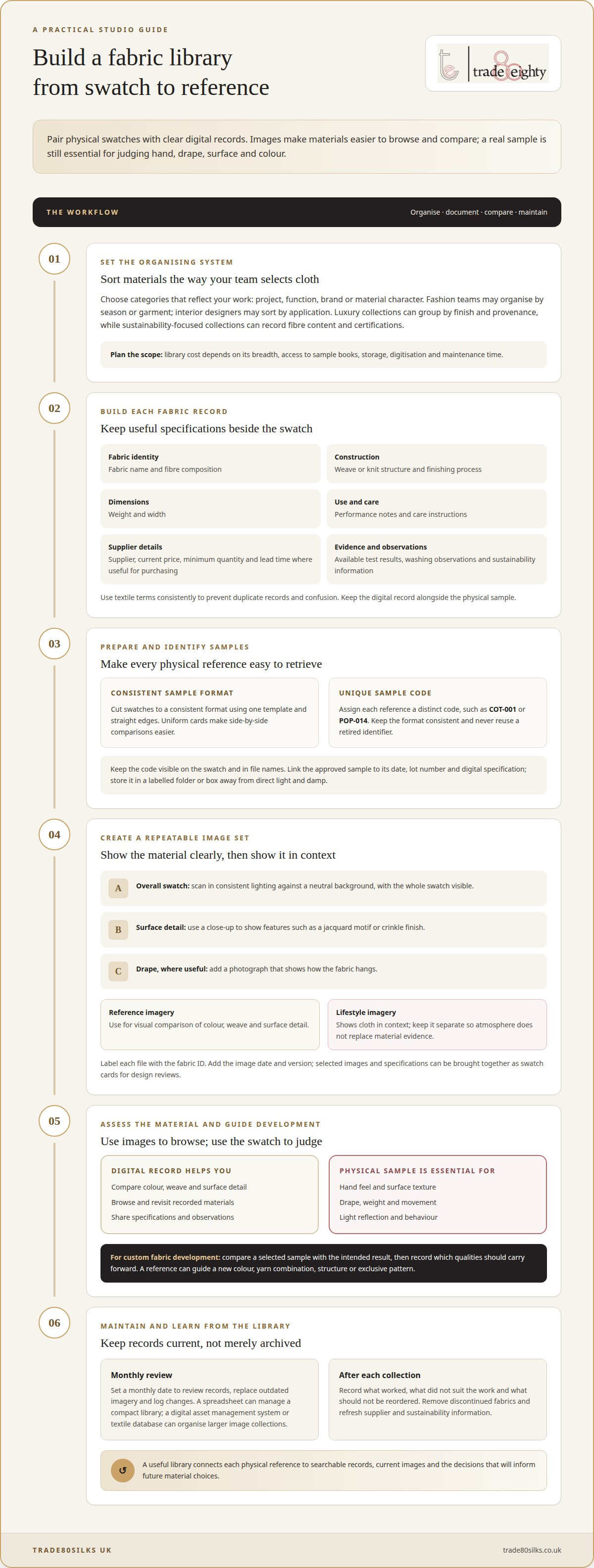
A fabric library is an organised collection of physical swatches and records that supports material selection across design projects. A fashion studio might include silk satin, organza and tulle, while an interiors practice could group wool, linen and furnishing cloth by use. For each entry, record the fabric name, fibre composition, construction, weight, width, supplier and care instructions. Use textile terms consistently to avoid duplicate records and confusion.
For a design team, building a professional fabric library means arranging materials so they can be found by project, function, brand or material character. A luxury collection might group fabrics by finish and provenance, while a sustainability-focused collection can record fibre content, certifications and supporting information. Fashion teams may organise references by season or garment; interior designers may sort by application. Choose a system that reflects how your team actually selects cloth.
Keep technical details with each swatch, including weave or knit structure, finishing process, performance notes and care guidance. Record available test results and observations after washing to inform later choices. Where useful for purchasing, add supplier details, current price, minimum quantity and lead time. A digital record keeps this information alongside the physical sample.
After each collection, review what worked, what did not suit the work and what should not be reordered. Remove discontinued fabrics, refresh supplier details and update sustainability information during regular reviews. A fabric library becomes more valuable when it captures these decisions, rather than simply archiving attractive cloth.
Record fibre composition, care information, available certifications and the basis for sustainability claims. In the UK, a library’s cost depends on its breadth, access to sample books, storage, digitisation and maintenance time. Source swatches and sample books from fabric suppliers, mills and brands, selecting references that suit your collections and projects.
High-resolution swatch and lifestyle imagery
High-resolution swatch images help designers compare colour, weave and surface detail before handling a sample. Scan each fabric in consistent lighting, against a neutral background, with the whole swatch visible. A close-up can show a jacquard motif or crinkle finish. Lifestyle images serve another purpose: they show how cloth appears in context, such as silk organza layered over a contrasting fabric. Keep these separate from reference swatch images, so atmosphere does not replace material evidence.
Use a repeatable image set for each entry: a clear overall view, a surface detail and, where useful, a photograph showing drape. Label each digital file with the fabric ID, then export selected images and specifications as swatch cards for collaboration. For example, a card for a premium fabric can bring its reference, composition and supplier details together for a design review. Include the image date and version so colleagues can distinguish current files from earlier records.
Cut physical swatches to a consistent format, using one template and straight edges. Uniform cards sit neatly in folders or boxes and make side-by-side comparisons easier. Keep the approved swatch with its date and lot number to link the physical reference to its digital record. Store samples away from direct light and damp, grouping them by a useful category such as colour, fibre or project. Add an update log whenever a record or sample changes.
A spreadsheet can manage a compact library, whilst a digital asset management system or textile database can organise larger image collections. Useful functions include searchable fields, consistent file names and shared updates. Set a monthly date to review records, replace outdated imagery and log changes. For work that calls for a distinctive material direction, bespoke fabric commissions can connect visual references with custom fabric development.
Using sample references for custom fabric development
Existing samples can guide custom colours, yarn combinations, structures and exclusive patterns. Their value lies in connecting a tactile reference with precise records of the design requirements.
Sample coding and storage
Sample coding and storage link each physical swatch to an organised record and a designated place. This makes earlier materials easier to retrieve when a new design calls for a related texture or construction. Store swatches in labelled folders or boxes, with a digital copy of each specification page. Keep the fabric code visible on the sample and record the qualities worth revisiting, such as surface, weight or drape.
Sample and tool selection
Sample and tool selection means choosing the references and records used to assess a material. Select samples that reveal qualities relevant to the development brief, rather than collecting swatches without a clear purpose. Assess hand feel, drape, surface texture, light reflection and behaviour. A specification page helps describe these observations, while the physical fabric remains essential for assessing how it feels and moves.
Unique sample identifiers
Unique sample identifiers are short codes assigned once to individual fabric references. A code such as COT-001 or POP-014 connects the swatch to its specification and digital record. Keep the format consistent, make each code distinct, and never reuse a retired identifier. This prevents confusion between similar fabrics and preserves a clear trail when a sample informs later development. Include the code in file names and on the physical reference.
For custom development, compare the selected sample with the intended result and record which qualities should carry forward. A reference might guide a new colour, yarn combination or structure without requiring an exact copy. Separate essential characteristics from those open to change, so the sample provides direction while leaving room for a considered, exclusive design.
Comparing fabric libraries with traditional sourcing
A fabric library and traditional sourcing serve different parts of material selection. The library brings recorded references together for quick comparison, while sourcing connects a project with suppliers, mills and current fabric options. For example, a designer can use a saved silk reference to define a preferred sheen, then explore available cloth with a supplier.
A library is especially useful when a team revisits materials across collections. A coded swatch and its specification help colleagues compare fibre, construction and finish without relying on memory. Digital records also make it easier to shortlist fabrics by project or function. However, photographs and descriptions cannot replace handling a sample when texture, drape or light reflection matters.
Traditional sourcing lets you engage directly with the material and its supplier. Viewing a sample book or discussing a fabric with a mill can reveal options beyond an existing collection, including a different yarn, colour or structure. It also gives the design conversation a physical reference. The trade-off is that findings need to be recorded afterwards, or useful details can remain in emails, notes or individual memory.
The strongest approach combines both methods. Use the library to clarify the design brief, locate a relevant reference and capture specifications. Then use traditional sourcing to assess suitable samples, discuss material possibilities and identify options for the project. Add useful new references to the library afterwards, so future work benefits from the decisions already made.
For a one-off project with a clear specification, direct sourcing may be sufficient. For a team handling recurring designs, a maintained library supports continuity and comparison. If the brief calls for a material developed around a particular reference, discuss your fabric development requirements as the next step.
Trade80Silks UK: Bespoke Fabric Commissions
Trade80Silks UK offers Bespoke Fabric Commissions for designers developing a material around a specific project or reference. A fabric library can help clarify the desired colour, texture and character; those references give the commission a considered starting point.
For a project that calls for an existing silk fabric, Crinkle Silk Satin ( #167 ), Printed Silk Organza ( PS PEG 5 ) and Printed Tulle ( PS PET 3x ) offer distinct material directions. Where the brief calls for a more individual result, a bespoke commission can bring the design requirements into a tailored fabric development conversation.
Share the qualities that matter to the work, such as a reference sample, preferred colour or intended pattern direction. Trade80Silks UK can support designers and manufacturers seeking premium silk and natural fabrics, with bespoke work suited to briefs that need more than a standard library reference.
Contact Trade80Silks UK to discuss a Bespoke Fabric Commission.
Give your next material idea a clear direction
A fabric library can become more than a reference shelf. As your design language develops, it can turn a fleeting impression into a considered brief, preserving the qualities you want to explore and the choices you are ready to leave behind. Each new project then becomes an opportunity to refine your approach rather than start with a blank page.
Use your library as a living creative resource. Add references that open new possibilities, and let the next brief take shape around the material qualities that matter most. If a project calls for fabric developed with a more individual direction, contact Trade80Silks UK to discuss your fabric needs.
With a thoughtful reference and a clear design intention, your next material decision can begin with confidence and lead somewhere distinctly your own.
Frequently Asked Questions
What should a professional fabric library include?
Include physical samples, searchable records and enough context to support a design decision. For example, a fashion team comparing cloth for a tailored jacket could note the intended garment, preferred handle and how the material should suit the silhouette. A library can also hold approved images, supplier references and project notes. These details help colleagues understand not only what a fabric is, but why it was selected.
How do you organise and catalogue fabric swatches?
Organise swatches using a consistent system that reflects how your team searches for materials. A studio might group by fibre first, then filter by colour family or project type. Apply the same terms across physical folders and digital records, so “navy” does not become a separate entry from “dark blue” without a clear reason. For cross-team work, a shared naming convention keeps searches and handovers coherent.
What is the best way to store fabric samples to prevent fading and damage?
Store samples in a clean, dry place away from direct sunlight, which can alter their colour over time. Keep them flat or gently folded, without heavy objects pressing on delicate surfaces such as pile or embroidery. Use folders or boxes that prevent snagging, and separate fabrics that may catch on one another. During routine reviews, check for fading, creasing or damage before relying on a sample for a decision.
Which fabric properties should be recorded in a professional textile library?
Record the properties that affect selection and use: fibre content, weight, width, construction, finish and care requirements. Add relevant performance results, such as observations after washing, where available. A fabric’s name alone may not distinguish it from a similar material; recording whether it is woven or knitted, for instance, gives a clearer technical reference. Keep tactile observations separate, so measured specifications remain distinct from a designer’s assessment.
How should fabric samples be labelled, coded and tracked?
Give every sample a short, unique identifier and add it to both the swatch and its digital record. Use a consistent format that allows new entries, and never assign an old code to a different fabric. Add the supplier reference or lot detail where relevant, along with the date the sample was approved. If a reference is replaced, mark its record as superseded rather than deleting its history.
How often should fabric samples and supplier details be reviewed and updated?
Review supplier details and sample records regularly, and revisit the library after each collection to capture what worked and what should not be reordered. A new season may bring changes in availability, product references or sustainability information, so update records as those details change. Keep a dated update log to help colleagues see whether a sample is current and when its supplier information was last reviewed.


