

The fibre name tells you only part of a fabric’s story. When searching for a natural fibre fabric supplier uk, you may see labels such as “natural”, “organic” and “sustainable” used as though they mean the same thing. They don’t. And even a clear fibre description may not tell you how a cloth will drape, feel or look in your finished design. Weave, weight and finish matter too, whether you’re choosing silk for a garment or sourcing material for a larger textile project.
This guide explains the difference between natural and regenerated fibres, and shows how construction and finish influence a fabric’s character. You’ll find practical ways to compare cloth, match it to a project and prepare a useful sourcing brief. Trade80Silks UK supplies silk and natural fabrics to designers and manufacturers, and offers bespoke textile development for projects that call for custom detail.
Key Takeaways
- Look beyond the fibre name: spinning, weaving or knitting, and finishing all affect how a fabric looks and behaves.
- Compare cotton, linen, wool and silk by their likely qualities, then assess the actual cloth against your project’s needs.
- Before sourcing, note the end use, quantity, colour direction, preferred finish and required fabric qualities.
- A natural fibre fabric supplier uk can help connect material choices with a design’s practical requirements and creative direction.
- Trade80Silks supplies premium silk and natural fabrics, with bespoke textile development for projects that need custom detail.
What does natural fibre fabric mean, and which fibres count?
A natural fibre comes from a plant or animal, but its origin alone doesn’t tell you how the finished cloth will look or behave. Fibres are prepared and spun into yarn, then woven or knitted. Finishing can further influence texture, lustre, softness and colour. As a result, two fabrics made from the same fibre may feel and perform quite differently.
Natural fibre fabric is cloth made from fibres that originate from plants or animals.
Common examples include cotton, flax-derived linen, wool and silk. Each has a different origin and may have a different handle and visual character, but yarn, construction and finish also shape the result. For a costume or garment project, treat the fibre name as a starting point, not a complete description of suitability. A useful overview of the category is provided by Natural fiber.
Labels describe different things. Natural refers to fibre origin. Organic relates to how a fibre is produced and may be supported by a relevant certification. Sustainable is a broader description that can involve environmental and social considerations. These terms aren’t interchangeable: natural origin alone doesn’t establish that a fabric is organic or sustainable.
Plant-based and animal-based fibres at a glance
Cotton comes from the cotton plant, while linen is made from flax. Wool is an animal fibre obtained from the fleece of sheep and other animals; silk is produced from silkworm cocoons. These origins are useful for an initial comparison, but they don’t determine a fabric’s exact weight, drape or finish. Look at the specific cloth and consider how it needs to move, sit or appear in your design.
For designers looking for a “natural fibre fabric supplier uk”, it helps to describe the intended use and effect as well as the fibre you have in mind. Trade80Silks specialises in silk and natural fabrics, helping designers compare material options in relation to a project rather than relying on a label alone.
Are regenerated fibres natural fibres?
Viscose begins with cellulose from plant matter, but the cellulose is dissolved and processed before being regenerated into fibres. It has a plant-derived raw material, but it is not used in the same relatively direct form as fibres such as cotton, flax or wool. Depending on the context, viscose may be described as a regenerated cellulosic or man-made cellulosic fibre. Calling it simply natural or synthetic can hide that distinction.
When comparing fabrics, check what the fibre originates from and how it is made into yarn. Then consider the construction and finish that give the cloth its final character. These details are more useful for judging appearance and suitability than broad labels alone, especially when a design calls for a particular period look, movement or surface effect.
How fibre, construction and finish shape fabric behaviour
A design may call for a soft, flowing sleeve, a sharply defined collar or a sheer layer beneath an outer fabric. Fibre content can help guide the choice, but it won’t tell the whole story. Yarn, construction, weight and finishing all contribute to how cloth falls, catches the light, feels in the hand and holds its shape.
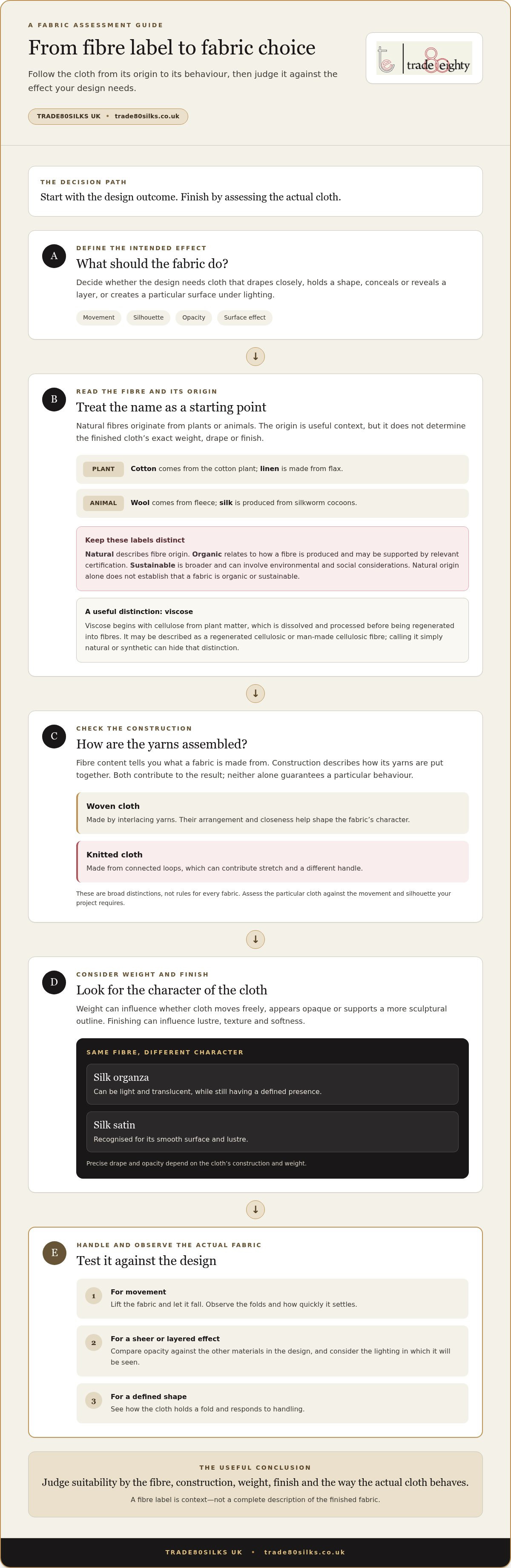
Fibre content identifies what a fabric is made from; construction describes how its yarns are assembled. Both matter, and neither alone guarantees a particular result.
What weave and knit contribute
Woven cloth is made by interlacing yarns. The arrangement and closeness of those yarns help shape the fabric’s character. Knitted cloth is made from connected loops, which can contribute stretch and a different handle. These are broad distinctions, not rules for every fabric: yarn and construction affect how a particular cloth behaves. Assess it against the movement and silhouette your project requires.
Silk shows why it is useful to compare the fabric itself. Silk organza can be light and translucent while still having a defined presence. Silk satin is recognised for its smooth surface and lustre. The precise drape and opacity depend on the cloth’s construction and weight. A sheer silk may suit a layered detail, while another silk may offer a more fluid fall, even though both are made from the same fibre.
How weight and finish affect a project
Weight can influence whether cloth moves freely, appears opaque or supports a more sculptural outline. A lightweight fabric may work well as a floating overlay or a detail intended to catch the light; a firmer cloth may help create definition. Finishing also affects the surface, bringing out qualities such as lustre, texture or softness. Consider these qualities together instead of choosing by fibre name alone.
- For movement, lift the fabric and let it fall. Observe the folds and how quickly it settles.
- For layered or sheer effects, compare opacity against the other materials in the design and consider the lighting in which it will be seen.
- For a defined shape, see how the cloth holds a fold and responds to handling.
These checks turn a design idea into practical sourcing criteria. Searching for a natural fibre fabric supplier uk is a starting point; describing the intended silhouette, movement and surface effect makes fabric comparisons more focused. Trade80Silks’ silk expertise can help relate those creative aims to material options. You can also explore silk fabric selection as part of the process.
How to compare natural fibre fabrics without relying on labels
Start with the result your design needs, rather than a claim on a roll or in a product description. Decide whether the cloth should drape closely, hold a shape, conceal or reveal a layer, or create a particular surface under lighting. Then compare the fabric’s construction and finish alongside its fibre content.
Natural origin alone doesn’t prove a fabric’s sustainability. Environmental considerations can include how a fibre is produced and processed, the finishes applied, the cloth’s expected service life and the care it requires. Assess these factors separately rather than inferring them from the fibre name.
| Fibre | Source | Likely qualities | Construction and project questions |
|---|---|---|---|
| Cotton | Plant | May feel soft or crisp, depending on yarn and finish. | Is the cloth woven or knitted? Does its handle suit the intended silhouette? |
| Linen | Flax plant | Can have a distinct texture and a relaxed appearance. | Does the surface support the intended look, and how will creasing appear? |
| Wool | Animal fleece | May offer body or a soft, yielding handle, depending on the cloth. | Do its weight and structure suit the intended shape and layering? |
| Silk | Silkworm cocoon | Can range from lustrous and fluid to sheer or more textured. | Will the finish and opacity create the right effect under the intended lighting? |
Match fabric qualities to the intended use
Turn the design brief into a short list of material priorities: drape, opacity, structure, surface and tactile effect. Silk organza, for example, may provide a sheer layer, while another silk construction may create a different fall or lustre. Compare samples alongside the other fabrics in the design, since layering and contrast can change the overall effect. Fibre names help narrow the options; handling the cloth helps you judge the result.
Read environmental and certification language carefully
“Organic” describes a particular production claim, not every environmental impact associated with a finished textile. On its own, it doesn’t tell you about every stage of processing, finishing, use or care. Certification references such as GOTS should be understood according to the scheme’s scope and supporting documentation; the name alone isn’t a complete assessment of a fabric’s impact.
For a project, record any available information about material origin, production and certification separately from practical requirements. Consider how the cloth will be used, maintained and reused, and whether its qualities support the design. A natural fibre fabric supplier uk can help you compare fabrics against priorities such as appearance, handle and construction.
What to consider when sourcing natural fibre fabric in the UK
A clear sourcing process turns a concept into practical fabric requirements. Start with the project’s end use, then identify the qualities that will support the design. Compare cloth against those priorities before settling the specification. This helps you judge whether a fabric’s appearance, handle and construction are suitable, instead of relying on its fibre label to make the decision.
- Define the project. Note what the fabric will be used for, how it should look and whether it needs to move, layer or hold a particular shape.
- Identify the qualities required. Describe the desired drape, opacity, structure, surface and tactile impression, along with any construction needs.
- Compare suitable cloth. Assess samples against the design and the materials they will sit beside, paying attention to colour, texture and finish.
- Set out the requirements. Record the quantity needed, colour direction, pattern, intended finish and any details that affect how the cloth will be used.
Prepare a useful fabric brief
State the end use first, then separate essential qualities from preferences. A period-inspired design might call for a particular surface or degree of translucency, while the garment’s movement may depend on the fabric’s drape. Include colour references, pattern placement, approximate quantity and preferred finish. Note construction requirements too, such as whether the cloth needs to form a defined shape or work as a light overlay.
A swatch can reveal details that a fibre description can’t: how the surface catches light, how the colour sits beside other materials, and how the fabric feels and falls in the hand. Assess it alongside the other layers and, where relevant, under lighting similar to the setting in which it will be seen. This helps refine the brief before you settle on a fabric.
When a bespoke fabric commission may help
Custom development can be useful when a distinctive textile detail is central to the brief. Trade80Silks develops bespoke fabrics through custom jacquard weaving, embroidery and digital printing on silk substrates. These techniques can help translate a specific motif, surface treatment or visual concept into cloth, with the material and intended effect considered together.
Trade80Silks is an independent textile merchant founded in 1980, with more than 35 years in the industry. Its specialist knowledge of silk helps designers relate material choices to a project’s purpose and character. A well-prepared brief gives the discussion a practical starting point, whether you’re comparing existing fabrics or developing a more individual textile.
If your project calls for considered silk sourcing or distinctive textile detail, explore fabric options with Trade80Silks.
How Trade80Silks brings specialist knowledge to natural fabric sourcing
The right cloth has to do more than match a fibre description. Silhouette, movement, surface and how the fabric works with other materials all affect the choice. Trade80Silks supplies premium silk and natural fabrics to designers and manufacturers, with more than 35 years of experience in the industry. Its curated selection of silk fabrics is sourced from premier silk mills, bringing specialist material knowledge to projects where detail matters.
A specialist approach to silk and natural fabrics
Silk is a useful example of why it pays to assess the cloth itself, considering construction and finish alongside fibre. Raw silk, sand-washed silk and printed silk organza offer different starting points for texture, surface and visual effect. Their names indicate material or treatment, but the fabric’s particular character still needs to suit its intended use. A clear brief about appearance and handling is just as valuable as choosing a fibre.
Trade80Silks supplies fabric by the metre and in bulk, supporting both individual design requirements and manufacturers’ needs. A focused reference such as a guide to crinkle silk satin can help you think about the character of a particular silk. The fabric should still be judged against the requirements of the finished project.
From considered selection to bespoke detail
Some briefs call for a distinctive textile detail that selection alone won’t achieve. Trade80Silks offers bespoke development through custom jacquard weaving, embroidery and digital printing on silk substrates. These methods connect the design intention with the material choice, and are useful for projects with specific visual requirements rather than a necessary step for every design.
Starting with a considered fabric choice helps define what a bespoke detail needs to achieve. A woven motif, embroidered embellishment and digitally printed design each contribute a different quality, so describe the desired effect, placement and relationship to the wider design in your brief. Trade80Silks’ specialist knowledge helps connect these choices with silk’s qualities and the project’s practical purpose.
For anyone searching for a natural fibre fabric supplier uk, specialist support can make it easier to compare fabrics against a design brief. Trade80Silks brings longstanding experience to that process, from selecting silk cloth to developing distinctive textile details for designers and manufacturers.
Explore Trade80Silks’ fabric selection and shape your next project around the material, finish and detail its design calls for.
Shape your next fabric brief with confidence
Start your next project by asking what the cloth needs to make possible. A particular movement, a distinctive surface or a considered contrast between layers can guide sourcing more clearly than a broad material label. Gather reference images, colour notes and practical requirements, then use them to focus your fabric exploration. Giving each sample a purpose helps turn inspiration into a considered design direction.
If “natural fibre fabric supplier uk” is part of your search, look for fabrics that answer to the needs of your brief. Trade80Silks brings together a curated fabric selection, specialist silk knowledge and bespoke development, including jacquard weaving, embroidery and digital printing on silk substrates. These services can support projects whose visual language calls for a more individual textile detail.
Explore Trade80Silks’ natural fabric selection and take the next step towards a textile choice that brings your creative idea into focus.
Frequently Asked Questions
Is silk a natural fibre?
Yes. Silk is a natural animal fibre produced by silkworms. Its appearance and handling depend on how the yarn is made into cloth and finished, so silk fabrics can vary considerably. Printed silk organza, for example, can create a light, translucent layer, while other silk fabrics may offer a different surface or fall. Assess the particular cloth rather than assuming all silk looks or behaves alike.
Are natural fibre fabrics always more sustainable than synthetic fabrics?
No. Natural origin alone doesn’t establish a fabric’s overall environmental impact, and a synthetic fibre isn’t automatically more harmful in every respect. The picture can involve how fibres are produced, how cloth is processed and dyed, how long it serves its purpose and what care it needs. Consider these factors together rather than treating a broad label as a complete assessment.
Can a fabric contain both natural and regenerated fibres?
Yes. A textile can blend fibres from different sources, such as cotton with viscose, a regenerated fibre made from plant-derived cellulose. A blend may combine qualities from its component fibres, though the result also depends on yarn, construction and finishing. Note the fibre proportions and assess the actual cloth, as a blend may handle differently from either fibre used alone.
What is the difference between natural, organic and sustainable fabric?
Natural describes the origin of the fibre, such as a plant or animal. Organic refers to a particular production claim, which may be supported by relevant certification; it doesn’t describe every stage or impact of the finished textile. Sustainable is a broader term that can involve production, processing, use and end of life. Treat these terms as distinct and look for evidence that relates to the specific claim being made.
How can I tell whether a fabric is woven or knitted?
Look closely at the cloth, ideally with a magnifier. Woven fabric usually shows yarns crossing over and under one another, while knitted fabric has interlinked loops that may be visible on the surface. A gentle stretch can offer another clue, although some wovens stretch on the bias and some knits are relatively stable. Compare a swatch in more than one direction rather than relying on stretch alone.
Does a fabric’s fibre content determine how it will drape?
No. Fibre content is only one influence. Yarn thickness, fabric weight, how densely the cloth is made and its finish can all change the way it falls. To assess drape, suspend a swatch from one edge and observe the folds, then compare it with the fabric held on the bias. This gives a more useful impression of movement than the fibre label alone.
What should I include in a fabric sourcing brief?
Describe the end use first, then note the silhouette, movement, opacity and surface you want the fabric to create. Include colour direction, pattern, desired finish, construction considerations and the quantity required. Mention how the cloth will sit beside other materials and whether lighting may affect its appearance. If you’re searching for a natural fibre fabric supplier uk, a clear brief helps focus the discussion on fabrics suited to your design.


