

A graduate collection is strongest when its fabrics serve both the creative idea and the garment’s practical demands. Thoughtful fabric selection for a graduate fashion collection starts with the intended silhouette and movement, then considers how each cloth feels, falls and behaves in the finished piece. Lightweight materials can create fluidity, while heavier cloth can add structure. The right choice depends on what each design needs to express.
It’s natural to want materials that make a collection distinctive, whilst also ensuring the garments can be made and worn as intended. This article explains how weight and fabric behaviour shape design decisions, and how to balance visual ambition with practical considerations such as season, purpose, durability and care. You’ll also learn how to assess samples and build a coherent material story across a collection, so each choice contributes to the overall vision rather than competing with it.
Key Takeaways
- Match a fabric’s texture, weight and drape to the silhouette and movement you want, while considering how it will wear over time.
- Keep creative ambition grounded in wearability and production needs so each design can work beyond the sketchbook.
- Assess samples for consistency and how they respond to cutting and sewing before settling on materials for the collection.
- Build a considered material story across the range, using bespoke fabric options when a particular design calls for a more individual finish.
How Does Fabric Weight Influence Design Decisions?
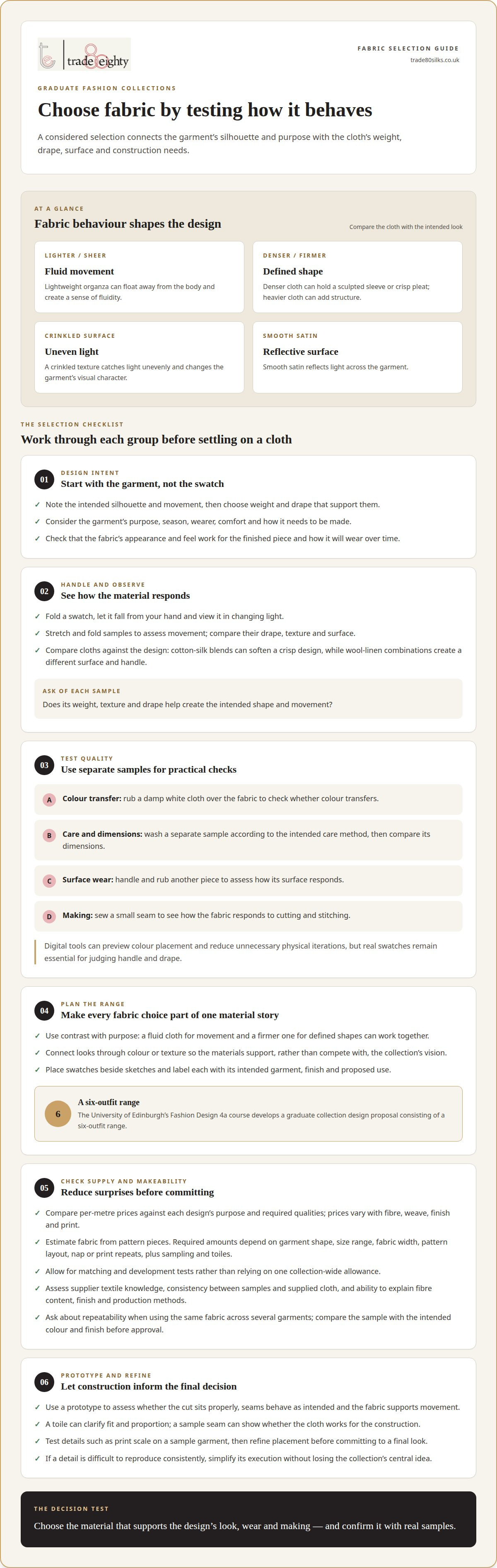
Fabric weight changes a silhouette’s volume, movement and presence. Lightweight, sheer organza can float away from the body, while denser cloth can hold a sculpted sleeve or crisp pleat. Texture matters too: a crinkled surface catches light unevenly, whereas smooth satin reflects it across a garment. These qualities affect both a design’s appearance and how a piece feels to wear. Fold a swatch, let it fall from your hand and view it in changing light. These simple tests show whether the material’s behaviour supports the design’s intent.
For UK fashion design graduates, choosing fabric also means considering how pieces work together across a collection. The University of Edinburgh’s Fashion Design 4a course develops a graduate collection design proposal consisting of a six-outfit range. A coherent range might use one fluid cloth for movement and a firmer contrast for defined shapes, with colour or texture connecting the looks. Fabric swatches placed beside sketches help communicate those decisions in a presentation. Label each sample with its intended garment, finish and proposed use, so the rationale remains clear to tutors and makers.
Per-metre fabric prices vary with fibre, weave, finish and print, so compare materials against each design’s purpose and required qualities. The amount needed for a graduate fashion collection depends on garment shape, size range, fabric width, pattern layout and details such as nap or print repeats. Sampling and toiles also use material. Estimate each look from its pattern pieces, then allow for matching and development tests instead of relying on one collection-wide allowance.
Plan a swatch assessment to test quality: rub a damp white cloth over the colour to check for transfer, then wash a separate sample according to the intended care method and compare its dimensions. Handle and rub another piece to assess surface wear, and sew a small seam to see how the fabric responds to cutting and stitching. Digital design tools can preview colour placement and reduce unnecessary physical iterations, but real swatches remain essential for judging handle and drape. Used together, digital studies and targeted sampling support creative development while helping limit avoidable material waste.
How Do Brands Balance Creativity and Practicality?
A graduate collection balances a distinct creative point of view with garments that can be worn and made. The F&F design brief asked students to demonstrate strong design and fabric selection alongside retail practicality.
Creative vision and practical needs
Creative vision and practical needs meet when a design’s appearance, use and production method support one another. A striking concept must still function as a garment. A dramatic sleeve, for example, needs to allow movement and have a construction method that brings its intended shape to life. Consider occasion, comfort and making requirements alongside silhouette, surface and colour. This balance gives innovation a practical foundation without making every look conventional.
Community-led research can give that balance a meaningful point of reference. Senuji de Silva’s graduate collection explored a family story through a fusion of Portuguese and Sri Lankan silhouettes. When work draws on community or heritage, engage with the people and references informing the concept, then translate those insights into considered design choices. A fabric’s finish, pattern or movement can support the story, while garment function keeps the wearer present in the final outcome.
Research, sampling and final outcomes
Creative research, sampling and final outcomes form a connected design process: research establishes intent, samples test decisions, and finished garments show what works. An initial idea can change when it meets the demands of construction and wear. You might test a print scale on a sample garment, then refine its placement before committing it to a final look. Recording why you made each change helps the final presentation communicate a deliberate development journey.
Sampling also reveals production needs before final decisions are fixed. A sample seam can show whether a chosen cloth works for the design’s construction, while a toile can clarify fit and proportion. If a detail proves difficult to reproduce consistently, simplify its execution without losing the collection’s central idea. The final range then reflects both creative ability and a clear understanding of how design choices shape making, wear and presentation.
How Do Fashion Brands Choose the Right Fabrics?
Choose fabrics by matching each garment to its purpose, season, visual character and construction needs. For a graduate collection, note the intended silhouette and wearer, then compare samples for drape, durability and response to cutting and sewing. Cotton-silk blends can soften a crisp design, while wool-linen combinations create a different surface and handle. Stretch and fold each sample to assess its movement, then test a prototype before settling on the material. Thoughtful fabric selection for graduate fashion collection work connects these practical observations with the collection’s wider creative direction.
Supplier selection affects whether the fabric received matches the sample and performs as expected. Assess the supplier’s textile knowledge, consistency between samples and supplied cloth, and ability to explain fibre content, finish and production methods. Ask about repeatability when a design uses the same fabric across several garments. Clear answers and consistent samples help you plan production with fewer surprises. Compare the sample with the intended colour and finish before approving it.
Experimental prototyping turns a visual concept into a garment that can be assessed in practice. A small test piece can reveal whether a contemporary cut sits properly, seams behave as intended, and a blend supports movement. Record the result beside the design drawing, then adjust the pattern or fabric choice. This lets innovation develop through evidence, not appearance alone.
UK fashion students can source sustainable or deadstock materials through deadstock textile suppliers, reclaimed-fabric outlets and university reuse schemes. Deadstock may provide a distinctive material for a limited design, while reclaimed textiles can support an upcycling concept. Check that the available quantity suits the pattern layout and sampling requirements before building a look around it.
Ethical sourcing starts with examining the evidence behind supplier claims. Seek clear information about fibre composition, material origin and relevant production stages, then match documentation to the specific fabric. For recycled-content claims, look for details identifying which fibre or component they cover. Keep this information with the swatch and design notes, so the collection reflects the material’s documented provenance. This makes fabric selection for graduate fashion collection projects more considered and easier to explain in a final presentation.
Graduate fashion collections
A graduate collection brings research, design and making together in a body of work with a clear point of view. For independent designers, fabric can become part of that authorship: a traditional weave may carry heritage, while an unexpected finish can make a familiar silhouette feel contemporary. Develop the material story alongside the concept rather than treating cloth as a final decorative choice.
Graduate Fashion Week brought together more than 3,500 graduating students from 70 universities. This breadth of work makes a distinct material language valuable. A designer might use one textile to create continuity, then introduce a contrasting surface where the story shifts. Each choice can reflect the research, intended wearer and craftsmanship visible in the finished garment.
Material decisions can also make a collection’s values clear. Organic cotton, bamboo, Tencel, hemp and recycled polyester are examples used in sustainable fashion collections. Their relevance depends on the design brief and required qualities, not simply the fibre label. Consider how each material will be cut, assembled, worn and cared for, then explain its role in the final presentation.
Development is strongest when every look contributes to the whole. Map each garment against the collection’s palette, construction language and intended use, then identify where a material variation adds meaning. A traditional cloth might anchor a contemporary shape, while a lighter textile creates contrast through movement. This approach helps the range feel considered without making every outfit identical.
The Graduate Fashion Foundation has supported multidisciplinary fashion graduates since 1991 and paired 27 emerging young talents with industry mentors. Treat material choices as part of a wider professional conversation: communicate the design rationale, show how the fabric serves the garment, and make craftsmanship visible through considered cutting and finish. A well-developed collection gives each material a purpose while preserving an independent creative voice.
Trade80Silks UK: Bespoke Fabric Commissions
Trade80Silks UK offers Bespoke Fabric Commissions for graduate designers developing a material idea around a collection’s distinctive visual language. This route is useful when an existing fabric does not achieve the desired print, weave or surface treatment. A commission can bring a considered design concept into the fabric itself.
For ready-to-explore options, Crinkle Silk Satin ( #167 ), Printed Silk Organza ( PS PEG 5 ) and Printed Tulle ( PS PET 3x ) offer different foundations for movement, transparency and texture. The right choice depends on the garment and the effect you want to create, from a softly rippled surface to a printed sheer layer. Share your collection concept with Trade80Silks UK to discuss a fabric direction.
Let your material choices shape the next step
A collection’s material story can continue to develop beyond the final presentation. For your next project, keep a record of the decisions that made each fabric feel right: how it supported a silhouette, expressed an idea or changed a garment’s character. Those observations can provide a useful starting point for future work and help you refine your creative language with intention.
A considered approach to fabric selection for a graduate fashion collection isn’t about following a fixed formula. It’s about choosing materials that give your ideas form, while remaining attentive to how those choices translate into finished pieces. If a design calls for a particular surface, print or hand, a bespoke commission may help you explore that direction.
Contact Trade80Silks UK about fabric to discuss a material direction for your next collection. Let your ideas lead, and give them room to take shape in cloth.
Frequently Asked Questions
What Are The Most Important Things To Look For When Sourcing Cloth?
Look beyond the face of the cloth to its usable width, grain, repeat and consistency. A large print repeat can affect pattern placement, while a directional pile may require every pattern piece to face the same way. Check samples for visible flaws and compare them under the lighting used for your presentation. These details help you judge how much fabric is genuinely usable and how it will look when made up.
What Role Does Fabric Sourcing Play in Brand Identity?
Fabric sourcing shapes brand identity through the textures, finishes and material choices that recur across designs. A label favouring crisp, architectural forms may develop a different signature from one built around soft movement and delicate surfaces. Consistent choices can make a collection recognisable without repeating the same garment. Record why each material belongs in the range, so your sourcing decisions support a coherent design language.
Why Do Designers Work with Specialist Fabric Suppliers?
Designers work with specialist fabric suppliers for focused textile knowledge and materials suited to considered design requirements. A supplier familiar with silk, organza or tulle can explain differences in surface and construction behaviour, informing sampling and pattern decisions. Specialist sourcing can also lead to a discussion about bespoke fabric development when an existing cloth cannot express the intended finish or print.
Why Is Fabric Selection So Important in Fashion Design?
Fabric selection matters because cloth influences how a pattern becomes a finished garment, from seam definition to the way a hem hangs. A sharply tailored jacket, for example, needs material that supports its form without obscuring the intended cut. The same pattern in softer fabric may create a different proportion. Choosing with the garment’s construction in mind helps the finished piece express the original design more faithfully.
Which fabrics suit different garment types and silhouettes?
Silk satin can suit fluid dresses and bias-cut shapes, while organza can add a translucent layer or volume without hiding the garment beneath. Tulle is often used for layered effects, and firmer cloth can help a structured jacket retain its outline. These are starting points, not fixed rules: the pattern, lining and intended movement all affect the result. Test the fabric in the garment’s key construction details.
How do fabric composition, weight, drape and stretch affect garment design?
Composition influences a cloth’s handle and care needs; weight affects how it hangs, while drape describes its fall around the body. Stretch can provide ease, but recovery matters: fabric that stays distorted may change a close-fitting garment’s shape. Consider these qualities together. Lightweight stretch fabric behaves differently from a similarly light woven cloth, so assess the sample in the pattern area where movement or strain will be greatest.


