

The most beautiful cloth isn’t always right for the garment. Searching for “couture fabric supplier uk” means finding materials that meet a design’s specific needs, from fluid drape and subtle lustre to structure, finish and the quantity required.
Look beyond a striking first impression. Consider how the fabric feels and falls, whether it suits the garment’s construction, and how much you need to source by the metre or roll. For a distinctive design, bespoke development can also help translate an original idea into a textile with its own character.
Trade80Silks UK supplies curated silk and natural fabrics, as well as bespoke development including jacquard weaving, embroidery and digital printing onto silk substrates. This guide explains how to assess hand, finish and structure, what to look for in a fabric supplier, and how to prepare a clear sourcing brief around your design and production needs.
Key Takeaways
- Choose fabric by comparing its hand, surface and drape with the garment’s structure and intended use.
- Assess silk, organza, tulle and other natural fabrics against the qualities your design needs.
- When choosing a couture fabric supplier uk, consider textile expertise, project communication and purchasing formats as well as the catalogue.
- Explore bespoke development when an existing fabric does not deliver the surface or character your design requires.
- Prepare a sourcing brief that covers the intended garment, colour direction, desired feel and project scale.
What a couture fabric supplier should bring to a fashion project
A couture fabric supplier brings together distinctive materials and textile knowledge to help a design move from concept towards construction. The supplier’s role is to provide and develop fabric, rather than make the finished garment. In practical terms, a couture fabric supplier matches textiles and relevant expertise to a garment’s design, construction and production needs.
Fabric is more than a colour or fibre choice. Its hand, drape, structure, surface and finish affect how a silhouette falls, moves and can be cut and assembled. Start with the garment brief: a sheer layer, a sculptural bodice and a softly draped panel each call for different qualities. Compare fabrics against the job they need to do, not just how they look on a roll.
The relationship between couture, craft and individual expression is explored in this overview of Haute Couture. For a designer, the practical starting point is to describe the garment’s intended use and construction, then identify the qualities the textile needs to contribute.
How couture sourcing differs from general fabric shopping
General fabric shopping may start with a broad category or appealing colour. Couture sourcing starts with the design brief. A crisp fabric may help a form hold its line, while a supple cloth may create more fluid movement. Texture and lustre can also change how a design reads under light. Consider these qualities together to judge whether a material supports the silhouette and construction, rather than choosing by appearance alone.
Trade80Silks’ curated silk and natural fabrics include organza and tulle, as well as options such as raw and sand-washed silk. For a project that needs a more individual direction, its bespoke development includes jacquard weaving, embroidery and digital printing onto silk substrates.
Which buyers benefit from specialist fabric supply
Specialist fabric supply can support couture designers, fashion houses, bridal designers and costume buyers working on a one-off piece, a sample or a planned production run. Each brief needs its own balance of appearance, handling and quantity. A textile suited to one statement garment may call for a different sourcing plan when the design is to be repeated.
Trade80Silks supplies designers and manufacturers by the metre or by the roll, providing purchasing formats for different project scales. The independent fabric merchant was founded in 1980 and brings over 35 years of industry experience to material selection and development. For anyone searching for a couture fabric supplier uk, the value is in finding a distinctive textile that also meets the practical demands of design and production.
Match couture fabric types and qualities to the design brief
A material’s reputation cannot tell you whether it will work for a particular design. Begin with the silhouette, construction and movement, then compare the fabric’s surface and behaviour with the brief. A sheer textile can add depth through layering, while a more defined surface creates a different visual effect. The right choice depends on how the cloth will be used and combined.
Choose fabric by structure, drape and finish
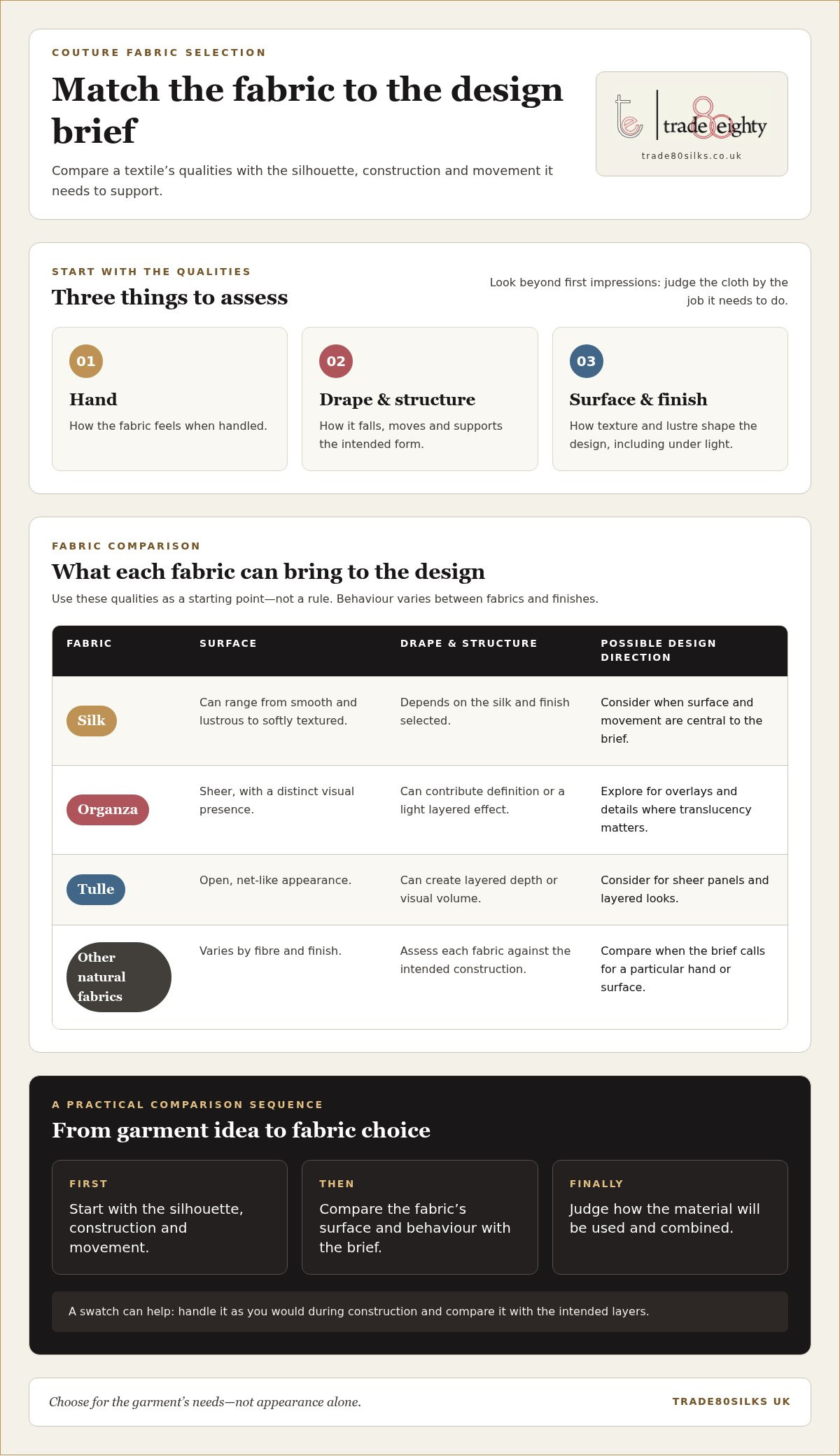
Assess the fabric as a whole: how it feels, how it falls when held or arranged, and how its finish responds to light. If you have a swatch, handle it as you would during construction and compare it with the intended layers. Consider whether it supports a fluid line, a more structured form or a layered effect. Use the comparison below as a starting point, not a rule, because qualities vary between fabrics and finishes.
| Fabric type | Surface | Drape and structure | Possible design direction |
|---|---|---|---|
| Silk | Can range from smooth and lustrous to softly textured | Depends on the silk and finish selected | Consider for designs where surface and movement are central to the brief |
| Organza | Sheer, with a distinct visual presence | Can contribute definition or a light layered effect | Explore for overlays and details where translucency matters |
| Tulle | Open, net-like appearance | Can create layered depth or visual volume | Consider for sheer panels and layered looks |
| Other natural fabrics | Varies by fibre and finish | Assess each fabric against the intended construction | Useful to compare when the brief calls for a particular hand or surface |
Trade80Silks’ range includes silk, organza, tulle and other natural textiles, including printed silk organza and printed tulle. For more detail on the qualities to compare when choosing silk, read the couture silk structure, drape and finish guide.
Consider bridalwear, layered looks and sheer details
Organza and tulle can introduce translucency and visual dimension, but the effect depends on the pattern, layers and intended finish. Bridal designers can compare these qualities with the effect they want from silk; costume buyers may focus on how surface and movement support a character or stage look. For broader sourcing context, The Business of Fashion covers fashion’s business and supply-chain considerations.
For printed tulle ideas, explore the printed tulle fabric selection guide. If silk is central to a bridal brief, the bridal silk supplier checklist offers a focused companion. When comparing materials for your own design, browse silk and natural fabrics and note the qualities your construction requires.
Assess a couture fabric supplier beyond the fabric catalogue
A catalogue is a starting point. Couture sourcing also depends on relevant material knowledge, purchasing formats that suit the project and clear communication about its requirements. Together, these help you move from browsing to a considered sourcing decision.
Assess a couture fabric supplier by the relevance of its materials, the depth of its textile expertise and the clarity of its project communication. This framework can help you judge how well a supplier’s offer fits your work, whether you are developing a single look or planning a production run.
Look for relevant material knowledge and a considered range
Start with the project’s fibre, finish and design requirements. A range that includes silk, organza, tulle and other natural textiles gives you options across different material categories. The aim is not simply to find a prestigious-sounding fabric, but to select a material that belongs in the design and supports its intended use.
Trade80Silks is an independent fabric merchant founded in 1980, with over 35 years of industry experience serving designers and manufacturers. Its curated selection includes silk and natural fabrics, and its bespoke development capabilities include jacquard weaving, embroidery and digital printing onto silk substrates. These options are relevant when a project calls for a particular textile direction as well as an existing material.
Consider purchasing format and project communication
Buying by the metre may suit a one-off design, a sample or a smaller project requirement. Buying by the roll may suit a larger production need. Choose a format based on the intended use and scale, and include those details in your sourcing brief so the discussion can focus on the fabric and quantity required.
A concise brief can include:
- Intended garment or project use
- Desired fibre, surface and finish
- Design qualities the fabric should support
- Whether you are sourcing by the metre or by the roll
Clear information helps focus the discussion on suitable materials and, where relevant, a bespoke development approach. Trade80Silks supplies fabric by the metre or roll to designers and manufacturers, supporting projects at different scales. When choosing a couture fabric supplier uk, compare how well the range, textile knowledge and purchasing formats align with the work you are preparing.
When bespoke fabric development is right for couture
Bespoke development is most useful when the fabric needs to carry a defining part of the design. If an existing textile already meets the brief for hand, surface, colour direction and behaviour in construction, choosing it may be the more direct route. A custom commission offers another option: shaping the textile around a visual idea instead of adapting the design to an available surface.
For a couture fabric supplier uk, bespoke capability extends the conversation beyond selecting from a curated range. Trade80Silks offers custom jacquard weaving, embroidery and digital printing onto silk substrates, giving designers different ways to develop pattern and surface detail for a project.
Choose between curated fabrics and a bespoke commission
Choose an existing fabric when its qualities already answer the design brief. Consider a bespoke direction if the project calls for a distinctive pattern, a particular embroidered detail or a printed design on silk. Use these questions to make the decision:
- Distinctiveness: Does the design depend on a textile expression that an existing fabric does not provide?
- Surface detail: Is the concept best expressed through woven pattern, embroidery or digital print?
- Project requirements: How do the intended garment, construction and production scale shape the material brief?
If the design does not rely on a specific custom surface, an existing fabric may keep sourcing simpler. If its identity depends on a particular textile detail, bespoke development can help bring that intention into the material itself. Let the creative brief and production needs, rather than the appeal of customisation alone, guide the choice.
Prepare a useful brief for custom textile development
A clear brief gives development a practical starting point. Describe the visual effect you want, the material direction and the intended application. Include relevant references or artwork, and explain the fabric’s role in the garment, including construction considerations that may affect the choice.
Then identify the technique that best reflects the concept. Custom jacquard weaving may suit a brief centred on woven pattern; embroidery can create stitched surface detail; digital printing onto silk substrates provides an approach for printed artwork. Describe what you want the fabric to express as well as any preferred technique.
To explore the available approaches, view bespoke fabric development and shape your enquiry around the design, material direction and project requirements.
Plan your couture fabric sourcing and take the next step
A clear sourcing process connects the design idea to a material decision. Before making an enquiry, set out what the garment needs to do, how it should look and feel, and how much fabric the project requires. This gives the discussion a practical starting point and keeps the design priorities in view.
A practical sequence from concept to fabric selection
Work through the brief in stages. First, describe the garment’s structure, movement and visual character. A design that needs a defined shape has different material requirements from one intended to flow or layer. Next, shortlist suitable fibres and finishes, noting whether a sheer or textured surface is central to the design.
Then decide whether an existing fabric meets the brief or whether bespoke development would serve it better. If a material has the right character, colour direction and finish, selection may be straightforward. If the design depends on a particular surface treatment or textile detail, include that requirement in your development brief.
Bring your sourcing brief to Trade80Silks UK
Before approaching a couture fabric supplier uk, gather the details that will make your enquiry precise:
- Intended garment: Describe the piece and the role the fabric will play.
- Desired hand and movement: Note whether you want a fluid, crisp, sheer or textured quality.
- Surface and colour: Record any pattern, finish or colour direction central to the design.
- Project scale: State whether you are considering fabric by the metre, by the roll or bespoke development.
Trade80Silks supplies silk and natural fabrics by the metre or roll to designers and manufacturers. Its bespoke development includes jacquard weaving, embroidery and digital printing onto silk substrates. Bringing together the design intention, required material qualities and project scale gives your sourcing discussion a focused starting point, whether you are selecting from the curated fabric range or developing a custom textile.
Explore couture fabrics and bespoke services to take your brief forward.
Make your next fabric decision with confidence
A considered fabric choice begins with the garment, not simply the appeal of a textile. Match hand, drape, surface and finish to the intended silhouette and construction, then account for project scale when deciding whether to source an existing fabric by the metre or roll. If the design calls for a distinctive surface, bespoke development offers a way to express it in the textile.
When choosing a couture fabric supplier uk, look for relevant textile expertise and sourcing options that support your brief. Trade80Silks was founded in 1980 and brings over 35 years of industry experience to its curated silk and natural fabrics, supplied by the metre or roll. Its bespoke capabilities include jacquard weaving, embroidery and digital printing onto silk substrates.
Bring your intended garment, desired material qualities, colour direction and project scale into the conversation. Explore couture fabrics and bespoke textile services to find materials suited to your design.
Frequently Asked Questions
What should I look for in a couture fabric supplier in the UK?
Look for a considered material range, relevant textile knowledge and purchasing formats that suit your project. A couture fabric supplier uk should help you assess how a fabric’s hand, surface, drape and finish relate to the garment’s design and construction. Trade80Silks supplies silk and natural fabrics to designers and manufacturers by the metre or roll, and offers bespoke development through jacquard weaving, embroidery and digital printing onto silk substrates.
How do I choose fabric for a couture garment?
Begin with the garment’s intended silhouette, construction and movement, then compare fabrics by hand, drape, structure, surface and finish. A fluid design may need different qualities from a garment that calls for a more defined form, while layering can make translucency an important consideration. Judge the material against the whole design rather than choosing by fibre or colour alone. A clear brief helps narrow the options.
Can a fabric supplier create bespoke couture fabric?
Yes. Trade80Silks offers bespoke fabric development, including custom jacquard weaving, embroidery and digital printing onto silk substrates. These techniques provide different ways to express pattern or surface detail in the textile. Start by describing the visual effect you want, the material direction and how the fabric will be used. The development approach can then be considered in relation to the design brief.
What is the difference between buying fabric by the metre and by the roll?
Buying by the metre can suit a one-off garment, a sample or a project with a smaller fabric requirement. Buying by the roll may suit a larger production need. The right format depends on the project’s scale and intended use. Trade80Silks supplies fabrics in both formats for designers and manufacturers with different purchasing requirements.
Which fabrics are commonly considered for couture and bridalwear?
Silk, organza, tulle and other natural fabrics may all be considered, depending on the design and construction. Organza and tulle can contribute sheer layers or visual dimension, while silk offers a range of possible surfaces and finishes. The most suitable option depends on the intended silhouette, movement and overall effect, not simply the garment category. Compare each material’s qualities with your brief.
When should I commission bespoke fabric instead of choosing existing cloth?
Consider bespoke development when a design depends on a pattern or surface treatment that an existing fabric does not provide. Custom jacquard weaving, embroidery or digital printing onto silk substrates can help express that direction. If an existing fabric already meets the design’s needs for hand, finish and appearance, selecting it may be simpler. Let the design’s distinctiveness and the project requirements guide the decision.
What information should I include in a couture fabric sourcing brief?
Include the intended garment, how the fabric will be used and the qualities it needs to support, such as a particular hand, movement, surface or finish. Add your colour direction, any pattern or visual references, and the project scale. State whether you are considering fabric by the metre, by the roll or bespoke development. Include a preferred technique, such as embroidery or digital printing, if you have one.


