

What makes crinkle silk satin fabric distinctive may also determine whether it suits your design. Its satin-like surface and visible texture can catch the light differently across a garment, so a brief product description may not answer practical questions about appearance or handling. Before choosing it, consider the finish you want and how the fabric needs to behave during cutting, sewing and care.
This guide explains how to assess the surface and movement, compare the fabric with your project’s requirements, and check the details that matter before ordering. You’ll find questions to ask about composition, width, weight, finish, colour and care, plus ways to use a sample if one is available. Trade80Silks UK lists Crinkle Silk Satin (#167) alongside other silk and natural fabrics. Use the checks below to decide what to confirm before committing to a project.
Key Takeaways
- Understand how a crinkled surface can affect satin’s appearance, and why the fabric name alone doesn’t confirm its fibre composition.
- Assess crinkle silk satin fabric by its surface, movement and making requirements before matching it to a design.
- Compare your project’s needs with the fabric’s confirmed texture and drape. Eveningwear and couture are contexts to explore, not automatic fits.
- Before ordering, confirm composition, width, weight, finish, colour and ordering unit, and ask whether a sample is available.
- Trade80Silks UK lists Crinkle Silk Satin (#167). Check its current product details with the supplier before ordering.
What is crinkle silk satin fabric, and what makes its surface distinctive?
Crinkle silk satin fabric combines a satin-like surface character with a visibly textured appearance. The name alone doesn’t confirm the exact fibre content or how the texture was created. Satin describes a surface effect associated with a satin weave, rather than a fibre. Silk, polyester and other fibres can be used in satin fabrics, so treat composition as a separate specification to check.
A crinkled surface adds variation to an appearance that might otherwise be expected to look smooth. Depending on the fabric’s construction and finish, the texture may catch light unevenly and add visual interest without a print or applied embellishment. These are general observations, not confirmed details of a particular product. Inspect a sample or request product information before using these qualities as the basis for a design decision.
Trade80Silks UK lists Crinkle Silk Satin (#167). The precise composition and finish aren’t stated here, so check the current product listing or ask the supplier before ordering.
How does crinkle texture change the look of satin?
Texture can make a surface look less uniform than smooth satin, with variations in how light reflects across it. The depth, regularity and prominence of the crinkle can’t be assumed from the product name. If consistency matters to your design, inspect the fabric in different lighting and look at enough of it to see how the texture reads across a larger area.
For couture or eveningwear, surface detail may contribute to the design, but it doesn’t guarantee a particular lustre, softness or drape. Assess those qualities on the actual fabric rather than inferring them from its name.
What should “silk satin” tell a fabric buyer?
Read “silk satin” as a description of a fabric category, not a complete technical specification. The term doesn’t confirm fibre percentages, finish or care requirements. Check the product listing for composition and ask the supplier to clarify anything missing or ambiguous before committing. For Crinkle Silk Satin (#167), verify these details directly instead of relying on the name alone.
These terms can help you describe what you’re looking for:
- Satin: A fabric surface associated with a satin weave, often recognised by its smooth appearance.
- Lustre: The way a surface reflects light and appears to shine.
- Drape: How fabric hangs and folds under its own weight.
- Crinkle: A visibly uneven or ridged surface effect. Its precise form depends on the fabric.
How does crinkle silk satin behave in a finished design?
A fabric’s behaviour becomes clear in the design, not from its name alone. Satin is often chosen for its smooth surface and light-reflecting character, but those general qualities don’t tell you exactly how a particular crinkle silk satin fabric will drape, move or look once cut and sewn. Fibre content, construction and finish all matter. Trade80Silks UK lists Crinkle Silk Satin (#167), but check the current product information or assess a sample, if available, to understand its handling characteristics.
Silk has a long history as a valued textile, explored in Britannica’s account of the history of silk. That history doesn’t determine how a modern fabric will behave. For a design decision, assess the material itself.
Before committing, check the fabric’s drape, surface consistency, movement and directional effects. Consider how it responds to handling in the intended pattern and lighting.
Which design details make the fabric’s texture more or less prominent?
Gathers and pleats bring fabric together in folds, which may make surface variations more noticeable. Broad, uninterrupted panels can help you judge how evenly the texture extends across an area. Seams interrupt the surface, so consider their placement in relation to the fabric’s character. The result depends on the material and construction, so inspect the cloth rather than assuming how it will look.
View a sample in lighting similar to that planned for the finished piece, then arrange it in a shape close to the intended silhouette. A fluid design may reveal different qualities from a closely fitted or structured form. Check the fabric both at rest and in motion.
What should makers consider when cutting and sewing satin?
Smooth satin fabrics can shift during handling, so test the actual material before cutting project pieces. Use a sample to trial your planned stitching and pressing approach, and note whether handling changes the surface or crinkle. Don’t assume the same needle, thread or pressing method will suit every satin. Confirm suitable choices using reliable guidance for the specific fabric.
Before laying out a pattern, check whether the fabric has a nap or directional effect, and whether pieces need to face the same way. This matters if the surface looks different when turned or viewed from another angle. A small layout test can reveal potential mismatches before you cut the main pieces.
If you’re planning a design around a particular drape or finish, you can discuss your fabric requirements with Trade80Silks UK before ordering.
Is crinkle silk satin right for your project? Compare the design requirements
Choose by the effect your design needs, not by the fabric name alone. Crinkle silk satin fabric may be worth considering when surface texture is part of the intended look. Whether it suits eveningwear or couture depends on the actual cloth, its confirmed specifications and how it works with your pattern. Use the table as a starting point for comparison, not as a promise of performance.
| Project requirement | What to consider | What to verify |
|---|---|---|
| Surface interest | A textured finish may suit a design where the fabric itself contributes visual detail. | Inspect the actual surface and consider whether its texture suits the scale and placement of the garment panels. |
| A uniformly smooth appearance | A smoother satin may be a closer match if the design depends on an even, uninterrupted surface. | Compare samples in the intended lighting. Don’t assume the product name tells you how pronounced the texture is. |
| Defined structure or transparency | If the silhouette depends on body or sheerness, compare textiles with those specific qualities in mind. | Confirm composition, weight, finish and opacity rather than inferring them from “satin” or “silk”. |
| Fluid movement | The pattern and the desired movement need to work with the fabric’s actual drape. | Assess a sample in a shape that approximates the intended silhouette, if a sample is available. |
Which projects may suit a textured satin finish?
Consider crinkle satin when surface character supports the design, perhaps as a deliberate detail in an eveningwear or couture concept. These are possibilities to explore, not recommendations for every garment. A close-fitting pattern, a softly falling silhouette and gathered panels each place different demands on fabric. Compare the confirmed weight, composition and movement with the pattern before deciding.
When should you compare crinkle satin with another fabric?
If you want a very smooth finish, a particular degree of transparency or a more defined silhouette, compare fabrics against that specific requirement. Silk organza may be worth considering where the design calls for a different balance of sheerness and structure, but check the actual cloth rather than relying on category labels.
For a design where surface or silhouette needs to be precise, compare samples in the intended lighting and pattern context. Final suitability depends on the material, the design and confirmed product details. Trade80Silks UK lists Crinkle Silk Satin (#167); confirm its current specifications with the supplier before making a project decision.
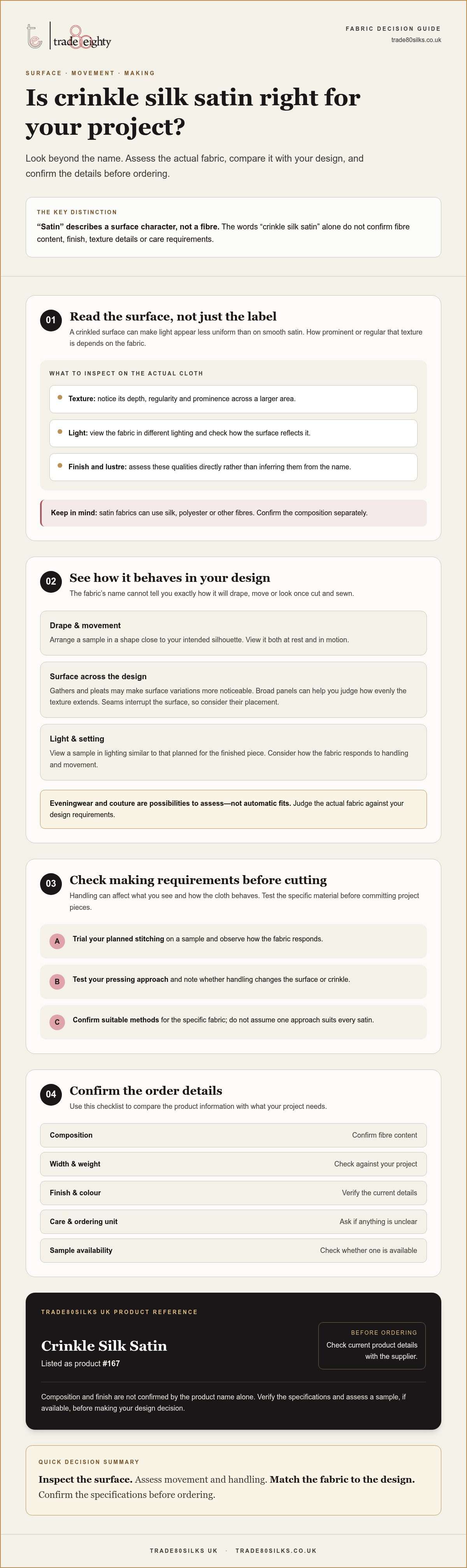
How to assess crinkle silk satin before placing a fabric order
A product description is a starting point, not a substitute for checking whether the cloth suits your design. Before ordering crinkle silk satin fabric, confirm the specifications that affect your pattern, appearance and making process. If a sample is available, use it to assess the material. Don’t assume a sample is available or infer unlisted product details.
Which fabric specifications should you confirm with the supplier?
Use this checklist to clarify details that influence suitability and quantity. For Trade80Silks UK’s Crinkle Silk Satin (#167), ask the supplier to confirm anything not included in the current product information.
- Composition: Confirm the fibre content and percentages rather than relying on the fabric name.
- Usable width: Check the width available for pattern placement, especially if it differs from the overall fabric width.
- Weight: Ask for the stated weight and how it is measured, particularly if the silhouette depends on a certain body or fluidity.
- Finish and colour: Confirm the surface finish and the precise colour against current product details.
- Care information: Request fabric-specific care guidance before deciding whether it suits the intended use.
- Stock and ordering unit: Check current stock status and whether the fabric is sold by the metre, roll or another unit.
- Sample availability: Ask whether a sample can be provided and what it will help you assess.
Verify the fabric’s specifications before cutting or ordering the quantity required for your project.
How can a sample help you plan a project?
If available, view a sample in lighting similar to where the finished piece will be worn or shown. Compare its colour and surface, handle it to assess movement, and check whether the texture looks consistent across the piece. A sample is a practical way to evaluate the material before committing to a pattern, though it may not represent every metre identically.
Test a small construction sample using the seam, pressing and finishing methods you’re considering. Confirm suitable needle, thread and pressing guidance for the specific fabric rather than applying general assumptions about satin. If weight is your main concern for bridalwear, compare the available fabric information with the needs of your design.
Estimate quantity from the pattern pieces and the confirmed usable width. Allow for seam allowances, layout, directional effects and any surface repeat. Lay out the pieces on paper or a planning surface of similar width. If the material needs a consistent orientation, account for that before calculating the order. Recheck the layout if the pattern changes.
For help clarifying specifications and ordering details, discuss your fabric requirements with Trade80Silks UK before placing an order.
Explore Trade80Silks UK’s crinkle silk satin and plan your next step
Trade80Silks UK lists Crinkle Silk Satin (#167) among its fabric offerings and has supplied designers and manufacturers since 1980. Its experience can provide context for a project discussion, but it doesn’t establish the current specifications or performance of this particular fabric. Before selecting crinkle silk satin fabric, confirm the details that matter to your pattern and intended finish directly with the supplier.
The business sells fabric by the metre or roll, but check the current product information for the ordering options for this specific fabric. A clear outline of your requirements can make an enquiry more productive and help identify which details need confirmation.
What information should you have ready when making an enquiry?
Share a concise outline of the project, including the type of piece you’re developing, your estimated quantity and the timeframe you’re working towards. This gives the supplier context for your request, but doesn’t imply a particular stock position or delivery commitment.
It also helps to describe the colour, surface finish and construction needs you have in mind. Ask which specifications are currently available, including composition, width, weight and care guidance, and whether a sample can be provided. Confirm stock status and ordering unit before planning your final quantity.
When might bespoke textile development be relevant?
Crinkle Silk Satin (#167) is a listed fabric offering. Bespoke fabric commissions are a separate option for projects that may need development beyond a listed material. If your brief calls for a particular textile treatment, pattern or surface effect, describe the intended result and ask whether it could be considered as a bespoke commission. Confirm the technique and outcome with the supplier rather than assuming they are available.
Trade80Silks UK offers bespoke textile development, including custom-woven fabrics, jacquards, embroideries and digital prints. If one of these approaches may suit your brief, prepare a short outline of the intended use, visual references, required quantities and key material priorities. Discuss the process, specifications and ordering details before committing.
For a practical next step, contact Trade80Silks UK with your project brief and ask them to confirm the current details for Crinkle Silk Satin (#167), including sample availability and whether the quantity you need is available.
Make your fabric choice with confidence
Start with the needs of your design. Decide whether the crinkled surface suits the intended look, then assess the fabric’s movement and handling against your pattern. Before ordering, confirm composition, width, weight, finish, colour and ordering unit, and ask about a sample if one would help. These checks let you judge whether crinkle silk satin fabric is suitable for your project without relying on its name alone.
Trade80Silks UK lists Crinkle Silk Satin (#167) and has supplied designers and manufacturers since 1980. Confirm current product specifications and ordering details directly with the supplier before committing.
Have a project in mind? Contact Trade80Silks UK to discuss your crinkle silk satin requirements and confirm the details you need for your next step.
Frequently Asked Questions
What is crinkle silk satin?
Crinkle silk satin is satin fabric described as having a crinkled surface. The name indicates a surface character, but it doesn’t confirm the fibre content or explain how the texture was created. It also doesn’t tell you the fabric’s weight, width or care requirements. Check the current product specification and assess a sample, if one is available, before deciding whether it suits your garment or design.
Is crinkle silk satin made from 100% silk?
Not necessarily. A product name alone doesn’t confirm the precise fibre composition, so check the supplier’s current specification for the stated fibres and percentages. If the details aren’t listed, ask the supplier to clarify them before ordering. Composition can affect how a fabric feels, how it should be cared for and how it behaves during construction. Don’t base a project decision on a generic description alone.
What can you make with crinkle silk satin?
Suitability depends on the fabric’s confirmed composition, weight, finish and drape, as well as your pattern and intended result. A designer might consider it when a textured satin surface is part of the desired look, but that doesn’t mean it will suit every garment or silhouette. If a sample is available, assess it against the pattern and confirm the current product details before committing.
How do you sew crinkle silk satin?
Test a sample with your intended stitching and finishing methods before cutting the main pieces. Observe how the cloth responds to handling, seams and pressing, and follow reliable guidance suited to its confirmed fibre composition. Plan the pattern layout carefully, checking for any directional surface effect that could make pieces look different when turned. A small construction test can reveal handling considerations before they affect the finished design.
How much crinkle silk satin should I order?
Start with your pattern’s fabric requirements, then check the usable width and plan how the pieces fit across it. Allow for seam allowances, directional surface effects and any pattern or texture matching your design requires. Confirm the ordering unit before calculating the quantity, as product details can vary. If the width or ordering information isn’t available, ask the supplier rather than estimating from a general satin description.
How should crinkle silk satin be cared for?
Follow care guidance for the specific fabric, since composition and finish can affect suitable washing, steaming and pressing methods. Don’t assume every fabric sold as crinkle silk satin has the same requirements. Check the product information or ask the supplier before cleaning or applying heat. If you’re testing a finishing method, try it first on a discreet sample area and follow specialist guidance that matches the confirmed fibre content.
Can I assess crinkle silk satin before ordering?
Ask the supplier whether a sample is available and what you can assess from it. A sample may help you review colour, texture, movement and surface appearance under lighting relevant to your project. It won’t necessarily represent every metre identically, and it can’t confirm specifications such as fibre composition or width. Check those details separately against current product information before deciding on your order.