

A larger fabric order doesn’t automatically make a production run more secure. The right specification and a supplier who can answer your questions matter just as much. If you’re searching for “premium fabric by the roll uk”, you’ll want to check that the cloth suits your design and that the available quantity fits your production plan.
Ordering in volume raises practical questions as well as creative ones. How does the fabric handle and drape? How much do you need once sampling, cutting and possible wastage are considered? What should you confirm about availability and delivery before scheduling production?
This guide explains how to assess fabric suitability, estimate roll requirements and compare UK suppliers. It covers practical checks to make before ordering, including composition, width, roll length and availability. Trade80Silks UK supplies silk and natural fabrics in bulk, including silk organza and tulle, and offers bespoke textile development for projects that need a custom approach.
Key Takeaways
- Confirm what each supplier means by a roll, including its format and available quantity, before planning production.
- Match silk, organza or tulle to the design’s intended use, then check the specifications of the particular fabric.
- Compare suppliers on their material range, clarity of specifications and sourcing support. Ask about bespoke development if your project needs a custom textile.
- Estimate fabric use from your pattern layout, size range, repeats and usable width. Allow for any testing before confirming your quantity.
- Use this guide to source premium fabric by the roll uk, and explore Trade80Silks’ silk, organza, tulle and other natural fabrics for your project.
What does premium fabric by the roll mean for UK designers?
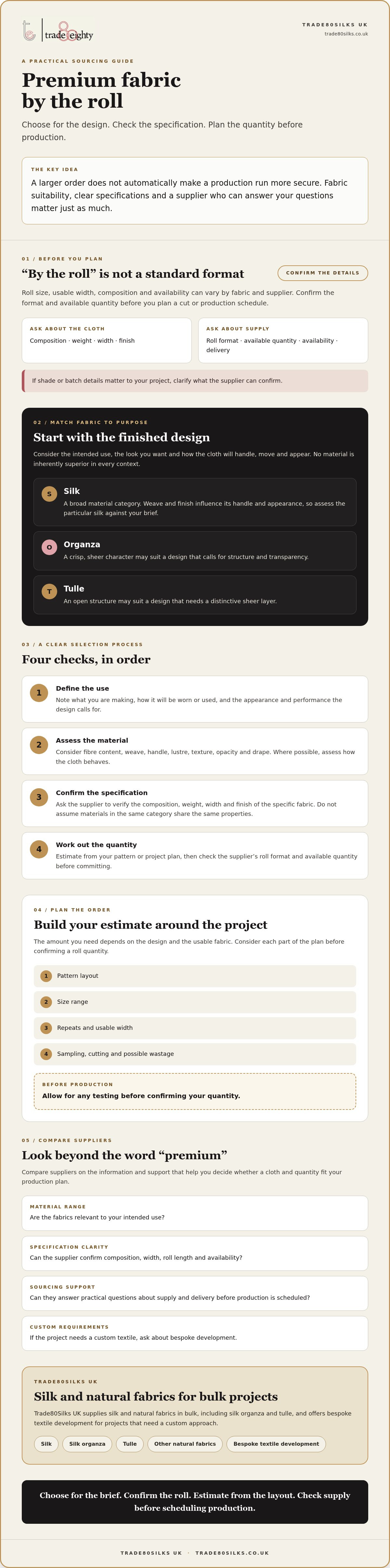
For a UK trade buyer, premium fabric by the roll means ordering a larger quantity of a selected fabric for a defined design or production need, with the roll format and specifications confirmed with the supplier. “By the roll” doesn’t describe a standard length or format. Roll size, usable width, composition and availability can vary by fabric and supplier, so check each detail before planning a cut or production schedule.
A larger order can help designers, studios and manufacturers source material for a collection or production run. It may also suit repeated designs that use the same fabric. However, the word “premium” alone doesn’t establish whether a cloth is right for your project. The global textile industry spans many fibres, constructions and processes, so assess the fabric itself against its intended use.
Who benefits from sourcing fabric in roll quantities?
Fashion designers may consider roll quantities for repeat styles, while bridal studios and costume teams may need planned supplies for coordinated pieces or multiple looks. Interior design professionals may also source larger quantities for a project, but should check that the material is appropriate for its intended application.
A larger order isn’t automatically the right choice. A small-run collection, one-off commission or early design trial may call for a more modest quantity. Let the production plan, rather than the idea of buying in bulk, guide the decision.
What makes a fabric premium rather than simply expensive?
Premium is a judgement against a brief, not a universal grade. Consider the fibre and construction, then assess the finish, handle and drape in relation to how the fabric will be used. A silk with a fluid fall may suit one design; organza’s crisp, sheer character or tulle’s open structure may better suit another. None is inherently superior in every context.
Before committing, check the supplier’s stated composition and available specifications. Consider how the fabric will be cut, handled and finished, and whether its surface, weight and movement support the intended result. Ask for the roll length, usable width and current availability. If shade or batch details matter to your project, clarify what the supplier can confirm. These checks help you decide whether the fabric and quantity are suitable, rather than relying on a marketing label.
Matching Premium Fabric to Design and Production Needs
Start with the finished design, not the material name. For a collection, costume brief or interior project, match the fabric’s movement, surface and structure to the intended result. Then confirm the specifications that will affect cutting and production. This makes a search for premium fabric by the roll uk more useful: you’re comparing fabrics against a specific brief, rather than choosing by category alone.
A practical selection process
- Define the use. Note what you’re making, how it will be worn or used, and the appearance and performance the design calls for. A fluid garment, a layered costume and a sheer decorative element may need different qualities.
- Assess the material. Consider fibre content and weave alongside handle, lustre, texture, opacity and drape. Where possible, assess how the cloth behaves instead of relying on a broad description.
- Confirm specifications. Ask the supplier to verify the composition, weight, width and finish of the specific fabric. Don’t assume that materials in the same category share the same properties.
- Work out the quantity. Once the material fits the brief, estimate requirements from your pattern or project plan. Then check the supplier’s roll format and available quantity before committing.
Which fabric characteristics should buyers assess first?
Fibre and construction influence how a cloth feels and falls, while its finish and surface affect its appearance. Lustre can create a subtle sheen or a more pronounced reflection. Texture may add depth, while opacity determines how much the layer beneath shows through. Drape matters too: a soft fall can support flowing shapes, whereas a more structured hand may help a design hold its form.
These are design considerations, not universal rankings. The right balance depends on the garment, costume or interior application and the effect you want. When comparing options, assess the fabric against the same requirements so you can judge which one is the closer fit.
How silk, organza and tulle serve different design needs
Silk is a broad material category, not a single interchangeable fabric. Weave and finish influence its handle and appearance, so compare the particular silk with your design brief. Organza can add a sheer, defined layer, while tulle may contribute an open, airy quality or visual texture. Their precise behaviour depends on the fabric, so check its specifications rather than relying on category expectations. Trade80Silks’ range includes silk, organza and tulle, including printed options.
Material choice is also part of wider conversations about responsible design and innovation in the sector. The UK Parliament’s evidence on the future of UK fashion and textiles offers broader context. To review available materials, explore Trade80Silks fabric options.
How to compare UK premium fabric suppliers before ordering
A supplier comparison should tell you more than the breadth of a fabric range. For a premium fabric by the roll uk order, look for clear answers that help you judge whether the material suits your brief and whether the available quantity fits your plan. Notice how the supplier responds to technical questions. Do they address each point, and are any uncertainties made clear?
| What to compare | Questions to ask |
|---|---|
| Fabric range | Does the selection include materials suited to your design, such as silk, organza or tulle? |
| Specifications | Can the supplier confirm fibre composition, usable width, finish and roll quantity for the specific fabric? |
| Sourcing support | Can they explain sample options, current availability and delivery arrangements for your order? |
| Bespoke capability | If standard fabrics don’t meet the brief, can they discuss relevant custom development and its requirements? |
Before ordering, confirm the selected fabric’s composition, width, finish, available quantity, sample options, current availability and delivery arrangements. If repeat orders or production batches matter to your project, ask how these are handled and what the supplier can confirm about consistency. Differences in width or composition can affect pattern yield, cutting plans and the finished result. Don’t assume a later order will match the first without checking.
What should a fabric supplier confirm before you commit?
Ask for details about the exact fabric you intend to order, not just a general description of its category. Clarify whether samples are available, what the supplier can confirm about current stock, and what delivery arrangements apply. If production depends on a repeat order, ask how batch differences are communicated and whether the material can be identified for future reference. These arrangements vary by supplier and fabric, so confirm them directly.
When is bespoke fabric development worth discussing?
Bespoke development may be worth exploring when a defined colour, pattern, texture or construction requirement isn’t met by standard materials. Trade80Silks’ development capabilities include custom jacquard weaving, embroidery and digital printing onto silk substrates. Before commissioning, discuss the design scope, technical requirements and project timing. Bespoke work is an option to consider when it fits the brief, not a necessary step for every collection.
A supplier’s experience can inform a useful conversation, but it doesn’t replace clear, project-specific answers. Trade80Silks supplies silk and natural fabrics to creative professionals. As with any supplier, confirm the specifications and arrangements that apply to your order directly.
How to plan a fabric roll order and reduce avoidable waste
Start your quantity estimate with the production plan, not an assumed standard roll length. Pattern layout determines fabric consumption because garment size, piece placement, fabric width, print repeats and directional features all affect how efficiently each length can be cut. A change in usable width or a need to match a print can alter the yield, so calculate for the specific project.
How can designers estimate fabric needed for a production run?
- Finalise the patterns and size range. Use approved pattern pieces and the intended size breakdown, rather than estimating from a sample garment alone.
- Set the production quantity. Calculate requirements across the planned unit count, including the different sizes and any design variations.
- Estimate fabric yield. Account for pattern layout, usable width, print repeats, directional nap and matching requirements where relevant. These factors affect how pieces fit together on the cloth.
- Allow for testing and project-specific contingency. Consider sampling, trial cutting or other checks required before production. Agree a sensible reserve with your pattern cutter or production team. There’s no universal extra percentage: the allowance depends on the fabric, design and production risks.
- Validate before ordering. Ask the pattern cutter or production team to review the estimate. Then confirm the selected fabric’s roll dimensions, continuity and usable quantity with the supplier.
Don’t assume a roll contains a particular length or one uninterrupted piece. Confirm the available quantity and whether it is continuous, since joins or separate lengths may affect your cutting plan.
What checks belong on a pre-order checklist?
Bring the key decisions together before placing a roll order. Record the fabric name or description, confirmed specifications, required quantity and intended use. Check that the approved sample or swatch corresponds to the material being ordered. Confirm current availability, delivery expectations and any considerations for repeat orders directly with the supplier.
Keep written confirmations alongside the approved swatch and production brief. This gives the team a reference during cutting and if a later order is needed. For repeat production, ask how changes between batches are handled and what details the supplier can confirm about the fabric supplied.
These checks are especially useful when sourcing premium fabric by the roll uk. Assumptions about width, continuity or usable quantity can disrupt an otherwise sound production plan. To review silk and natural fabric options, explore Trade80Silks fabric options.
Source premium fabric by the roll with Trade80Silks UK
For designers and manufacturers seeking premium fabric by the roll uk, Trade80Silks supplies silk and natural fabrics by the metre and in bulk to creative professionals across the UK. The curated range includes silk, organza and tulle, alongside other natural fabrics, for briefs across fashion, bridal, film and interior design. The right choice depends on the project, so confirm the composition, width, finish, quantity and current availability of the fabric you’re considering.
Trade80Silks was founded in 1980 and has more than 35 years of experience in the textile industry. That background can inform a sourcing conversation, while the practical details of each order should still be agreed directly. Roll dimensions, available quantities and delivery arrangements can differ, so establish what applies to your chosen material before finalising a production plan.
What can Trade80Silks help designers source?
The curated selection brings together silk, organza, tulle and other natural fabrics, giving designers different textures and material qualities to consider for a defined creative purpose. If a standard fabric doesn’t meet your brief, bespoke fabric commissions may be an option. Confirm the scope and feasibility of a custom project directly rather than assuming a particular finish, quantity or schedule is available. Check current arrangements for samples and supply details too.
How should a buyer begin a sourcing conversation?
A clear brief helps you discuss suitable materials and practical requirements. Before getting in touch, gather:
- Project use: what you’re creating and the qualities the fabric needs to provide.
- Material preferences: any requirements for fibre, texture, drape, opacity, colour or finish.
- Estimated quantity: your production estimate, including relevant pattern or cutting considerations.
- Timing: your target production schedule, so availability and delivery expectations can be discussed.
Include a relevant pattern reference, approved colour reference or technical specification if you have one. For bespoke development, outline the design intent and any particular requirements. Trade80Silks’ capabilities include custom jacquard weaving, embroidery and digital printing onto silk substrates. Ask which approach may suit the project and confirm the commissioning details before proceeding.
If you’re ready to explore a material or discuss a specific brief, discuss your fabric requirements with Trade80Silks. A clear conversation can help you identify what to confirm before moving from an initial design idea to a bulk order.
Make your next fabric order a considered one
A successful roll order aligns the creative brief with the production plan. Assess the fabric for its intended use, confirm specifications and availability with the supplier, then validate the quantity against approved patterns and cutting requirements. These steps bring clarity to a search for premium fabric by the roll uk.
Trade80Silks supplies a curated selection of silk and natural fabrics to creative professionals. For projects that need a distinctive material approach, bespoke development can include custom jacquard weaving, embroidery and digital printing onto silk substrates.
Whether you’re exploring fabrics for a new collection or refining a production requirement, begin with a clear brief. Discuss your fabric requirements with Trade80Silks and explore which materials may suit your project.
Frequently Asked Questions
Can I buy premium fabric by the roll in the UK?
Yes. UK suppliers may offer fabric in bulk or by the roll, although formats and availability differ. Trade80Silks UK supplies silk and natural fabrics by the metre and in bulk. Before placing an order for premium fabric by the roll uk, ask about the selected material’s roll dimensions, continuous length and available quantity. Then check that these details suit your production plan.
How much fabric should I order for a production run?
Base your estimate on approved patterns, the size range and planned unit count. Fabric width affects how pattern pieces can be arranged, while print repeats, directional nap and matching may increase consumption or limit efficient cutting. Ask your pattern cutter or production team to validate the yield, including any sampling or testing needs, before ordering. Confirm the usable quantity with the supplier rather than relying on an assumed roll length.
What should I check before ordering fabric by the roll?
Confirm the selected fabric’s fibre composition, usable width, finish and available quantity. Check that it suits the intended use and matches the approved sample. Ask the supplier to verify current availability and delivery arrangements, and clarify whether the quantity is continuous. Keep written confirmations with your approved swatch and production brief so everyone involved can refer to the same material details.
Is buying fabric by the roll suitable for a small fashion label?
It can suit a small label if a planned collection or repeat production needs a larger quantity of the same material. A limited run, prototype or early-stage design may be better served by a smaller order, depending on the supplier’s available formats. Compare your validated fabric estimate with the quantity offered, then check whether ordering by the metre or in bulk better fits the project.
Can I request samples before placing a fabric order?
Ask the supplier whether samples are available and how to request them, as arrangements may vary. Confirm that a sample represents the exact fabric you intend to order, including its composition, finish and colour where relevant. Assess its handle, drape and opacity against your design brief, and check how the approved sample relates to the material available for your order.
Can a supplier create bespoke fabric for my design?
Some suppliers offer bespoke development, but feasibility depends on the project’s design and technical requirements. Trade80Silks UK accepts bespoke fabric commissions, with capabilities including custom jacquard weaving, embroidery and digital printing onto silk substrates. Share your design intent and relevant specifications, then discuss scope and timing directly before commissioning. Confirm what can be achieved for your brief rather than assuming a particular technique or outcome will be suitable.
What is the difference between buying fabric by the metre and by the roll?
Buying by the metre generally means ordering a measured length, while buying by the roll refers to a larger quantity supplied in a roll format. Exact quantities and ordering options aren’t standard across all suppliers or fabrics. Trade80Silks UK supplies fabric by the metre and in bulk, so ask about the format, roll dimensions and available quantity for the material you’re considering.
