

The most beautiful silk organza is not automatically the right cloth for your design. A search for silk organza fabric uk can bring up silk and synthetic options with similar descriptions, although their fibre content, finish and construction can affect how they catch the light, drape and hold their shape. If you are choosing for a specific design or production run, that difference matters. A sheer, crisp layer that looks right on screen may behave differently once handled or cut.
Start with the brief, not the product photograph. This guide explains the qualities and uses of silk organza, compares it with synthetic alternatives, and shows how to assess transparency, structure and drape for your design. It also covers what to confirm before ordering, including composition, width, weight, finish and current availability. Trade80Silks UK supplies Printed Silk Organza and offers bespoke digital printing onto silk substrates. Product specifications and print requirements should be confirmed for the fabric you have in mind. Checking these details early helps match the material to the design before production begins.
Key Takeaways
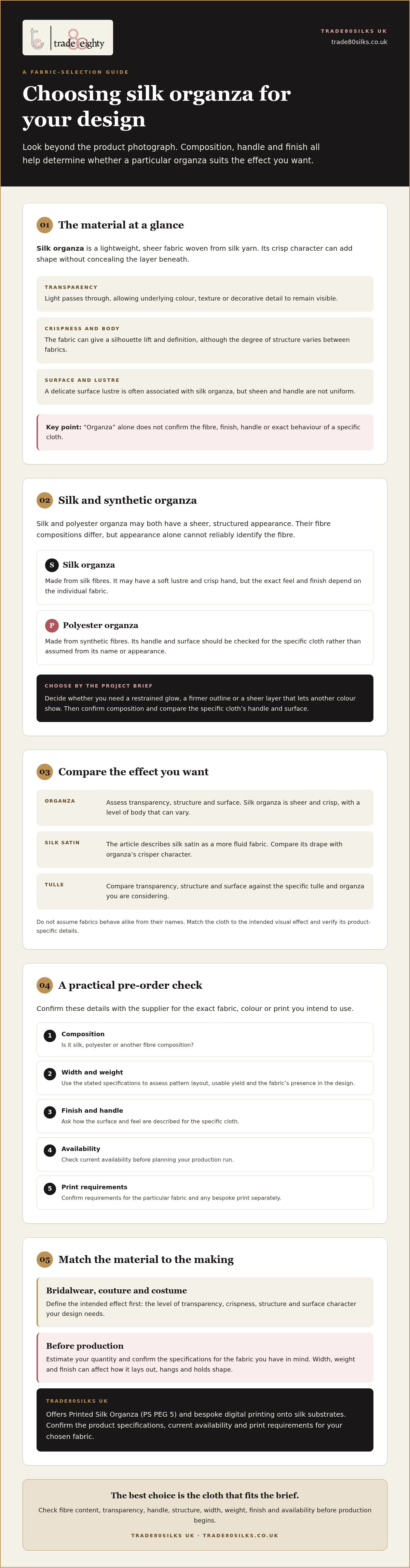
- Assess silk organza by its translucency, crispness and body, as these qualities can vary between fabrics.
- Compare silk and synthetic organza by composition, handle and appearance, then choose according to your project rather than assuming they behave alike.
- Distinguish organza from silk satin and tulle by comparing transparency, structure and surface, then match the cloth to the effect you want.
- Before ordering silk organza fabric uk, confirm the composition, width, weight, finish and current availability with the supplier.
- For bridalwear, couture or costume projects, define the intended effect and estimate your quantity. Ask separately about available fabric and bespoke print requirements.
What Is Silk Organza Fabric? Understand Its Sheer, Structured Character
Silk organza is a lightweight, sheer fabric woven from silk yarn, valued for a crisp character that can give a design shape without hiding what lies beneath. Its translucency lets the colour, texture or detail of an underlying layer remain visible, while its body can add lift and definition to a silhouette. The balance of softness and structure varies from one fabric to another.
The broader term Organza can describe fabrics made from different fibres, including silk and synthetics. For silk organza fabric UK buyers are considering, the name alone does not confirm the exact composition, lustre, handle or finish. Treat a general description as a starting point, then check the product-specific details with the supplier.
How does silk organza look and feel?
Silk organza is often recognised by its transparent appearance and delicate surface lustre. Its hand, meaning the way the cloth feels and responds in your hand, is typically crisper than that of a fluid fabric such as silk satin. In a layered design, light passes through the organza, allowing underlying colours or decorative details to show and adding visual depth without an opaque covering.
That description is a guide, not a promise of a uniform finish. One organza may feel more supple, while another holds its shape more distinctly. Surface character and sheen can also vary. If your design relies on a particular degree of crispness or a subtle rather than pronounced lustre, ask about the exact fabric rather than relying on the word “organza” alone.
What gives organza its structure?
A useful term is plain weave: a simple construction in which each crosswise yarn passes alternately over and under lengthwise yarns. In organza, the yarns, their arrangement and any finishing all contribute to how much light the cloth admits and how firmly it holds a fold or shape. The weave is one part of the fabric’s character, not a complete specification.
For a practical comparison, separate broad characteristics from details that need confirmation. Composition identifies the fibre, while weight, width and finish help you assess a particular fabric for a pattern, layer or production plan. Do not assume these details from a general description. Trade80Silks UK offers Printed Silk Organza (PS PEG 5), but its composition, width, weight, finish and current availability should be confirmed for the fabric under consideration.
Silk Organza Fabric Properties: Assess Composition, Handle and Finish
Silk and polyester organza can share a sheer, structured appearance, but their fibre compositions differ and cannot be reliably identified by appearance alone. Both may suit designs that call for transparency and definition, but their handle, lustre and response to finishing depend on the individual fabric. Choose according to the qualities your project needs, not the word “organza” or a product photograph in isolation.
Silk organza versus polyester organza
Silk organza is made from silk fibres; polyester organza is made from synthetic fibres. That distinction matters to a material brief, but it does not guarantee a particular feel or finish. A silk fabric might have a soft lustre and crisp hand, while another fabric, silk or polyester, may feel softer or have a more pronounced sheen depending on its yarns and finish.
Begin with the visual effect you need. Do you want a restrained glow, a firmer outline or a sheer layer that lets another colour remain visible? Compare supplier descriptions and, where possible, ask about the specific cloth’s handle and surface. Organza has varied fashion applications; this overview of uses for organza offers further context. Do not infer fibre content from transparency, crispness or lustre. Check the stated composition.
Which fabric details should buyers verify?
Check the product details with the supplier before calculating fabric requirements. Width affects pattern layout and usable yield, while weight and finish can influence how the cloth hangs, layers or holds a shape. Confirm that the specification applies to the exact colour or print you intend to use, rather than assuming all versions behave alike.
- Fibre content: confirm whether the organza is silk, polyester or another composition.
- Width and weight: use the stated details to assess pattern layout and the fabric’s likely presence in the design.
- Finish: ask how the surface and handle are described for the specific cloth.
- Care and handling: request guidance before cutting or making, rather than applying assumptions from another organza.
- Colour, print and quantity: verify current availability in the required design and amount before committing your production plan.
These checks are useful when comparing silk organza fabric UK options listed in different colours, prints and specifications. Trade80Silks UK offers Printed Silk Organza and bespoke digital printing onto silk substrates. You can discuss silk organza requirements with the supplier and confirm the composition, width, weight, finish and availability relevant to your brief.
Silk Organza Compared with Other Fabrics: Find the Right Design Effect
Choosing between organza, silk satin and tulle comes down to the visual and structural role each cloth needs to play. The right fabric depends on the silhouette and finish you want: a crisp translucent layer, a fluid sheen and an airy net-like volume create different effects, even when used in the same design.
| Fabric | Transparency | Structure | Surface | Design effect |
|---|---|---|---|---|
| Silk organza | Sheer; underlying colours or details may show through | Often crisp, with some body | May have a delicate lustre; finish varies | Defined, light layers that can add shape without fully concealing what lies beneath |
| Silk satin | Usually less transparent than organza, depending on the cloth | Often more fluid in drape | Smooth surface with a characteristic lustre | Continuous sheen and flowing folds rather than a crisp sheer outline |
| Tulle | Open, net-like construction allows light through | Varies by construction and finish | Mesh texture rather than a smooth woven surface | Airy volume or a visibly netted layer |
When does organza suit a design better than silk satin?
Choose organza when you need translucency with some body, such as a layer that frames an under-colour or helps define a shaped detail. Silk satin gives a different effect: its smooth, lustrous surface and drape emphasise flowing folds rather than a crisp outline. Neither is inherently better. Choose according to the garment or feature and the finish you want. For a closer look at satin, see the crinkle silk satin fabric guide.
How does silk organza differ from tulle?
Organza is a woven cloth, while tulle has an open, net-like construction. This difference affects the visual texture: organza presents a more continuous sheer surface, while tulle’s mesh can remain visible and contribute a light, airy quality. Both can create layered effects, but they do not produce identical transparency, surface or volume. Construction and finish vary, so assess the specific fabric rather than relying on the category name alone.
When comparing silk organza fabric uk options, start with the intended effect, then consider how the actual cloth handles and layers. A swatch or product description can inform your decision, but confirm the relevant specifications with the supplier before settling the design.
How to Choose Silk Organza for Bridalwear, Couture and Other Projects
Start with the design brief, then assess the fabric against the silhouette and making plan. In bridalwear, a sheer layer might soften an underlying colour or frame a sleeve. In couture, a crisp panel could add definition, while costume work may call for visible layering or added volume. These are possibilities, not guarantees: the result depends on the specific organza and how it is used.
Which silk organza qualities suit bridal and couture designs?
Be clear about the job the cloth needs to do. An overlay can preserve the colour or detail beneath it, while a sleeve or trim may benefit from a more defined outline. If the design uses several layers, consider how their combined transparency and structure will look together. Let the intended silhouette guide your choice instead of assuming a particular weight or finish will suit every design.
What should you check before ordering fabric?
Use this four-step process to turn a creative idea into a practical fabric decision:
- Define the design effect. Note where the organza will sit, what should remain visible beneath it, and whether you want a soft, airy or more defined impression.
- Assess the structure. Consider how the cloth needs to fall, hold a shape or layer with other materials. Check that the supplier’s description matches the role you have planned for it.
- Confirm the specifications. Verify fibre composition, width, weight, finish and the chosen colour or print. Ask whether these details suit your cutting and construction plan.
- Check the quantity and availability. Calculate requirements from your pattern and layout, then confirm that the chosen fabric is currently available in the amount needed.
Before cutting, ask the supplier for care guidance and any relevant handling or testing advice for the exact fabric. Do not assume that instructions for another organza or a different finish will apply. If you are considering a bespoke print, explain the design requirements and clarify what can be discussed for the chosen silk substrate.
A clear specification helps connect the visual ambition to the production brief when sourcing silk organza fabric UK. Trade80Silks UK offers Printed Silk Organza and bespoke digital printing onto silk substrates. Discuss your silk organza fabric requirements with the supplier, including the composition, dimensions, finish, quantity and print brief you need to confirm.
Where to Source Silk Organza in the UK and What to Ask
A useful supplier conversation should clarify the fabric’s identity and production implications, rather than leave you to infer them from a photograph. When comparing silk organza fabric UK suppliers, consider whether they can explain the specifications, discuss how the material relates to your brief and confirm details before you include it in a production plan.
What should a silk organza supplier be able to clarify?
Ask about the exact cloth you are considering, and check that the details apply to your chosen colour or print. If a point is not listed, request confirmation rather than treating a general description as a specification. This makes it easier to compare options and judge whether the material suits your planned cut and construction.
- Composition: confirm the stated fibre content.
- Dimensions and weight: check the fabric width and weight, then compare them with your pattern layout and intended use.
- Finish and print: ask how the surface is finished and, for printed fabric, confirm the relevant design details.
- Quantity and availability: explain the amount you need and ask what is currently available in the chosen fabric.
- Project considerations: request relevant care or handling guidance and check whether the specifications fit your making plan.
For a production order, written confirmation gives you a clear reference for the agreed composition, width, weight, finish, print and quantity. It can also reveal unanswered questions before you allocate fabric to a cutting plan. Ask directly about project-specific requirements instead of assuming a general description covers them.
When might printed or bespoke silk organza be suitable?
Printed silk organza may suit a design that calls for a pattern over a sheer ground, where the print and underlying layers contribute together to the overall effect. Trade80Silks UK offers Printed Silk Organza (PS PEG 5), but its composition, width, weight, finish and current availability should be confirmed for the fabric you have in mind.
Buying an available fabric and discussing a bespoke print are separate steps. Trade80Silks UK also offers bespoke digital printing onto silk substrates. A project discussion can clarify the proposed design, substrate requirements, scope and feasibility, without assuming that every specification or outcome is available.
Trade80Silks UK supplies silk and natural fabrics to designers and manufacturers. When making an enquiry, share the intended use, required quantity and any print considerations, then confirm the relevant details before planning production.
Choose Organza with Confidence for Your Next Design
The right silk organza is the one whose transparency, handle and structure support the effect you have in mind. Compare it with alternatives according to the role it needs to play, then confirm composition, width, weight, finish, care guidance and current availability before ordering. These checks connect your design choice with the practical needs of cutting and production.
For designers sourcing silk organza fabric uk, Trade80Silks UK offers Printed Silk Organza and bespoke digital printing onto silk substrates. Confirm product details and discuss the scope of any print requirement for your project.
Contact Trade80Silks UK to discuss your silk organza and fabric requirements, including the intended use, specifications and any bespoke print brief.
Frequently Asked Questions
What is silk organza fabric?
Silk organza is a sheer, lightweight woven fabric made from silk fibres. It is known for a character that can feel crisp and hold some shape. Its transparency lets colour or detail beneath show through, making it useful for considered layers and defined details. The exact lustre, softness and structure vary with construction and finish, so check the specific product description rather than assuming every silk organza behaves alike.
Is silk organza different from polyester organza?
Yes. Silk organza is made from silk fibres, while polyester organza is made from a synthetic fibre. Both can have a sheer, structured appearance, but their handle and finish are not necessarily the same. Appearance alone cannot reliably confirm fibre content, and neither composition guarantees one particular level of crispness or sheen. Check the stated composition and ask about the individual fabric’s surface and feel when comparing options.
Can silk organza be used for bridalwear?
Silk organza can be considered for bridalwear details where a design calls for a sheer layer with some body, such as an overlay, sleeve or trim. Its transparency may allow an underlying colour or texture to remain visible, while its structure can contribute definition. Suitability depends on the design, construction and exact cloth, so confirm its specifications and care guidance before planning it into a garment.
How do I choose silk organza for a design project?
Begin with the intended effect. Decide what should show through the fabric and whether the design needs a soft layer or a more defined outline. Then assess how it must drape or hold shape, and confirm composition, width, weight and finish with the supplier. Check that the chosen colour or print is available in the quantity your cutting plan requires. Ask for handling guidance for the specific fabric before making.
Does silk organza hold its shape?
Silk organza can have a crisp character that gives a design some body, but how well a particular cloth holds a shape depends on its construction, weight and finish. Do not assume every organza will provide the same structure. Consider the shape required and how the fabric will be used, then confirm the individual product’s specifications and handle with the supplier before committing.
Can silk organza be printed?
Yes, silk organza can be printed, although the result and available options depend on the fabric and printing requirements. Trade80Silks UK offers Printed Silk Organza (PS PEG 5) and bespoke digital printing onto silk substrates. For a particular design, confirm the substrate, print scope, feasibility and current availability directly with the supplier. Do not assume every print or finish is available for every organza.
What should I ask before buying silk organza fabric in the UK?
Before ordering silk organza fabric UK suppliers offer, ask for the exact fibre composition, width, weight and finish. Confirm the colour or print and current availability, explain your intended use and required quantity, then check that the specifications suit your cutting and construction plan. Request care or handling guidance for the specific cloth, and seek written confirmation of agreed details before incorporating it into a production plan.


