

The most carefully prepared artwork can still produce an unexpected result if the silk beneath it isn’t suited to the design. For a digital print on silk UK commission, the relationship between image, cloth and intended use matters: colour, fine detail and drape all influence the finished impression.
It’s natural to wonder whether a file is print-ready or whether a particular silk will give a garment or textile the right movement and finish. A considered brief brings these questions into focus before production, giving the printer useful context about your design and its purpose.
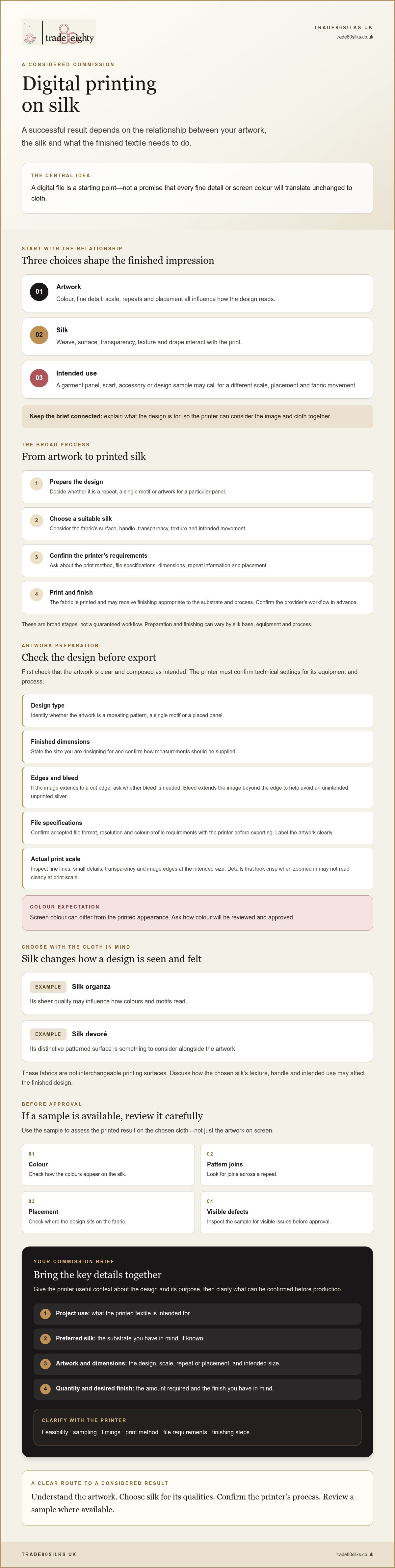
This guide explains how to prepare artwork, compare silk substrates and brief a bespoke print commission. It covers practical points to discuss, from file requirements and design scale to the way fabric texture and drape may shape the result. With a clear understanding of your artwork, cloth and intended use, you can make more informed choices for your project.
Key Takeaways
- Understand how digital printing applies prepared artwork to fabric, and confirm which design effects the printer can support.
- Check dimensions, scale, repeats and placement before preparing your artwork, then confirm file requirements with the printer.
- Compare silk substrates by their sheen, transparency, texture and drape to suit the intended use.
- Review a sample, if available, for colour, pattern joins, placement and visible defects before approving production.
- When briefing a digital print on silk UK commission, outline the project use, preferred silk, artwork, dimensions, quantity and desired finish. Ask about feasibility, sampling and timings.
What does digital printing on silk involve, and when is it useful?
Digital textile printing applies a design prepared in digital form to fabric using a printer’s chosen process. Unlike a woven pattern, which is formed as threads interlace, a printed design sits on the cloth’s surface. It is also distinct from embellishment, which adds decorative elements such as embroidery or beading. The broad term digital printing on textiles covers different methods, so ask the printer to confirm the process used for your silk and artwork.
Digital printing can suit intricate imagery, tonal variation and considered repeats, provided the supplier’s equipment and process can reproduce the design on the chosen substrate. The result depends on more than the image: silk’s weave, surface and transparency interact with the print, while production settings and finishing can affect its appearance. A digital file is a starting point, not a promise that every fine detail or screen colour will translate unchanged.
How does a digital silk print move from artwork to cloth?
The process usually begins with preparing the artwork and selecting a suitable silk. The printer then reviews the file and layout. Once the details are agreed, the fabric is printed and may undergo finishing appropriate to the substrate and process. These are broad stages, not a guaranteed workflow. Confirm the provider’s print method, file requirements and finishing steps before preparing a final file or approving production.
Preparation can vary by silk base, and a file that works well for one fabric or print set-up may need adjustments for another. For a digital print on silk UK commission, clarify how the printer wants dimensions, repeat information and placement supplied. Also ask what can be confirmed before the cloth is printed.
Which design projects can benefit from printed silk?
Printed silk may suit garment panels, scarves, accessories or design sampling, although these are possible applications rather than services every printer offers. Bespoke imagery can give a project a distinctive visual character, while a carefully planned repeat can help a motif flow across a wider length of cloth. The right approach depends on the intended use, design scale and printer’s capabilities.
Material choice shapes the effect. Printed silk organza, for example, is sheer, which may influence how colours and motifs read. Silk devoré has a distinctive patterned surface that designers should consider alongside their artwork. These materials are not interchangeable printing surfaces. Discuss how the chosen silk’s texture, handle and intended use may affect the finished design before committing to a commission.
How to prepare artwork for digital printing on silk
Prepare the design in the order the printer will need to assess it: decide whether it’s a repeat or a placed image, set the intended dimensions, check how the artwork will sit on the silk, then export it to the provider’s requirements. For a digital print on silk UK commission, don’t rely on settings from another project. Ask the printer for its current file format, resolution and colour-profile specifications before export. FESPA’s guidance on preparing artwork for digital printing offers useful context on image quality and colour management, but the print provider’s requirements should take precedence.
Keep two decisions distinct. You can check that the artwork is clear and composed as intended; the provider must confirm the technical settings for its equipment and process.
- Define the design: Decide whether it is a repeating pattern, a single motif or artwork intended for a particular panel.
- Set the dimensions: State the finished size you’re designing for and confirm how the provider wants measurements supplied.
- Check the edges: If artwork extends to a cut edge, ask whether bleed is needed. Bleed means extending the image beyond that edge to help avoid an unintended unprinted sliver.
- Confirm specifications: Ask for file, resolution and colour-profile requirements, then export and label the artwork clearly.
What should a silk-print artwork file include?
Before export, confirm the accepted format, required resolution, dimensions and colour profile directly with the printer. Inspect fine lines, small details, transparency and image edges at the intended print scale. Details that look crisp when zoomed in on screen may not read clearly at their actual size. These are general checks, not a substitute for provider-specific instructions. Screen colour can also differ from the printed appearance, so ask how colour is reviewed and approved.
How should you prepare a repeat pattern or placed design?
A repeat tile is a unit designed to join neighbouring copies, while a placed design is positioned as a single motif or panel. A seamless repeat is a pattern tile whose opposite edges meet without a visible break, so its joins need checking before the design is printed across cloth. Preview the repeat at full size, or at a representative scale, and look for abrupt lines, awkward gaps and changes in motif orientation. For placed artwork, check its position in relation to the intended panel or fabric area.
Fabric width and print layout can affect where a design falls, particularly if placement matters. Ask the provider how these will be handled before finalising the file. If you’re considering a bespoke silk print, you can discuss the project and available silk options through bespoke silk print commissions.
How to choose silk and manage colour expectations
Choose the silk for how the finished piece should feel and move, not for appearance alone. Consider the intended use, desired weight and hand, opacity, drape and surface texture, then ask the printer which substrates are suitable for the proposed process. Sheen and surface character can influence perceived contrast: lustrous cloth may reflect light differently from a more textured surface, changing how colours appear. Treat these as design considerations, not guarantees of print performance.
Which silk qualities should guide your substrate choice?
Start with the qualities your project needs. A sheer fabric may allow layers or the surface beneath it to show through; a more substantial cloth may offer a different sense of coverage and movement. The precise behaviour depends on the specific silk, so request details about the fabric and confirm its suitability for printing. Trade80Silks UK offers printed silk organza and printed silk devoré, but the availability of these fabrics doesn’t mean every design or print effect will suit either substrate.
Silk organza: Its transparency is a key design consideration. Ask how the cloth and any layers beneath it may influence the appearance of your artwork.
Silk devoré: Consider how its patterned surface relates to the design. Confirm the exact substrate and print suitability with the provider.
Silk satin: If you’re considering a lustrous surface, discuss how sheen and reflected light may affect perceived contrast and colour.
Other silk surfaces: Texture, weight and drape vary. Request substrate-specific information before settling on a base.
For any option, assess the hand and movement against the intended use, whether that means a fluid accessory or a more structured design. Don’t assume that a substrate’s general characteristics predict the printed result. Confirm the relevant details with the printer.
Why can printed colour look different from a screen preview?
A screen emits light, whereas silk reflects it, so a digital preview can’t guarantee the finished colour. The fabric’s sheen, texture and transparency may influence how the print is perceived, as can the lighting in which it’s viewed. Ink and finishing are also process-specific factors to discuss with the printer. A colour that appears vivid on a backlit display may look different on cloth.
Before approving a digital print on silk UK commission, ask whether a sample or strike-off is available on the intended substrate and how colour approval works. If you receive one, assess it under lighting relevant to the final use and compare it with your reference. Agree in advance what you’ll review and approve. Don’t assume an exact screen-to-fabric match.
How to review a silk print before approving production
Approval is most useful when it relates to the agreed artwork on the intended silk, rather than a digital image viewed in isolation. A representative fabric sample is more informative than a screen preview alone. If a sample or strike-off is available, use it to assess how the design, cloth and colour work together before authorising the production run.
What should you check on a printed sample?
Compare the sample with your brief and the artwork version submitted. Check the design scale, alignment and motif placement. For a repeat, look for continuous joins. Consider the colour impression alongside the silk’s surface character and drape, viewing it under lighting relevant to its intended use. A sample can show how these elements interact, but confirm with the printer what it represents in relation to the eventual production.
- Colour: Does the overall impression suit the approved reference and intended use?
- Scale and placement: Are motifs the expected size and positioned as agreed?
- Repeat continuity: Do joins look consistent, without unintended gaps or abrupt lines?
- Visible defects: Are there marks or irregularities you need the printer to review?
- Fabric character: Does the sample’s surface and movement suit the project?
If changes are needed, describe them precisely, identifying the artwork area, placement or colour impression in question. Keep a record of the requested revision and ask whether it changes the artwork version or approval stage. This helps everyone refer to the same instruction.
What should be agreed before production begins?
Before giving approval, confirm the silk substrate, artwork version, intended quantity and who is responsible for signing off the design. Ask the provider to clarify the next production steps, any finishing involved, how the fabric should be handled and what care information is available. These details vary by print process and silk, so obtain confirmation rather than assuming a particular method or outcome.
A concise written record can state the approved file name or version, the substrate, agreed placement and any sample observations. If approval is based on a sample, note that clearly and retain the relevant correspondence. This helps prevent confusion if a revised file or new instruction is circulated later.
For a bespoke digital print on silk UK project, clear approval is part of a considered commission. Discuss a bespoke silk print commission with Trade80Silks UK to explore a silk-specific outcome for your design.
How to brief a UK silk-print commission with confidence
A clear enquiry gives the printer a useful starting point without asking you to settle every technical detail alone. For a digital print on silk UK commission, explain what you’re creating, how the fabric will be used and which qualities matter most. The provider can then advise what further information is needed to assess whether the proposed artwork and silk are suitable.
What information should you send with a print enquiry?
Share the project’s intended application, your preferred silk or desired fabric qualities, approximate dimensions and quantity, and the stage your design has reached. An artwork preview can help communicate the visual direction; label it as a preview if it isn’t the final print file. Explain whether the design is a repeat, a placed motif or a panel, and note any priorities around scale, placement or colour.
A concise brief might include:
- Project use: What you’re designing and how the printed fabric will be used.
- Silk preference: A named base, if known, or the desired weight, drape, sheen or transparency.
- Artwork: A preview or file, with repeat, scale and placement notes.
- Requirements: Intended dimensions, approximate quantity and desired finish.
- Timing: Your preferred production timeframe, for the provider to confirm feasibility.
Ask the printer to confirm accepted file formats, resolution and colour-profile requirements before preparing a final export. It’s also useful to ask whether sampling is available, what information is needed to assess feasibility, and what production timings can be confirmed. Requirements vary, so don’t assume that specifications from another supplier will apply.
How can Trade80Silks UK support a bespoke silk project?
Trade80Silks UK offers bespoke digital printing onto silk substrates, giving designers an enquiry route for a silk-specific outcome. Its fabric range includes printed silk organza and printed silk devoré. Whether a particular base, artwork or finish is suitable should be confirmed as part of the discussion. Your first enquiry needn’t be a finished technical specification. Share your aims and ask which practical details the team needs to assess the project.
Once the provider has reviewed your brief, confirm the agreed silk, artwork requirements, sampling options and production timings before proceeding. This keeps expectations grounded in the project and the provider’s confirmed capabilities.
If you’re planning a bespoke silk print, discuss your silk-print project with Trade80Silks UK and confirm its practical requirements.
Bring your silk-print idea into focus
A successful digital print on silk UK project begins with choices made together: artwork prepared to the printer’s requirements, a silk substrate suited to the intended use, and clear expectations for colour and finish. Reviewing an available sample against the agreed design can also help you make a more informed approval decision.
A concise brief, including application, fabric preference, dimensions, quantity and design priorities, gives the printer a useful basis for discussing feasibility and next steps. Trade80Silks UK offers bespoke digital printing onto silk substrates, alongside silk and natural fabrics sold by the metre or roll.
Discuss your silk-print project with Trade80Silks UK and confirm the practical requirements for your design. Careful preparation and a clear conversation help bring your artwork and chosen silk together.
Frequently Asked Questions
What is digital printing on silk?
Digital printing on silk applies a digitally prepared design to fabric using a textile-printing process. The silk influences how the design appears: surface texture, sheen, transparency and drape all affect its visual character. The method and outcome also depend on the artwork, chosen substrate and finishing. Ask the print provider to explain its process and available sampling options, then agree how the result will be reviewed before approving production.
Can you digitally print any design on silk?
Not every design is suitable for every silk or printing process, although a wide range of artwork may be considered. Suitability depends on the file, dimensions, level of detail, repeat, fabric and provider capabilities. Fine lines, gradients and large repeats deserve particular attention at their intended scale. Send a clear brief and ask the printer to review the artwork before production. A screen preview alone can’t confirm how the design will appear on cloth.
How do I prepare artwork for printing on silk?
First, ask the provider for its current file-format, resolution, dimension and colour-profile requirements. Check the artwork at its intended print scale, paying attention to fine detail and edges. If it’s a repeat, check that the tile joins cleanly; for a placed motif, clarify its position in relation to the fabric layout. Requirements vary between providers, so use the printer’s specifications rather than relying on generic settings or assumptions from another commission.
Will the colour look exactly the same on silk as on my screen?
Not necessarily. A screen emits light, whilst silk reflects it, so colour and contrast may appear different on fabric. Sheen, texture, transparency, viewing conditions and the print process can all influence the impression. Discuss colour expectations with the provider and ask whether a representative sample or another approval stage is available. If you review a sample, consider it on the intended silk and under lighting relevant to how the finished textile will be seen.
Which silk is best for digital printing?
There isn’t one best silk for every design. Choose according to the intended use and the fabric’s weight, drape, opacity, surface and sheen, then confirm print suitability with the provider. A sheer fabric such as organza may create a different visual effect from a more opaque silk, particularly where layers or the surface beneath are visible. Ask for substrate guidance and whether sampling is available before deciding which fabric best supports your design.
Can I commission custom digital printing on silk in the UK?
Yes. Trade80Silks UK offers bespoke digital printing onto silk substrates, though suitability and practical arrangements depend on the project and should be confirmed with the provider. Prepare a brief describing the intended use, artwork, preferred silk, dimensions and approximate quantity. Then ask about file specifications, feasibility, sampling options and production timings. This gives the printer a clear starting point for discussing a digital print on silk UK commission without assuming unconfirmed requirements or outcomes.


