

The highest momme figure isn’t automatically the best silk for your project. If you’re comparing fabric specifications and wondering what is silk momme weight, the unfamiliar term can make it difficult to judge whether one cloth is heavier or simply better suited to a different purpose.
Momme measures silk’s weight in relation to its area, rather than its thread count or overall quality. It can also be compared with GSM: one momme is approximately 4.3 grams per square metre. A number alone can’t tell you how a fabric will drape, feel or perform, since weave and finish matter too.
This guide explains what momme measures, how to convert it to GSM and why neither figure should be confused with thread count or treated as a quality grade. You’ll learn how to weigh the specification against a project’s needs, from fluid movement to a more structured effect, and what to consider when comparing fabrics. The aim is to help you choose according to the qualities your design needs, not simply the largest number on a specification sheet.
Key Takeaways
- Understanding what is silk momme weight helps you interpret a fabric specification as a measure of weight, not a quality grade.
- Distinguish fabric weight measurements from thread count, which describes a different property.
- Decide on the drape, opacity and structure your project needs before comparing silk weights.
- For a more meaningful comparison, look at fabrics with similar weaves and finishes. A heavier cloth isn’t automatically the better choice.
- Explore how silk satin, organza, raw silk and sand-washed silk may suit different design intentions.
What Is Silk Momme Weight and What Does the Number Measure?
Momme is a traditional unit used to express the weight of silk fabric in relation to its area. If you’re asking what is silk momme weight, the key point is that it indicates how much a given area of silk weighs. It’s a useful starting point when comparing specifications, but it isn’t a grade of fibre quality and doesn’t describe the fabric’s weave or finish.
How is momme measured in silk fabric?
The traditional basis is the weight, in pounds, of a piece of silk measuring 45 inches wide by 100 yards long. The measurement uses a fixed length and width of cloth, providing a consistent way to express fabric weight. For broader context on the fibre itself, the overview of silk describes its properties, history and production.
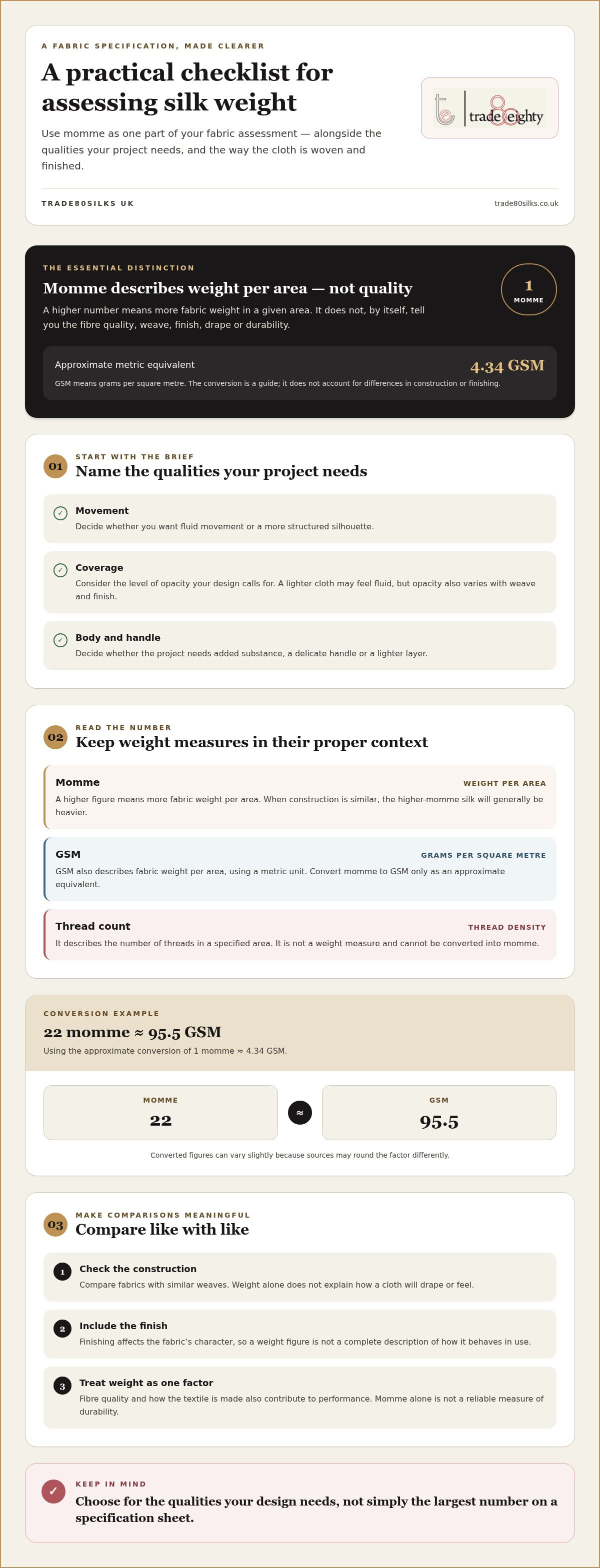
For metric comparison, momme can be expressed as grams per square metre, usually shortened to GSM. One momme is commonly converted to approximately 4.34 grams per square metre. For example, 22 momme equates to roughly 95.5 GSM (22 × 4.34). This conversion helps you compare fabric weight figures across different specification systems, but it doesn’t account for how the cloth is constructed or finished.
What does a higher momme number tell you?
A higher momme figure means more fabric weight per area. When comparing two silks with similar construction, the higher-momme cloth will generally be heavier. That distinction can help you assess a design brief, but it doesn’t show that the silk uses finer fibres or represents a superior quality grade.
Weight may influence a fabric’s feel or fall, but those qualities also depend on weave and finish. A heavier silk might have more body in one construction, while another may remain supple. A lighter cloth may feel fluid, but its opacity will also vary with the weave and finish. Momme alone is not a reliable measure of durability either. Fibre quality and how the textile is made both contribute to performance.
Use the figure as one part of a considered assessment. First identify the qualities your project calls for, such as fluid movement, a particular level of coverage or a more structured silhouette. Then compare momme figures alongside weave and finish. This makes the measurement practical: it helps describe weight without reducing silk’s character to a single number.
How Does Silk Momme Compare with GSM and Thread Count?
Fabric specifications can use different numbers to describe different things. For silk, momme and GSM both refer to weight per area, while thread count describes the number of threads in a defined area. Keeping these measures distinct makes comparisons clearer and prevents a specification from being mistaken for a quality rating.
| Measurement | What it describes | How to read it |
|---|---|---|
| Momme | Silk fabric weight, expressed through a traditional unit | A higher figure means greater weight per area |
| GSM | Fabric weight in grams per square metre | A higher figure means more grams in each square metre |
| Thread count | The number of threads within a specified area of fabric | It describes thread density, not fabric weight |
Is momme the same as GSM?
No. Momme and GSM are different units that both express fabric weight per area. The commonly used approximate conversion is 1 momme ≈ 4.34 GSM. On that basis, 22 momme is approximately 95.5 GSM. Treat the conversion as a guide rather than an exact match: sources may round the factor differently, so converted figures can vary slightly.
For a useful comparison, keep the fabric basis consistent. Momme’s traditional measurement uses a set length and width of silk, while GSM expresses weight for one square metre. The conversion relates those measurements to the same area-based weight, but doesn’t account for differences in construction, finishing or behaviour in use. When comparing one specification in momme with another in GSM, use the converted figure as an approximate equivalent.
Is silk momme the same as thread count?
No. If you’re asking what is silk momme weight in relation to thread count, they measure separate characteristics. Momme indicates weight per area, whereas thread count indicates how many threads occupy a given area. A thread-count figure can’t be converted into momme, and neither measurement alone establishes the overall quality of a silk fabric.
For example, if one silk specification lists momme and another lists thread count, those figures don’t provide a direct comparison. One tells you about weight, the other about thread density. Look for a weight specification if weight is the question, then use the construction and finish to understand the wider character of the cloth.
Silk figures shouldn’t be treated as interchangeable with numbers for cotton or other materials. Even when two fabrics share a GSM value, their fibres, weave and finish may give them very different handles and performance. Use weight as one reference point, then compare like with like wherever possible. Trade80Silks UK supplies silk and natural fabrics for design and manufacturing briefs, including silk fabric by the metre, so you can explore material choices alongside their specifications.
Does a Higher Silk Momme Weight Mean Better Fabric?
No. A higher momme figure means more weight per area, but it doesn’t make a silk automatically better for every design. A project may call for fluid movement, a delicate handle or a light layer rather than added substance. The useful question isn’t simply which silk weighs more, but which qualities suit the garment or textile you’re creating.
Weight is only one part of a fabric’s character. Fibre provenance, yarn, weave, finishing and construction all contribute to how silk looks and handles. Two fabrics with the same momme may behave differently, while fabrics at different weights may each suit their intended purpose.
| Weight choice | Potential advantages | Considerations |
|---|---|---|
| Heavier silk | May feel more substantial or provide greater coverage, depending on construction. | Could bring more body than a design needs; drape and opacity still depend on weave and finish. |
| Lighter silk | May suit a brief calling for a delicate hand or fluid movement. | Could offer less coverage or structure, depending on the weave and how the fabric is made. |
What can heavier silk offer, and what might it change?
Additional weight may create a more substantial impression and, in some constructions, contribute to greater opacity or a fuller fall. These are possibilities, not guarantees: yarn, weave and finishing can change the result. A higher figure alone can’t promise greater durability, softness or colour depth, so assess those qualities separately against the fabric’s construction and the design’s needs.
For a designer comparing silk for different applications, this distinction matters. A fabric that lends presence to one silhouette might feel too weighty for another. Consider how the cloth should move, sit and layer, then judge its specification alongside its weave and finish rather than using weight as a shortcut to quality.
Why can lighter silk be the better design choice?
A lighter silk may suit a brief calling for a gentle drape or a more delicate handle. Yet lightness doesn’t automatically mean transparency or a lack of structure; those qualities depend on how the fabric is woven and finished. Silk organza shows why purpose matters: its appeal in a design can come from the character of its construction, not from selecting the highest weight available.
So, what is silk momme weight useful for when choosing between fabrics? It gives you a way to assess weight, but the design brief should guide the decision. Before settling on a specification, consider whether the finished piece needs movement, coverage, shape or a combination of these qualities. Then compare silks with similar weaves and finishes where possible, and assess fibre provenance and construction on their own merits. A considered selection balances the number with the material’s intended role.
How to Use Momme When Assessing Silk for a Project
Use momme as one part of a practical fabric assessment, not as a decision in isolation. Start with the qualities the finished piece needs, then compare weight alongside weave, finish and fibre composition. The project’s purpose should guide your choice: the right silk is the one whose character supports the intended design.
- Define the desired drape. Decide whether the cloth should fall fluidly, hold a soft shape or create a more pronounced structure. Consider how it will move when worn or hang within the finished textile.
- Set your opacity and coverage needs. Decide whether the design calls for a sheer layer, more coverage or a fabric to layer with others. Weight alone can’t settle this, as weave and construction also affect what shows through.
- Note the intended structure. Identify whether the material needs to feel light and yielding or support a defined form. This gives you a clearer basis for comparing stated weights.
- Compare like with like. Where possible, compare fabrics with the same or a similar weave and finish. Differences in their weight specifications are more informative when the constructions are comparable.
- Read the description and assess the cloth. Record the stated weight, weave, finish and fibre composition, then examine the fabric’s handle and fall. A specification gives useful context, while the cloth itself shows how it behaves.
Which fabric qualities should you consider alongside momme?
Read the fabric description as a whole. Fibre composition, weave and finish each contribute to the material’s character, so consider them alongside stated weight. Relate what you observe to the application: a garment may need ease of movement, while a decorative textile could call for a particular balance of coverage and form. For bridalwear, consider how the silk’s weight, drape and opacity work together with the design and any planned layers.
How can you compare silk samples fairly?
Look at samples under consistent lighting and handle each in the same way, so differences in colour, surface and movement are easier to judge. Keep a simple record of the stated weight, weave and finish for each swatch. If you’re considering crinkle silk satin, compare its surface and drape with the qualities your design requires.
Asking what is silk momme weight tells you how to interpret one part of a specification; looking at the cloth helps connect that figure to its character. Drape it over a hand or support, observe how it falls, and consider whether its opacity and structure align with your brief. These observations don’t replace technical details, but they help you assess how those details translate into a design.
Trade80Silks UK supplies silk and natural fabrics for designers and manufacturers, including silk satin, organza, raw silk and sand-washed silk. Explore silk fabrics for your project and assess the material in the context of the qualities your design calls for.
Choosing Silk with Trade80Silks: From Momme to Material
Momme is a useful starting point when assessing silk, but it can’t tell you everything about how a fabric will look or perform. Weave, finish and intended use complete the picture. Begin with the qualities your design calls for, then weigh the specification against the material’s surface, drape and structure.
Trade80Silks UK supplies silk and natural fabrics to designers and manufacturers, by the metre and in bulk. The selection includes silk satin, silk organza, raw silk and sand-washed silk, offering different material characters for varied creative briefs. A satin and an organza at comparable weights, for instance, may handle and look quite different because their constructions and finishes differ. Use momme alongside the fabric description and your own assessment of the cloth, rather than treating it as a ranking.
How do weave and material choices shape the final result?
Consider the intended surface as well as the weight. Satin, organza and other weaves can each bring a distinct appearance and feel, even when their weight figures are similar. If sheerness is central to your brief, silk organza may be worth exploring; its construction and finish, as well as its stated weight, inform the effect. Match the fabric’s drape and structure to the design rather than relying on the number alone.
For a garment or textile that needs movement, consider how the silk falls and responds to handling. If the design calls for greater definition, assess whether the material offers the desired body. These are practical considerations, not fixed results of a particular momme figure. A fabric’s surface, fibre composition and finish all contribute to the impression it creates, so compare the full specification with the intended use.
When might bespoke fabric development be appropriate?
Some briefs call for more than selecting an existing material, particularly when a specific pattern or surface treatment is central to the design. Trade80Silks UK offers bespoke fabric development, including custom jacquard weaving, embroidery and digital printing. These techniques provide ways to shape a textile around a creative direction, with the fabric choice considered alongside the desired pattern and finish.
Founded in 1980, Trade80Silks UK brings longstanding industry experience to its work with designers and manufacturers. The project brief remains the guide: the right material depends on the intended effect, not a universal weight category. Consider the specification, examine the weave and finish, and assess how the fabric’s handle relates to the piece you’re developing.
If you’re ready to consider silk beyond its momme figure, explore the silk fabric range and find material inspiration for your next design brief.
Let Your Design Brief Lead the Way
As you move from research to material selection, let the intended effect guide your next decision. Asking “what is silk momme weight?” helps clarify one part of a fabric specification, but the creative possibilities emerge when you consider how the cloth’s surface, movement and structure will serve your design.
Bring your brief into focus: note the qualities you want the finished piece to express, then explore fabrics with those qualities in mind. A thoughtfully chosen silk can shape a design’s character, whether you’re developing a garment, a distinctive textile or a detailed surface treatment. There’s no single figure that defines the right choice; the most useful specification is the one that supports your purpose.
Explore Trade80Silks’ silk fabrics and find inspiration for the material direction of your next project. With a clear brief and an eye for each cloth’s qualities, you’re well placed to make a considered choice that feels distinctly your own.
Frequently Asked Questions
Can momme alone prove that silk is pure?
No. A momme figure can’t confirm whether a fabric is pure silk, a blend or another fibre. Read the fibre composition as a separate specification, and consider it alongside the weave and finish. If you’re choosing between two fabrics for a project, don’t treat matching weight figures as evidence that their fibre content is the same. Composition information, not momme, identifies the fibres described.
Does silk momme weight change after washing?
The stated momme is the fabric’s original weight specification, but washing may affect the cloth’s condition or dimensions. That doesn’t mean the original specification has changed; it means the textile may respond to care. Follow the instructions provided for the specific fabric, and test the intended care method on a sample where appropriate. If you measure a finished piece later, note that laundering may affect its dimensions as well as its feel.
Can two silk fabrics with the same momme feel different?
Yes. The question “what is silk momme weight?” concerns the fabric’s weight, not every quality you’ll notice by touch. Silk satin and raw silk with the same stated momme may differ in surface, sheen and handle because their yarns, weaves and finishes are not the same. If you’re considering both for one design, compare their descriptions and samples directly rather than expecting the shared figure to predict how they will feel.
Is momme listed on every silk fabric?
No. A fabric description may give weight in GSM or provide other construction details without stating momme. That omission doesn’t, by itself, indicate poor quality or make the material unsuitable. Use the available specification to understand what is documented, and note the units when comparing options. Avoid converting a figure if you can’t tell what it measures or whether the comparison uses a consistent basis.
What happens if a silk fabric’s momme is not stated?
You can still make a considered assessment. Start with the project’s requirements, then use the available composition, weave and finish details to narrow your options. If you have a sample, observe how it falls and feels in the intended application. For instance, assess whether its handle suits a softly draped garment or a textile that needs more form. A missing momme is one absent detail, not a verdict on suitability.
Can momme be used to compare silk blends with pure silk?
It can offer a weight comparison, but it can’t make different fibre compositions equivalent. A silk blend and pure silk at a similar weight may handle or drape differently, depending on the other fibres, weave and finish. For a fair assessment, compare fabrics with similar compositions where possible, and record fibre content separately from weight. Then consider how each material’s characteristics suit the intended use, rather than choosing by a shared number alone.


