

The most lustrous silk isn’t necessarily the best silk for wedding dress designs. The right cloth is the one whose behaviour supports the gown’s intended character. A fabric that looks fluid on a screen may feel more substantial in the hand, while colour and surface can shift with the light. So which silk will give your wedding dress the look, movement and structure you want?
Familiar names such as satin, organza and raw silk can seem interchangeable, especially when you’re judging them from photographs. Yet each has a distinct appearance and handle, and its suitability depends on the silhouette, finish and construction you have in mind.
This guide compares bridal silk fabrics by their lustre, texture and drape, explaining the design roles they can support without declaring one a universal favourite. You’ll also find practical ways to assess colour and feel before committing to a design. With more than 35 years of experience supplying fabrics sourced from silk mills, Trade80Silks UK helps designers consider how a cloth can bring their vision into focus.
Key Takeaways
- The best silk for wedding dress designs depends on the intended silhouette, movement and finish, rather than a fabric name alone.
- Compare bridal silks by their surface, drape and structure to see which qualities support your design.
- Consider silk’s distinctive look alongside construction needs and the wearer’s preferences. It isn’t automatically right for every gown.
- Assess samples in the intended light and alongside planned trims or layers before settling on a fabric.
- Explore crinkle silk satin, printed silk organza and raw silk as possible starting points for your bridal design.
Best silk for a wedding dress: why the fabric changes the whole design
The best silk for a wedding dress depends on the gown’s intended shape, movement and finish, not on which fabric name carries the greatest reputation. “Bridal silk” describes a family of cloths rather than one uniform material. Surfaces may be smooth, textured or patterned, while drape and structure vary between fabrics. These differences influence how a design reads on the body and how the cloth behaves during construction.
A fabric’s surface shapes the way light falls across the gown. Lustrous cloth can create a more reflective impression, while a textured or printed surface gives the eye different details to follow. Drape matters just as much: a cloth that falls close to the body creates a different outline from one that holds a fuller shape. The fabric’s weight and handle also inform how it can be cut, joined and supported in the garment.
Silk has a distinctive visual and tactile character, but its qualities are not identical across every type or finish. For a broader overview of the properties of silk, including its production and different forms, see the reference guide. For design decisions, the useful question is how a particular cloth responds to the intended construction, rather than whether silk is considered prestigious in general.
Fabric behaviour matters because it determines how a gown’s shape, surface and movement come together in the finished design. It contributes to the result, but it doesn’t replace the pattern, cut or finishing techniques. A carefully chosen fabric can support those decisions. The garment’s final character emerges from how they work together.
What does silk contribute to a bridal gown?
Silk can bring a soft lustre and tactile presence to a gown, with the precise effect shaped by the cloth’s surface and construction. Depending on the fabric, it might contribute a fluid fall, a smoother-looking finish or visible texture. Consider how it will sit against the body, catch changing light and interact with seams and layers. These qualities inform the design, while skilled cutting and finishing give them form.
Start with the dress you want to create
Before choosing by name, describe the gown you have in mind. Is its mood restrained, romantic or striking? Should the silhouette move fluidly, hold crisp volume or present a smooth surface? Decide which qualities matter most, then consider how the fabric can support them through the planned construction. A single gown can also combine complementary cloths, using one for the main silhouette and another for a separate design element.
This brief gives fabric selection a practical purpose. If graceful movement is central to the design, assess how a sample falls when lifted and allowed to settle. If the silhouette relies on defined volume, consider whether the cloth’s handle supports that intention. Think about the finish in context, too: a surface that appears understated on its own may take on a different presence beside trims or another layer. The aim is to choose a cloth whose qualities align with the design decisions already taking shape, rather than relying on reputation alone.
Which silk fabrics suit wedding dresses? Compare their design roles
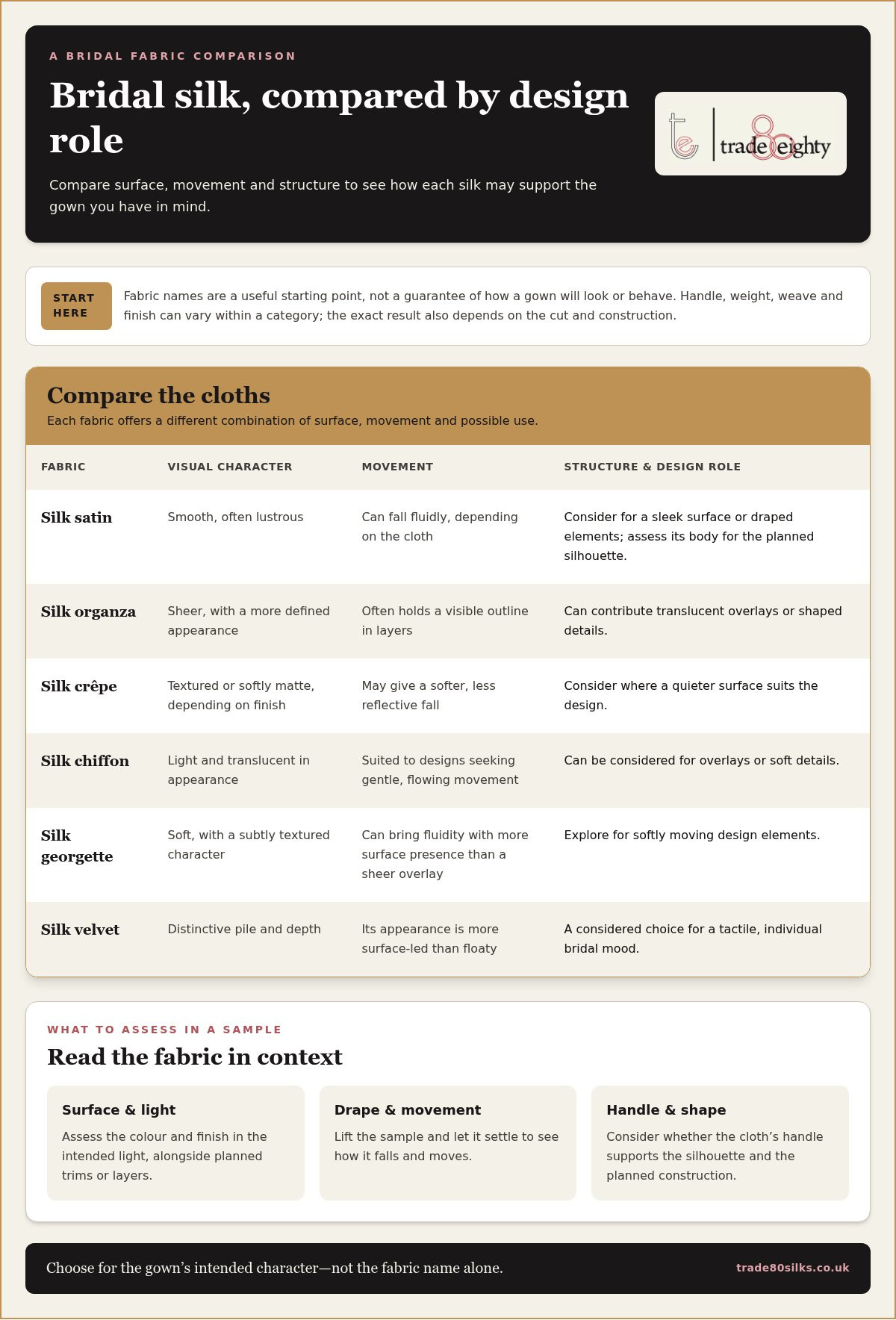
Fabric names offer a useful starting point, but the design role makes a comparison meaningful. Satin may bring a smooth, lustrous surface; organza can add a sheer layer with a more defined outline. Chiffon, georgette and crêpe each offer their own approach to texture and movement, while the exact result depends on the cloth itself and how the gown is cut and constructed.
Use this guide to narrow the possibilities by the effect you want, rather than treating any fabric as a universal choice. Handle, weight, weave and finish can vary even within a familiar fabric category.
| Fabric | Visual character | Movement | Structure and possible design role |
|---|---|---|---|
| Silk satin | Smooth, often lustrous | Can fall fluidly, depending on the cloth | Consider for a sleek surface or draped elements; assess its body for the planned silhouette. |
| Silk organza | Sheer, with a more defined appearance | Often holds a visible outline in layers | Can contribute translucent overlays or shaped details. |
| Silk crêpe | Textured or softly matte, depending on finish | May give a softer, less reflective fall | Consider where a quieter surface suits the design. |
| Silk chiffon | Light and translucent in appearance | Suited to designs seeking gentle, flowing movement | Can be considered for overlays or soft details. |
| Silk georgette | Soft, with a subtly textured character | Can bring fluidity with more surface presence than a sheer overlay | Explore for softly moving design elements. |
| Silk velvet | Distinctive pile and depth | Its appearance is more surface-led than floaty | A considered choice for a tactile, individual bridal mood. |
Silk satin, organza and crêpe: how their effects differ
Satin’s lustre can draw light across a gown, although the degree of sheen and the way it drapes depend on the specific satin. Organza offers a different design tool: its transparency can create a light overlay, while its more defined presence can make edges and layers visible. Crêpe brings another surface character, but its texture and fall also vary. Explore the silk organza fabric guide for a closer look at this versatile cloth.
Think beyond the name. A sample can show how a particular cloth responds to folds, seams and layers, but the finished effect also depends on pattern, lining and construction. A fabric that appears fluid when held loose may read differently once shaped into a fitted bodice or gathered skirt.
Chiffon, georgette and velvet for contrasting bridal moods
Chiffon and georgette are worth considering when softness and flowing movement are central to the brief. Velvet offers a more distinctive, tactile surface rather than a default bridal choice. The best silk for wedding dress design is the one that supports the intended mood and construction. For designers weighing up these qualities, Trade80Silks UK’s silk fabric selection includes options such as crinkle silk satin, printed silk organza and raw silk.
Is silk always the best wedding-dress fabric? Compare the trade-offs
Silk has a long association with bridalwear, but that reputation doesn’t make every silk suitable for every gown. A design may call for a particular lustre, texture or fall; another may prioritise a different surface or handling quality. The fibre name alone can’t tell you exactly how a cloth will look or behave, since weave, finish and construction all shape the result.
The best fabric is the one that answers the gown’s design requirements, not the one with the grandest reputation. Identify what the fabric must contribute, then weigh those qualities against the practical needs of the garment and the wearer’s preferences. A smooth, reflective finish may be central to one brief, while another calls for a quieter surface or a different tactile impression. Comparing fabric categories in this way keeps the decision grounded in the intended design rather than assumptions about what a wedding dress ought to be made from.
When silk supports the design, and when it may not
Silk can be a considered choice when its surface, drape or texture reinforces the gown’s character. A lustrous cloth may suit a design that welcomes light across its surface; a textured silk may help create a more distinctive finish. If the brief calls for another look or handling quality, a different fabric category may be more appropriate. Neither choice is inherently superior: the design sets the criteria.
Assess the fabric against the whole brief, not just the first impression of a swatch. Consider how it will appear in the gown’s colour, in the intended lighting and alongside planned layers or trims. Then consider the wearer’s preferences: a fabric’s feel and the way it moves are part of the experience of wearing the garment. Aim for a coherent match between visual intention, construction and personal comfort, rather than choosing silk simply because it is associated with occasionwear.
Why fabric combinations can be more useful than a single-fabric rule
A gown doesn’t have to rely on one cloth throughout. Designers can select fabrics for distinct roles, such as a main body, an overlay or a detail, allowing each to contribute a different surface or visual effect. For example, satin beneath a sheer overlay can create contrast between a smooth base and a translucent outer layer. The overall result depends on how the materials work together in the pattern and construction.
Before settling on a combination, compare the cloths side by side and consider how their colours, textures and movement relate. A surface that seems subtle alone may become more pronounced beside another fabric, so assess the pairing as part of the design rather than as separate choices. For further context on one satin option, explore this crinkle silk satin guide. Trade80Silks UK’s silk and natural fabrics can also provide a starting point for considering materials alongside your gown’s brief.
How to choose the right wedding-dress silk: a practical sample checklist
A fabric sample is most useful when you assess it against the gown it’s intended to become. Screens can suggest colour and surface, but they can’t fully show how cloth responds to light, touch or movement. Use this process to compare shortlisted silks with the design brief and planned construction in mind.
- Define the brief. Note the silhouette, mood and finish you want, along with whether the design calls for fluid movement, a more defined shape or a particular surface. This gives each sample a clear purpose in the comparison.
- Shortlist suitable cloths. Choose a small group whose visible character seems aligned with the brief. Consider weight in relation to the planned design, but assess the individual cloth rather than relying on a fabric name alone.
- Examine each sample. View it in the intended lighting and compare its colour and sheen with the design palette. Handle it gently, observing how it falls, folds and responds when moved.
- Review it in context. Place the sample beside planned trims, linings or overlays, then consider how its character will support the silhouette and construction. Discuss the pattern and handling with the dressmaker before making a final selection.
Compare each sample in the gown’s intended light, alongside its planned layers, and against the design’s silhouette and construction. This simple discipline helps turn an appealing swatch into a considered fabric decision.
Assess the sample against the gown brief
Begin with colour. A shade viewed on a screen may appear different beside the other colours in the design, so inspect the cloth in the lighting where the gown is intended to be seen. Notice whether its sheen changes the impression of the colour. Then lift and lower the sample, letting it fall naturally. Gentle movement can reveal folds and surface effects that a flat swatch conceals.
Ask whether what you observe supports the design. Does the cloth’s fall suit the intended line? Does its surface complement the mood, and does it appear compatible with the planned construction? Record what you see rather than relying on a quick first impression.
Review layering, finishing and practical handling
Place the sample beside any planned overlay, lining or decorative detail. Notice how the colours and surfaces relate, and whether one layer changes the visual impression of another. A dressmaker can assess how the cloth’s handle suits the pattern and intended construction, including how it behaves at seams and joins. Keep notes for each option, using the same criteria so shortlisted fabrics can be compared consistently.
Record the fabric name, colour impression, surface, movement and how it looked with the planned layers. These observations make it easier to revisit the shortlist with the design brief in view. For a considered selection of silk and natural fabrics, explore Trade80Silks UK fabrics.
Find bridal silk fabric for your design with Trade80Silks UK
Choosing cloth for a bridal project means matching material qualities to the design, rather than selecting by name alone. Trade80Silks UK supplies fabrics to designers and makers, with a curated selection sourced from silk mills. Its range includes crinkle silk satin, printed silk organza and raw silk, each offering a different starting point for a gown concept. With more than 35 years of industry experience, Trade80Silks UK brings considered fabric knowledge to bridalwear projects.
Finding the best silk for wedding dress design starts with understanding what the cloth needs to contribute, whether that is a particular surface, a print or a texture that supports the overall idea. Fabrics are supplied by the metre or roll, giving designers and makers material to consider in relation to their project and intended construction.
A considered fabric selection for bridal designers
A curated selection can help you explore how different cloths might serve a gown’s character. Crinkle silk satin, printed silk organza and raw silk each offer distinct visual possibilities; the right direction depends on your brief, planned silhouette and finishing details. Reviewing the material in this context helps connect the initial concept with practical choices for the garment’s construction.
As you compare options, consider the role each fabric is intended to play. Your selection might be guided by the desired surface, the relationship between the cloth and other design elements, or the way a particular fabric supports the overall visual composition. This is a fabric decision, not a finished-gown choice: the designer and dressmaker shape the garment through pattern, construction and finishing. For brides seeking inspiration on how luxury textiles look when fully realised, boutiques specialising in wedding dresses Sydney showcase how different silks drape, hold structure and move on the body.
When a bespoke textile can serve a distinctive brief
Some concepts call for more than a choice from an existing fabric selection. Bespoke development can bring a specific creative direction into focus through custom jacquard weaving, embroidery or digital printing onto silk substrates. These techniques offer different ways to develop a textile in keeping with the brief, whether the design calls for a woven pattern, embroidered detail or a printed surface.
A clear brief helps guide those possibilities. Set out the intended character of the fabric, where it will be used in the gown and how it should relate to the wider design. Trade80Silks UK offers bespoke fabric commissions for designers developing a textile around a considered creative idea.
From a distinctive surface to a carefully chosen base cloth, thoughtful fabric selection gives a bridal design its material foundation. Explore Trade80Silks UK’s silk and natural fabrics to consider the possibilities for your next design.
Let your design lead the next fabric decision
Before settling on a cloth, turn your design intention into a simple test: what should the gown express at first glance, and what should it feel like in motion? Keeping that vision at the centre can help distinguish a fabric that merely appeals from one that genuinely belongs in the design. The best silk for wedding dress projects is ultimately a choice made in relation to the individual brief, not a rule to follow.
If your concept calls for a distinctive textile, bespoke development can give you further creative possibilities, including custom jacquard weaving, embroidery and digital printing onto silk substrates. Trade80Silks UK brings more than 35 years of industry experience to its curated fabrics sourced from premier silk mills, helping designers consider materials in light of their intended use.
Take a closer look at the cloths and creative options that could bring your idea into focus. Explore Trade80Silks UK’s curated silk and natural fabrics and take your bridal design forward with confidence.
Frequently Asked Questions
Which silk is best for a wedding dress with a flowing silhouette?
For a flowing silhouette, consider a silk with a drape that complements the intended line, such as chiffon, georgette or a suitably fluid satin. The best silk for wedding dress designs depends on how the specific cloth falls, not its name alone. If the skirt is gathered or layered, examine how the fabric behaves in those forms, as well as how it looks when held freely.
Is silk satin suitable for a wedding dress?
Yes, silk satin can suit a wedding dress where a smooth, lustrous surface supports the design. It may work for a clean, uninterrupted line or a detail where reflected light is part of the desired effect. Before choosing, look at the particular satin in the intended colour and against the gown’s pattern. A sample can help reveal whether its sheen feels balanced across the planned garment.
Can you combine different silk fabrics in one wedding dress?
Yes, combining silk fabrics can give separate parts of a gown distinct visual roles. For example, a designer might use satin for a main section and a sheer fabric as an overlay, creating contrast without relying on one surface throughout. Consider how the colours and textures work together, and how the layers will be joined. A dressmaker can assess the combination in relation to the pattern and construction.
What is the difference between silk organza and silk chiffon for bridalwear?
Silk organza is typically chosen for a sheer layer with a more defined outline, while silk chiffon is often considered for a softer, flowing impression. The precise feel and appearance vary by cloth, so treat these as design directions rather than fixed rules. For instance, consider organza where a layer’s shape should remain visible, and chiffon where the brief calls for a gentler fall.
How can I judge a wedding-dress fabric sample before choosing it?
Judge a sample under lighting similar to the ceremony or reception, then compare it with the gown’s chosen colour palette. Hold it vertically, let it fall and move it gently to see how folds and sheen change. Place it beside planned trims or other layers, too. Note what you observe, including colour, surface and handle, so each shortlisted cloth can be compared against the same design priorities.
Does the season affect which silk is suitable for a wedding dress?
The season can inform the design brief, but it doesn’t determine a single suitable silk. Consider the setting and schedule: an outdoor ceremony followed by an indoor reception may call for different layers or styling from a celebration held entirely indoors. Think about the wearer’s comfort and whether the gown will include an overlay, lining or removable element. Assess the complete design, rather than choosing by season alone.


