

A fabric that looks right on a swatch can still behave differently in production. Avoiding fabric sourcing mistakes starts with testing sample yardage for shrinkage, colourfastness and strength before committing to a larger order.
It’s understandable to focus first on colour, handle and price, but performance, availability and consistency matter just as much once a fabric is in use. This article explains how to test washing and wear properties, communicate specifications and timelines clearly with suppliers, and weigh sustainability alongside the fabric’s intended purpose. Together, these steps can help you choose materials with greater confidence and reduce the risk of unwelcome surprises when production begins.
Key Takeaways
- Test sample fabric for shrinkage, colourfastness and strength before committing to a production order.
- Set out fabric specifications, quantities and timing clearly so supplier expectations are aligned.
- Consider fibre choices, dyeing and supply-chain transparency when assessing a fabric’s sustainability.
- Match the material to its intended use, and weigh quality and availability alongside cost.
1. Fabric testing for shrinkage, colourfastness and strength
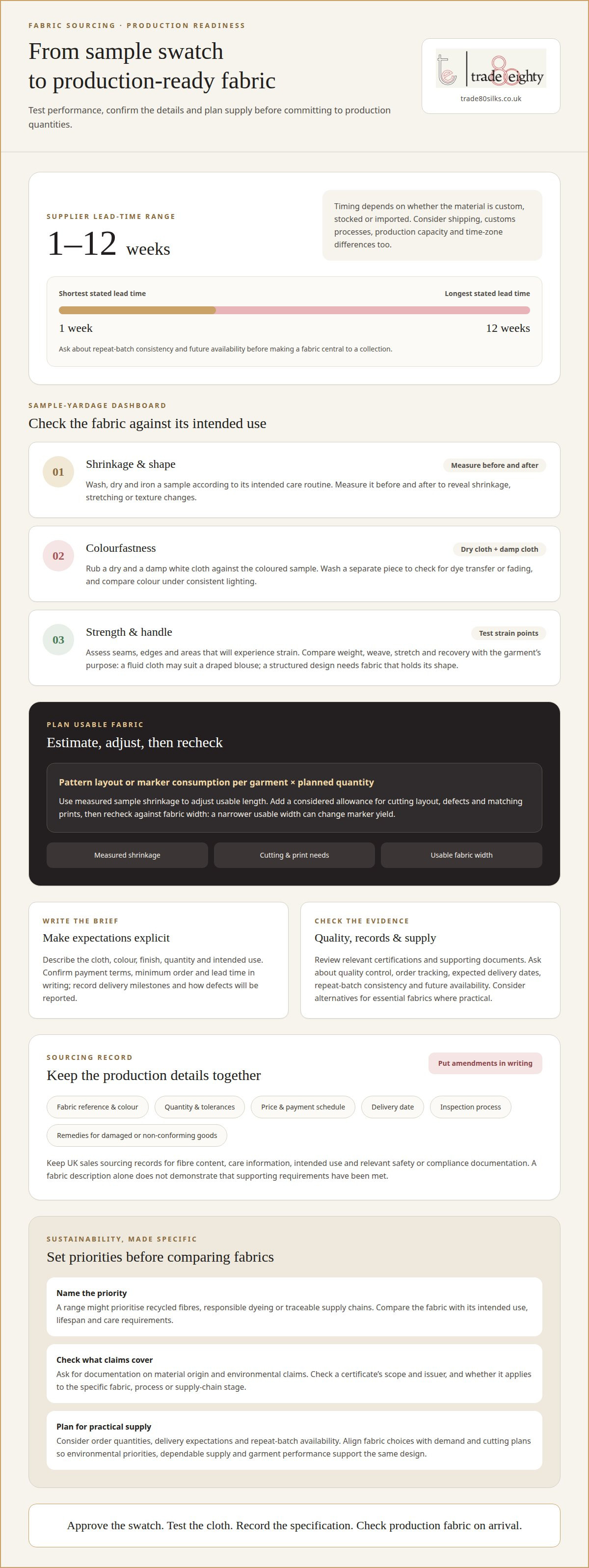
Before committing to production quantities, obtain sample yardage and test it under the conditions the finished garment will face. Wash, dry and iron a sample according to its intended care routine, then measure it before and after. This reveals shrinkage, stretching or texture changes that a paper specification cannot show.
Check colourfastness as well as appearance. Rub a dry and damp white cloth against a coloured sample, and wash a separate piece to see whether dye transfers or fades. Compare the result under consistent lighting, since a swatch and a later production batch may differ in shade. Record the fabric reference and colour details for manufacturers.
Assess strength and handle by testing seams, edges and areas that will experience strain. Compare the sample’s weight, weave, stretch and recovery with the garment’s purpose; a fluid fabric may suit a draped blouse, while a structured design needs a body that holds its shape. Composition, width and finish also affect drape, comfort, cutting yield and care.
Calculate required fabric from the pattern layout or marker consumption for each garment, multiplied by the planned quantity. Use the sample test’s measured shrinkage to adjust the usable length, then add a considered allowance for cutting layout, defects and matching prints. Recheck the estimate against fabric width, since a narrower usable width can change the marker yield.
For reliable quality, compare samples from different rolls or batches for colour, texture and construction, then inspect production fabric on arrival. Keep the approved swatch as a reference and report defects promptly. NHS says textiles and furnishings should meet the flame-retardancy standards in Health Technical Memorandum 05:03, Part C, to crib source 5 standards.
2. Supplier relationships and communication
Clear communication turns a fabric specification into a workable production plan. Describe the cloth, colour, finish, quantity and intended use, then confirm payment terms, minimum order and lead time in writing. For clothing production, record delivery milestones and how defects will be reported, so both parties understand how quality concerns will be handled.
Compare domestic and overseas suppliers by considering more than the quoted lead time. Fabric sourcing lead times can range from 1 to 12 weeks, depending on whether the material is custom, stocked or imported. Include shipping, customs processes, time-zone differences, production capacity and routes for resolving discrepancies. Ask about repeat-batch consistency and future availability before making a fabric central to a collection. These comparisons are a practical part of avoiding fabric sourcing mistakes.
Assess reliability through evidence and specific discussions. Review relevant certifications and supporting documents, ask about quality-control processes, and establish how orders are tracked from production through dispatch. Confirm expected delivery dates early, allow schedule buffer, and agree how updates will be shared if a disruption affects supply. Relying on one source can leave a brand exposed to delays, so consider alternatives for essential fabrics where practical.
For UK sales, keep sourcing records that cover fibre content, care information, intended use and any relevant safety or compliance documentation. These are separate considerations: a fabric description alone does not demonstrate that supporting requirements have been met. Agree which records accompany the order and retain them together for reference.
Record the fabric reference, colour, quantity, tolerances, price, payment schedule, delivery date, inspection process and remedies for damaged or non-conforming goods. Put amendments in writing; a revised sample or delivery date shouldn’t rest on a verbal exchange. This careful record-keeping supports stronger supplier relationships and makes avoiding fabric sourcing mistakes a more consistent part of production planning.
3. Considering sustainability in sourcing
Define what sustainability means for the collection before comparing fabrics. One range might prioritise recycled fibres, while another focuses on responsible dyeing or traceable supply chains. Set these priorities in the sourcing brief, then compare each fabric with its intended use, lifespan and care requirements. Origin matters, but so does whether the material performs as needed and suits the garment. This makes avoiding fabric sourcing mistakes part of setting the brief, not an afterthought.
Fibre names alone don’t tell the whole story. If considering cotton, recycled content or another lower-impact option, ask for documentation explaining the material’s origin and supporting its environmental claims. Review the scope and issuer of each certificate, and check whether it applies to the specific fabric, process or supply-chain stage. Certification can inform a decision, but it should sit alongside clear production details.
Responsible dyeing and finishing also belong in the assessment. Ask how these processes are described and what records support the claims. Traceability is more useful when it identifies relevant stages, from fibre through fabric finishing, rather than relying on a broad sustainability statement. This gives brands a clearer basis for explaining material choices without implying that one fibre or label answers every concern. Scrutiny can help prevent fabric sourcing mistakes when claims influence a design decision.
Plan for practical consequences, too. A preferred sustainable fabric may involve different order quantities, delivery expectations or repeat-batch availability, so consider these factors before building a production schedule around it. Delays can affect a collection if a key material does not arrive as planned. Align fabric choices with demand and cutting plans; efficient use of cloth can reduce waste. Sustainable sourcing is most useful when environmental priorities, dependable supply and garment performance support the same design.
4. Common fabric sourcing mistakes
A frequent mistake is choosing a fabric for appearance alone, without matching its properties to the garment. A design that needs stretch and recovery may lose its intended shape in a rigid weave. Assess weight, drape, finish and intended use together, then choose materials suited to both construction and wear.
It can be useful to consider whether a fabric is practical to source before building a collection around it. Minimum orders can range from 50 to 1,000 yards, depending on supplier, fabric and customisation. Specialty cloth may require a larger commitment, while a sampled print might no longer be available when production begins. Confirm quantity and repeat availability before finalising designs, especially for wholesale orders.
Do not let the search for an ideal cloth stall the whole collection. One designer described spending five months looking for a fabric that might not be available in affordable quantities. For emerging brands, coordinating complementary colours and textures can be more practical than demanding an exact match. Let the fabric selection guide the range rather than designing around material that remains difficult to source.
Buying stock without a production plan can tie up cash and studio space. Estimate demand, calculate usable yield and align orders with confirmed designs before purchasing. Fabric price alone is a poor measure of value: durability, customer preferences and performance shape a garment’s long-term quality. A low-priced fabric that fails its intended use can undermine the whole order.
Finally, don’t inspect only one small swatch when production arrives. Check every roll promptly, document flaws and compare the delivered cloth with the approved reference. Quality concerns discovered after 45 days may be harder to resolve, according to supplier return practices described in the market. Clear specifications, colour codes and construction notes help prevent common fabric sourcing errors before orders are cut.
For a considered selection tailored to a specific design, discuss your fabric requirements.
Trade80Silks UK: Bespoke Fabric Commissions
Trade80Silks UK offers Bespoke Fabric Commissions for designers whose specifications call for a distinctive fabric beyond a standard selection. Custom-woven cloth, intricate jacquards, embroideries and digital prints can help bring a considered design direction into the material itself. This route is especially relevant when colour, pattern or surface detail needs to work closely with a collection’s intended look and use.
For projects suited to an existing fabric, Crinkle Silk Satin (#167), Printed Silk Organza (PS PEG 5) and Printed Tulle (PS PET 3x) offer different foundations for creative development. Your intended garment, required quantities and material preferences can guide the conversation, helping connect sourcing decisions with the design brief.
To discuss a fabric commission or an appropriate silk option, contact Trade80Silks UK.
Bring your next fabric brief into focus
The next sourcing decision is an opportunity to shape more than a garment’s appearance. A clear brief brings together the design’s character, how it will be worn and the qualities that matter most in the finished cloth. That gives each choice a purpose, from the initial creative direction to the fabric selected for development.
A thoughtful approach to avoiding fabric sourcing mistakes also creates room for originality. Rather than forcing a design around an uncertain material, let your priorities guide a fabric direction that feels considered and distinctive. Trade80Silks UK can support that process through its fabric offering and bespoke commissions, helping you explore silk options in relation to your project.
When you’re ready to discuss the direction of your next design, contact Trade80Silks UK for sourcing help. A well-shaped fabric brief is a fine place to begin.
Frequently Asked Questions
What are the most common fabric sourcing mistakes?
Common mistakes include choosing cloth before confirming its availability, ordering more than a collection can use, or selecting a material that conflicts with the garment’s construction. A striking print may be a poor choice if it cannot be reordered for later production. Before committing, align the design and production plan with the supplier’s available quantities, so one sourcing decision does not constrain the whole range.
How do you check fabric quality before placing an order?
Inspect a physical swatch under consistent lighting and examine both sides, the selvedges and the weave for visible irregularities. Compare its handle and surface with the garment’s intended finish. For instance, assess a sheer fabric for evenness across the sample, not just for colour. Keep a dated reference swatch with the fabric description to support later comparisons.
How can you verify a fabric supplier is reliable?
Look for clear, consistent answers about the fabric, order process and how problems are handled. Ask for relevant customer references or trade recommendations, then consider whether the supplier’s communication is documented and timely during early discussions. A reliable working relationship is demonstrated through specific information, not broad assurances. Keep written records of agreed details, so decisions remain clear as an order progresses.
What fabric sample and testing should you request before bulk ordering?
Request a physical swatch for an initial assessment and sample yardage if the design needs a test garment or production trial. This reveals how the material behaves during cutting, stitching and finishing, which a small swatch cannot fully show. Record the sample’s fabric reference and colour identification, then retain an approved piece as the standard for reviewing the production order.
What are typical minimum order quantities, lead times and prices for fabric sourcing in the UK?
Market estimates put fabric minimum order quantities at 50 to 1,000 yards, while lead times can range from 1 to 12 weeks. Both depend on factors such as whether the fabric is stocked, custom-made or imported. There isn’t one price that applies across fabric sourcing: material, customisation, order size and delivery arrangements shape the quote. Agree those details before committing.
How can you assess fabric certifications and sustainability claims?
Match each sustainability statement to documentation for the exact fabric and process being offered. Note what the certificate covers, who issued it and which supply-chain stages it relates to; a document for one stage does not automatically describe every stage. Keep supporting records alongside product information, and make public descriptions no broader than the evidence, particularly when discussing fibre origins or production methods.


