

Habotai and China silk may sound like two different fabrics, but the names often refer to the same lightweight, plain-weave silk. The difference between Habotai and China silk is usually a matter of naming; how sheer a fabric looks depends on its weight and construction.
If you’re choosing silk for a garment or creative project, you’ll want to understand its opacity, feel and resilience before deciding. This guide explains how Habotai feels, when it appears sheer, and how its texture and durability compare with Mulberry silk, a name that refers to the silkworm’s food source rather than the fabric’s weave. It also explains why Habotai is known as China silk, helping you distinguish a change in terminology from a meaningful difference in the material.
Key Takeaways
- Habotai and China silk often describe the same plain-weave fabric, so the name alone may not tell you how it will look or feel.
- Assess transparency by considering the fabric’s weight and how it will be used, rather than assuming every Habotai silk is equally sheer.
- Compare the smooth, lightweight handle of Habotai with Mulberry silk’s typical weights to judge which better suits your project.
- Understanding the difference between a silk’s name, weave and fibre can help you choose more confidently for a particular design.
Habotai versus Mulberry silk texture and durability
Habotai and China silk generally name the same plain-weave fabric, rather than two distinct silk types. Their feel depends on weight and finish, while Mulberry identifies the source of the silk fibre.
Texture, Surface and Finish
Habotai has a smooth, even surface, a soft sheen and a cool, gentle feel. It gives garments and scarves a subtle lustre without satin’s pronounced shine. This distinction matters when the surface will be seen or handled closely: a fine, even weave creates a different impression from a textured finish.
China silk shares these qualities when the name refers to Habotai. Habotai is also more substantial and easier to handle than chiffon, whose twisted yarns give it a light, translucent character. Chiffon can feel slightly grainy, while Habotai feels smoother and less slippery.
Weight, Weave and Drape
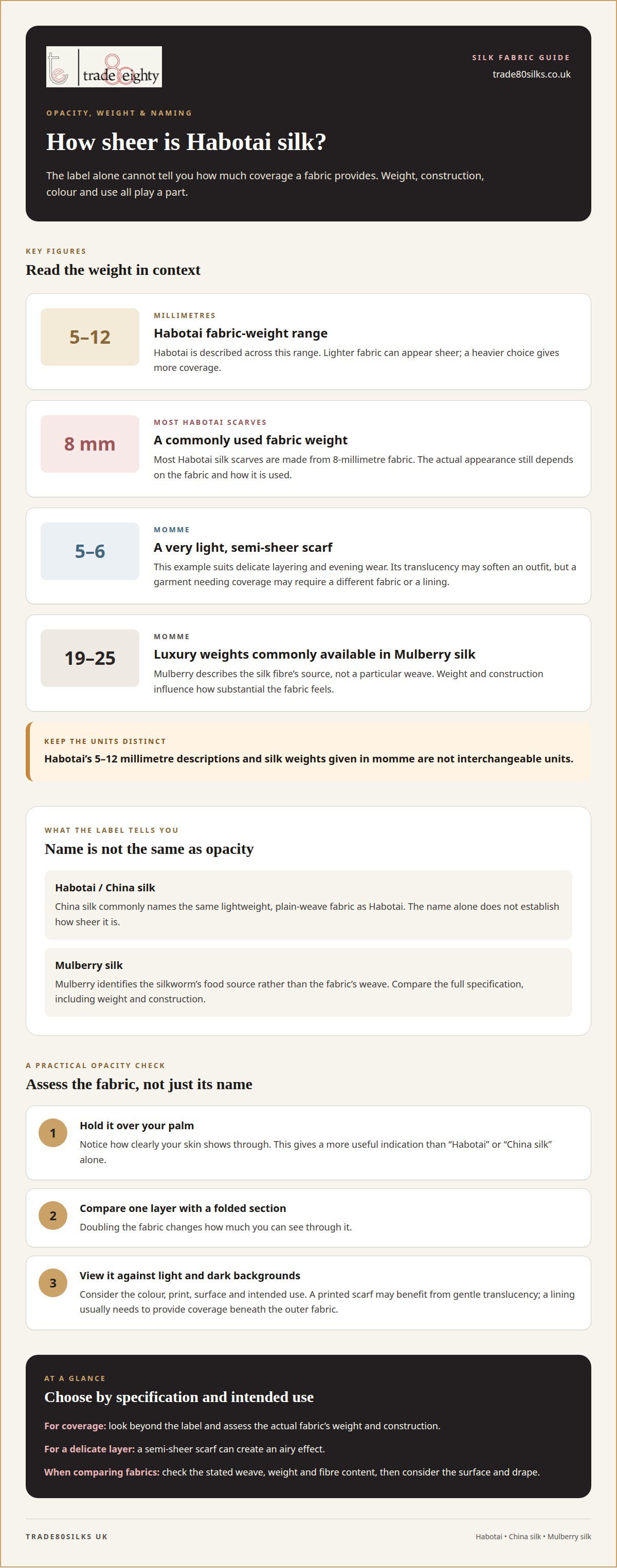
Habotai is a plain-weave silk fabric, with weights ranging from 5 to 12 millimetres. The weave crosses threads evenly, creating a supple surface and graceful drape. Lighter fabric can appear sheer, while a heavier choice gives more coverage; the name alone does not establish opacity. This matters when selecting fabric for a visible layer or a garment lining.
Compared with chiffon, Habotai feels more substantial and falls in a more controlled way. Chiffon’s twisted yarns create a softer, more diffused appearance, particularly when dyed. For a flowing design, decide whether you want chiffon’s airy movement or Habotai’s smoother, steadier fall.
Durability and Price Comparison
Habotai is more durable and easier to work with than chiffon, but its name alone cannot establish how it compares with Mulberry silk. Mulberry silk is commonly available in luxury weights such as 19-25 momme; construction and weight influence how substantial a fabric feels.
There is no inherent price difference between Habotai and China silk when both names describe the same fabric. UK prices depend on the fabric’s weight, finish and specification, so compare those details rather than relying on the label alone.
When buying fabric in the UK, check the stated weave, weight and fibre content, then assess its surface and drape. A plain weave and smooth finish point towards Habotai; a description that says China silk may refer to the same material.
Habotai silk as another name for China silk
Habotai is a lightweight, plain-weave silk traditionally used for linings and delicate garments. China silk commonly names the same fabric, so the label alone doesn’t indicate a different weave or fibre.
Alternative Names and Meaning
Habotai is also known as China silk, Habutai and Pongee. “Habotai” is a Japanese term meaning “soft as down”, evoking the fabric’s gentle feel. The terminology reflects its history: although the word is Japanese, Habotai was originally produced in China. It was traditionally used for linings and lightweight garments, where a fine, supple cloth is useful.
Makers may see these names used for similar silks. Read the full specification alongside the label: the weave and fibre content describe the material more clearly than the name alone.
Typical Momme Weights
Habotai is described across a weight range of 5 to 12 millimetres, with most Habotai silk scarves made from 8-millimetre fabric. China silk, when used as another name for Habotai, follows the same fabric-weight descriptions. These figures are not momme weights, so don’t treat the units as interchangeable.
Mulberry silk, by contrast, is commonly available in luxury weights such as 19-25 momme. The weight affects the cloth’s substance and drape, making it relevant when choosing between a delicate lining and a more substantial fabric.
Habotai’s lightweight feel suits linings, scarves, silk painting and lightweight garments. China silk used for these purposes refers to the same kind of fabric, rather than a separate material with different uses.
For care, hand-wash Habotai gently in a sink with very mild detergent or shampoo. Silk is fragile when wet, so hang it to drip-dry instead of wringing it; iron on a low setting with a pressing cloth. After painting or dyeing, follow the care instructions for the paint or dye used.
For a different surface finish, sand-washed silk uses a softening process that can give fabric a gentler handle.
Differences in transparency and opacity
Habotai’s transparency isn’t determined by its name. It can appear sheer or more opaque depending on the fabric’s weight and construction. A lightweight Habotai scarf, for example, may show more through than a denser piece. China silk is often another name for Habotai, so that label alone doesn’t tell you how much coverage the cloth provides.
A 5-6 momme silk scarf is very light and semi-sheer, making it suited to delicate layering and evening wear. This example illustrates why opacity matters in fashion: a translucent scarf can beautifully soften an outfit, whilst a garment requiring coverage may need a different fabric choice or a lining. The finished appearance also depends on colour and the way the material is used.
To assess transparency, hold the fabric over your palm and see how clearly your skin shows through. This practical test tells you more than the words “Habotai” or “China silk” alone. Compare a single layer with a folded section, since doubling the fabric changes how much you can see through it.
Texture and finish also affect a fabric’s appearance. A smooth surface reflects light differently from a textured one, while colour and print can make what lies beneath less apparent. View the cloth against both light and dark backgrounds, then consider its intended use: a printed silk scarf may benefit from gentle translucency, while a lining usually needs to provide coverage beneath the outer fabric.
For a project where opacity is central, assess the actual fabric rather than relying on the name. A very lightweight silk below 5 momme is described as too flimsy for an everyday scarf, while a 5-6 momme scarf remains semi-sheer. These examples help distinguish a deliberate airy effect from a fabric intended to feel more substantial.
Habotai silk is also known as China silk
The clearest distinction is that “China silk” often names Habotai, rather than a separate weave. Habotai is also called Habutai and Pongee, so fabric descriptions may use different labels for closely related material. The practical takeaway is to check the construction and fibre details alongside the name.
The terminology brings together two histories. “Habotai” comes from Japanese and means “soft as down”, yet the silk was originally produced in China. It was traditionally used for linings and lightweight garments, where a fine, soft cloth could sit beneath an outer layer. The Japanese name and Chinese production history describe different aspects, not necessarily different fabrics.
A place name may appear to identify provenance, while a textile name describes a material tradition. “China silk” is used as an alternative name for Habotai; by itself, it doesn’t tell you the precise origin of a particular length of cloth. Likewise, “Habutai” and “Pongee” may appear in descriptions, but the names alone don’t establish the fabric’s weight, finish or intended use.
For a project specification, record the details that affect the result: whether the cloth is silk, its weave and weight, and its surface finish. These features help distinguish a delicate lining from a more substantial fabric, even when both descriptions use “China silk”. A smooth surface can have a subtle sheen, while different finishes change how light falls across the material. Construction and finish are more useful than the label alone.
The concise answer is that Habotai and China silk commonly refer to the same lightweight silk fabric, while Habutai and Pongee are additional names. The word “China” reflects its traditional production history, not a guaranteed specification for every fabric sold under that label. For a project requiring a considered material specification, discuss a bespoke fabric commission shaped around the intended use and finish.
Trade80Silks UK
Trade80Silks UK helps designers and manufacturers select silk and natural fabrics for considered projects. If understanding Habotai’s naming has clarified your direction but your design calls for a different surface or finish, explore options such as Printed Silk Organza, Printed Tulle or Crinkle Silk Satin. Bespoke Fabric Commissions can support projects requiring a fabric developed around a particular creative brief.
The right choice depends on the intended use, appearance and material character, not the name alone. Share the qualities you’re seeking, such as a printed effect or distinctive texture, to begin shaping your fabric brief.
For help considering fabric options for your project, contact Trade80Silks UK.
Shape your next fabric brief
Once you understand the difference between Habotai and China silk, describe the material your design calls for. Consider how drape, surface, colour and transparency will affect the finished piece, then use those qualities to guide a focused fabric brief. A clear description helps turn an idea into a considered direction for material selection.
Trade80Silks UK offers a curated range of fabrics, including Crinkle Silk Satin (#167), Printed Silk Organza (PS PEG 5) and Printed Tulle (PS PET 3x). These distinct materials offer different starting points for designs shaped by texture, print and finish.
Bring your project’s material questions to Contact Trade80Silks UK and take the next step towards a fabric choice that supports your creative intent.
Frequently Asked Questions
Is Habotai sheer?
Habotai can be sheer, particularly in a very light weight, but the name alone doesn’t determine its transparency. A 5-6 momme silk scarf, for example, is very light and semi-sheer, making it suitable for delicate layering. For a design needing more coverage, consider the fabric’s weight and how it will be layered, rather than assuming every Habotai fabric has the same opacity.
What does “Habotai” mean?
“Habotai” is a Japanese term meaning “soft as down”. The name describes a gentle quality associated with the fabric, rather than a specific weight or finish. Treat it as a textile name in your project description, then consider the details that affect the result, such as weight, weave and intended role. A fine lining and a scarf may call for different properties.
What is China silk?
China silk is a name commonly used for lightweight Habotai silk, traditionally produced in China and used for linings and lightweight garments. The term describes a fabric tradition, not a guarantee about the origin of every piece sold under that label. For a garment lining, the useful details are the actual fibre, construction and weight, since these shape the fabric’s feel and appearance.
Are Habotai and China silk the same fabric?
Often, yes: China silk is commonly another name for Habotai, rather than a separate weave. The difference between Habotai and China silk is usually terminology, not a change in the fabric itself. However, labels can be used differently in product descriptions, so include the required fibre, weave and finish in a design specification instead of relying on either name alone.
How do Habotai and China silk differ in sheen, drape and opacity?
When the names refer to the same Habotai fabric, they don’t indicate different sheen, drape or opacity. Habotai has a smooth surface, soft sheen and graceful drape; transparency depends on the fabric’s weight. For a scarf intended to show some translucency, a lighter fabric may suit the design, while a lining calls for attention to coverage and layering.


