

What if distinctive embroidered cloth began not with a motif, but with the way the textile needs to look and move? A design that works on a sketch can feel quite different on fabric, where drape, texture, scale and placement all affect the result. If you’re looking for bespoke embroidered fabric that feels individual rather than selected from a standard catalogue, start by connecting the embroidery to the textile’s intended use.
Developing a considered textile means balancing visual character with material qualities, whether you’re working on couture, fashion, costume or another creative application. This article explains how fabric choice, embroidery design and placement can work together, and what to prepare for a commission. Trade80Silks UK draws on more than 35 years of textile experience to develop bespoke fabrics in conversation with designers’ creative direction and their choice of silk and natural fabrics. You’ll find ideas for design directions, practical prompts for key decisions and guidance on shaping an initial reference into a clear brief.
Key Takeaways
- Start with a clear creative direction, then shape the embroidery around the textile’s purpose and character.
- Plan motif, scale, texture and placement with the garment area and viewing distance in mind.
- Compare silk, organza and tulle as potential grounds for bespoke embroidered fabric, considering the visual qualities each brings.
- Prepare a focused brief that covers the application, visual references, fabric direction and design priorities.
- Trade80Silks supplies premium silk and natural fabrics and offers custom embroidery as part of its bespoke textile commissions.
Bespoke Embroidered Fabric Begins with a Distinctive Creative Direction
Embroidery gives cloth its own visual rhythm: a motif draws the eye, stitching adds texture, and the relationship between thread and ground defines the surface. Bespoke embroidered fabric is developed around a particular creative brief, with the embroidery designed as part of the textile rather than selected as a ready-made embellishment. The starting question is not simply “what should we embroider?” but what the fabric needs to express and how it will be used.
Illustrative example: imagine a fine, sheer ground with a restrained botanical motif arranged to suggest movement across a runway look. The motif, fabric and garment concept are considered together, so the embroidery feels integral to the design. This is one possible creative direction, not a fixed specification.
What makes embroidered fabric bespoke?
A bespoke commission gives designers room to develop a textile around a project’s visual language. Reference images, sketches or a moodboard can help clarify whether the desired impression is graphic, delicate, richly layered or quietly textured. From there, the design can be refined through decisions about the motif, its scale and how it sits on the fabric ground.
This differs from choosing an existing embroidered fabric, where the design is already established and the project must work around it. Bespoke development puts the brief at the centre. It concerns the cloth itself, not the making of a finished garment. For background on embroidery’s history, materials and varied applications, see Embroidery.
Where can designers use embroidered cloth?
Embroidered cloth can contribute to textiles for couture, fashion collections, bridalwear and costume. Its role depends on the piece: a concentrated motif can create a focal point, while a finer, more dispersed design can add a subtler surface texture. Neither approach is inherently better; each creates a different visual effect. Beyond wearable fashion, custom stitching and bespoke textile work can also preserve personal history, much like assembling a memorial t-shirt quilt from meaningful garments.
Begin with the intended piece and the impression the fabric should make. Should the textile command attention from across a runway, or reveal detail at closer range? Should the embroidery set the mood, complement a silhouette or create a visual link across a collection? These questions turn a general preference into a practical design direction before you refine material choices.
A useful starting point for a commission is a short project description, a few visual references and a note on where the fabric will be used. These do not need to form a finished technical specification. They help explain the atmosphere and priorities behind the idea, making the design discussion more focused. Trade80Silks develops bespoke fabric commissions, including custom embroidery, with premium silk and natural fabrics.
Designing Bespoke Embroidery: Motif, Scale, Texture and Placement
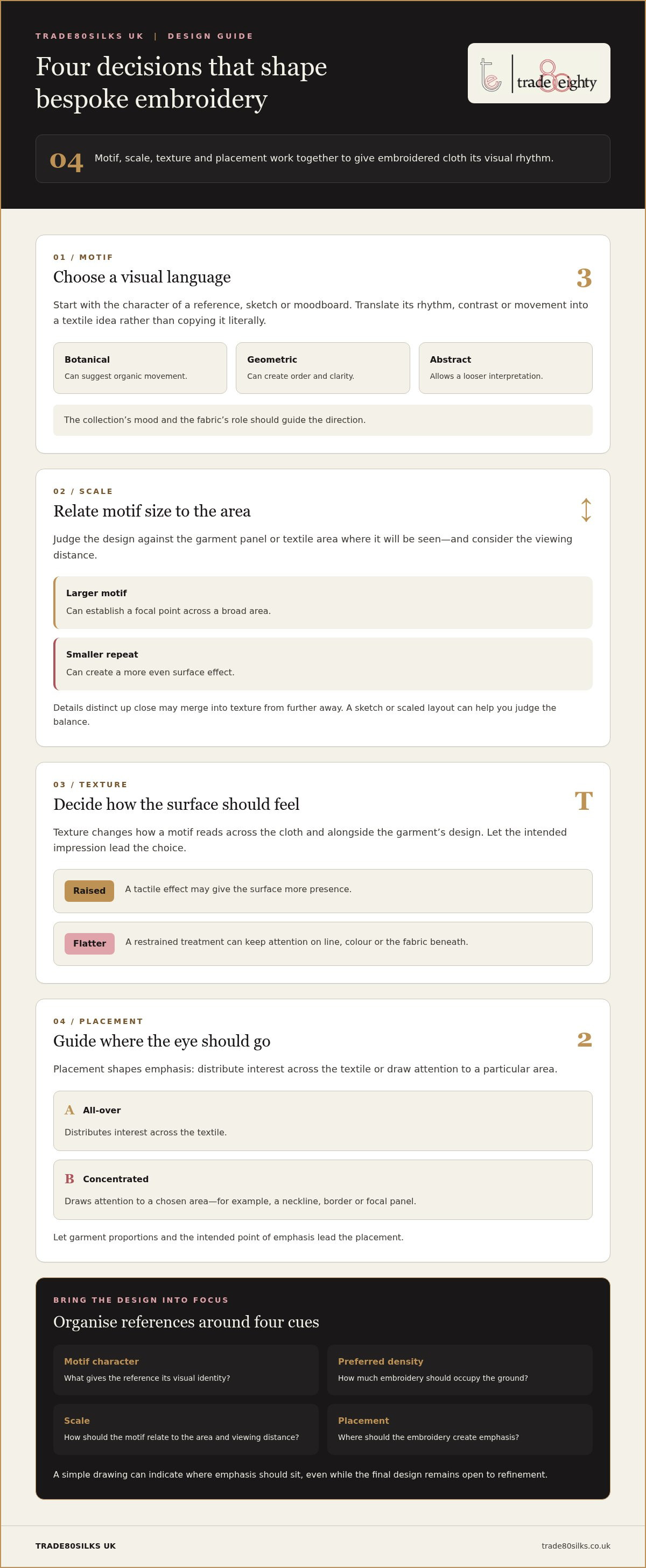
A textile motif can begin with a detail in a reference image, a line in a sketch or the balance of colour and shape in a moodboard. The design task is to translate that starting point into a repeat or placement that feels intentional on cloth. Rather than copying a reference literally, identify what gives it character, such as its rhythm, contrast or sense of movement, and explore how that quality could become a textile design.
Choosing a motif and embroidery scale
Botanical, geometric and abstract motifs each offer a different visual language. Botanical forms can suggest organic movement; geometric arrangements can create order and clarity; abstract shapes allow a looser interpretation. These are starting points, not fixed styles. The right direction depends on the collection’s mood and the role the fabric will play.
Relate scale to the garment panel or textile area where the embroidery will be seen. A large motif can establish a focal point across a broad area, while a smaller repeat may create a more even surface effect. Consider viewing distance as well: details that are distinct up close may merge into texture from further away. A sketch or scaled layout can help you judge the balance before developing the concept further.
Spacing matters as much as the motif. Regular intervals can create a composed rhythm, while varied spacing may feel more spontaneous. Negative space gives elaborate forms room to breathe and keeps the ground visible as part of the design. Motif scale sets the visual weight of embroidery, while spacing determines whether that weight feels balanced, rhythmic or deliberately irregular.
Using texture and placement with intention
Texture adds another dimension. A raised or tactile effect may give the surface more presence, while a flatter, more restrained treatment can keep attention on line, colour or the fabric beneath. Let the intended impression guide the choice, since texture affects how a motif reads across the cloth and alongside the garment’s design.
Placement can be all-over or concentrated. An all-over pattern distributes interest across the textile; a focused arrangement draws attention to a particular area. For example, embroidery might trace a neckline, define a border or gather around a focal panel, leaving other areas quieter. These are design options rather than prescribed placements: garment proportions and the intended point of emphasis should lead.
For a bespoke embroidered fabric commission, organise references around what they show: motif character, preferred density, scale and placement. A simple drawing can indicate where the emphasis should sit, even if the final design remains open to refinement. To develop a textile concept, explore bespoke fabric commissions with Trade80Silks.
Choosing the Fabric Ground for Bespoke Embroidered Fabric
The fabric beneath embroidery is part of its visual language. A motif can appear crisp against one ground, softened by another or changed by the interaction of transparency, surface and drape. Choosing the ground alongside the embroidery concept helps the textile read as a considered whole, rather than a pattern placed on an unrelated cloth.
Consider the embroidery and fabric ground together, because each shapes how the other is seen. Silk, organza and tulle offer distinct starting points. The right direction depends on the project and the impression the textile needs to create.
How silk, organza and tulle shape the design
Silk offers varied surface character and lustre, creating scope to explore contrasts between cloth and embroidery. Organza provides a sheer visual ground, so motifs can sit against transparency or form part of a layered composition. Tulle’s netted structure creates a different effect, with pattern visibility changing as layers overlap. These are design considerations, not guarantees of how a finished textile will behave.
| Fabric ground | Visual character | Project considerations |
|---|---|---|
| Silk | Surface and lustre can lend the textile a nuanced, refined appearance. | Consider how the chosen surface relates to the motif and the intended visual effect. |
| Organza | A sheer ground makes transparency part of the design. | Think about how the motif will read against what lies beneath or behind it. |
| Tulle | A netted ground gives the textile an open, patterned appearance. | Consider how layering may alter the visibility and density of the design. |
Matching the textile to the intended application
Start with the garment, costume or textile project, then narrow the fabric direction. A runway piece may be seen from a distance as well as close at hand. A layered design also introduces a relationship between the embroidered surface and the ground beneath it. These factors can guide decisions about motif clarity, placement and density, without assuming one fabric suits every purpose.
Weight, surface and drape should support the intended design and application. A distinctive surface may be central to the visual brief; in another project, transparency or a netted structure may be the quality to explore. Describe what the textile needs to contribute: how it should appear in movement, whether it will be layered and the distance from which its embroidery should be legible.
These considerations give a bespoke embroidered fabric commission a useful material focus. Trade80Silks supplies premium silk and natural fabrics and develops bespoke textile commissions, including custom embroidery. Connecting the application to a fabric direction helps bring the design concept into focus alongside the character of the cloth.
Preparing a Creative Brief for Bespoke Embroidered Fabric
A clear brief gives a textile commission direction while leaving room for creative development. It helps translate an initial idea into useful decisions about purpose, references, fabric and design priorities. For bespoke embroidered fabric, explaining what matters most is more useful than trying to specify every detail at the outset.
What to include in an embroidery brief
Begin with the intended application and the impression the cloth should create. Note the approximate fabric area, where it will be used and what the embroidery should contribute, whether that is a focal detail or a more restrained surface effect. Gather reference imagery and motif ideas, then indicate a colour direction and preferred level of ornament. A rough sketch can communicate intent without being polished.
- Purpose: Describe the project, its application and the visual role the textile should play.
- Visual references: Collect images, sketches or moodboard details that express the desired character. Add a short note to explain what each reference contributes.
- Fabric direction: Identify a preferred ground, such as silk, organza or tulle, if you have one, and explain what draws you to it.
- Design priorities: Clarify which motif, colour, scale, placement and level of ornament matter most to the concept.
Placement notes can be especially useful. Mark where the embroidery should draw the eye and where the ground should remain visible. Colour references also reduce ambiguity: alongside a named colour, include a visual reference where possible, since the same description can suggest different shades. Separate essential requirements from exploratory ideas, so the brief makes clear what must be preserved and where there is creative latitude.
How to develop and refine the concept
Refinement brings creative intent into conversation with material considerations. A motif that works in a drawing may need a change in scale or position once its relationship to the ground is explored. Keep the central priorities visible and treat secondary details as open to development. This gives the discussion focus without treating the first sketch as a final specification.
If you’re weighing surface embroidery against a pattern formed in the weave itself, the custom jacquard weaving guide offers a useful comparison. The choice depends on the character you want the textile to express. For broader context on shaping an idea into a commission, follow the bespoke fabric commission guide.
Before sharing your brief, check that it explains the project’s purpose, provides visual references and identifies the decisions that matter most. Then begin a bespoke fabric commission with Trade80Silks, where custom embroidery is part of considered textile development.
Commission Bespoke Embroidered Fabric with Trade80Silks
A distinctive textile commission brings a designer’s visual intention together with a considered material choice. Trade80Silks works with designers seeking bespoke embroidered fabric, supplying premium silk and natural fabrics and offering custom embroidery as part of its bespoke textile development. The creative brief and the character of the cloth guide the decisions, so the design stays connected to the project’s direction.
With more than 35 years of industry experience, Trade80Silks brings textile knowledge to this collaborative process. Discussion can draw on a designer’s references, intended application and fabric preferences, without prescribing a single aesthetic or a predetermined result.
A considered approach to bespoke textile development
A commission can start with an early concept or a more developed design brief. Visual references, sketches and notes about the intended use help establish the qualities the textile should express. Preferences for silk or another natural fabric provide a material starting point, and custom embroidery can be considered in relation to the ground and overall design direction.
Textile development is a creative exchange. The designer brings knowledge of the collection, garment or costume; Trade80Silks brings experience in premium fabrics and bespoke textile commissions. Together, these perspectives can help clarify which elements are central to the concept and which can remain open to exploration as the idea develops.
Taking the next step from inspiration to commission
To begin, bring the intended application, visual references and any material preferences you have considered. A concise description of the desired impression can be as useful as a finished drawing. For example, note whether the textile should feel expressive, restrained, delicate or visually bold. Details about motif, colour and placement can further show where attention should fall.
You don’t need every decision settled before a project conversation. A clear sense of purpose provides a useful foundation, while questions about fabric and embroidery can be explored in relation to the brief. Separating essential requirements from ideas you’re still testing also helps preserve the heart of the concept as it takes shape.
Whether you’re developing cloth for a runway collection, couture or costume, Trade80Silks offers a considered way to explore the relationship between creative intent and material character. To discuss a project direction, explore bespoke fabric commissions.
Give Your Textile Idea Its Next Step
A compelling fabric commission begins with a clear intention, not necessarily with every detail resolved. A visual reference, a preferred material or a sense of the atmosphere you want to create can provide a useful starting point. From there, the motif, ground and overall direction can be considered together, keeping the original idea at the centre of the process.
For designers developing bespoke embroidered fabric, Trade80Silks brings more than 35 years of textile industry experience and supplies premium silk and natural fabrics to designers and manufacturers. Custom embroidery is available through its bespoke fabric services. Shape your inspiration into a project direction that reflects your creative vision.
Take your textile idea towards a bespoke commission with Trade80Silks.
Frequently Asked Questions
What is bespoke embroidered fabric?
Bespoke embroidered fabric is cloth whose embroidery is developed for a particular design brief rather than selected as a complete, ready-made pattern. A commission can shape how a motif is interpreted and how it relates to the ground. For example, a designer creating a capsule collection might adapt a recurring detail from its print or silhouette into an embroidered textile, helping establish a visual thread across separate pieces.
Can embroidery be commissioned on silk?
Silk can be considered as a ground for commissioned embroidery. Make the choice with the project’s desired appearance in mind: for example, consider whether the motif should stand out against a lustrous surface or a more subdued silk, and whether the cloth or stitching should lead visually. Include the intended application and preferred silk character in the brief, so material and design are discussed as connected choices.
How do I brief a bespoke embroidered fabric design?
Begin with the project’s purpose, then make the references easy to interpret. Label a sketch to distinguish motif shape from placement, and note whether a colour image is a precise target or simply an atmospheric reference. A quick outline of the intended cloth area can add scale context. Mark non-negotiable details separately from ideas open to revision, helping the discussion focus on what defines the design.
What is the difference between embroidered and jacquard fabric?
Embroidery adds decorative stitching to a fabric surface, while jacquard pattern is created through the structure of the weave. Both approaches can express a motif, but they introduce the design differently. Consider whether the concept calls for stitching as a visible surface element or a pattern formed in the woven cloth. That distinction can help clarify the brief before you decide how the textile should express its design.
Can bespoke embroidery be designed for a specific garment?
Yes, the embroidery concept can be developed with a particular garment design in mind. A working sketch can show seams, darts and openings, giving the textile design context for how cut pieces will be assembled. You might also indicate whether a motif should align across a seam or sit within a single panel. These notes communicate the relationship between the cloth design and the garment without requiring a finished pattern.
What should I consider when choosing a fabric for embroidery?
Consider how the fabric’s surface, weight, drape and transparency relate to the intended visual effect. Compare fabric references alongside the embroidery artwork, noting which qualities should remain prominent. For layered designs, describe what lies beneath the embroidered ground; for a more opaque look, explain how much of the surface should be visually covered. This gives material choices a clear design context.
Is bespoke embroidered fabric suitable for costume design?
Yes, bespoke embroidered fabric can contribute to a costume concept when the textile needs to support a particular character or visual reference. For a historical interpretation, reference imagery can guide the mood and motif, while a more fantastical design might call for an original visual language. Trade80Silks UK develops bespoke textile commissions for creative applications, with custom embroidery available as part of its fabric services.


