

An intricate motif doesn’t automatically call for jacquard. The right choice depends on whether you want a pattern woven into the cloth, applied through print or embroidery, or sourced in an existing fabric. For designers considering custom jacquard weaving UK commissions, that distinction shapes both the look of the design and how the finished cloth will work in a garment or interior.
To turn a sketch, palette or tactile reference into fabric, you need to think about more than the motif. Its scale, repeat and contrast must work with the cloth’s hand and intended use. This guide explains what jacquard can achieve, how it compares with digital printing and embroidery, and what to include in a clear bespoke brief.
Trade80Silks UK works with designers and manufacturers on bespoke fabric commissions, including custom jacquard weaving, embroidery and digital printing. With more than 35 years in the textile trade, the company can help you consider how pattern, colour, texture and material work together. The practical steps below will help you make those decisions with greater clarity.
Key Takeaways
- Consider jacquard when you want the pattern to be part of the cloth’s woven structure, rather than applied to its surface.
- Assess motif scale, repeat and contrast to guide how your design will read in fabric.
- Compare jacquard with digital printing and embroidery according to the effect you want and the role of the cloth.
- Prepare a clear brief covering end use, artwork, desired hand, colour direction and design scale before developing a bespoke commission.
- Custom jacquard weaving UK commissions can be considered alongside embroidery and digital printing as part of bespoke fabric development.
What is bespoke jacquard weaving and is it worthwhile?
A motif can be more than an image placed on cloth. In jacquard weaving, the pattern is formed by the arrangement of interlacing yarns, making it part of the fabric’s structure rather than a surface decoration. A print colours the surface; jacquard forms its pattern through the weave.
This distinction matters when the cloth itself should contribute to the design. A woven motif can bring pattern, colour and texture into one material, giving a garment or interior scheme a more integrated character. Bespoke jacquard is worth exploring when an original motif is central to a collection, costume concept or interiors vision, and an existing fabric doesn’t express it as intended.
Whether it is worthwhile depends on the design and its purpose, not simply on how elaborate the pattern looks. Consider a bespoke woven design when you want the motif and cloth to work together. If you mainly need a surface image or a detail added to ready-made cloth, printing or embroidery may be more suitable. Let the end use, desired hand and visual character guide your choice.
How does a jacquard pattern become part of the cloth?
During weaving, warp yarns run lengthwise and weft yarns pass across them. Their interlacing forms the fabric, while a jacquard design controls how that interlacing creates the pattern. The Jacquard machine offers useful historical context for the mechanism behind this approach.
The finished appearance depends on the artwork and chosen weave. Yarn colour can create contrast, while the weave itself can contribute textural or tonal effects. A motif may read clearly from a distance or feel more restrained at close range. Consider these qualities together: artwork is only one part of how a pattern will look in cloth.
Which projects can benefit from a bespoke jacquard?
Fashion, couture and bridal projects may use a distinctive woven motif to establish a recognisable design language across a collection or statement piece. Costume designers can consider jacquard when the fabric needs to support a character or visual concept. In interiors, a bespoke pattern can give a scheme its own identity, with the fabric choice shaped by how and where it will be used—such as pairing bespoke upholstery fabrics with fine antique furniture from nwtiques.com in classic town and country homes.
Start with the end use. A cloth intended for a structured garment has different priorities from one chosen for a flowing couture look or an interior application. Ask how the fabric should feel and behave, how prominent the motif should be, and whether its scale will remain legible in the finished design. These decisions help set a practical direction for both pattern and cloth.
For designers exploring custom jacquard weaving UK commissions, the first question isn’t simply “Can this motif be woven?” It’s whether weaving is the best way to achieve the desired relationship between design and material. Balance visual intent with the fabric’s role to decide whether bespoke jacquard is the right foundation for the project.
Which design and fabric choices shape a custom jacquard?
A compelling jacquard begins with more than an attractive motif. Its scale, repeat and contrast need to suit the cloth and the way the design will be seen. Jacquard appearance depends on both the artwork and the weave structure. A large, open motif can make a confident statement, while a smaller repeat may create a quieter, more continuous surface. The right choice depends on the intended effect and application.
Colour needs similar consideration. Contrasting yarn colours can make a pattern read clearly, while closer tones may give it a subtler, more textural quality. The weave can also create tonal variation through the way yarns catch light and form the surface. For an overview of the process and its uses, see Jacquard Weaving: Technology and Applications.
How should artwork be prepared for woven pattern development?
Share a clear sketch, finished artwork, reference image or considered visual direction. Include the intended motif scale and how it should repeat across the cloth. Point out which features need to stand out and where you want less contrast. This explains the character you want to preserve, rather than leaving the design to be interpreted from an image alone.
Artwork may need adapting for translation into cloth. A textile designer can help retain its defining qualities while considering how scale, repeat and contrast work together in the woven pattern. Keep the original intention clear, but allow for adjustments that help the design read coherently as fabric.
How do fibre, weight and hand affect the design?
Fibre and cloth weight influence how a fabric feels, hangs and suits its intended role. A design for a softly draping fashion piece has different material priorities from one for a structured garment or an interior application. Describe the desired hand in practical terms, such as fluid, crisp or substantial, and consider how the motif should sit against that tactile character.
Silk and other natural fabrics have distinct visual and tactile qualities, so material choice should be part of the design conversation, not an afterthought. If your concept calls for sheer cloth, the silk organza fabric guide can help you consider its character. Separate what the design must express from what the cloth must do, then weigh both before settling on a direction.
For a project exploring custom jacquard weaving UK, pair a clear visual direction with realistic cloth priorities. Trade80Silks’ bespoke fabric service includes jacquard, embroidery and digital printing, so you can consider the approach that best suits your design.
Custom jacquard weaving vs printing and embroidery: which suits your design?
Choose a technique by the effect you want the fabric to achieve, rather than assuming one method is inherently superior. Jacquard forms a pattern through the weave, digital printing applies colour and imagery to the fabric surface, and embroidery adds stitching as decoration. Each creates a different relationship between design and cloth. The right route depends on your artwork, the material’s hand and the project’s intended use.
| Approach | Design effect | Cloth structure | Useful priority |
|---|---|---|---|
| Jacquard weaving | Motif formed by the woven pattern | Pattern is part of the cloth structure | Developing motif and material together |
| Digital printing | Colour and imagery applied to the surface | Design sits on the chosen fabric | Surface imagery or considered colour placement |
| Embroidery | Stitched detail or embellishment | Stitching is added to the fabric | Introducing a tactile, decorative accent |
When is a woven pattern the stronger design direction?
Jacquard may suit a project where the motif should feel inherent to the cloth, rather than placed on top of it. For example, a repeating emblem could give a fashion design a distinctive visual signature, or a restrained tonal motif could add interest without relying on a printed image. In both cases, the pattern and fabric character are considered together. Jacquard is a strong direction when the material’s surface is part of the design language.
For designers considering custom jacquard weaving UK commissions, ask whether the motif gains meaning from being woven into the fabric. If it does, weigh jacquard alongside the cloth’s intended role and feel. This Jacquard Fabric Market Analysis offers an industry perspective, but a market trend alone can’t determine the best method for an individual brief.
When might print or embroidery suit the brief better?
Digital printing may be the more direct choice when the priority is surface imagery or deliberate colour placement. It suits a design that needs to appear on the fabric without becoming part of its weave. Embroidery, by contrast, is suited to briefs calling for stitched texture, embellishment or a defined detail on the cloth. Consider the intended hand as well, since each approach interacts with the fabric differently.
Trade80Silks’ bespoke fabric offer includes custom jacquard weaving, embroidery and digital printing. Choose between these methods by considering the artwork, cloth, end use and desired visual effect: a woven motif, printed image or embroidered accent. Set those priorities first so the method serves the design, rather than dictating it.
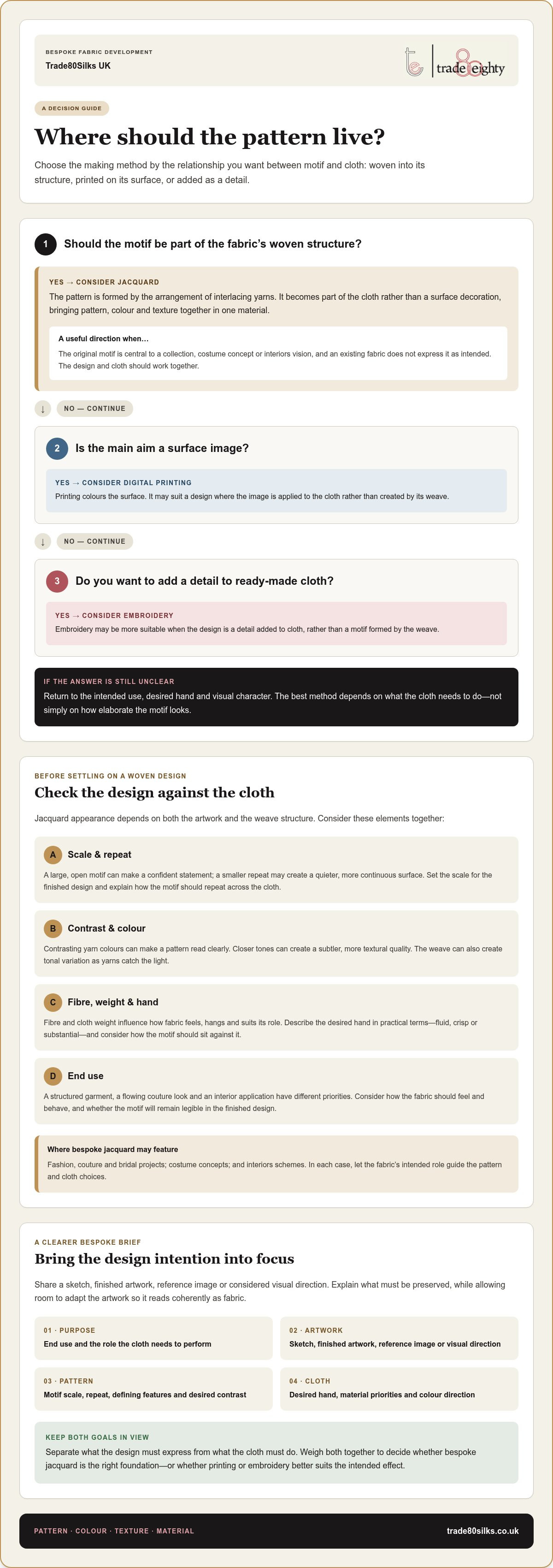
How to prepare a strong custom jacquard commission brief
A useful brief translates creative ambition into decisions about the cloth. For a custom jacquard commission, explain what the fabric is for, what the design needs to communicate and which qualities matter most in use. You don’t need every technical detail settled at the outset. Clear references and priorities give fabric development a considered starting point.
What information should the brief contain?
Set out the intended application and, where relevant, the wearer or setting. A cloth for a flowing garment, a costume concept or an interior scheme will have different priorities. Then gather visual references and distinguish firm requirements from ideas you’re happy to develop collaboratively.
- Purpose: Describe the project, where the fabric will be used and the impression it should create.
- Artwork: Share a sketch, finished artwork or reference image, noting which features are essential to its identity.
- Scale and repeat: Indicate the intended motif size and how it should sit across the cloth. Add a visual reference if helpful.
- Colour direction: Provide preferred colours, tonal references or a palette, and explain whether you want the pattern to read clearly or feel subtle.
- Cloth priorities: Describe the desired hand, weight and drape in practical terms, and include fabric references that convey the feel you have in mind.
- Flexibility: Separate non-negotiable requirements from elements open to refinement, such as adjustments to the artwork or its overall balance.
How can sampling help refine a jacquard idea?
A sample can help you assess how the design reads as cloth rather than as a flat image. Use it to consider motif scale, the relationship between colours and the tactile character of the material. These qualities are easier to judge together, particularly when the finished fabric needs to work in a specific design context.
Review the sample against the brief: does the pattern make the intended impression, and does the cloth feel suited to its use? If something feels out of balance, give focused feedback based on your original priorities. For example, explain whether the motif needs greater presence or the fabric should feel softer, rather than asking for a change without stating its purpose.
For a broader view of the stages involved, the bespoke fabric commission guide follows the journey from creative brief towards finished textile. A well-considered brief is a practical first step for custom jacquard weaving UK, helping Trade80Silks shape a bespoke fabric commission around your design intent and cloth priorities. Develop your bespoke fabric commission with those details in hand.
Commission custom jacquard weaving with Trade80Silks UK
A bespoke fabric commission brings a design intention into closer conversation with the cloth itself. Trade80Silks UK has over 35 years in the textile industry and supplies premium silk and natural fabrics to designers and manufacturers. Its bespoke fabric development includes custom jacquard weaving, embroidery and digital printing, offering different ways to realise a creative brief according to the pattern, material and effect the project calls for.
For designers considering custom jacquard weaving UK, the starting point is not simply a motif, but how it should relate to the fabric and its purpose. A woven pattern may be right when the design and structure need to develop together. Digital printing or embroidery may better serve a brief centred on surface imagery or stitched detail. The intended use helps guide that decision.
What to expect from a collaborative commission
A commission begins with a considered discussion of your creative brief, the fabric’s intended application and the qualities you want from the cloth. Explain what the design must communicate, alongside your preferences for colour, texture, weight or drape. This helps clarify the direction and consider how custom jacquard, embroidery or digital printing could translate your aims into fabric development.
The process is a collaborative exchange. The more clearly you describe the desired effect and practical priorities, the more thoughtfully each can be weighed. You may already have a resolved design, or be exploring how an idea might take shape in cloth. Either way, the conversation can connect creative ambition to a material direction without assuming that one technique suits every project.
How to take the next step with your design
Gather the references that best express your intent. A developed artwork is useful, but a clear concept or visual reference can also start the discussion. Include where the fabric will be used and what you want it to look and feel like in context. Bring together any material references, colour notes or sketches too.
- Artwork or concept: Share a sketch, image or description of the motif and the qualities you want to retain.
- Application: Explain whether the fabric is for a fashion, bridal, film or interior design project, and describe its setting or use.
- Material direction: Note preferences for fibre, weight, hand, colour and drape, distinguishing essentials from ideas open to development.
These details focus the bespoke fabric conversation, whether you’re ready to commission a specific woven pattern or still weighing up the right approach. Trade80Silks brings experience in fine textiles and bespoke development to the process, with the method guided by your project rather than a fixed formula.
Discuss your bespoke fabric commission and share the design direction you have in mind.
Give your fabric idea its next expression
The most rewarding bespoke work begins with a design intention you’re ready to explore. Perhaps you have a clear motif, or simply a sense of how the fabric should look and feel in its finished setting. Either can start a thoughtful conversation about the material and method best suited to your project.
Trade80Silks sources premium silk and natural fabrics from premier silk mills, bringing a considered appreciation of cloth to bespoke development. If you’re weighing up custom jacquard weaving UK for a future collection or interior concept, let the intended use and your creative priorities lead the discussion. A carefully chosen fabric direction can give your idea a distinctive material presence.
Gather your references, colour notes or initial sketches, then discuss your custom fabric commission with Trade80Silks to begin shaping a fabric direction for your project.
Frequently Asked Questions
What is custom jacquard weaving?
Custom jacquard weaving develops a fabric in which the chosen motif is formed through the arrangement of the weave, rather than added afterwards. It’s an approach to consider when an original pattern should feel closely connected to the material. For a custom jacquard weaving UK commission, the design conversation can begin with a visual idea and explore how it might become part of a bespoke fabric.
Can any design be woven as a jacquard pattern?
Not every design will translate into cloth exactly as it appears on screen or paper. Fine details, gradients and complex imagery may need adapting so the main character remains clear in a woven interpretation. For instance, a sketch with delicate lines might be simplified or given a different scale. Share the original artwork alongside the features you most want to preserve to help guide its development.
How is jacquard fabric different from printed fabric?
Jacquard forms a motif through the fabric’s weave, while printing applies a design to the cloth’s surface. This distinction can guide your choice: a repeating emblem intended to feel integrated with the material suggests a woven direction, while a brief built around a particular image or placement of colour may point towards printing. Consider the desired appearance alongside the fabric’s role in the finished project.
Is jacquard fabric suitable for fashion and interiors?
Jacquard can be considered for both fashion and interior design, provided the fabric direction suits the application. A designer developing a distinctive textile for a collection may prioritise visual identity and hand; an interior project may place more emphasis on how the pattern reads in its setting. Describe the intended use early, since it helps shape choices about material, motif and overall character.
What should I include in a custom jacquard brief?
Include the project’s purpose, intended use, artwork or visual references, preferred colour direction and the qualities you want from the cloth. Identify which parts of the design are essential and where you’re open to development. If you have a fabric reference that conveys the desired feel or drape, include it and explain what you’d like it to communicate.
Can jacquard weaving use silk?
Yes, silk can be considered as part of a bespoke jacquard fabric direction. Trade80Silks works with premium silk and natural fabrics, and the most suitable material depends on the project’s intended use and desired cloth character. In your brief, describe the feel, appearance and application you have in mind to help frame material choices.
How does sampling help with a bespoke jacquard commission?
A sample gives you a tangible way to assess how the design and material work together. Consider whether the motif feels appropriately scaled, how the colour reads in the cloth and whether the tactile character suits the project. Keep feedback focused on your priorities, such as a clearer pattern impression or a different overall feel, so refinements have a clear purpose.


