

The loom, not the motif, distinguishes handloom from industrial jacquard weaving: a weaver guides one, while powered machinery produces cloth at scale on the other. Both methods can weave a design into the cloth itself, and industrial powerloom factories typically require minimum orders in the thousands of metres. A bespoke jacquard fabric weaver can help develop an approach suited to your design and intended quantity.
Handloom cloth is often associated with close artisanal control, while industrial weaving is associated with higher output. The practical choice also depends on the pattern, fabric width, finish and required consistency across the order. Understanding these factors helps you brief a custom fabric commission clearly.
This guide explains how jacquard designs become woven patterns, how handloom and industrial methods differ, and what to consider when planning quantities and scaling. It also looks at how width, fibre and finishing affect the character and use of the finished cloth.
Key Takeaways
- Decide whether the design’s defining quality comes from a woven structure or a surface print before settling on a production method.
- Match your order quantity to the process: industrial powerloom production typically calls for orders in the thousands of metres.
- A clear motif brief can begin with a digital file or a hand-drawn sketch, then be translated into the loom’s pattern instructions.
- Consider Trade80Silks UK’s Bespoke Fabric Commissions when your project calls for a custom-woven cloth shaped around its design and intended use.
What Are The Benefits Of Purchasing Custom Woven Jacquard Fabric?
Custom jacquard weaving makes a motif part of the cloth’s construction, giving designers control over pattern, texture and repeat. The result depends on how the design works with the chosen yarns and intended use.
A design library can grow from one original motif into a coordinated collection, with variations in scale, colour and repeat across related textiles. Computer-aided design (CAD) lets a team develop artwork digitally before translating it into loom instructions. A hand-drawn sketch can also be the starting point, so specialist software is not essential at the outset.
Before weaving, a designer may map the motif onto grid paper, with each square representing an intersection of warp and weft. Loom preparation involves threading individual yarns through heddles, which control how the warp lifts. Traditional punch-card systems can use hundreds or thousands of cards linked into a continuous loop; digital controls can translate the same design logic into modern production.
Woven Designs Versus Printed Textiles
With jacquard, the pattern is woven into the fabric rather than printed onto its surface. Interlacing yarns create the design, whereas a print adds colour to the cloth’s existing construction. When comparing UK weavers and requesting samples, assess the motif’s scale, the fabric’s face and reverse, fibre, width and finish. A sample helps you judge how these choices look in the intended light and application.
Design Ownership and Weaving Costs
Set out design ownership terms before production, including rights to the original artwork, the loom-ready file and any future reuse of the pattern. These terms depend on the agreement between the parties, so record them clearly for each commission. UK cost per metre depends on factors such as fibre, pattern complexity, loom preparation, order quantity and finishing. A detailed brief clarifies how each choice affects the specification and overall production cost.
Minimum order quantities and production scaling
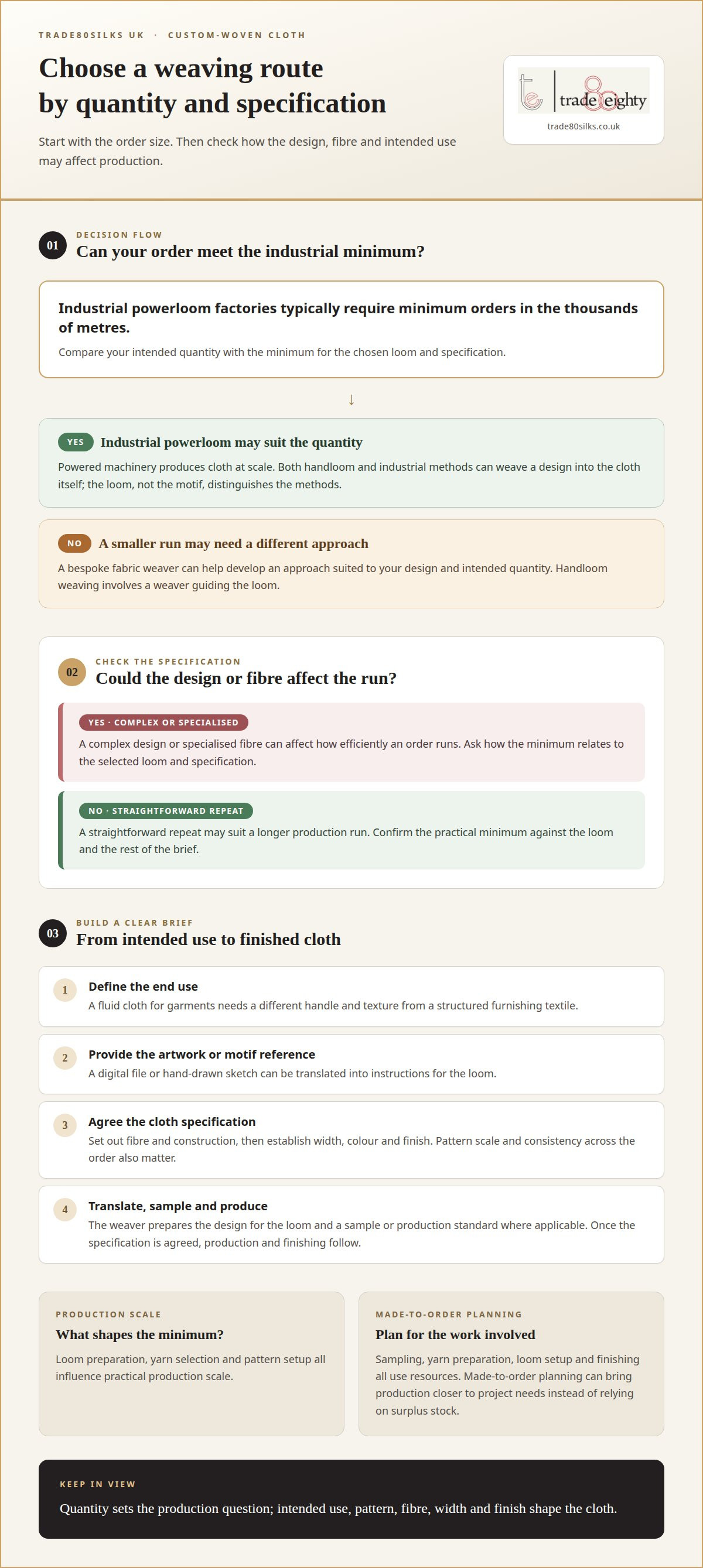
Order size affects which loom suits a project, how preparation costs are apportioned and how much cloth is produced. Industrial powerloom factories in the UK typically require minimum orders in the thousands of metres, so a smaller run may need a different production approach.
Jacquard fabric can be made to order in different fibres, structures, pattern scales, widths and finishes. Intended use helps shape these choices: a fluid cloth for garments needs a different handle and texture from a structured furnishing textile. Define the end use and desired appearance first, then align the specification with the production method.
Minimum order quantities reflect more than fabric demand. Loom preparation, yarn selection and pattern setup all influence practical production scale. A complex design or specialised fibre can affect how efficiently an order runs, while a straightforward repeat may suit a longer production run. Ask how the minimum relates to the chosen loom and specification.
Made-to-order planning can bring production closer to a project’s actual requirements instead of relying on surplus stock. The process still uses resources: sampling, yarn preparation, loom setup and finishing all play a part. Coordinating colourways or related designs can make an order more coherent, provided the shared specification suits each fabric’s intended role.
The process from brief to finished cloth is straightforward: define the use, provide artwork or a motif reference, agree on fibre and construction, then establish width, colour and finish. The weaver translates the design for the loom and prepares a sample or production standard where applicable. Once the specification is agreed, production and finishing follow, with each decision affecting the final handle and appearance.
For a project shaped around a particular design and quantity, develop a custom fabric brief that brings its use, dimensions and finish into focus.
How jacquard weaving builds patterns into the fabric
A jacquard motif begins as artwork, such as a stylised leaf or geometric repeat. The design is translated into instructions that control which warp yarns rise as the weft passes across the loom. Changing that sequence builds the pattern into the cloth’s structure rather than adding colour to its surface afterwards.
Each choice in the pattern map affects the finished appearance. A longer warp float can make a motif more prominent, while tighter interlacing creates a different balance of texture and definition. The weaver considers how the selected fibre and weave structure will express fine outlines, shaded areas or larger blocks of colour. A small repeat can read differently from the same artwork enlarged across the cloth.
On a traditional jacquard loom, punched cards provide instructions for lifting warp threads. As the cards pass through the mechanism, their pattern directs the loom’s selection, while the weft is inserted across the raised and lowered yarns. Repeated interlacing builds the design into the textile. The card sequence thus carries the translated motif into the weaving process.
Contemporary jacquard production can also use digital design files to prepare loom instructions. This allows a motif to be developed on screen, its repeat refined, and the interaction of colour and structure considered before production. Digital preparation changes how instructions reach the loom, but the woven effect still depends on the relationship between warp, weft and yarn choice.
For example, contrasting yarns can distinguish petals from leaves in a floral design, while changes in interlacing add relief without printing or embroidery. The reverse may show a different arrangement of the same yarns, so both sides can help explain how the motif is constructed. Reviewing the design at its intended scale alongside the chosen weave and fibre helps align the artwork with the finished cloth’s character.
Which UK mills offer bespoke jacquard fabric weaving?
For a UK custom order, match a bespoke jacquard fabric weaver to the design, fibre and intended quantity. Jacquard describes a way of controlling woven patterns, not one standard fabric or a single type of mill. A cloth for a fluid garment, for example, calls for different qualities from a structured furnishing textile. Start by defining what the finished material must do.
Prepare a specification describing the motif, repeat, fibre, width, colour and finish, along with the cloth’s intended use. A sample can help you assess the handle and see how the pattern reads at the relevant scale. For instance, a floral design for a dress may need a finer, softer result than the same motif planned for a decorative panel.
Production method matters too. Industrial powerlooms suit production at scale, while a bespoke jacquard fabric weaver can develop an order around its specific design and material requirements. In the UK, distinguish between suppliers who arrange bespoke weaving and mills that manufacture the fabric themselves. Knowing who handles the brief, loom preparation, sampling and finishing makes the process easier to understand.
Compare proposals by the details they address, not by a mill name alone. Look for a clear connection between the artwork, weave structure, proposed fibre, width and finish. A raised motif against a smooth ground, for example, presents different design considerations from a two-colour geometric repeat. These specifics show how closely the proposal reflects your project’s priorities.
A concise brief can bring the motif, material and application into one practical discussion. Discuss a bespoke jacquard brief with these details in view.
Trade80Silks UK: Bespoke Fabric Commissions
Trade80Silks UK’s Bespoke Fabric Commissions are a natural next step when a project calls for custom-woven cloth or an intricate jacquard design. The service also encompasses embroidery and digital prints, giving designers and manufacturers a way to develop fabric around a specific creative brief.
For a jacquard commission, bring together the motif or artwork, intended use, preferred fibre, and desired width and finish. These details help shape a fabric specification that connects the design with its practical application. Trade80Silks UK also offers silk fabrics including Crinkle Silk Satin ( #167 ), Printed Silk Organza ( PS PEG 5 ) and Printed Tulle ( PS PET 3x ), for projects where a printed material better suits the concept.
Contact Trade80Silks UK to discuss your bespoke fabric requirements.
Shape your next fabric brief
Give your design a clear starting point by deciding what the cloth must express. Should the motif command attention or sit quietly within a larger composition? Consider its scale, viewing distance and how the fabric should move or feel in use. These priorities help a bespoke jacquard fabric weaver translate visual intent into a considered textile specification.
Gather your artwork or reference image, along with notes on application, preferred fibres, colour direction and finish. Mark which qualities are essential and where there is room to explore. This gives the design conversation a practical focus while leaving room for the woven structure to add character to the motif. A thoughtful brief can turn an initial idea into a fabric with a distinctive role in your collection.
Contact Trade80Silks UK to discuss your fabric project and take the next step towards a design shaped around your creative direction.
Frequently Asked Questions
How does handloom jacquard weaving differ from industrial jacquard?
A weaver guides handloom jacquard production, while industrial jacquard uses powered machinery to produce cloth at scale. The choice affects the production method and the quantity suited to the process. For a distinctive, smaller project, discuss how the motif and cloth specification fit the proposed method; larger production plans may be better suited to industrial machinery.
How does the structural integration of a jacquard weave affect garment longevity?
A jacquard motif forms part of the cloth’s woven structure rather than sitting on its surface as a print. That construction alone does not determine how long a garment lasts. Fibre choice, yarn quality, weave, garment construction, frequency of wear and care all influence its service life. For example, a high-friction area such as a sleeve cuff may wear differently from a lightly used panel.
What makes a textile a true jacquard material?
A textile is jacquard when its design is created by controlling the warp yarns during weaving, with the weft crossing them to build the motif into the cloth. A printed floral pattern on plain fabric is not jacquard, even if it looks intricate. Examine the fabric’s construction and reverse: the arrangement of woven yarns reveals that the pattern belongs to the textile itself.
What are the minimum order quantities for bespoke jacquard weaving in the UK?
Industrial powerloom factories typically require minimum orders in the thousands of metres. The production route and specification affect the quantity needed, so align the planned volume with the chosen loom, yarn and design. For a coordinated collection, consider whether related designs can share a production plan; each motif and material must still suit its intended end use.
What are typical lead times for bespoke jacquard fabric production?
Production timing depends on the work involved, not on a single standard schedule. Design preparation, yarn selection, loom setup, sampling, production-run length and finishing all contribute to the process. A complex motif may require more preparation than a simple repeat. Set out the artwork, material choices and intended quantity together to clarify the stages involved.
What artwork and file formats do jacquard weavers need to create a design?
A jacquard design can start with a digital file or hand-drawn sketch. The artwork is then translated into loom instructions, making a clear motif and intended repeat useful starting points. Include colour direction and desired scale, and distinguish key details from decorative elements. The weaver can use this information to interpret the design for the selected cloth.


