

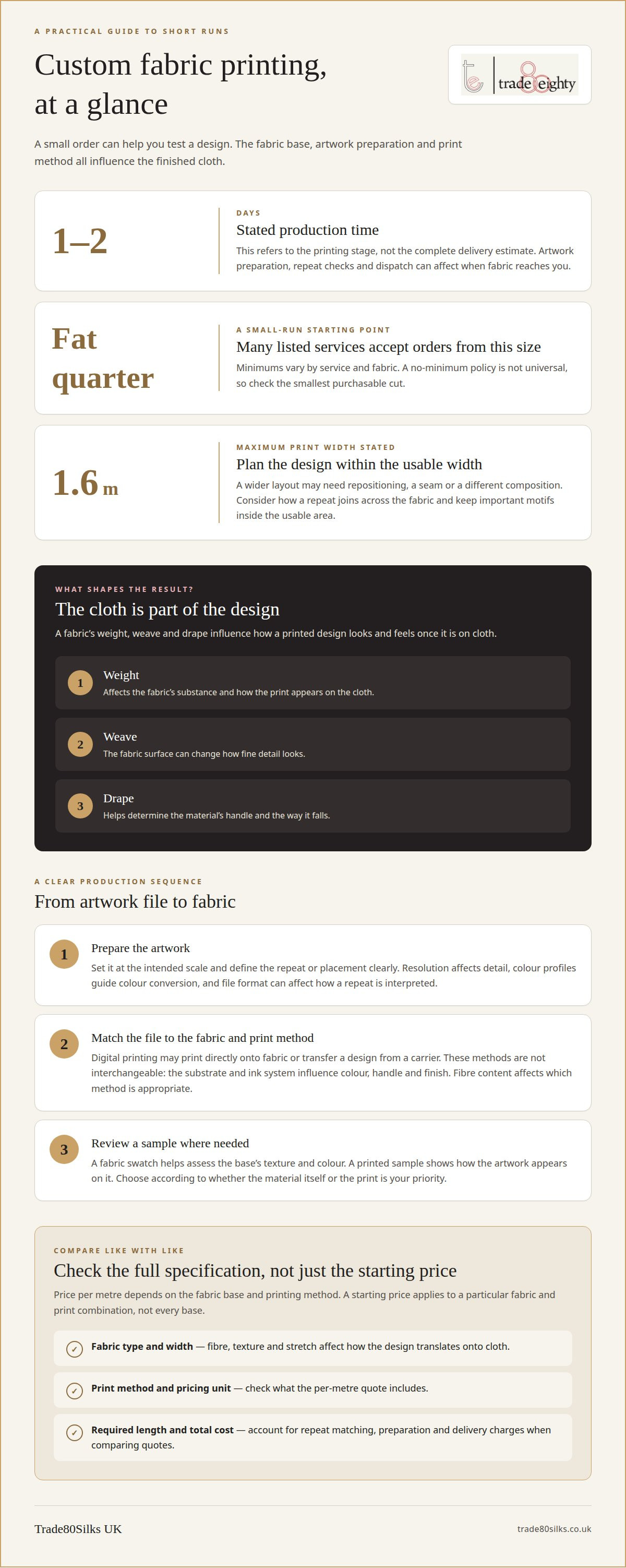
Low-minimum custom fabric printing in the UK can be a short-run option without a lengthy production wait: stated production times are 1 to 2 days, and many services accept orders from a fat quarter upwards. The fabric base matters just as much as the print, shaping how a design looks and feels once it is on cloth.
Choosing a base involves more than colour or price; weight, weave and drape all influence how a printed design comes to life. This guide explains how in-house digital printing works, what affects production time and starting prices, and how different fabric choices suit different creative intentions. You’ll find a clearer way to think about the balance between a small order, the material’s character and the finish you want, whether you’re developing a sample, refining a design or planning a considered production run.
Key Takeaways
- Understand what can affect production time, from print preparation to the fabric selected for your design.
- Learn how in-house digital printing works and what print width means when planning a repeat or placement.
- Compare fabric bases by their weight, weave and drape to choose a material that complements your intended finish.
- Explore silk options and bespoke fabric commissions for projects that call for a more distinctive material character.
How long does it take to print my fabric?
Stated production time for custom fabric printing is 1 to 2 days. That is the printing stage, rather than a complete delivery estimate: preparing artwork, checking the repeat and dispatch can affect when fabric reaches you. For a sample or a short run, allow time for each stage, particularly if you need to assess colour and handle before planning a larger quantity.
Minimum order quantities vary between UK printing services. Most UK fabric-printing sites listed offer orders from a fat quarter upwards, giving designers a practical way to test a placement or motif before committing to more cloth. A no-minimum order policy is not universal, so the smallest purchasable cut depends on the service and fabric. Bulk discounts and large-order pricing also depend on the quantity and chosen base; compare the quoted total for the same material and cut length, rather than assuming a larger order always costs less overall. If you require finished promotional items or corporate gifts rather than raw printed yardage, turning to bulk specialists like SwagStore.NET can simplify volume orders of branded merchandise.
When comparing services, look at the complete cost for your intended sample or quantity, including any preparation and delivery charges. A fabric swatch helps you assess the base’s texture and colour; a printed sample lets you see how your artwork appears on it. These answer different questions, so choose according to whether the material itself or the print is your priority.
For environmentally conscious choices, look for specific information about the fabric’s sourcing and the inks used. Terms such as “organic cotton” and “certified” should refer to a particular material or process, rather than being used as broad, unsupported descriptions. The fabric base and printing method both matter when assessing an environmental claim.
For overseas orders delivered under DPU, the UK Government says the buyer handles import customs clearance at their own cost and risk, including customs duties and taxes. Artwork requirements also depend on the print workflow: resolution affects detail, colour profiles guide colour conversion, and file format can affect how a repeat is interpreted. Prepare a clean, repeat-ready design and follow the printer’s specifications before production.
In-house custom digital fabric printing
Digital fabric printing takes artwork from a file to a textile through a print workflow. The design is prepared for the chosen cloth, then printed directly onto the fabric or transferred from a carrier. These methods are not interchangeable: the substrate and ink system influence colour, handle and finish. Digital printing can reproduce detailed artwork without preparing a separate screen for each colour.
Print width is a practical design constraint. Custom fabric printing services can print textiles up to 1.6 metres wide, so a layout wider than that may need repositioning, a seam or a different composition. Keep important motifs inside the usable area, and consider how a repeat joins across the fabric width. A border design, for example, needs a different file arrangement from an all-over floral repeat.
UK digital textile printing services may use different ink systems, including pigment inks. The precise process depends on the fabric and required finish. Digital printing can suit artwork with fine tonal changes, while transfer printing moves the design from a carrier onto the textile. If you are opting for modern film transfers, learning how to choose a dtf supplier can help you evaluate print durability, ink quality and minimum order requirements. Fibre content affects which method is appropriate, so consider the fabric base and image together.
A useful production sequence is straightforward:
- Prepare the artwork at its intended scale, with the repeat or placement clearly defined.
- Match the file to the fabric width and the selected print method.
- Review a sample where colour, texture or scale needs assessment before a larger run.
Turnaround includes more than the moment the printer runs. File preparation, fabric handling and finishing all form part of production, so a print-ready file can help avoid unnecessary revisions. For a distinctive textile direction, tailored fabric commissions can bring artwork and material choice into closer alignment.
Fabric range and starting price
The fabric base and printing method affect the price per metre, so compare like with like. Fibre, texture and stretch also influence how a design translates onto cloth.
Per-metre fabric prices
A per-metre price may cover a set length of fabric, the printing, or both. Check what the quote includes before comparing options. Cotton and jersey, for example, are not directly comparable if one stretches and the other does not. Consider the fabric name, width and pricing unit together when estimating how much material your project needs.
For a repeat pattern, allow for the usable length your layout needs, including any allowance for matching motifs. A placement print may use the cloth differently from an all-over design. The base affects the result too: fine detail can appear differently on a lightweight textile than on a heavier weave. Consider the desired handle and appearance alongside the price.
Starting price details
A starting price applies to a particular fabric and print combination, not every base. The final cost depends on the material, quantity and printing service’s pricing structure. Treat a starting figure as an indication, then compare the total for the same fabric and length.
Premium fabrics can cost differently from everyday cotton, while jersey and other stretch materials may need a suitable print process. A good result depends on how the design works with the cloth, not just the lowest metre rate. A sample can help you assess colour and surface before choosing a larger quantity.
For a useful comparison, note the fabric type, width, print method and required length for each option. This gives a printing company a clear basis for a quote and helps you assess whether a lower starting cost will deliver the finish you want. It also makes it easier to track changes if you adjust the fabric or quantity.
Fabric bases available for custom printing
The fabric base determines a print’s drape, surface and usable width, so choosing the material is central to the finished design. Royal Silk Chiffon and Woven Canvas illustrate how differently a light, fluid cloth and a substantial woven base can behave.
Royal Silk Chiffon weighs 26 grams per square metre and has a maximum print width of 1.33 metres. Its fine, airy quality suits designs where movement and a delicate hand matter. Woven Canvas 500gsm has a maximum print width of 1.5 metres, offering a much heavier surface. These specifications help establish how artwork and fabric dimensions relate before printing.
For low minimum custom fabric printing in the UK, start by matching the base to your design. A flowing fabric can create soft folds in a garment, while a firm canvas gives a print a more structured look. Consider the intended use, design scale and how the cloth should fall. A large motif on a narrower width may need repositioning, while a repeat pattern should be planned with its joins in mind.
Match the printing process to the textile as well. Results depend on the fabric and its surface, so the same colour artwork can appear differently on different bases. If organic or sustainable sourcing matters to your project, treat it as a selection criterion alongside weight, width and handle. These considerations are useful when planning a small collection or sample using low minimum custom fabric printing in the UK.
- Choose by drape and structure, then compare the fabric’s weight and maximum print width.
- Plan motif scale and repeat placement around the usable width.
- Assess sourcing requirements separately from the visual and tactile qualities of the base.
For a distinctive silk surface, consider exploring printed silk fabric options as part of your material selection.
Trade80Silks UK: Bespoke Fabric Commissions
Trade80Silks UK offers bespoke fabric commissions for designers seeking a distinctive textile direction beyond a standard print choice. Its range includes Printed Silk Organza (PS PEG 5), Printed Tulle (PS PET 3x) and Printed Silk Devore' (PS CP8), each offering a different surface and character for creative projects.
Choose this route when the fabric itself is central to your design, or when you’re developing a considered silk concept for a collection, sample or commission. Crinkle Silk Satin (#167) is another available material, alongside the printed silk options. The right starting point is the intended look and feel of the finished textile, together with the artwork or material direction you have in mind.
Contact Trade80Silks UK to discuss your bespoke fabric commission.
Shape your next fabric project
The fabric gives a design its character before the first cut. As you move from idea to production, consider how the print will work with the cloth, how the material should feel in use, and whether the design calls for a particular surface or drape. Thinking through these choices can focus a commission and make discussions about artwork and fabric more productive.
For low-minimum custom fabric printing in the UK, a clear creative direction is a useful starting point. Gather the intended use, preferred material qualities and a description of the design you have in mind. Trade80Silks UK’s range includes Crinkle Silk Satin (#167), Printed Silk Organza (PS PEG 5) and Printed Tulle (PS PET 3x), offering distinct possibilities for textile projects.
Contact Trade80Silks UK about your fabric to discuss the direction of your project and take the next step with confidence.
Frequently Asked Questions
Which UK fabric printers offer custom printing with no minimum order or low minimum quantities?
UK fabric printers set their own minimums, so “no minimum” isn’t a universal standard. Listed services commonly accept orders from a fat quarter, which can suit a small design test without committing to a full roll. Trade80Silks UK offers bespoke digital printing onto silk substrates, a relevant option for projects where silk is central to the material choice.
What is the minimum order quantity for custom fabric printing in the UK?
Minimum quantities differ between UK printing services and fabric bases. Some services list orders from a fat quarter, but that does not mean every fabric is available in the same cut. For a sample-sized project, distinguish the minimum cut length from any minimum set by the printing process or material.
How much does low-volume custom fabric printing cost per metre in the UK?
There is no single per-metre rate for custom printing across the UK. The fabric base, printing method and quantity all affect the cost, so compare the same material and required length. Check whether the quote includes both fabric and printing, then compare the total for your intended cut rather than relying on a starting figure alone.
What print methods do UK fabric printers use for small custom orders?
Digital printing and transfer printing are two ways to print textile designs. Digital printing applies artwork through a digital workflow, while transfer printing moves the design from a carrier onto the cloth. The best fit depends on the fabric’s fibre and surface, as well as the artwork: a fine tonal illustration and a repeating motif place different demands on the process.
Can UK customers order fabric samples or test prints before placing a larger order?
A small sample or test cut can help you assess a design before committing to a larger quantity. Use a fabric swatch to judge the base’s colour and handle, and a printed test to review motif scale or placement. Each answers a different question, so choose the sample that addresses your main concern first.
How long does custom fabric printing and delivery take from UK suppliers?
Custom fabric printing production is stated at 1 to 2 days; delivery is a separate stage. The overall arrival time depends on dispatch and the journey to your address, so production timing alone doesn’t describe the full wait. If planning around a fitting or launch, allow for both the print stage and delivery when setting your project schedule.


