

A short print run can still need careful planning. Turnaround for small-run digital fabric printing can vary, so allow time for both printing and delivery when planning. These timings give you a useful starting point when planning a sample, commission or production schedule.
It’s understandable to want a clear date before committing fabric and artwork to print, especially when colour and finish matter as much as timing. This article explains what can affect turnaround, how trade orders and minimum quantities work, and how to prepare digital artwork for considered colour reproduction. You’ll also find guidance on delivery planning and the details that help a print run move smoothly from design file to finished cloth.
Key Takeaways
- Plan separately for printing and delivery so you can build a realistic schedule for your fabric.
- Explore small-quantity ordering for sampling or a considered first run, and understand how trade requirements can shape an order.
- Prepare your artwork with the fabric and intended colour effect in mind to support a more considered reproduction.
- For a distinctive textile direction, consider how a bespoke fabric commission could bring your design intent to life.
Production turnaround and delivery
UK fabric-printing services differ in quality, turnaround and shipping; fabric, print method and artwork all matter. Small-run digital printing is offered by UK textile-printing businesses, including Manchester-based providers.
UK-based production
A production site in the UK places printing within the textile supply chain. For an order delivered in the UK, consider the journey from production to delivery rather than treating print time as the whole schedule. Sustainability depends on several factors, including the textile, process, energy use, material waste and transport. Digital textile printing can suit short runs and changing designs, while sublimation is appropriate for compatible textiles, not every cloth. Compare the printing method with the fabric’s fibre content and intended finish. If sustainability matters to your project, consider the full production and delivery process, not location alone.
Production lead times
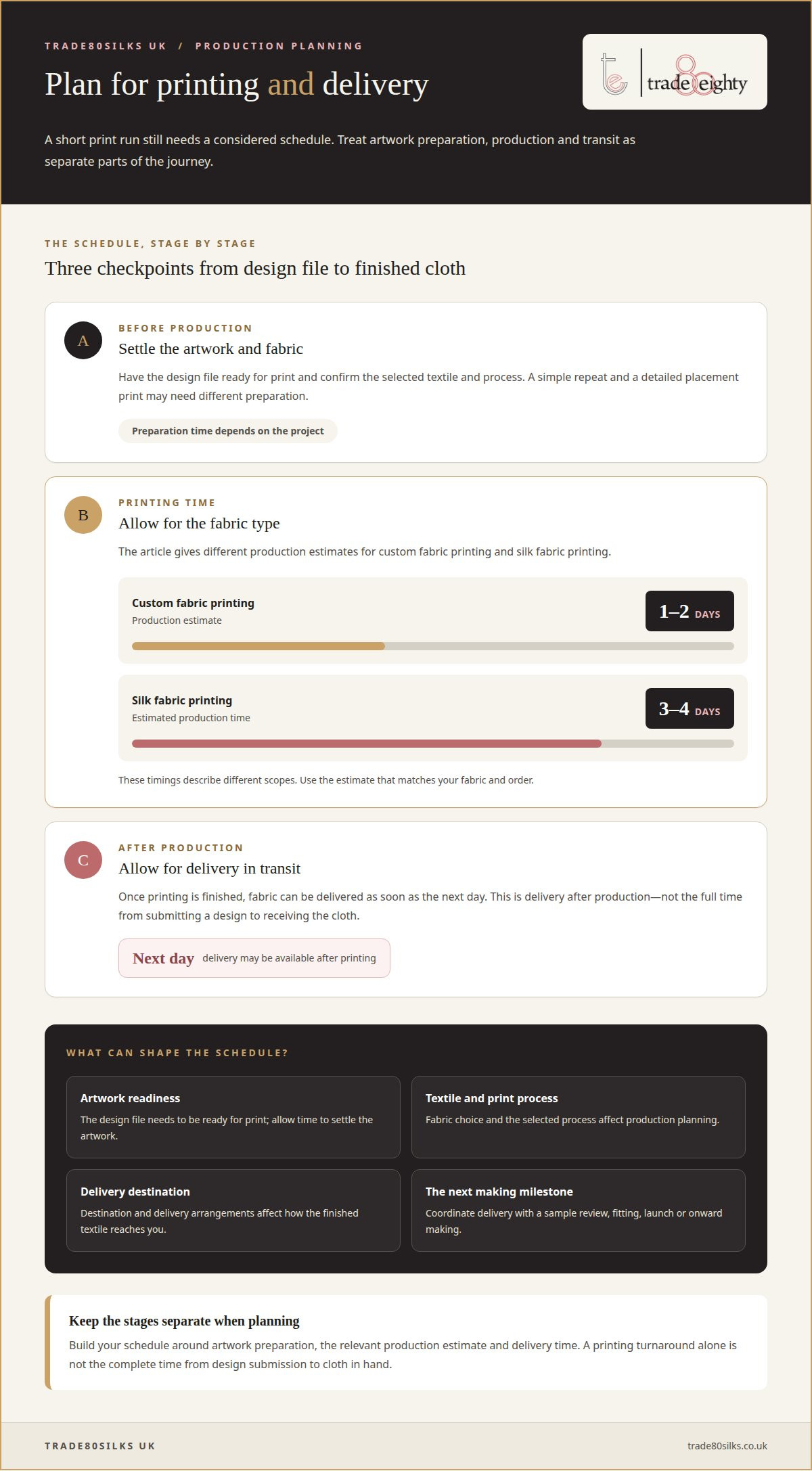
Custom fabric printing can be ready in 1-2 days, while silk fabric printing is estimated to take 3-4 days. These timings describe different scopes, so the fabric type matters when planning a short-run order. The production schedule also depends on the design file being ready for print and on the selected textile and process. A simple repeat design and a detailed placement print may need different preparation. Allow time to settle the artwork and fabric choice before building production into a wider making schedule. That distinction helps when demand is tied to a fitting, launch or sample review.
Delivery arrangements
After printing is finished, fabric can be delivered as soon as the next day. Treat that as delivery after production, not as the complete time from submitting a design to receiving cloth. For a useful schedule, separate artwork preparation, printing and transit, then plan around the latest stage. Your destination and delivery arrangement affect how the finished textile reaches you, so allow for them when coordinating a sample review or onward making. If your project has a fixed date, include delivery time in the plan rather than relying on production turnaround alone. This makes short-run printed products easier to coordinate with the next stage of work.
Trade textile printing and low minimum orders
Small orders let designers test custom-printed fabric before committing to a larger run. Minimums, sampling options and trade discounts all shape the most practical order size.
Minimum order quantities
Some UK fabric-printing services have no minimum order requirement, while many offer small quantities from a fat quarter upwards. That gives independent designers and makers room to print a sample, develop a prototype or produce a limited collection. Check how the minimum is measured, because fabric width and order units affect how much usable textile you receive. Match the quantity to the pattern repeat and intended placement, not just the finished item.
Swatch packs and test prints
A swatch pack helps you assess a fabric’s handle, surface and print appearance before choosing a larger quantity. Compare the sample with the design in its intended setting, since colour and detail can look different on screen and cloth. A test print can also show whether fine lines, scale and repeat work as planned. When considering organic cotton or another textile, assess the actual substrate: fibre and surface influence the result. These checks help you refine artwork and material choices before production.
Order volumes and bulk discounts
Order volume can affect the rate offered to trade buyers. Across the UK market, wholesale customers may receive discounts of up to 40% on bulk orders; this is a market offer, not a universal rate. Compare the saving with the amount of fabric your project genuinely needs, including any allowance for pattern matching or later additions. A larger run can suit established demand, while a smaller order may be more useful for sampling or a new design. For a silk-based project, explore bespoke fabric commissions as one route to a considered textile outcome.
How long does it take to print my fabric?
Fabric choice affects both a print’s appearance and the production route. A sample lets you assess the cloth itself before committing a design to a wider run.
Silk printing has a different estimated production time from general custom fabric printing, as outlined above. For a fashion toile or bespoke accessory, allow the sample stage to inform your schedule too. A fast printing turnaround doesn’t remove the time needed to select fabric, prepare artwork and review the result.
Start with the intended use. A light, sheer textile for an overlay behaves differently from a denser cloth intended to hold a structured shape. A swatch helps you assess drape, surface texture and how the design sits across the weave. Check fine lines, contrast and repeat scale on the actual material rather than relying on a screen preview alone.
Printing methods suit different fibres. Reactive printing is used for certain natural fibres, while other processes suit other fabric types. Consider the fabric and process together: a colour result on one base may not look identical on another. A design idea may still need adjustment when translated onto cloth.
For a practical sample review, assess:
- Colour: compare the printed area with the intended palette in natural and indoor light.
- Scale: check whether motifs remain legible at the chosen repeat size.
- Handle: feel whether the printed fabric retains the movement needed for the garment or design.
Record artwork changes after reviewing the sample, then use the revised file for the next print stage. For example, a fashion print with fine botanical detail may need larger motifs on a textured base. This sequence connects fabric selection, colour assessment and production planning, helping you make an informed decision before moving from a sample to the finished textile.
Digital artwork and colour reproduction
Colour shifts, shrinkage and wash fastness can affect finished cloth. Fabric, preparation, print method and finishing influence the result, so assess a sample before approving a run.
Preparing digital artwork
Set the design at its intended scale and show clearly where a repeat begins and ends. Check that delicate lines, small lettering and fine motifs remain legible at their intended size on the fabric. For personalised designs, such as textile labels, keep important details away from cut edges. A clean, high-quality file gives the printing service a clear source image and reduces avoidable interpretation during setup.
Colour reproduction
A screen displays light, while printed colour comes from pigment or dye applied to a textile. The same digital value can therefore look different on silk, cotton or a textured weave. Select the fabric before finalising the palette, then review a sample beside the reference colours. Deep tones, subtle neutrals and fine gradients deserve particular attention, as the cloth’s surface and absorbency influence their appearance.
For a useful comparison, view the sample in daylight and under the lighting where the finished piece will be seen. Note any artwork changes needed, such as softening a saturated red or strengthening contrast in a small motif. This gives the next print a clearer colour target without assuming every fabric will reproduce identically.
Shrinkage and wash fastness relate to the textile and its treatment, not artwork alone. Consider how the fabric will be cared for, and assess a printed sample using the intended care process before committing the full design. This matters especially for fashion pieces that will be washed repeatedly. Environmental considerations also depend on the substrate, inks or dyes, processing and care choices, so review the complete material pathway rather than print appearance alone.
To shape artwork around a considered fabric choice, share your fabric brief.
Trade80Silks UK: Bespoke Fabric Commissions
Trade80Silks UK is a natural next step when your design calls for a distinctive silk or a bespoke fabric commission. A clear brief can set out the intended use, artwork, preferred fabric and colour direction, helping shape a textile that supports your project’s creative aims.
For printed designs, the offering includes Printed Silk Organza (PS PEG 5) and Printed Tulle (PS PET 3x), each bringing a different surface and drape to a design. Printed Silk Devore' (PS CP8) provides another option for projects with a considered textile direction. The right choice depends on the look and feel your design requires.
If you’re ready to discuss a bespoke fabric commission or a printed silk option, contact Trade80Silks UK with your project brief.
Shape your next fabric commission
Let your next design begin with the qualities that matter most: the cloth’s drape, the artwork’s scale and the way colour supports the finished piece. For small-run digital fabric printing in the UK, a clear creative brief can connect these decisions and give a bespoke commission a purposeful direction.
Trade80Silks UK’s fabric selection includes Crinkle Silk Satin (#167), Printed Silk Organza (PS PEG 5) and Printed Tulle (PS PET 3x). Each offers a distinct textile character for designers considering how a print might sit on the chosen material. Share your intended use, preferred fabric and design direction to begin a focused conversation about your project.
Contact Trade80Silks UK about printing and take the next step towards a textile that feels considered from the first sketch.
Frequently Asked Questions
Are there any additional charges?
Additional charges depend on the service and order details. Bespoke textile development is charged on a project basis, so its scope affects the overall quotation. For a print commission, factors such as fabric selection, artwork preparation and requested quantity can shape the work involved. Review the written order breakdown to understand what is included and what is priced separately before approving production.
Can you print metallic or neon colours?
Metallic and neon effects may not reproduce like standard colours in digital fabric printing. Metallic appearance relies on reflective material, while neon shades can sit outside the colour range reproduced by ordinary print processes. For a design with either effect, consider a close printed colour interpretation rather than assuming a luminous or reflective finish. A physical sample can help you assess how the artwork reads on the chosen fabric.
What inks do you use?
There isn’t one ink type used across all digital fabric printing. Ink selection depends on the printing process and the fibre being printed, with different systems suited to different textiles. A printer working with silk may use a different process from one printing polyester. For a silk commission, the fabric and intended finish help determine the appropriate production method; ink names alone don’t establish the final appearance.
What is the minimum order quantity for digital fabric printing in the UK?
Minimum quantities vary between UK printing services. Some accept orders without a minimum, while small-quantity orders are commonly available from a fat quarter upwards. For a trial design, this can make a limited sample or first run possible without planning a larger production quantity. Check how the minimum is measured, since the order unit and fabric width affect the amount of usable material.
How much does small-run digital fabric printing cost per metre in the UK?
There isn’t one fixed UK price per metre for small-run fabric printing. The amount depends on the textile, print process, order quantity and any bespoke development involved. A design printed onto a silk substrate may have different production requirements from one intended for another fabric. Compare quotations by reviewing the fabric and work included, rather than judging the per-metre figure alone.
Which fabrics can UK digital printers print on, including cotton, linen and polyester?
Fabric compatibility varies by printer and process, so cotton, linen and polyester aren’t universal options. Trade80Silks UK’s printed offerings include Printed Silk Organza, Printed Silk Devore' and Printed Tulle, which is polyamide. Its bespoke digital prints are produced on silk substrates. Match fibre content to the intended result, as the textile affects how the design and colour appear once printed.


