

The best silk fabric for eveningwear isn’t always the one with the brightest sheen. The right choice depends on how the cloth falls, catches the light and supports your intended silhouette. A fabric that looks compelling online may behave differently in a finished design, so assess the material itself before deciding.
Fabric names alone don’t make comparison easy. Drape, surface and transparency all influence the result, and weight and construction can vary between fabrics in the same category. A swatch lets you assess appearance and handling before committing.
This guide compares eveningwear silks by design purpose, helping you shortlist options for fluid movement, a more defined shape or a distinctive surface. It covers crinkle silk satin, printed silk organza, printed silk devoré, raw silk and sand-washed silk, and explains what to confirm with a supplier, including composition, weight, width and care guidance. Trade80Silks UK draws on more than 35 years of industry experience and offers bespoke fabric commissions for briefs that standard options don’t meet.
Key Takeaways
- The best silk fabric for eveningwear depends on the silhouette, finish and movement you want, not simply the fabric name.
- Compare silk satin, organza, sand-washed silk and raw silk by surface, structure and transparency to narrow your options.
- Printed silk organza and printed silk devoré can add pattern and texture. Assess each specific fabric to see how it will work in your garment.
- Use a swatch to assess handling and appearance, then ask the supplier to confirm composition, weight, width and care guidance.
- Match your fabric choice to the garment’s construction, lining and intended finish. Consider a bespoke commission if standard options don’t meet the brief.
Best silk fabric for eveningwear: start with the effect you want
The best silk fabric for eveningwear depends on the silhouette, finish and movement you want. A softly falling gown, a close-fitting design and a sculptural form place different demands on cloth, so no single silk suits every eveningwear brief.
Compare five qualities: drape, or how the fabric falls; surface, including lustre and texture; structure, meaning the support or definition it contributes; transparency; and print, which affects the visual character and placement of a design. The Silk fabric overview introduces the range of silk textiles, but a fabric name alone won’t tell you exactly how a particular cloth looks or handles. Weight, finish and composition can differ between fabrics described by the same name.
Quick shortlist by design effect: For a fluid look, observe how a swatch falls and moves. For a sculptural silhouette, consider whether the cloth and construction provide the definition you need. For a layered or patterned effect, assess transparency, surface and print placement together.
Match the fabric to the eveningwear silhouette
For a fluid silhouette, observe the fabric hanging freely and in motion. For a close-fitting design, consider how it behaves across shaped seams and contours. A sculptural form calls for a careful assessment of the fabric’s body alongside the support provided by its construction. These are design considerations, not fixed rules based on a silk label.
Lining, seams and garment construction can change the finished piece’s appearance and movement. Drape the swatch against your pattern or toile, and assess it where the garment will be shaped, layered or left unlined.
Which qualities matter beyond a luxurious appearance?
Lustre can catch the light, while a textured surface may add visual depth. Opacity and movement affect how these qualities appear on the body. A print brings another consideration: its scale and placement should work with the garment’s seams and silhouette, not just look appealing on a flat piece of cloth.
Fabric suitability comes down to design intention, cloth behaviour and garment construction. Weight, width and composition vary by fabric, so confirm these details and care guidance with the supplier. Assessing a swatch beside the intended lining and construction gives you a more useful basis for comparison.
Six silk fabric options for distinct eveningwear designs
Rather than treating silk types as a league table, consider what each fabric could contribute and what you need to check before cutting. The qualities below are starting points, not guarantees. Weight, composition, finish and behaviour can vary, so confirm specifications and assess a swatch before making a final choice.
| Fabric | Possible design effect | What to check |
|---|---|---|
| Silk satin | A lustrous surface can emphasise clean lines and the way a gown catches the light. Crinkle silk satin is a confirmed Trade80Silks UK offering to consider if its particular surface suits the brief. | Check the specific finish, weight, drape and composition. Satin doesn't always have the same appearance or handling. |
| Sand-washed silk | A softer-looking surface may suit a more subdued finish than a visibly lustrous cloth. | Assess the actual colour and surface in suitable light, and confirm weight and care guidance. |
| Silk organza | Depending on its construction, organza may create a sheer layer or contribute definition to a design. | Check transparency, body and how it behaves over the intended underlayer. |
| Printed silk organza | Combines a printed surface with organza's potential for layered visual detail. It is a confirmed Trade80Silks UK offering. | Review print scale and placement on a swatch, and check the cloth's opacity and structure. |
| Raw silk | Its surface character can add visual texture where a more tactile appearance is intended. | Inspect the specific fabric for texture, weight and suitability for the planned seams. |
| Printed silk devoré | A printed, textural option for designs that call for surface detail. It is a confirmed Trade80Silks UK offering. | Examine the actual pattern and any areas of transparency. Confirm composition and construction requirements. |
Silks for fluid lines, lustre and a softer surface
Silk satin and sand-washed silk offer different surface effects, rather than interchangeable versions of the same look. Satin may suit a design that calls for a lustrous face, while sand-washed silk may appeal when a softer-looking finish is preferred. Treat these descriptions as a starting point: compare the actual cloth, including how it falls, and check the specifications of any crinkle silk satin before selecting it for a gown.
Silks for transparency, texture and visual detail
Organza can create a translucent layer or a more defined effect, depending on the fabric and how it's used. Raw silk and printed silk devoré may suit briefs that call for surface interest or visual pattern. Silk tulle is another general fabric category for sheer layering, but it isn't listed here as a confirmed Trade80Silks UK offering. For wider silk terminology, consult this silk fabric reference, then confirm details for the fabric you're considering.
The best silk fabric for eveningwear is the one whose verified qualities support your design and construction, not simply the one with the most appealing name. To review confirmed fabric options and bespoke commissions, visit Trade80Silks UK fabric sourcing.
How eveningwear silk choices compare in wear, construction and finish
A fabric’s appearance on a roll or screen is only part of the decision. Its surface may give a gown lustre or texture, while its structure and movement affect how seams, folds and shaped panels look once the garment is made. A cloth that looks striking in a small swatch may behave differently across a full skirt or close-fitting bodice.
Construction matters too. Lining can alter opacity and body; seam placement may interrupt a print or textured surface; and the size and shape of pattern pieces affect how the cloth hangs and where its visual details fall. Consider the fabric alongside the intended finish, rather than treating material choice as a separate decision.
Which silk supports a flowing, softly draped look?
If fluid movement is central to the design, test a satin or sand-washed silk rather than assuming either will automatically create the effect you want. Hold the swatch loosely, pin it as it might sit at the shoulder or waist, then let it fall over a form or toile. Check whether the folds settle as intended and how the surface responds to light as the cloth moves.
Compare the specific fabric’s weight, finish and movement, and ask the supplier to confirm its composition and other specifications. For satin-specific considerations, see this crinkle silk satin fabric guide.
When should structure, sheerness or surface detail lead?
For a design shaped by layering or definition, assess organza, raw silk or printed silk devoré against the pattern and underlayers you plan to use. Organza may contribute a sheer or more defined effect, depending on the cloth and construction. Check printed or textured surfaces across the garment’s pattern pieces, because seams and placement can change how the detail reads.
Check the swatch on its own and layered over the intended lining or support. View it from different angles and under lighting similar to where the garment is likely to be seen. A fabric that appears suitably opaque or structured on its own may look different in layers, so verify these qualities for the specific cloth before committing.
A swatch is meaningful only in context: assess it with the pattern, lining and finish that will shape the completed garment. This comparison helps you choose the best silk fabric for eveningwear based on how it is likely to look and behave in your design, not just how it appears as a sample.
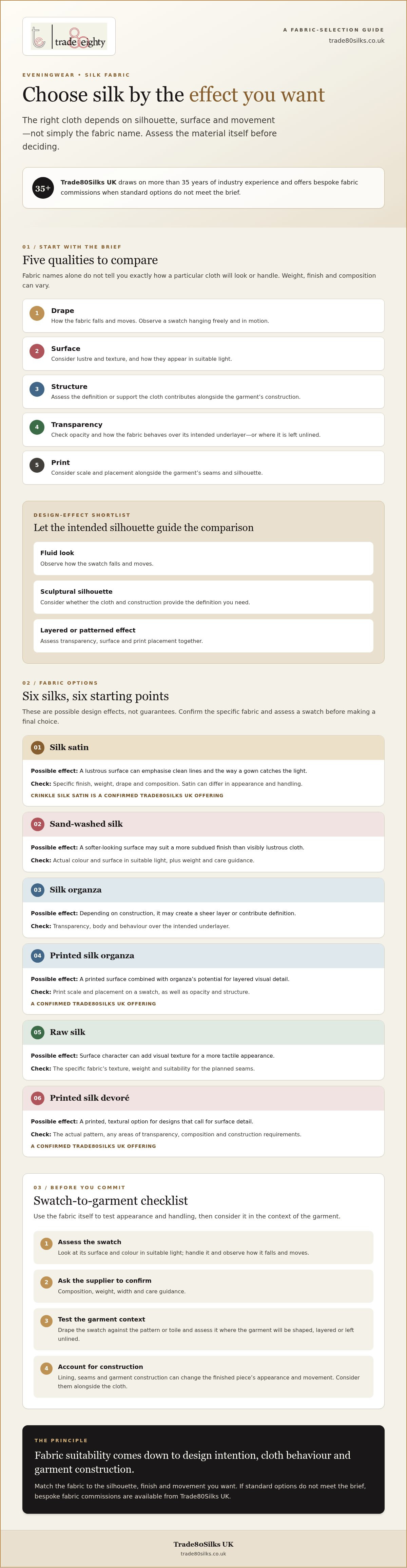
Choosing Silk Fabric for an Evening Gown: A Checklist
A consistent selection process helps you move from a visual idea to a fabric that works with the garment’s pattern and finish. Use this checklist to assess a swatch against the design, then confirm the details that could affect sampling and ordering.
What should a designer test on a fabric swatch?
- 1. Define the brief. Note the intended silhouette, movement, surface and finish. Decide whether the fabric needs to fall fluidly, contribute definition, provide a sheer layer or carry a visible print.
- 2. Review the surface in context. Look at the swatch in lighting relevant to the finished garment, and turn it to see how lustre, texture and colour appear from different angles.
- 3. Test its behaviour. Hold, drape and fold the cloth, then pin it against the pattern or toile to approximate the intended seams, shaping and movement. Assess it with the planned lining or support, since these can change the finished appearance.
- 4. Ask about handling. Before sampling, confirm suitable pressing, handling and care guidance with the supplier. Don’t assume instructions for one silk apply to another.
What should you confirm before ordering fabric?
- 5. Check the specifications. Confirm composition, weight and usable width, then compare them with the pattern pieces and construction plan. For a printed fabric, ask about the repeat and consider how it will align across seams and panels.
- 6. Establish quantity and availability. Calculate requirements against the pattern and any planned matching or placement, then ask the supplier whether the selected fabric is available in the quantity needed. Confirm stock and quantity rather than assuming they will be available.
- 7. Revisit the whole design. Before committing, compare the cloth with the intended lining, seam placement and finish. If a specification or handling question remains unresolved, seek clarification before proceeding.
For larger-order considerations, consult this premium fabric by the roll sourcing guide. Assessing a swatch against the pattern, construction and finish gives you a firmer basis for deciding which option may be the best silk fabric for eveningwear for your brief.
Explore silk fabric options for eveningwear from Trade80Silks, and confirm the specifications and availability of any fabric you’re considering.
Source eveningwear silk with a clear design brief
A considered fabric choice brings your design intention, the cloth’s behaviour and its verified specifications together. The best silk fabric for eveningwear is not simply the one with an appealing surface. It must also suit the silhouette, construction and finish you plan to achieve. Before sourcing, gather your design references, pattern requirements and the qualities you want the finished garment to express.
Trade80Silks UK supplies silk and natural fabrics by the metre or roll to designers and manufacturers, drawing on more than 35 years of industry experience. Confirmed silk options include crinkle silk satin, printed silk organza, printed silk devoré, raw silk and sand-washed silk. Composition, weight, width, care guidance and availability can vary, so check the details of the specific fabric against your brief before proceeding.
When is a bespoke fabric commission worth exploring?
A bespoke commission may be worth discussing when standard fabric options don’t fulfil a particular design requirement, such as a distinctive woven pattern, embroidered detail or printed design on silk. Trade80Silks’ commission capabilities include custom jacquard weaving, embroidery and digital printing onto silk. These are project-based possibilities, not off-the-shelf options, so let the brief and requirements guide an initial discussion.
Prepare visual references, intended garment use and any technical requirements you can specify. Include details such as the desired surface, colour, placement or construction considerations, while being prepared to confirm what is feasible for the project.
How to take the next step with a fabric supplier
A clear enquiry gives the supplier a useful starting point. Share the design or silhouette, the finish you’re seeking, the quantity required and your intended timing. If you’ve assessed a swatch, note what you observed and list any outstanding questions about composition, width, weight, care or availability. Confirmed details help you judge whether a fabric is suitable for sampling or whether a bespoke route merits discussion.
Trade80Silks can be approached as a sourcing partner while you refine the material brief. Explore Trade80Silks’ silk and natural fabric range to review available categories, or use your design references and requirements to frame a conversation about a fabric commission.
Choose silk with confidence for your eveningwear design
The best silk fabric for eveningwear supports your intended silhouette, movement and finish. Compare surface and structure, then assess a swatch alongside your pattern, lining and construction rather than relying on the fabric name alone. Before ordering, confirm composition, weight, usable width, care guidance and any print repeat details with the supplier.
Trade80Silks UK supplies silk and natural fabrics to designers and manufacturers, with more than 35 years of industry experience and a curated selection sourced from premier silk mills. If standard options don’t meet your brief, bespoke commissions can include jacquard weaving, embroidery or digital printing onto silk, subject to project requirements.
Bring your design references, intended finish and fabric requirements to the sourcing conversation. Explore Trade80Silks’ curated silk fabrics and discuss your design brief to identify options for your eveningwear project.
Frequently Asked Questions
What is the best silk fabric for eveningwear?
The best silk fabric for eveningwear is the one that supports the gown’s silhouette, finish and intended movement. Silk satin may be worth assessing for a lustrous surface, while organza, raw silk or sand-washed silk offer different possibilities for layering, texture or a more subdued appearance. Names alone can’t predict how a specific cloth will behave, so assess a swatch with your pattern and confirm its specifications with the supplier.
Is silk satin a good choice for an evening gown?
Silk satin can be a good choice if its particular surface and behaviour suit your design. Its lustre may emphasise the gown’s lines and catch the light, but satin fabrics can vary in finish, weight and drape. Assess the actual cloth rather than relying on the category name: hold and pin a swatch against your pattern or toile, and ask the supplier to confirm composition, weight and care guidance.
Can silk organza be used for eveningwear?
Yes, silk organza can be considered for eveningwear, particularly where a design calls for a sheer layer or a more defined effect. The result depends on the specific fabric and how it’s combined with lining, support and other layers. Printed silk organza is among Trade80Silks’ confirmed offerings, but verify its current specifications and availability. Check a swatch against the intended underlayer and pattern before deciding how it will work.
How do I choose silk fabric for a flowing evening dress?
Choose by testing how the specific fabric falls and moves, rather than assuming a silk type will automatically create a fluid effect. Satin or sand-washed silk may be options to investigate, depending on their individual weight, finish and behaviour. Drape a swatch freely, pin it where the garment will be shaped, and assess it alongside the pattern and planned lining. Ask the supplier to confirm the relevant fabric details before sampling.
What should I check before buying silk fabric for a gown?
Confirm the fabric’s composition, usable width, weight and care guidance, then compare these details with your pattern and construction plan. For printed cloth, ask about the repeat and consider how the design will align across seams and panels. Review a swatch in suitable lighting and test it with the intended lining or support. Finally, ask the supplier to confirm current availability and whether the required quantity can be supplied.
Is raw silk suitable for eveningwear?
Raw silk may suit an eveningwear design where its particular surface and texture complement the intended finish. Suitability depends on the specific cloth, its composition, weight and behaviour during construction, rather than the name alone. Examine a swatch against the garment’s pattern and consider how seams, shaping and lining may affect the finished appearance. Confirm specifications and care guidance with the supplier before deciding whether it fits your brief.
Can I commission a custom silk fabric for eveningwear?
Yes, a bespoke commission may be an option when standard fabrics don’t meet a design brief. Trade80Silks offers project-based capabilities that include custom jacquard weaving, embroidery and digital printing onto silk. Prepare visual references, intended use, desired finish, quantity and technical requirements for discussion. Bespoke development isn’t an off-the-shelf purchase, so confirm feasibility, specifications and project details with the supplier before proceeding.


