

The fabric that looks most delicate may be the one that gives a silhouette its strongest shape. The difference between silk satin and organza lies not only in appearance, but also in how each fabric is constructed and behaves once it is cut, sewn and worn.
If you’ve compared swatches online, you’ll know that a fabric name alone doesn’t always reveal its fibre, weave or finish. Silk describes a natural fibre; satin describes a weave, while organza is a sheer, crisp fabric with a plain weave. Choose the wrong surface or drape, and the finished design may feel quite different from the one you imagined.
This guide explains how to distinguish the visual and structural qualities of silk satin and organza, match each to a design purpose, and check the details before ordering. We’ll compare sheen, transparency, movement and shape, as well as practical ways to assess a sample. Whether you’re considering Crinkle Silk Satin or Printed Silk Organza, check the specific fabric details rather than relying on the name alone.
Key Takeaways
- Look beyond the names to compare fibre, weave and fabric construction.
- Consider how light, transparency and drape will affect the silhouette and visual effect.
- Choose for the design’s purpose: fluid movement, sheer layering or shape-holding structure.
- Assess a sample in the intended lighting and alongside any planned lining or underlayer.
- Check the specification, including composition, weight, width, finish and care instructions, before ordering.
What is the difference between silk satin and organza?
Silk satin has a smooth, lustrous face and often falls in fluid folds. Organza is sheer, lightweight and crisp, with more capacity to hold a shape. The distinction is visual and structural, but the names describe different things: silk is a fibre, satin is a weave, and organza is a fabric construction. For eveningwear, those differences can affect everything from the way a skirt moves to how much of an underlayer shows through.
Silk fibre, satin weave and organza construction explained
Silk names a natural fibre, not a particular weave or garment style. Satin describes a weave that creates a smooth face, where the surface threads reflect light. Satin weave explains this construction and why satin can be made from silk or other fibres. Organza, by contrast, is a sheer fabric with a crisp construction, commonly made using a plain weave. Its transparency is part of its visual character, not a guarantee of any particular fibre.
So, “satin” alone doesn’t confirm that a fabric is silk, and “organza” alone doesn’t confirm its fibre content. Both terms cover fabrics that can vary in composition and finish. Check the product specification rather than relying on a name or photograph.
The quickest way to tell silk satin and organza apart
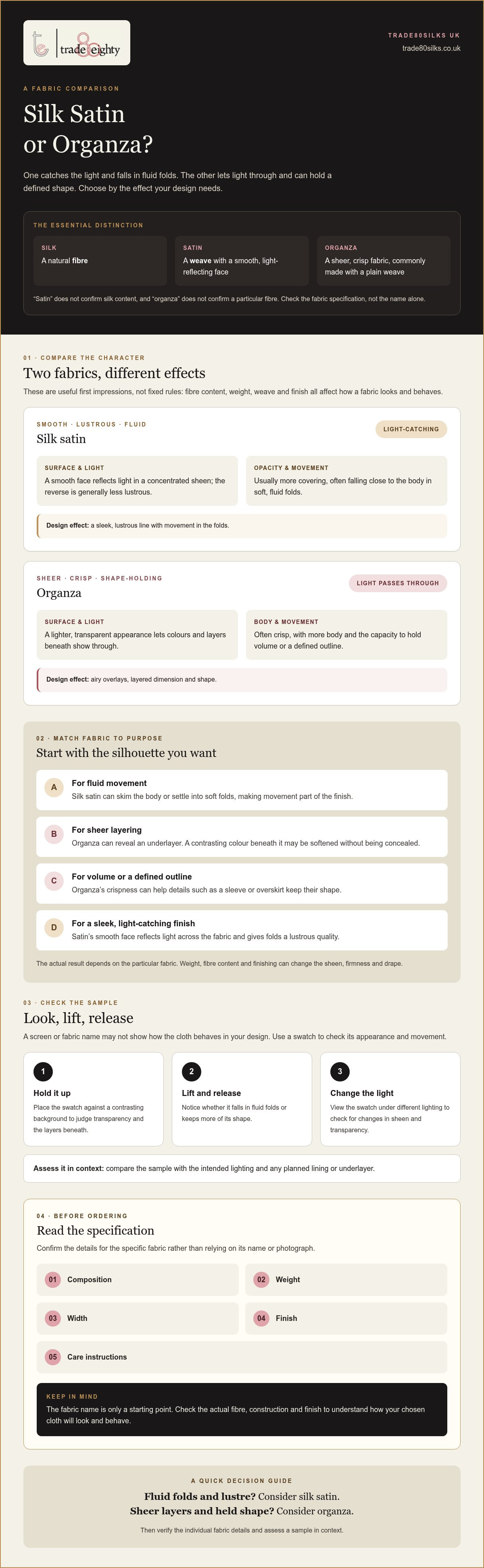
Start with the surface, then notice how the cloth moves. Satin’s smooth face catches the light in a concentrated sheen, and its folds often fall close and fluidly. Organza lets light pass through, creating a layered effect, while its crisp hand helps it maintain volume. These are useful first impressions, not fixed rules: fibre content, weight, weave and finishing all affect a fabric’s behaviour.
- Surface: Satin appears smooth and lustrous; organza has a lighter, more transparent appearance.
- Opacity: Satin is generally more covering, while organza reveals colours and layers beneath it.
- Body: Satin often flows; organza is usually crisper and more shape-holding.
- Design effect: Satin can create a sleek, fluid line, while organza can add airy volume or a sheer overlay.
For a practical comparison, hold a swatch against a contrasting background, then lift and release it to see how it falls. View it under different lighting to check for changes in sheen and transparency that a screen may not show. The exact difference between silk satin and organza depends on the fabric, so confirm its composition, weight, finish and care details before choosing it for a design.
How weave, transparency and drape change the look of each fabric
The difference between silk satin and organza becomes clearer when you consider how each responds to light and movement. Satin’s smooth face reflects light across its surface, giving folds a lustrous quality. Organza’s transparency lets light pass through the cloth, revealing colours and layers beneath. Neither effect is fixed: weight, fibre content, weave and finish all influence appearance and behaviour.
Fibre content identifies what a fabric is made from; construction describes how its yarns are arranged to create its surface and structure.
| Feature | Silk satin | Organza |
|---|---|---|
| Surface | Typically smooth, with a lustrous face and softer reverse | Sheer, with a lighter, often subtly shimmering appearance |
| Transparency | Usually more opaque | Transparent, allowing layers beneath to show |
| Drape | Often fluid, forming soft folds | Often crisp, with more body |
| Structure | Can follow the body or fall close to it | Can hold volume and defined shapes |
| Typical design effect | A sleek, light-catching finish | Airy overlays and layered dimension |
How silk satin reflects light and moves
A satin weave creates a smooth face that catches and reflects light, while the reverse is generally less lustrous. In eveningwear, a fluid satin may skim the body or settle into soft folds, making movement part of its visual appeal. Satins are not all alike: their weight, weave and finish can change both the intensity of the sheen and the way the cloth falls.
How organza creates transparency and volume
Organza’s sheer quality makes what lies beneath part of the design. A layer over a contrasting colour, for example, can soften its appearance without concealing it; several layers can build visual depth. Its crispness can help a sleeve, overskirt or other detail keep a defined outline, although fibre composition and finishing affect how firm or delicate the fabric feels. An analysis of wedding dress fabrics offers further academic context on qualities such as drape, stiffness and sheen.
Use these qualities as a starting point, then handle a sample: lift it, let it fall, and view it under lighting similar to that intended for the finished design. Trade80Silks UK offers Crinkle Silk Satin (#167) and Printed Silk Organza (PS PEG 5). Explore silk satin and organza fabric options, then check each fabric’s current specification before selecting it.
Is silk satin better than organza for your design?
Neither fabric is inherently better. The right choice depends on the result you want: a design shaped by fluidity and lustre, or one that uses transparency, layering and a more defined outline. The difference between silk satin and organza is a design decision, not a ranking of quality. Each fabric has strengths, and either may be unsuitable if its qualities work against the intended silhouette.
Before choosing, identify the effect that matters most:
- Fluidity: Consider satin if movement and soft folds are central to the design.
- Lustre: Consider satin for a smooth surface that catches the light.
- Sheerness: Consider organza when you want an underlayer or another colour to remain visible.
- Shape: Consider organza if the design calls for a crisper outline or layered volume.
When silk satin is the more suitable choice
Silk satin may suit eveningwear or occasionwear where a lustrous finish and fluid movement are part of the design. It can work well for a flowing skirt or a silhouette that relies on smooth folds, but the result depends on the particular cloth, not the name alone. Check its fibre content, weight and finish, then assess whether its drape and surface support the form you have in mind.
One limitation to consider is that the fabric’s sheen and fall may draw attention to the cut and the way the cloth sits. If you want a crisp, held-away shape or a translucent layer, satin may not create the effect you’re seeking. Review a sample alongside your pattern and planned construction before committing.
When organza is the more suitable choice
Organza may suit a sheer overlay, layered detail or design element that needs more definition. It could be used for a sleeve, a bridal detail or added volume, provided its transparency and structure suit the intended result. Because an underlayer remains visible, assess the organza over the actual fabric or colour you plan to place beneath it, rather than judging the swatch on its own.
Its crispness can help define a shape, but may not be desirable in a design intended to fall close to the body. Hold and layer a sample to judge its transparency and stiffness, and check the composition, weight and finish in the specification. Those details are a more reliable guide than assuming every satin or organza will behave alike.
How to choose between silk satin and organza for a sewing project
Start with the finished effect, then check whether the cloth can support the design and the making process. The difference between silk satin and organza gives you a useful starting point, but a sample and its current specification are better guides than the fabric name alone.
- Define the visual effect. Decide whether the design calls for a lustrous surface, fluid movement, transparency, layering or a more defined shape.
- Assess the structure. Consider how the fabric needs to fall or hold its form, and how it will work with seams, gathers and any underlayer.
- Test a sample. Examine and handle the actual cloth under conditions that reflect the finished project.
- Verify the specification. Check the details against your pattern, construction plans and care requirements before ordering.
A sample checklist for comparing hand, opacity and drape
Look at each swatch in lighting similar to that intended for the finished piece. Hold it against the light and over the planned lining or underlayer to see how much shows through and whether the colours combine as expected. Then drape it over a curved surface to observe how it moves, forms folds or creates volume. These checks reveal more than viewing a flat swatch alone.
Next, handle a small test piece as you expect to work with the full fabric. Try pinning and stitching it, noting how it responds to your chosen method and whether the result supports the design. Don’t assume one sample represents every fabric in the same category. Test the specific cloth you’re considering before committing to the project.
Specifications to confirm before ordering fabric
Read the current product information and confirm fibre composition, usable width, weight and finish. These details can affect how the cloth behaves and whether the pattern pieces will fit as planned. Check the care guidance and any handling recommendations for that particular fabric, rather than relying on general advice for satin or organza.
Calculate the required quantity from your pattern layout and the fabric’s usable width, allowing for the design and construction requirements. If a specification is unclear, seek clarification before placing an order. For a closer look at silk satin and organza fabric options, compare the available fabric information with your project brief.
Source silk satin or organza to suit your finished design
Let the intended effect guide your shortlist: silk satin may suit a lustrous, fluid finish, while organza may suit sheer layering and a crisper outline. The difference between silk satin and organza can help you identify which qualities to investigate, but the final decision should rest on the specific fabric and how it looks and behaves in your design.
Trade80Silks UK offers Crinkle Silk Satin (#167) and Printed Silk Organza (PS PEG 5). These are examples to consider, not a substitute for checking the current details of the fabric you’re interested in. Don’t infer composition, weight, finish or availability from a product name alone.
Matching a fabric sample to the intended result
Use your design brief as a practical reference when assessing a sample. Compare its surface, movement and opacity with the effect you want in the finished piece, and view it in the intended lighting. If the design includes a lining or another layer, place the sample over it to judge the combined appearance. This helps you check whether the fabric supports the colour, silhouette and degree of transparency you have planned.
If a specification isn’t clearly published, confirm the details before making a decision. If your design calls for a distinctive surface or pattern not represented by the fabrics you’re considering, bespoke fabric development may be worth discussing. Describe the desired effect and ask which details can be confirmed before proceeding.
What to ask a fabric supplier before placing an order
Before ordering, check the current information for the selected fabric. Useful questions include:
- What is its confirmed fibre composition, width and weight?
- How is the surface finished, and what care guidance applies?
- Is a sample available, and does it represent the current fabric?
- How much usable width should be allowed for when planning the pattern layout?
Keep the answers with your project notes so you can compare options against the same requirements. Trade80Silks UK has more than 35 years of experience in the fabric industry, and its range includes the silk satin and printed silk organza examples noted above. Explore Trade80Silks UK’s fabric range to compare materials for your design or discuss a bespoke requirement for a custom surface or pattern.
Choose the fabric that brings your design to life
The difference between silk satin and organza is a matter of construction and design effect, not which fabric is inherently superior. Satin can bring lustre and fluid movement; organza can offer sheerness, layering and a crisper shape. Let your intended silhouette guide the choice, then compare a sample in the lighting and layers planned for the finished design.
Before ordering, check the specific fabric’s composition, weight, width, finish and care guidance. Trade80Silks UK has more than 35 years in the fabric industry, with offerings that include Crinkle Silk Satin (#167) and Printed Silk Organza (PS PEG 5). For a design requiring a distinctive surface or pattern, bespoke fabric development can include custom jacquard weaving, embroidery and digital printing.
Explore silk satin and organza fabrics and compare their qualities against your creative brief. To discuss a bespoke fabric requirement, contact Trade80Silks UK with the surface, pattern and fabric details your design calls for.
Frequently Asked Questions
What is the main difference between silk satin and organza?
The main difference between silk satin and organza is their construction and the effect they create: satin has a smooth, light-reflecting face, while organza is sheer and typically crisper. Silk identifies a natural fibre, whereas satin describes a weave; organza describes a fabric construction and may use different fibres. For a project, compare the specific fabric’s composition and specification, since names alone don’t confirm how it will look or behave.
Is organza always made from silk?
No, organza isn’t always made from silk. The name describes a sheer, lightweight fabric with a characteristic crisp quality, but its fibre content can vary. A fabric labelled organza could therefore behave or feel differently from silk organza. Check the composition in the product information before ordering, particularly if the fibre affects your design brief, handling plans or how the fabric needs to work alongside other materials.
Can silk satin be see-through?
Silk satin is generally more opaque than organza, but don’t assume every satin provides complete coverage. Transparency can be affected by the fabric’s weight, weave, colour and finish. If opacity matters, hold a sample against the light and over the intended lining or underlayer. This gives you a more useful impression than a photograph and helps you assess whether the fabric provides the coverage and visual depth your design requires.
Which fabric is better for a flowing evening dress, silk satin or organza?
Silk satin is often the more suitable starting point if a flowing evening dress depends on fluid movement, soft folds and a lustrous surface. Organza is generally crisper and more transparent, so it may work better as an overlay or detail than as the main fabric for a close, fluid fall. The result depends on the actual cloth, so assess its sample and specification against the intended silhouette.
Does organza hold its shape better than silk satin?
Organza generally has a crisper hand and can hold a defined shape more readily than fluid silk satin. That can make it useful for adding volume or shaping a sheer layer, although the degree of structure varies between fabrics. Fibre composition, weight and finish all influence the result. Handle a sample and test it in the intended construction before relying on it to create a particular outline.
How can I tell whether a fabric is silk satin or silk organza?
Look at the surface and how the fabric behaves, but use the product specification to confirm its identity. Silk satin usually has a smooth, lustrous face and a fluid fall; silk organza is typically sheer and crisper. These visual clues aren’t proof of fibre content. Check that the specification identifies silk and describes the fabric accurately, then compare a sample with the design’s requirements before ordering.
Can silk satin and organza be used together in one garment?
Yes, they can be combined when their contrasting qualities support the design. For example, satin could provide a lustrous base, while organza could introduce a sheer overlay, sleeve or layer of volume. Consider how their different weights, transparency and movement will work together at seams and across the silhouette. Test both fabrics in a small sample, including any planned underlayer, before committing to the full project.

