

What looks beautiful on a roll may behave differently once it is cut, layered and stitched. When comparing bridal silk fabric suppliers uk, look beyond colour and lustre: silk, organza and tulle each bring different qualities to a design, and the order needs to suit the garment and production plan.
Before committing, consider both the cloth and how you will use it. This checklist explains how to assess fabric behaviour, compare supplier capabilities and prepare a practical sourcing brief. Trade80Silks UK supplies fabrics by the metre and in bulk, as well as bespoke development including jacquard weaving, embroidery and digital printing onto silk substrates. Use the guidance below to match materials and ordering choices to your design.
Key Takeaways
- Start with the design and construction requirements, then shortlist fabrics whose handle, appearance and behaviour suit the intended garment.
- Compare silk, organza and tulle by considering how weight, weave and finish may affect drape, opacity and surface character.
- Compare bridal silk fabric suppliers uk by looking at material range, trade ordering formats and bespoke development capabilities.
- Prepare a clear brief covering the design, intended use and quantity, and identify which qualities need physical assessment.
- Trade80Silks supplies fabrics and offers bespoke development for bridal projects, drawing on over 35 years of textile industry experience.
What should bridal silk fabric suppliers in the UK help you source?
Start with the design, not just a fibre name. The aim is to source cloth whose handle, appearance and behaviour suit the silhouette, construction and finish. Your brief might call for a fluid skirt, a sheer overlay or a layered detail. For designers and makers, choosing a supplier is about finding suitable material and planning its purchase, rather than buying a finished gown.
Silk describes a natural fibre, whereas satin describes a weave, so the terms are not interchangeable. A satin-woven fabric can be made from a different fibre. Check the fabric’s composition and assess the cloth itself against the design requirements. For background on what silk is, consider its origins and material properties alongside the finish and behaviour you need.
Which bridal projects need silk, organza or tulle?
Each material brings a different character to a bridal design. Silk may suit a garment where lustre, fluidity or a refined surface is central. Organza has a sheer appearance and added body, making it useful when a design needs translucency with a more defined shape. Tulle’s light net structure lends itself to veils, overlays and layered effects. These are starting points, not fixed rules: the fabric’s finish, construction and placement all influence the result.
What makes a supplier relevant to a trade buyer?
A trade-ready range should help you connect a material to the garment and design, rather than leave you choosing by name alone. Check whether the silk, organza and tulle options fit the elements in your brief, then match the ordering format to your production plan. Buying by the metre can suit a smaller requirement or development stage, while bulk or roll orders may suit planned production. Choose a format based on the project’s quantity and cutting needs.
Experience supplying designers and manufacturers also matters. Trade work involves considering the textile alongside the practical requirements of making. Trade80Silks supplies silk, organza, tulle and other natural fabrics by the metre or roll to designers and manufacturers across the UK, drawing on over 35 years of textile industry experience. Its bespoke fabric development includes custom jacquard weaving, embroidery and digital printing. These services are useful when a project calls for a distinctive textile. Compare suppliers by assessing three connected needs: material suitability, order planning and the ability to develop fabric around the design.
How do silk weight, weave and finish shape bridal fabric performance?
A fabric’s behaviour comes from several qualities working together. Weight affects how the cloth hangs and how much body it contributes. Weave shapes its surface and structure, while finish influences handle and visual character. Together, these details can change drape, opacity and how the fabric responds during cutting and construction. The right choice depends on the design, not a universal ranking.
Bridal garment behaviour is shaped not by fibre alone, but by the combined effects of weight, weave and finish. A search for bridal silk fabric suppliers uk is more useful when guided by the intended silhouette and construction than by a material label alone.
| Fabric | Characteristic to consider | Design requirements it may suit |
|---|---|---|
| Silk | Its handle, weight and weave influence fluidity, body and surface lustre. | Silhouettes where drape or a refined surface is central. |
| Organza | A sheer appearance with a comparatively crisp character. | Designs seeking transparency with added definition or layered structure. |
| Tulle | A light, open net structure that can create a softer layered effect. | Veils, overlays and designs that use transparency or volume. |
How should you assess silk for a bridal design?
Begin with the silhouette. Does it call for fluid movement, more body or a surface with visible texture? Silk satin may suit a design where a smooth, lustrous finish is important, while other silk finishes create different tactile and visual effects. Trade80Silks’ Crinkle Silk Satin is one option to explore. Its guide, Crinkle Silk Satin Fabric: A Complete Guide to Choosing and Using It, offers further context on the fabric.
UK silk has a rich craft history, and Heritage Crafts’ overview of the UK silk weaving industry provides further background. For your design, assess the actual cloth against its intended use rather than relying on the word “silk” alone.
When do organza and tulle suit the brief?
Organza’s crisper, sheer character can define a layer or introduce structure, while tulle’s net construction lends itself to softer overlays and graduated layers. Neither guarantees a particular level of volume or transparency. The result depends on the fabric selected, how it is cut and how it is built into the garment. Trade80Silks supplies silk organza and printed tulle. Read Silk Organza Fabric UK: A Designer’s Guide to Choosing the Right Cloth and Printed Tulle Fabric UK: A Designer’s Guide to Choosing Well for more guidance. Explore the bridal fabric range as you refine the material direction for your project.
How can you compare bridal silk fabric suppliers in the UK?
Compare suppliers against the needs of your work rather than treating range size as a measure of fit. A designer developing a fluid silk skirt, sheer organza layer and tulle overlay has different sourcing needs from a maker ordering one cloth for a defined production run. For instance, dedicated suppliers such as thesilkroute.co.uk focus specifically on providing premium 100% silk fabrics for bridal wear and dressmaking. Consider four practical areas: relevant materials, trade experience, ordering formats and bespoke development.
For bridal trade buyers, the right supplier combines relevant cloth, production-aware ordering and development capability that answers a real design need. Compare bridal silk fabric suppliers uk by weighing each capability against a specific garment or collection plan.
| Consideration | Standard fabric sourcing | Custom textile commissioning |
|---|---|---|
| Material choice | Select from silk, organza, tulle and other available fabric categories suited to the brief. | Develop a textile around a particular surface, pattern or design concept. |
| Ordering purpose | Source by the metre for a particular requirement or in bulk for planned production. | Plan a bespoke fabric as part of a defined collection or distinctive project. |
| Useful when | An existing cloth answers the garment’s construction and visual requirements. | Standard fabric doesn’t express the intended design sufficiently. |
| Capabilities to consider | Range and experience supplying designers and manufacturers. | Development methods relevant to the intended textile effect. |
Which sourcing capabilities support a bridal collection?
Map each design element to a material category: silk for a particular surface or drape, organza for a sheer layer with definition, and tulle for netted overlays. Then align the order with the project stage. Metre-based purchasing may suit a focused requirement, while bulk or roll orders can support production planning. Trade80Silks supplies fabrics by the metre and in bulk to designers and manufacturers, drawing on over 35 years of textile industry experience.
When is bespoke fabric development worth considering?
Consider custom development when the design relies on a textile detail that standard cloth cannot express. Custom jacquard weaving can create a distinctive woven pattern; embroidery can add surface detail, while digital printing can realise a particular printed concept on silk substrates. These methods are most relevant when the fabric itself is integral to the collection’s identity, rather than simply a background for the garment.
Trade80Silks offers bespoke fabric development alongside its silk, organza and tulle supply. Begin with the design requirement, such as a particular motif, surface treatment or visual effect, and relate the development route to the project’s intended scale and construction. This keeps custom work purposeful and helps identify when an existing fabric already serves the brief.
What belongs on your bridal fabric sourcing checklist before ordering?
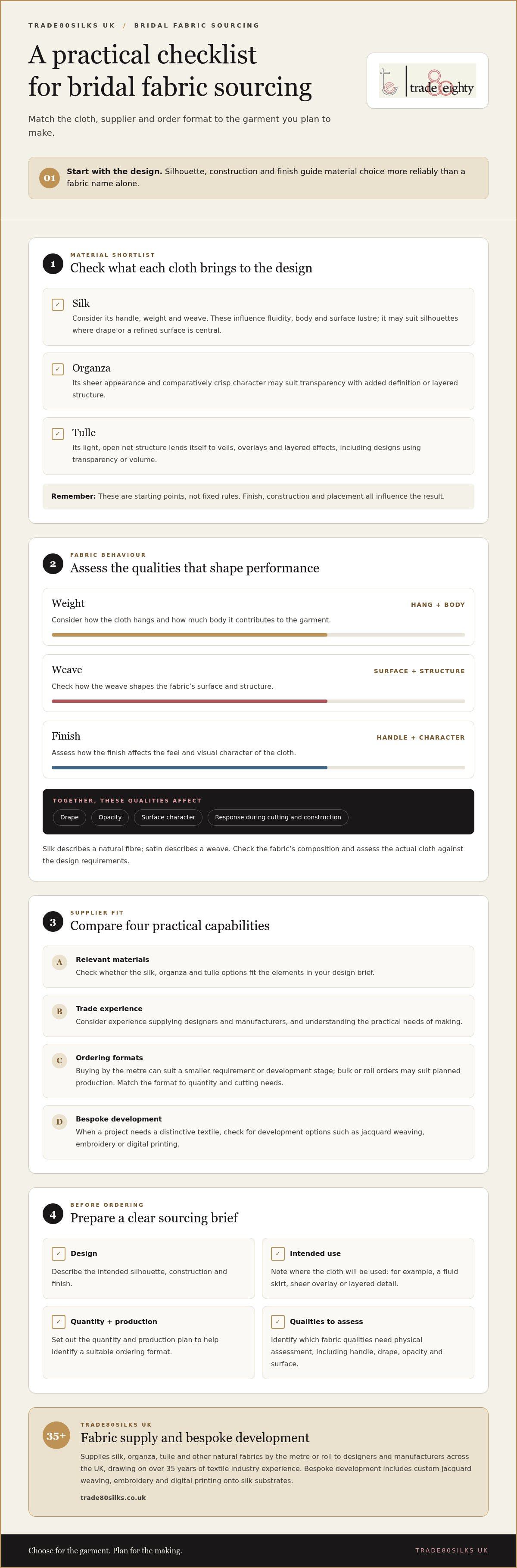
A clear brief turns fabric selection into a practical production decision. Before approaching bridal silk fabric suppliers uk, record what the garment needs to do, which components require fabric and how the order fits the production plan. Separate information you can prepare at your desk from qualities that are best judged by handling the cloth.
What project details should you prepare?
Start with the garment type, silhouette and construction. Then describe the intended wearer experience, such as a softly moving skirt, a defined overlay or a light layered finish. Record the colour direction and surface finish, and note any pattern or embellishment requirements that affect fabric choice. A concise brief might include:
- Fabric applications: main cloth, lining, overlay, veil or decorative detail.
- Design intent: silhouette, construction, desired appearance and how the garment should move or feel.
- Colour and finish: preferred colour direction, lustre or texture, plus any print, pattern or embroidery requirements.
- Production plan: quantity required and whether the need relates to development, sampling or a production run.
These details help narrow the material options, but they do not replace physical assessment. Handle, drape, opacity and the appearance of a finish in the intended colour are qualities to evaluate on the cloth, not infer from a description alone.
How should you plan quantities and custom work?
Estimate quantities from the garment and its pattern pieces, not just the main silhouette. Include each component, account for cutting direction and consider whether pattern or motif placement affects the layout. Separate fabric needed for development from the metreage or bulk requirement for production. This gives each part of the order a clear purpose and avoids treating sampling and making as one undifferentiated quantity.
If bespoke work is part of the brief, describe the intended result as clearly as the construction. For jacquard, outline the woven pattern and where it should sit in the design. For embroidery, identify the placement and visual character of the detail. For digital printing, set out the motif, colour direction and intended scale. These particulars give a custom commission direction and help establish whether development is appropriate or a standard cloth already serves the design.
With your brief and quantities organised, explore the Trade80Silks fabric range to consider silk, organza, tulle and bespoke development in relation to your project.
How Trade80Silks supports bridal fabric sourcing and bespoke design
A considered bridal fabric choice brings together the design’s visual character, how the cloth behaves in construction and the practical requirements of production. Trade80Silks supplies silk, organza, tulle and other natural fabrics to designers and manufacturers across the UK, with options sold by the metre and in bulk. For anyone comparing bridal silk fabric suppliers uk, this combination of material categories, trade ordering and bespoke development provides a practical way to match a project brief to its next sourcing step.
With over 35 years of textile industry experience, Trade80Silks supplies fabrics for designers working with different material qualities. Connect the cloth to the garment: a design might call for a considered silk surface, a sheer organza layer or tulle for a lighter overlay.
Which bridal fabric categories can Trade80Silks supply?
Silk fabrics offer a range of surfaces and handles to consider in relation to a garment’s silhouette and finish. For a smooth, lustrous effect, Crinkle Silk Satin is one option; other silk fabrics include raw, sand-washed and printed silk. The suitability of each depends on the design and how the fabric will be used.
Organza and tulle offer different possibilities for sheer and layered applications. Printed Silk Organza may suit a brief calling for a translucent layer with a more defined presence, while Printed Tulle offers a net structure for overlays and layered effects. These are material characteristics, not guarantees of how a finished garment will look. Construction and design determine the result.
How can bespoke development extend a bridal concept?
When existing cloth does not express the design clearly, bespoke development offers a way to make the textile part of the creative brief. Custom jacquard weaving can realise a distinctive woven pattern; embroidery can introduce considered surface detail, while digital printing onto silk substrates can interpret a particular motif or artwork. Each method serves a different purpose. Start by defining the intended fabric effect and where it will appear on the garment.
For example, a brief might describe a motif’s scale and placement, the desired surface character and whether the cloth is intended for a main garment panel or a separate detail. Connecting these choices helps align development with the design and its construction. Custom work is not essential when a standard fabric already suits the purpose.
Explore Trade80Silks’ fabric and bespoke services and share a considered project brief to begin shaping the right material direction for your bridal design.
Shape your next bridal fabric order with confidence
Start with the design: match silk, organza or tulle to the garment’s intended drape, surface and construction, then plan quantities around its components and production needs. Comparing bridal silk fabric suppliers uk means looking beyond material names to trade ordering formats and the capacity to support a distinctive brief.
Trade80Silks brings over 35 years of textile industry experience to supplying silk, organza and tulle by the metre and in bulk. For projects that call for a more individual textile expression, bespoke development includes jacquard weaving, embroidery and digital printing.
Prepare your design direction and production requirements, then explore Trade80Silks’ bridal fabrics and bespoke textile services. Share your project brief to take the next step towards a fabric choice that brings your design to life.
Frequently Asked Questions
What should I look for in a bridal silk fabric supplier in the UK?
Look for a fabric range, ordering format and trade experience that fit your design and production needs. When comparing bridal silk fabric suppliers uk, consider whether silk, organza and tulle suit the planned garment, and whether bespoke development could serve a distinctive concept. Assess the cloth itself too: its handle, drape, surface and opacity should support the brief. Do not rely on the material name alone.
Is silk a good fabric choice for a wedding dress?
Silk can suit a wedding dress when its surface, drape and structure work for the design. Different silk fabrics have different qualities, so consider the silhouette, construction and finish you are planning. Silk satin may suit a brief calling for a smooth, lustrous surface, while another design may need a softer or more textured character. Think about how the cloth should sit, move and appear, then assess the specific fabric against those intentions.
Can bridal fabric suppliers provide bespoke silk designs?
Some textile suppliers offer bespoke development for projects that call for a distinctive textile surface or pattern. Trade80Silks provides custom jacquard weaving, embroidery and digital printing onto silk substrates. Give the brief a clear creative foundation by describing the motif, colour direction, intended garment application and production context. These details help connect the development method to the design, whether you want a woven pattern, embroidered detail or printed effect.
How much bridal fabric should I order?
The amount depends on the pattern, silhouette, fabric width, layout, size range and any directional or matching motifs. Include each component in your estimate, such as the main garment, lining, veil, overlay or decorative details, as these may use different fabrics. Work from the pattern and consider cutting direction and design placement before calculating quantities. A generic estimate may not account for a distinctive layout or motif repeat.
What is the difference between silk organza and tulle for bridalwear?
Silk organza is sheer with a crisper character, while tulle is a net fabric often used for veils and light layers. Their different structures can contribute to distinct effects, but the final appearance depends on the particular cloth and how it is incorporated into the garment. Consider whether your design needs a more defined sheer layer or a softer netted effect, then assess transparency, volume and construction together.
Can I buy bridal silk fabric by the metre or in bulk?
Yes. Trade80Silks supplies fabrics by the metre and in bulk for different project and production requirements. Plan quantities around the pattern layout, garment components and any motif placement, rather than using a broad estimate. If development or sampling and production are separate stages in your workflow, record their fabric needs independently. This helps make your order plan reflect the project’s actual requirements.
What information should I prepare before sourcing bridal fabric?
Prepare the garment type, silhouette, construction, fabric applications, colour direction, desired surface and estimated production quantity. Note whether the design calls for silk, organza, tulle or a combination, and record any print, pattern or embroidery requirements. Separate decisions you can set out in your brief from qualities that need physical assessment, such as handle, drape and opacity. This gives your sourcing plan a clear creative and practical foundation.


