

The most striking print isn’t always the right tulle for your design. With printed tulle fabric UK options, a motif that looks delicate on screen may read differently across an open mesh, where transparency, colour and scale all influence the finished effect.
It’s understandable to focus first on the pattern, especially when online images make a fabric’s true appearance difficult to judge. Tulle’s airy structure can handle and drape differently from a conventional woven fabric, so the right choice depends on more than the print alone. Compare the motif, mesh and intended layers against your silhouette and finish. This guide also explains when a curated printed fabric may suit your brief and when bespoke development could help shape a more specific design. With more than 35 years of textile experience, Trade80Silks UK supplies fabrics for designers and makers. The aim is to help you choose a cloth that works as well in practice as it looks in your plans.
Key Takeaways
- Understand how the open net structure lets the ground cloth, printed motif and layers beneath it interact.
- Choose printed tulle fabric UK options by considering the finished design, print scale, colour contrast and intended silhouette.
- Compare curated printed cloth with bespoke development in light of your artwork, project quantity, schedule and material needs.
- Consider how layering, gathers and panel placement can change a print’s prominence and apparent colour in bridalwear, fashion or costume.
- Use a sourcing checklist covering composition, width, print, handling, intended use and project quantity before ordering.
Printed Tulle Fabric UK: What It Is and What Makes It Distinctive
Printed tulle is an open-net fabric carrying a printed pattern. The net describes its structure, while the print describes its surface design. This distinction matters when choosing printed tulle fabric UK for a design, because the image and the open ground beneath it work together to shape the finished effect. Tulle is commonly made with a mesh structure, and its precise fibre and characteristics depend on the fabric. What is tulle offers a useful introduction to the textile’s structure and traditional uses.
Plain tulle has no printed motif. Embroidered net gains decoration through stitched detail, which can sit raised from the ground, while a printed woven fabric carries its design on a more continuous interlaced surface. The method of decoration is distinct from the base structure: a print doesn’t turn tulle into woven cloth, just as embroidery doesn’t define the net itself.
How the net structure shapes appearance
The openings in tulle allow light and the layers beneath to remain part of the visual composition. A pale lining may show through differently from a darker one. A printed area can also appear more or less prominent depending on the ground colour, motif placement and what sits behind it. The result is a pattern seen in relation to its setting, not simply on a flat surface.
Consider how the fabric will be viewed in the finished piece. A motif that reads clearly against a contrasting underlayer may appear softer over a similar colour. Overlapping panels can deepen the overall impression of colour or pattern. Don’t assume that every tulle has the same degree of transparency, stretch or stiffness. Check the fabric’s stated specifications and, where available, assess a sample alongside the intended lining.
Printed tulle compared with other sheer fabrics
Printed silk organza offers a woven sheer alternative. Its interlaced structure gives a more continuous ground for the printed design, whereas tulle’s open mesh makes the space between motifs and the layers beneath more visible. Tulle may suit a brief calling for a net-like, layered effect; organza may suit one that favours a woven sheer surface. Neither is universally better. Let the intended appearance and role of the fabric guide your choice, and compare the product details for each option.
How to Choose Printed Tulle for Your Design
Begin with the finished piece, not the motif. Printed tulle should support the design’s visual purpose, whether that means a quiet surface detail, a clear focal point or a layered impression. Tulle has a long association with ballet and couture; the history of tulle in fashion offers context for the range of effects designers have created with this distinctive material.
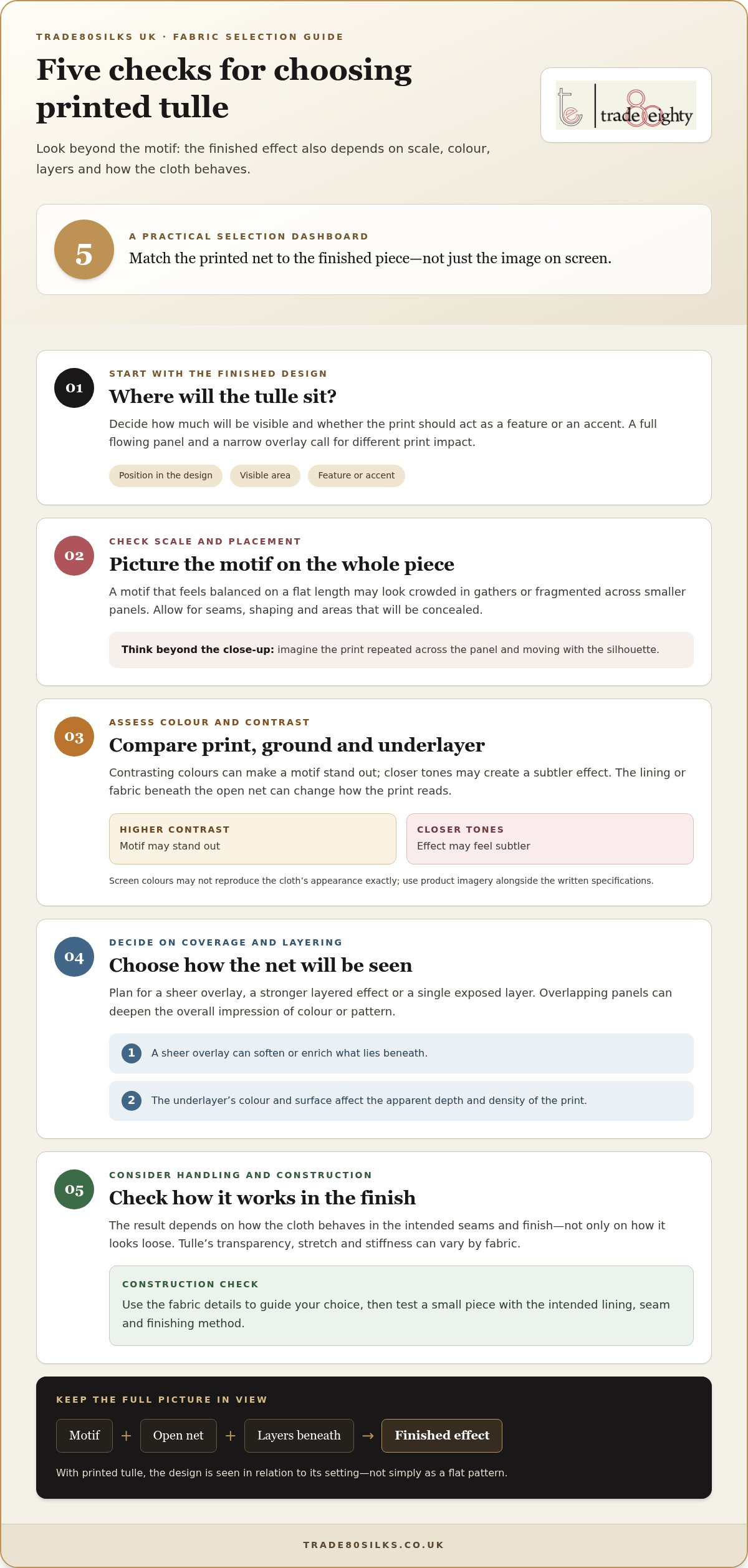
A useful checklist: choose printed tulle by design, print, transparency and handling. Work through these decisions before ordering:
- 1. Define the finished design. Identify where the tulle will sit, how much will be visible and whether it needs to read as a feature or an accent. A full flowing panel and a narrow overlay call for different print impact.
- 2. Consider scale and placement. A motif that looks balanced across a flat length may feel crowded in a gathered section or fragmented when cut into smaller panels. Picture the print on the garment or costume, allowing for seams, shaping and concealed areas.
- 3. Assess colour and contrast. Compare the print with the ground colour and any lining or underlayer. Contrasting colours can make a motif stand out; closer tones may create a subtler effect. Use product imagery alongside the written specifications, bearing in mind that screen colours may not reproduce the cloth’s appearance exactly.
- 4. Decide on coverage and layering. Work out whether the design needs a sheer overlay, a stronger layered effect or a single exposed layer. The colour and surface of the fabric beneath the net can change the apparent depth and density of the print.
- 5. Consider handling and construction. The finished effect depends on how the cloth behaves in the intended seams and finish, not just how it looks loose. Use the fabric details to guide your choice, then test a small piece with the intended lining, seam and finishing method.
Match print scale and colour to the design
Look beyond a close-up of the motif. Imagine it repeated across the whole panel, compressed by gathers or moving with a flowing silhouette. Check whether negative space remains part of the design and whether the print will complement or compete with other elements. For printed tulle fabric UK projects, this helps connect the fabric’s character to the proportions and intended finish of the piece.
Test the structure for the intended finish
A sheer overlay can soften or enrich what lies beneath, while one exposed layer gives the net and print a different presence. Body and softness vary by fabric, so a small construction test can show how the chosen tulle responds to your pattern and finishing choices. Explore Trade80Silks UK printed tulle as a curated option for a design-led project.
Printed Tulle Compared: Ready-Printed Cloth or Bespoke Development?
The choice between a curated print and a bespoke commission depends on how closely an existing cloth matches the design brief. For printed tulle fabric UK projects, consider the artwork, required quantity, schedule and material together, rather than treating custom development as automatically preferable. The history of machine-made net fabric offers a reminder of the structure’s technical heritage. The practical question is how best to bring your chosen design to it.
| Consideration | Curated printed fabric | Bespoke development |
|---|---|---|
| Design control | Choose from an existing print and assess its colour, motif and scale against the design. | Develop a more specific visual direction around project artwork or design requirements. |
| Project fit | Works well when the available pattern and material support the intended look. | May suit a brief that calls for distinctive artwork or a closely directed visual result. |
| Material choice | Evaluate the particular cloth using its product imagery and stated specifications. | Define material needs as part of the commission; the substrate is central to the development brief. |
| Planning | Consider the fabric quantity required and how it fits your schedule. | Include artwork, quantity and schedule in the planning conversation. |
When a curated printed fabric fits the brief
An existing print can be a considered choice when its pattern, colour and scale complement the garment or costume. Compare the available imagery with the stated specifications, then picture the motif across the actual panel, including gathers, seams and layered areas. Trade80Silks UK’s Printed Tulle is a curated option for design-led projects. Assess its product details against your intended finish.
When bespoke textile development merits consideration
A bespoke commission may suit a project when existing artwork doesn’t express the intended identity or the visual direction calls for closer control. Trade80Silks UK offers bespoke digital printing onto silk substrates. This is a distinct development route: it doesn’t mean the listed Printed Tulle is silk or that bespoke printing is applied to tulle. For related considerations around printed designs and material choice, see the printed silk fabric guide.
Neither route is inherently better. Let the artwork, quantity, schedule and required material determine the best fit. Explore Trade80Silks UK printed fabric options as you shape the brief.
Using and Handling Printed Tulle in Bridalwear, Fashion and Costume
Printed tulle can bring pattern and translucency to a design, but its suitability depends on the selected cloth’s properties and the role it will play. In bridalwear and occasionwear, it may work as an overlay, sleeve, soft volume or veiling effect when its composition and construction suit the intended finish. A lining or underlayer influences both coverage and contrast: a motif may look more pronounced against a contrasting ground, or more subdued when the colours are similar.
For a coordinated layered look, consider pairing printed tulle with a smoother cloth such as crinkle silk satin. Compare the fabrics together in the intended combination, because their different surfaces and the visible underlayer contribute to the overall effect.
Printed tulle for fashion and costume
In fashion and costume, motif placement can help establish a character or direct attention across a silhouette. A print centred on a prominent panel may read clearly, while gathers or smaller cut pieces can change how much of the motif remains visible. For performance or photography, assess the fabric at the intended viewing distance and under lighting similar to the final setting. Close inspection alone may not show how the overall pattern will read on stage or in an image.
Handle the fabric with care during construction. Before cutting the full piece, test your planned cutting and pinning approach on a small section. Then use a sample to try the intended seam and finish. This helps you assess whether the construction suits the cloth and whether the print sits as intended.
Before committing, check:
- Pattern scale: Does the motif work across the pattern pieces and finished silhouette?
- Underlayers: How do the lining or fabrics beneath affect colour, contrast and coverage?
- Seam finish: Does a test seam give the appearance and construction the design requires?
- Viewing distance: Does the print read clearly at close range and from the intended audience or camera position?
These checks turn a visual preference into a practical material decision, particularly when selecting printed tulle fabric UK for a specific garment, costume or occasionwear brief. To explore the curated fabric option for your project, view Trade80Silks UK printed tulle.
Sourcing Printed Tulle Fabric in the UK with Confidence
A considered order starts with the project requirements, then checks each fabric detail against the design and construction plan. When sourcing printed tulle fabric UK, don’t rely on a product image alone: the net structure, print and underlayer can combine differently in the finished piece than they appear on screen.
What to compare before placing a fabric order
Use this checklist to organise the information that matters to your garment or costume:
- Composition: Match the stated fibre content to the project’s requirements. Don’t assume a fibre from the fabric name or appearance.
- Width: Compare the stated usable width with your pattern layout, panel dimensions and motif placement.
- Print: Review the print details alongside imagery, considering motif scale, colour and how the design will sit across pattern pieces.
- Handling and care: Use the fabric’s handling and care guidance to plan construction and later treatment. Don’t infer these properties from another tulle.
- Intended use: Consider the planned silhouette, lining, seams and finish, so the cloth suits its role in the finished design.
- Project quantity: Plan for the pattern layout and print placement, allowing for the cutting requirements of your design.
Consider the whole arrangement, not just the fabric in isolation. A print may look more prominent against one lining and more subdued against another. Pattern placement can also affect whether motifs align, repeat or fall at a focal point. Use the product details to make decisions about the specific fabric, and plan the quantity around your pattern layout and chosen placement.
Explore Trade80Silks UK printed tulle and bespoke options
Trade80Silks UK offers Printed Tulle as a fabric option for designers and makers. Compare the product information with your requirements for composition, width, colourway, print and care. Trade80Silks UK brings more than 35 years of textile industry experience to its fabric expertise, supporting designers as they assess materials for their projects.
If your project calls for distinctive artwork or a more tailored visual direction, a bespoke fabric commission may be a suitable route. Trade80Silks UK offers bespoke digital printing onto silk substrates. This is a separate development option: it doesn’t mean that Printed Tulle is silk or that the silk printing service applies to tulle.
Explore Trade80Silks UK printed tulle for a curated fabric choice, or discuss a project-specific bespoke commission as you refine your material brief.
Choose a Fabric That Brings Your Design to Life
The right printed tulle balances its motif with the open net beneath it, the layers behind it and the way the finished piece will be seen. Before choosing, consider print scale and colour in context, then compare the cloth’s specifications with your construction and project needs. A small sample test can help show how the fabric behaves in your intended seams and finish.
For designers sourcing printed tulle fabric UK, the right choice may be a curated cloth that already suits the brief or a bespoke route shaped around a more specific visual direction. Trade80Silks UK offers Printed Tulle and brings more than 35 years of textile industry experience to its fabric expertise. Bespoke development also includes digital printing onto silk substrates, a separate option for projects requiring an individual visual approach.
Explore the fabric and possibilities for your design with Trade80Silks printed tulle and bespoke textile services. Review the product details and choose the route that best fits your design brief.
Frequently Asked Questions
What is printed tulle fabric?
Printed tulle is a patterned fabric made on an open net structure. The spaces in the net allow light and underlying layers to show through, so the finished appearance depends on the print, the ground and anything beneath it. This distinguishes printed tulle from plain net, embroidered tulle, where decoration is stitched, and printed woven fabrics. Check the specific fabric details for fibre content, width and handling.
Can printed tulle be used for bridalwear?
Yes, printed tulle can be considered for bridalwear when its properties suit the design and construction. It might be used as an overlay, sleeve detail or layered panel, for example, but the effect depends on the cloth, pattern and underlayer. A lining can alter both the motif’s contrast and the apparent coverage. Assess the fabric details and test a small sample with the intended seam and finish before planning the full piece.
How do you choose the right printed tulle for a design?
Start with the finished design, then compare the motif’s scale, colour and placement with the garment’s proportions. Consider how the print will appear across panels or gathers, and how a lining or other underlayer may change its contrast and visual density. When sourcing printed tulle fabric UK, review product imagery alongside composition, width and handling information. A small construction test can help you judge the fabric with your planned seam and finish.
Is printed tulle the same as printed organza?
No. Printed tulle has an open net structure, so the spaces in the mesh allow layers beneath to remain visible. Printed organza is a woven sheer fabric, with an interlaced surface that presents the print differently. Either may suit a design, depending on the desired appearance, material properties and construction. Compare the specifications of each fabric rather than assuming every tulle or organza has the same transparency, body or handling.
Can printed tulle be sewn on a domestic sewing machine?
Printed tulle may be sewn on a domestic machine, but the result depends on the fabric’s construction, the machine and the chosen settings. Test a small piece first, using the thread, seam and finishing method intended for the project. This lets you observe how the fabric feeds and whether the stitch suits its open structure. Use the product’s handling guidance, and match the needle and machine settings to the particular cloth.
How do you stop printed tulle from shifting while cutting?
Prepare a flat, uncluttered cutting surface and arrange the tulle without pulling or stretching it. Pattern weights can help hold the layers in position. If using pins, place them within seam allowances where practical and handle the net gently. A rotary cutter or sharp fabric scissors may suit your method and the cloth. Test your approach on a small area, then check that the print remains correctly aligned with the pattern pieces.
Can printed tulle be specially designed for a project?
A bespoke textile commission can be shaped around a project’s artwork and visual direction. Trade80Silks UK offers bespoke development, including digital printing onto silk substrates. This describes a silk printing option, not a claim that the listed Printed Tulle is silk or that printing is applied to tulle. Trade80Silks also offers Printed Tulle as a fabric choice. The best route depends on the required material and how closely an existing print meets the design brief.


