

The colour is only one part of a successful silk commission. For bulk repeat-pattern fabric orders, minimum quantities start at 20 m; a custom colour silk fabric commission should be planned around the chosen silk, colour method and intended use. Samples help you assess how the shade and surface work together before committing to a larger order.
A carefully chosen colour can shape the character of a design, yet the same shade may appear different across silk weaves and finishes. It’s sensible to consider the fabric, sample process, minimum quantity and production schedule as connected decisions, rather than treating colour in isolation.
This guide explains how to develop or select a shade, what affects minimums and lead times, and what to include when requesting samples. It also explores how a custom commission takes shape, so you can discuss your design intentions and practical requirements with greater clarity.
Key Takeaways
- Match your colour choice to the silk’s weave, finish and intended use, then assess the shade on the fabric itself.
- Prepare a clear sample request that explains your design, preferred material and the details you need to evaluate before ordering.
- Plan quantities and production timing together, as the commission’s specifications shape both the minimum order and schedule.
- Compare suitable options such as Crinkle Silk Satin, Printed Silk Organza, Printed Tulle and Printed Silk Devore' when discussing a bespoke fabric direction.
Minimum order quantities and lead times
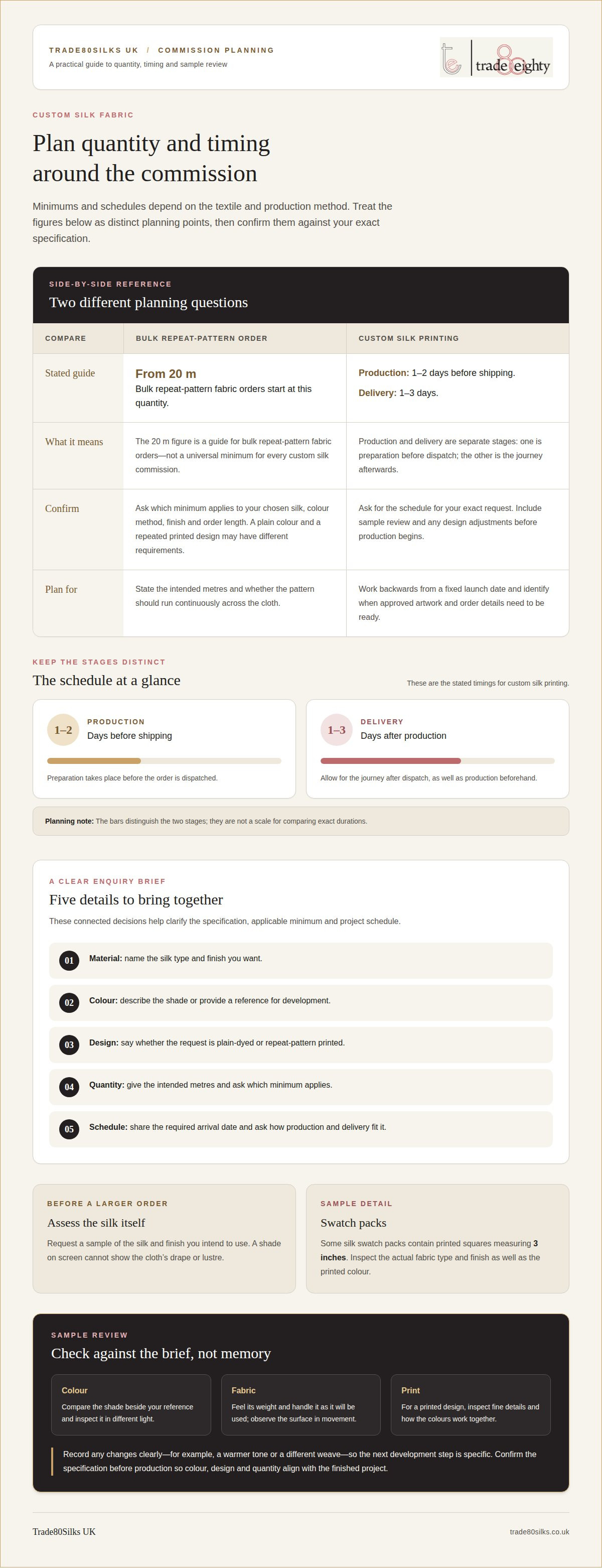
Minimum order quantities depend on the type of textile and production method. For bulk repeat-pattern fabric orders, quantities start at 20 m. Treat this as a guide for that order type, not a universal minimum for every custom silk commission. A plain colour developed for a particular project may involve different requirements from a repeated printed design, so establish the quantity against your chosen fabric and specification.
Ask about the minimum order quantity and lead time for the exact request. Include the silk, colour method, finish and intended order length in your enquiry. These details help clarify whether a minimum applies to the fabric, the print run or the overall commission. For example, a designer developing one repeat pattern should state the required metres and whether the pattern is intended to run continuously across the cloth.
For custom silk printing, production takes 1-2 days before shipping. The stated delivery time is 1-3 days. These are separate stages: production describes preparation before dispatch, while delivery describes the journey afterwards. Build both into your project schedule, allowing time for sample review and any design adjustments before production begins. If a collection has a fixed launch date, work backwards from that date and identify when the approved artwork and order details must be ready.
A useful enquiry can be concise, provided it covers the decisions that affect timing and quantity:
- Material: name the silk type and finish you want.
- Colour: describe the shade or provide a reference for development.
- Design: say whether the request is plain-dyed or repeat-pattern printed.
- Quantity: give the intended metres and ask which minimum applies.
- Schedule: share the required arrival date and ask how production and delivery fit it.
For custom colour silk fabric, recording these details together makes it easier to develop a clear commission brief. Confirm the specification before production so the colour, design and quantity align with the finished project.
Supplier communication and samples
A fabric sample lets you judge colour, handle and surface before committing to a larger purchase. Ask for a sample of the silk and finish you intend to use, since a shade viewed on screen cannot show the cloth’s drape or lustre. Some silk swatch packs contain printed squares measuring 3 inches. Use these to inspect detail, but assess the actual fabric type and finish as well as the printed colour.
Make your request specific. Describe the intended use, preferred silk, desired shade and any finish or weave requirements. If you have a reference image or physical colour sample, identify it clearly and explain which details matter most. Custom silk suppliers may offer variations in colour, weight and weave, so a focused brief helps frame a useful sample rather than a broad, ambiguous request.
- Colour: name the shade or provide a visual reference, noting whether you want a close match or a new interpretation.
- Material: state the silk type and the surface or weave you want to assess.
- Purpose: explain whether the cloth is intended for a flowing garment, a structured design or another project.
- Sample review: inspect the colour in different light and handle the fabric as it will be used.
- Purchase terms: ask about return policies and warranty services before investing.
When reviewing a sample, compare it with your original brief rather than relying on memory. Check the shade beside your reference, feel the fabric’s weight and observe how its surface responds to movement. For a printed design, inspect fine details and the relationship between colours. Record any requested changes clearly, such as a warmer tone or different weave, so the next development step is specific.
A considered sample exchange makes a custom colour silk fabric commission easier to specify. To explore silk fabric options for your project, bring together your reference, intended use and material preferences.
Choosing or developing a colour
Piece-dyed silk receives colour across the woven fabric, whilst digital printing places designs onto its surface and hand-dyeing applies colour by hand. Choose according to whether your priority is an even ground shade, intricate imagery or a more individually applied effect.
Colour selection and development
Begin with the role colour will play in the finished design. A matching shade can create a composed effect, while a contrasting colour can draw attention to particular details. For printed cloth, identify the colours you want to bring forward, then compare possible plain shades with the print. A colour reference helps communicate the intended direction, but assess the shade on silk, where weave and lustre affect its appearance.
Silk dyeing methods
Piece-dyeing colours the cloth as a whole, making it suitable for a consistent ground colour. Digital printing can reproduce intricate designs and a broad colour spectrum, which suits artwork with several hues or fine detail. Hand-dyeing involves applying colour manually, allowing a more individual treatment. Natural silk dyeing can use plant-based and mineral sources; the chosen dyes matter to buyers considering environmental impact.
To develop a shade, describe its intended mood and relationship to other materials. A colour that looks balanced alone may compete with a print or appear different beside another fabric. Compare the proposed shade with the design’s dominant and accent colours, then decide whether you want harmony or contrast. This gives the colour discussion a clear purpose beyond naming a favourite shade.
Plain colours can highlight details within a printed fabric. For example, the Seaweed silk print is suggested with Dusky Lime, Cornflower and Burnt Orange plain-dyed silk. Iris Blue is suggested with Electric Blue or Celeste Blue, while Bright Orange can echo its orange detail. These pairings show how a complementary shade can match a print element or create contrast.
If sustainability matters to your project, examine the dyes used. Traditional synthetic dyes can contain harmful chemicals and affect environmental health. Include this consideration alongside colour, weave and finish when refining the specification, so the selected method supports both the visual intention and the material priorities of your design.
Custom silk fabric commissions
In the UK, dyeing and textile imports involve requirements shaped by the materials, dyes and import route. Silk type and weave affect how cloth drapes, whilst weight also influences movement and structure.
Per-metre cost
The cost of custom-dyed silk per metre depends on the silk, colour method, finish and order quantity. A single ground shade differs from a complex design requiring detailed colour development, so compare like with like when reviewing a commission. Specify the fabric and intended use, then ask for the cost breakdown by metre, including any separate sample or preparation charges.
For a useful comparison, define whether you need a plain ground colour or a printed design, and state the required length. Silk weight affects drape: lighter cloth tends to flow, while heavier silk lends itself to more structured pieces. Include the desired weight and weave in your brief so the proposed material suits the design, not just its colour. For designers partnering with custom apparel makers like PowerSweet Fashion, specifying these structural properties early also helps ensure the finished garments hang and move as intended.
UK supplier options
UK buyers can look for textile suppliers offering bespoke fabric commissions, custom dyeing or colour matching. The right route depends on whether the project needs an even shade across the cloth or a printed motif. Set out your desired colour, silk type, weave and intended use together, then compare how each proposed process addresses those requirements.
Silk colour can fade or bleed during washing or light exposure, potentially affecting the finished piece. Assess a sample for colour transfer and ask for care guidance before production; printed silk washing guidance recommends 30°C. This gives you a practical basis for considering colour stability and handling, though care instructions should reflect the specific fabric and finish.
Custom-coloured silk may involve different types and weights, including satin, organza or other weaves, with weight chosen for the required drape. A listed real 100% Silk Satin weighs 85 gsm, but that figure should not be treated as a standard for every silk. Match the weight to the design’s movement and structure.
For a commission, bring your colour reference, fabric preference and intended quantity together in one brief. Discuss a bespoke silk fabric commission when your design calls for a considered material and colour direction.
Trade80Silks UK: Crinkle Silk Satin ( #167 )
Trade80Silks UK offers Crinkle Silk Satin ( #167 ) as one option for buyers considering a silk commission. If your design calls for a printed or textured surface, Printed Silk Organza ( PS PEG 5 ), Printed Tulle ( PS PET 3x ) and Printed Silk Devore' ( PS CP8 ) offer different material directions to consider.
Bring your colour reference, intended use and preferred fabric qualities together when shaping a bespoke fabric commission. This gives the discussion a clear creative focus, whether you are refining a shade or developing a textile concept around a particular surface. Trade80Silks UK can help designers and manufacturers consider its silk and natural fabric options in relation to their project.
To discuss a bespoke fabric commission or explore the available silk fabrics, contact Trade80Silks UK.
Shape your next silk commission
A colour decision becomes more purposeful when it starts with the finished design. Consider the mood you want the cloth to convey, how its surface will catch the light, and whether a printed or plain fabric best serves that intention. These choices can turn an early reference into a considered commission brief.
Trade80Silks UK offers Crinkle Silk Satin ( #167 ), Printed Silk Organza ( PS PEG 5 ) and Printed Tulle ( PS PET 3x ), giving designers distinct materials to consider alongside their colour direction. A bespoke fabric commission can bring those creative requirements into one conversation, from the character of the shade to the textile surface that supports it.
If you’re ready to develop a custom colour silk fabric concept, contact Trade80Silks UK about your commission. Bring your design reference and intended use, and take the next step towards a fabric direction that feels considered and distinctly yours.
Frequently Asked Questions
What Should Buyers Look for in Custom Silk Fabric?
Assess the silk’s weave, weight, finish and intended use, then consider how its colour supports your design. A flowing garment needs a different drape from a structured piece. Check that the sample’s surface and feel suit the project, and include these requirements in your brief. This makes it easier to compare fabric options on relevant qualities, not shade alone.
Where can I buy custom-colour silk fabric in the UK?
Trade80Silks UK supplies silk and natural fabrics to designers and manufacturers, with bespoke fabric commissions that include digital printing. Its offerings include Crinkle Silk Satin ( #167 ), Printed Silk Organza ( PS PEG 5 ) and Printed Tulle ( PS PET 3x ). If your project needs a particular shade, distinguish between selecting a fabric and commissioning colour development, and describe the intended result clearly.
What are the minimum order quantities for custom-colour silk fabric?
Bulk repeat-pattern fabric orders start at 20 m. This minimum relates to repeat-pattern orders, not necessarily every custom-colour request. The quantity for a commission depends on its process and specification, including whether it involves a plain shade or a printed repeat. State the silk type, design and required length together, so the minimum can be considered against the actual order rather than assumed from another production method.
How long does custom silk fabric dyeing and delivery take?
For custom silk printing, production takes 1-2 days before shipping, and stated delivery takes 1-3 days. These timings describe printing and delivery, not a universal schedule for dyeing. A dyed-silk commission may involve different preparation and production steps, shaped by the fabric and colour process. Separate production from transit when planning your project, and allow time to approve the colour direction before the order proceeds.
How do I provide a colour reference or Pantone code for silk dyeing?
Include the Pantone code if you have one, and describe the intended shade in plain language, such as a muted blue or warm ivory. A physical reference adds useful context, particularly if the colour must sit beside another material. Identify the reference clearly and explain whether it should be matched closely or used as a starting point. Assess the resulting sample on silk, since its lustre affects how colour appears.
Can I order silk fabric colour swatches or strike-offs before production?
Request a fabric sample or printed strike-off before committing to production, and specify the silk and design you want to assess. Silk swatch packs can contain printed squares measuring 3 inches, offering a compact view of colour and detail. A sample helps you judge the actual surface and scale, while a strike-off can show how artwork reads on fabric. Use your review to note any changes needed to the brief.


