

Coloured silk can be overdyed, but its existing shade will affect the result. For the clearest, most predictable colour, start with undyed silk fabric for natural dyeing. Prepare the silk carefully to remove finishes that may hinder colour uptake, and test a small sample before dyeing coloured or printed cloth.
A pale or already-coloured fabric may not produce the hue you expect. The result depends on the fabric’s starting colour, fibre content and finish, so choosing the right silk matters as much as preparing it properly.
This guide covers the supplies to gather, how scouring and degumming work, and how to choose fabric for dyeing or printing. It also explains what to consider when assessing coloured silk for a project, so you can plan the process with care.
Key Takeaways
- Overdyeing coloured silk is possible, but the original shade and any printed finish can affect the final colour; test a discreet area first.
- Prepare your supplies and handle silk gently during scouring so finishes are removed without rough treatment.
- Choose the fabric’s weight, weave and finish to suit your dyeing or printing technique.
- Check the fibre content before beginning, as silk blends may respond differently from pure silk.
Can I dye coloured silk or must it be natural?
Silk need not be natural white: prepared-for-dyeing silk can take colour, but its existing shade will influence the result. A pale ground usually keeps colours clearer, while a darker ground combines visually with the new dye. Printed areas may respond differently from the surrounding silk, so test a discreet sample before treating the whole piece.
Madder can produce reds, weld can give yellows, and indigo is associated with blue shades. The final colour depends on the fabric’s starting shade, dye bath and preparation, so use samples to assess the effect.
For safety, reserve dyeing vessels exclusively for textile work and keep them separate from food preparation. In the UK, follow the disposal instructions for each dye and auxiliary; a natural origin alone doesn’t establish that dye liquor is suitable for drains.
Natural colours can fade with washing and light. Thorough preparation and a suitable mordant can help improve colour retention. Gentle washing and keeping silk out of strong sunlight can help preserve the shade.
- Choose a suitable ground. Use undyed silk fabric for natural dyeing when you want the dye’s colour to show without an existing hue. For prepared-for-dyeing coloured silk, assess how its base shade may combine with the chosen natural dye.
- Check fibre content and finish. Choose silk rather than assuming a silk-like appearance means pure silk. Cotton blends can take colour differently, and a printed or coated finish may affect how evenly dye reaches the fibres.
- Prepare the cloth. Wash or scour silk to remove dressing and oils before dyeing. One preparation guideline heats silk or wool to 60 degrees C; handle silk gently and avoid abrupt temperature changes.
- Set up the dye bath. Weigh dry fabric and allow about 10 litres of water per 100 grams of silk, giving it room to move. Use a dedicated vessel, and follow the dye recipe for any mordant or other additions.
- Test before committing. Dye a small offcut or hidden area, then let it dry fully before judging its colour. This reveals how the original shade, print and fibre content affect the result.
Scouring and degumming silk
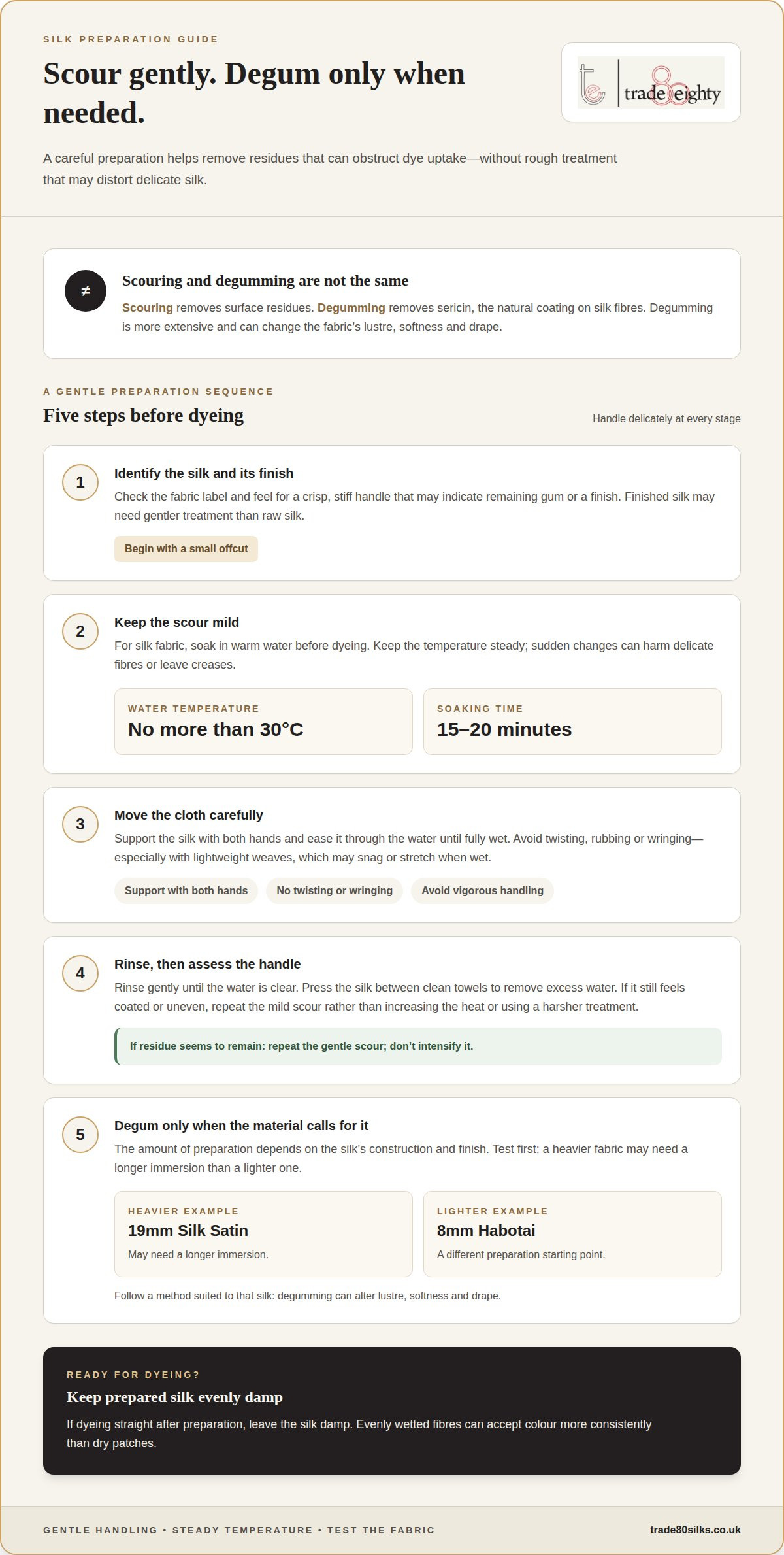
Scouring removes surface residues that can obstruct dye uptake; degumming removes sericin, the natural coating on silk fibres. The processes are related but not interchangeable. The fabric’s construction and finish determine how much preparation it needs.
- Identify the silk and its finish. Check the fabric label and feel for a crisp, stiff handle that may indicate remaining gum or a finish. A finished silk may need gentler treatment than raw silk, so begin with a small offcut rather than immersing the whole length.
- Prepare a gentle scour. For silk fabric, use warm water at no more than 30°C and soak for 15-20 minutes before dyeing. Keep the temperature steady; sudden changes and vigorous handling can distort delicate fibres or leave creases.
- Move the cloth carefully. Support the fabric with both hands and ease it through the water, allowing it to become fully wet. Avoid twisting, rubbing or wringing, particularly with lightweight weaves, which can snag or stretch when wet.
- Rinse and assess the handle. Rinse gently until the water is clear, then press the silk between clean towels to remove excess water. If it still feels coated or uneven, repeat the mild scour instead of increasing the heat or using a harsher treatment.
- Degum only when the material calls for it. Degumming is a more extensive removal of sericin than ordinary scouring, and can alter silk’s lustre, softness and drape. A heavier fabric, such as 19mm Silk Satin, may need a longer immersion than lighter 8mm Habotai, so test first and follow a method suited to that silk.
Allow the prepared silk to remain damp if you’re moving directly to dyeing; evenly wetted fibres can accept colour more consistently than dry patches. For a project that depends on a particular weight or surface, choosing silk fabric for your project begins with matching the weave and finish to the intended treatment.
Silk fabrics listed for dyeing or printing
- Match the fabric’s weight to the technique. Lightweight 8mm Habotai is a different starting point from heavier 19mm Silk Satin. A fine cloth is easier to handle for fluid colour effects, whilst heavier satin gives a more substantial surface. Choose by the finished piece’s desired drape and feel, not by the word “silk” alone.
- Decide whether colour or print comes first. For natural dyeing, start with a pale, unprinted silk so the dye can define the ground colour. A printed silk already carries a design; treat it as a surface to preserve or build upon, rather than expecting dye to create a clean, uniform colour across the print.
- Read colour descriptions carefully. Raw silk Dupioni is listed in 48 colours, so “raw silk” does not necessarily mean undyed. Existing colour affects the appearance of a new dye layer. If you want the natural dye to remain visually clear, select an undyed ground and test a swatch before cutting the full length.
- Consider the visual role of each weave. Silk Organza offers a sheer-looking base for layered effects, while Tulle has an open construction that leaves spaces between threads. Devoré combines areas of different texture through its patterned surface. These distinctions matter when choosing fabric for a print-led design or a translucent finish.
- Use a sample to make the final decision. Prepare an offcut using the same scouring and dye process intended for the main cloth. Compare its dry colour, handle and pattern visibility against the design. This small trial helps reveal whether the silk’s weight, weave and existing finish will produce the effect you want.
Is the silk fabric pure silk, and how can I check its fibre content?
- Start with the composition label. Look for the stated fibre percentages rather than relying on a fabric’s sheen or hand. A silk-and-cotton blend contains fibres that can respond differently in a dye bath, so the composition affects how evenly colour develops and how the finished cloth behaves.
- Read every part of the description. Terms such as “silk”, “peace silk” or “natural silk” don’t by themselves tell you whether a cloth is pure silk. One hand-woven Indian Silk Dupion is described as 100% natural silk, whilst a separate project fabric is described as 46% peace silk and 54% cotton.
- Distinguish a blend from a pure-silk weave. A proposed wrap described as 50% cotton and 50% silk is a blend, even when the two fibres are woven together. That distinction matters: silk and cotton may take natural colour differently, creating variation across the fabric rather than one uniform shade.
- Keep the label with your test swatch. Record the fibre percentages, colour and fabric description beside the sample. Then prepare and dye the swatch using the same process intended for the main cloth. Compare its dry colour and texture, since a wet sample can look deeper than the finished result.
- Avoid guessing from appearance alone. Lustre, softness and drape can help you describe a fabric, but they don’t establish its fibre content. Don’t use a flame test on a garment or valuable length: it damages the material and introduces an avoidable hazard. Use the maker’s composition details to guide your choice.
For a design requiring a particular fibre composition, weave or finish, plan a silk fabric commission around those material requirements before dyeing begins.
Trade80Silks UK: Crinkle Silk Satin ( #167 )
Trade80Silks UK can help you move from choosing a fabric to shaping a considered textile design. If your project calls for a distinctive surface, Crinkle Silk Satin ( #167 ) offers a different starting point from sheer or patterned cloth. For print-led concepts, consider Printed Silk Organza ( PS PEG 5 ), Printed Tulle ( PS PET 3x ) or Printed Silk Devore' ( PS CP8 ).
These fabrics serve different visual purposes, so match the structure and surface to your intended result. If your design depends on a particular fabric direction, Bespoke Fabric Commissions provide a route to a tailored concept. For natural dyeing, assess the fibre content and finish before preparing any fabric, then test a sample to understand its response.
To discuss a fabric direction for your project, contact Trade80Silks UK or visit trade80silks.co.uk.
Make your next silk project intentional
Choosing undyed silk fabric for natural dyeing is a design decision, not simply a search for pale cloth. Consider the mood you want the finished piece to convey, then select a silk whose surface and structure support that intention. A sample can help you refine the relationship between colour, texture and movement before committing to the full piece.
For a project that calls for a distinctive textile direction, Trade80Silks UK offers Crinkle Silk Satin ( #167 ), Printed Silk Organza ( PS PEG 5 ) and Printed Tulle ( PS PET 3x ). Each can inform a different creative approach, from a tactile surface to a sheer or patterned effect.
Contact Trade80Silks UK for silk advice as you shape your next fabric project, and take your idea forward with confidence.
Frequently Asked Questions
Do I need to wash silk before I start dyeing it if it says PFD?
Yes, a gentle pre-dye scour can be useful even on silk labelled PFD, meaning prepared for dyeing. The label indicates the fabric’s intended use, but a light wash can remove handling residue or dust picked up after finishing. Keep the fabric supported in the basin, avoid twisting it, and follow any preparation instructions supplied with the cloth.
How much dye do I need for different weights of silk fabric?
Use the dye maker’s dosage and calculate it against the dry weight of your silk, rather than estimating from the fabric’s visible size. A heavier length needs more dye than a lighter piece of the same dimensions. Dye concentration and the depth of colour you want also affect the quantity, so weigh the cloth dry and scale the recipe proportionally.
Selecting Your Canvas: Which Silk Weave Suits Your Vision?
Choose the weave according to the surface and movement you want in the finished piece. Habotai has a smooth, light handle suited to fluid colour; satin’s lustrous face reflects light, while crepe’s textured surface softens the appearance of colour. Chiffon is sheer and delicate, making its transparency part of the design. For artists who view fabric as a canvas and combine textiles with broader studio work, specialist retailers such as Art Parts Fine Arts offer premium fine art supplies to support creative practice. Test a small sample to compare the effects.
What is the easiest silk for a beginner to dye?
Lightweight Habotai is a practical starting point because its simple, even surface makes colour changes easy to observe. An 8mm Habotai is lighter than 19mm Silk Satin, so it’s also easier to handle in a small sample. Begin with an offcut, keep it unfolded in the bath, and note the dry colour before choosing a larger piece.
Which types of silk fabric are best for natural dyeing, such as habotai, crepe, satin or chiffon?
Habotai is a versatile choice for a smooth, lightweight result, while crepe has a softly textured surface. Satin reflects light across its face, which can make colour appear more luminous; chiffon offers a sheer, airy finish. For undyed silk fabric for natural dyeing, choose a weave that suits the intended drape and appearance, then test how your dye looks on that surface.
Should undyed silk be scoured or mordanted before natural dyeing?
Scour first to remove residues, then mordant when the dye method calls for it. One wool-and-silk recipe uses aluminium sulphate at 8% and cream of tartar at 7% of dry fibre weight, with 3 litres of water per 100 g of fabric. Simmer for 45 minutes, keeping the bath below 82°C. Weigh silk dry before calculating ingredients.


