

A well-chosen fabric helps define a production’s look and feel, from costume details to scenic surfaces. Choosing fabric for film and television production in the UK means weighing how the material reads on camera against its role in the scene. Stretch fabrics, mesh, velvet, metallic fabrics and prints each create a distinct effect; wool is another option when warmth and breathability matter.
Colour and pattern often catch the eye first, but texture, drape and the demands of each scene matter just as much. This guide covers how to match fabric to film, television and theatre uses, what to consider when commissioning a custom print, and how to prepare a useful material brief. The aim is to connect a fabric’s character with its intended role, from costume accents to visual elements in a set.
Key Takeaways
- Match fabric to its role in the production by weighing texture, drape and the visual effect you want on screen or stage.
- Explore how a custom print can help bring a costume or visual concept to life, with the design shaped around the production’s creative direction.
- Compare the qualities of silk satin, silk organza, tulle and devoré to find a material that complements your intended look.
- Consider Trade80Silks UK’s printed silk fabrics and bespoke commissions when your production calls for a distinctive textile.
How does this apply to a film, television, or theatre production?
Costume teams select fabric around the character, scene and practical use. For film, television and theatre, the decision balances appearance with movement, comfort, durability and the production’s requirements.
Costume Fabric Types
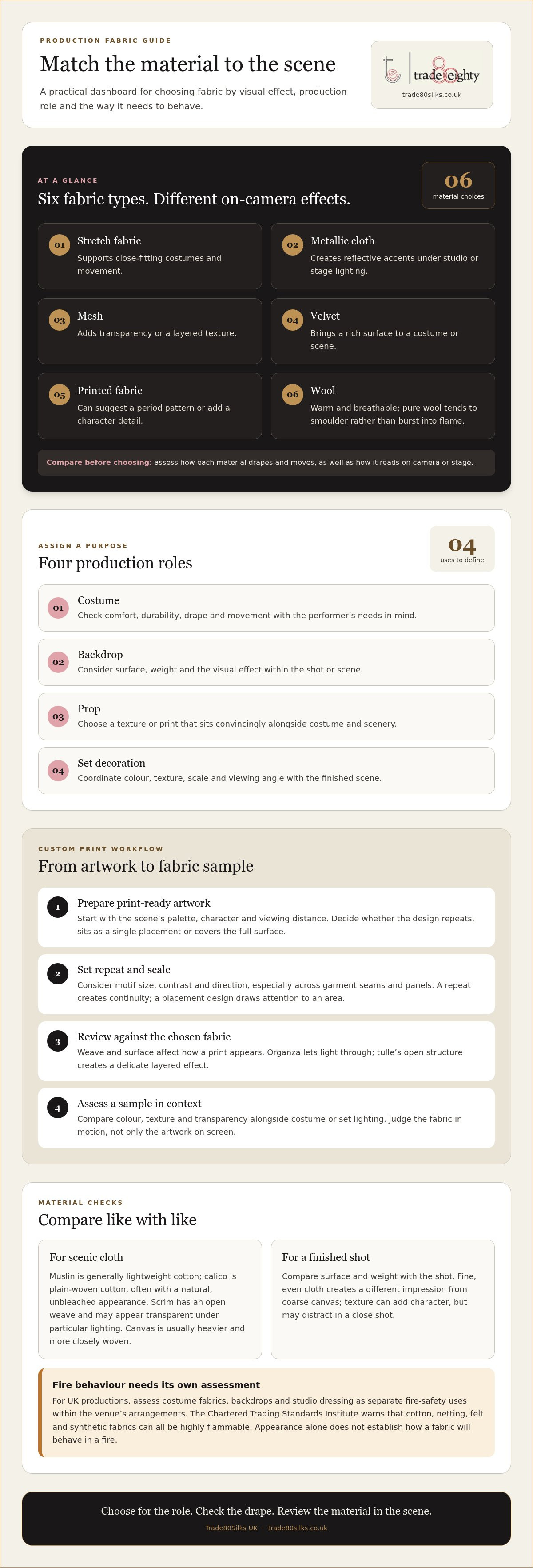
Stretch fabric can support close-fitting costumes and movement, while metallic cloth creates reflective accents under studio or stage lighting. Mesh adds transparency or a layered texture; velvet has a rich surface, and printed fabric can suggest a period pattern or a character detail. Compare how each material drapes and moves. Wool is warm and breathable, and pure wool tends to smoulder rather than burst into flame.
For UK productions, assess costume fabrics, backdrops and studio dressing as separate fire-safety uses within the venue’s arrangements. The Chartered Trading Standards Institute (CTSI) warns that cotton, netting, felt and synthetic fabrics can all be highly flammable. Appearance alone does not establish how a fabric will behave in a fire.
The cost per metre of muslin, calico, velvet and scenic fabric depends on factors such as fibre, weight, width, finish, print and order quantity. Compare materials using the same specifications, and judge each against its intended use.
Choosing Fabrics for Production Use
First assign each textile a role: costume, backdrop, prop or set decoration. For a moving costume, assess comfort, durability and drape. For a backdrop, consider its surface, weight and visual effect in the scene. Props and set dressing may call for a different texture or print to sit convincingly alongside costumes and scenery.
Before ordering, align fabric selection with the production schedule and delivery address. Request samples to compare colour, texture and drape with the design, then record the chosen material and its intended use. To support more sustainable sourcing, consider whether existing stock or reusable textiles can meet the brief, and whether the material can be used again. These steps help costume and set teams coordinate their choices around the finished scene.
Wool’s warmth and breathability may be relevant when selecting costume material, alongside the needs of the scene. Keep those qualities in mind when comparing fabrics for different production roles.
Custom fabric printing and design options
Custom printing lets designers develop textiles around a production’s visual language. A period costume might use a small-scale floral repeat, while a fantasy setting could call for abstract motifs or layered colour. Start with the scene’s palette, character and viewing distance. A motif that reads clearly in close-up may lose definition in a wide shot or on stage.
Artwork should suit both the fabric and its intended use. Decide whether the design should repeat, appear as a single placement or cover the full surface. Consider motif scale, contrast and direction, especially on garments with seams or panels. A repeat can create continuity across costume pieces; a placement design draws attention to a particular area.
Designers planning fabric for film and television production across the UK can begin by matching the artwork to the material’s structure. Sheer organza lets light through, while tulle’s open structure creates a delicate layered effect. Weave and surface affect how a print appears, so assess the fabric in motion rather than judging the artwork on screen alone.
For a considered workflow, prepare print-ready artwork, set its repeat and scale, then review the design against the chosen fabric. A sample lets the team assess colour, texture and transparency alongside costume or set lighting. This is particularly useful when a print needs to coordinate with other textiles or remain consistent across several pieces.
A bespoke print can also support storytelling beyond wardrobe, echoing a location, distinguishing a fictional group or adding a coherent detail to set dressing. A brief for fabric for film and television production UK teams can use should identify the intended role, visual direction and material qualities. For distinctive textile concepts, custom textile design can form part of the production’s fabric planning.
Fabrics supplied for film, television and theatre productions
Film, television and theatre departments source textiles for costumes, scenic surfaces, props and set dressing. The right choice depends on the intended use, the camera or audience’s view, and how the fabric needs to behave during production. Costume fabric needs to move with its wearer; a backdrop may instead need to hang smoothly and support the scene’s composition.
Cotton muslin, calico, scrim and canvas differ in weave, weight and transparency. Muslin is generally a lightweight cotton cloth; calico is plain-woven cotton, often with a natural, unbleached appearance. Scrim has an open weave that can appear transparent under particular lighting, while canvas is usually heavier and more closely woven. The exact appearance depends on the fabric selected.
For a filming backdrop, compare the fabric’s surface and weight with the shot. Fine, even cloth creates a different impression from coarse canvas. Scrim may suit a gauzy visual layer, while calico can provide a plain surface for dressing or scenic use. Costume teams should assess softness, drape and movement against the performer’s needs. Texture can add character, but may distract in a close shot.
Production sourcing works best when teams define the use before choosing a material. Record whether each piece is for wardrobe, a prop, scenery or set decoration, then consider colour, texture, scale and viewing angle. Samples let designers compare fabric with costume details and set finishes before making a choice. For a distinctive brief, a bespoke textile commission can bring the design direction into the fabric itself.
Finally, coordinate material selection with the production schedule and planned construction. A clearly labelled fabric reference helps costume and set teams keep related pieces consistent across scenes, while leaving room for deliberate contrast between characters or locations.
What fabrics are commonly used for film and television production in the UK?
Costume and wardrobe teams often consider stretch fabrics, mesh, velvet, metallic fabrics and prints. Each has a different visual character, so choose according to the costume design, scene and camera framing. For example, a print’s scale can look very different in close-up and in a wide shot.
Wool is another established option for costumes and scenic use. Pure wool and high-wool-content fabrics are naturally flame resistant, and wool can help deaden sound. Heavier wool also hangs well as a backdrop, creating a smooth, uncreased surface. Consider it when a production needs substantial cloth with a composed finish.
The intended role should guide fabric selection. Costume teams can compare drape and movement with the performer’s actions, while scenic teams may prioritise how evenly a fabric hangs behind a scene. For props and set dressing, texture and colour can help an object sit naturally in its surroundings. The same textile may serve different purposes, but its weight and appearance should suit each one.
For a practical shortlist, group materials by function before comparing samples:
- Costume: assess movement, comfort, texture and how the material reads on camera.
- Backdrop: consider weight, hanging quality and whether the surface looks smooth in the frame.
- Scenic detail: compare colour, pattern and texture with neighbouring set elements.
View samples alongside costume colours and set finishes under the production’s intended lighting. This can show whether a metallic surface draws focus, a print remains legible or a wool backdrop has the desired visual weight. The right choice supports the scene without competing with its subject.
Pure wool garments are used as personal protective equipment for fire and military personnel. This is another context for considering wool when developing a costume or seeking a material with substantial visual presence.
For film and television, the intended role remains central. Weigh a material’s appearance and handling against the scene, while keeping protective use distinct from the production’s own costume requirements. Comparing wool with other shortlisted fabrics can clarify whether it suits the design.
Trade80Silks UK: Crinkle Silk Satin ( #167 )
Trade80Silks UK supplies refined silk fabrics for productions seeking a distinctive surface, sheer layer or printed design. Crinkle Silk Satin ( #167 ) brings a tactile, textured character to costume and visual styling, whilst Printed Silk Organza ( PS PEG 5 ) and Printed Tulle ( PS PET 3x ) offer printed options for layered creative concepts. Printed Silk Devore' ( PS CP8 ) adds another printed silk choice.
For a design that calls for a more individual direction, Bespoke Fabric Commissions can support a tailored textile concept. These materials are suited to projects where the fabric itself contributes to the intended visual language, rather than serving as a neutral background. Consider the role, texture and overall appearance you want before selecting a direction for your production.
To discuss fabric options for your production, contact Trade80Silks UK.
Shape your next production fabric brief
Before choosing materials, turn the creative direction into a practical fabric brief. Note each textile’s role, desired surface and drape, palette, and appearance under the production’s lighting. This gives costume, set and design teams shared visual priorities and helps them make deliberate choices for each scene.
For fabric for film and television production in the UK, connect the production’s requirements with a material that supports its intended character. Consider whether the design calls for a quiet foundation, a translucent layer or an expressive printed surface. A clear brief gives fabric selection purpose while leaving room for the artistry that makes a production’s visual world distinctive.
When your project calls for considered silk fabrics or a bespoke textile direction, contact Trade80Silks UK about production fabric. Begin with the look you want to create, and let that vision guide the conversation.
Frequently Asked Questions
Which UK suppliers sell fabric for film, TV, theatre and set dressing?
Trade80Silks UK supplies premium silk and natural fabrics for designers, manufacturers and film costume buyers. Its materials can suit productions seeking silk for wardrobe or selected visual details, while the right textile depends on the scene’s intended look and use. For a project brief, identify whether you need a costume cloth, a printed surface or a bespoke fabric direction, then match your choice to that purpose.
What UK fire safety standards apply to fabrics used on film and TV sets and in studios?
Assess costume fabrics, backdrops and studio dressing as distinct fire-safety uses within the production’s venue arrangements. Appearance alone does not establish fire behaviour; cotton, netting, felt and synthetic fabrics can all be highly flammable.


