

Momme is the clearest starting point when you buy mulberry silk fabric in the UK, but it isn’t a quality score on its own. Silk organza typically weighs 4 to 6 momme, while silk charmeuse typically weighs 12 to 30 momme; the weave and intended use matter alongside the weight.
When you buy mulberry silk fabric in the UK, it’s easy to focus on thread count or a luxurious name. Neither tells the whole story of how a fabric will drape, feel or suit your project. Understanding the difference between fibre, weave and momme makes it easier to compare fabrics on their merits.
This guide explains how mulberry silk is made, what common weaves offer, and how momme and thread count relate to fabric selection and UK prices. You’ll also find practical points to consider when choosing silk for a garment, lining or creative commission, so you can make a more confident decision.
Key Takeaways
- Compare momme alongside weave and intended use; thread count alone won’t tell you how silk will drape or feel.
- Learn what “mulberry silk” describes, and which fibre and fabric details help you assess a 100% silk claim.
- Understand how weave, weight, width and purchase quantity influence silk fabric prices in the UK.
- Explore how Trade80Silks UK’s silk fabrics and printed textiles may suit a considered design or manufacturing project.
Momme and thread count
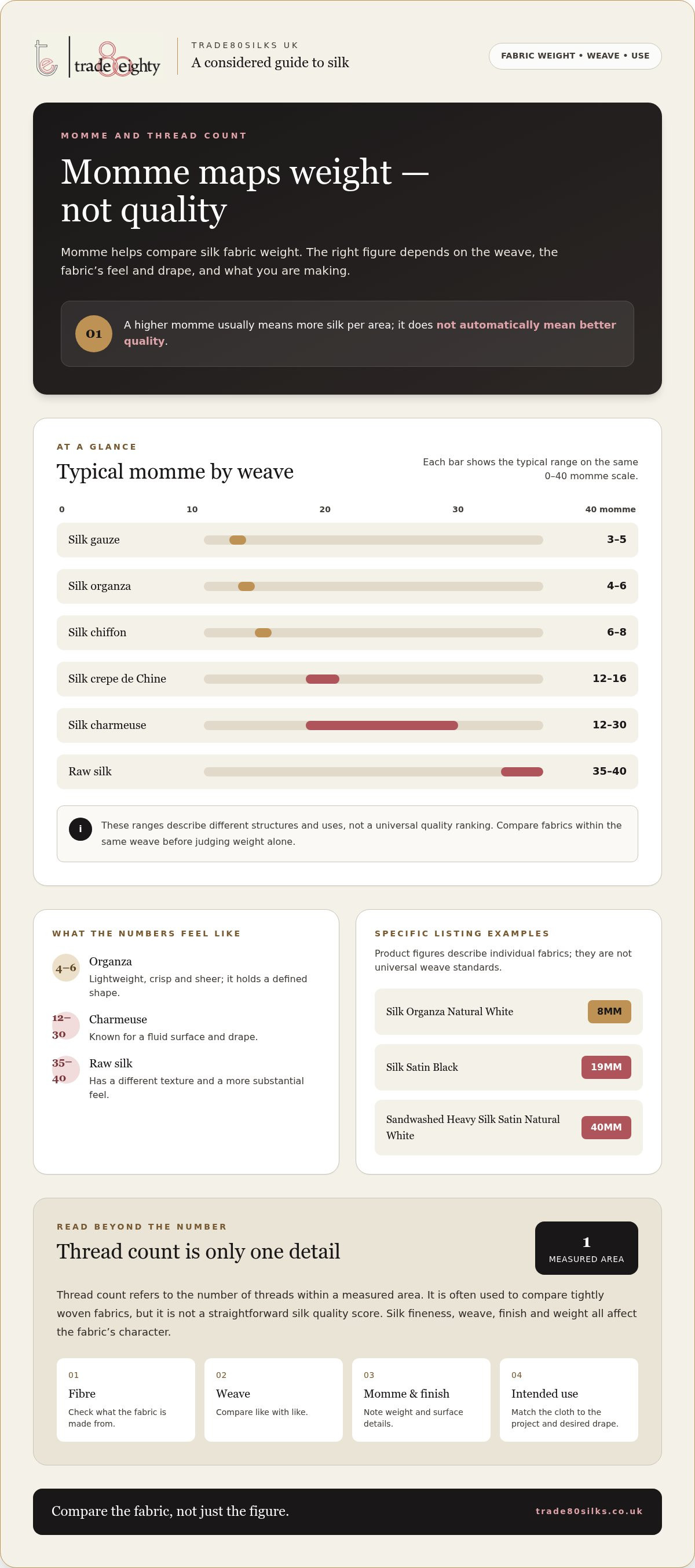
Momme describes silk fabric weight, helping you compare cloths with different weaves. A higher momme usually means more silk per area, but it doesn’t automatically indicate better quality. The right weight depends on the fabric’s purpose, feel and desired drape.
Compare typical weights by weave rather than treating one figure as a universal standard:
- Silk gauze typically weighs 3 to 5 momme.
- Silk organza typically weighs 4 to 6 momme.
- Silk chiffon typically weighs 6 to 8 momme.
- Silk crepe de Chine typically weighs 12 to 16 momme.
- Silk charmeuse typically weighs 12 to 30 momme.
- Raw silk typically weighs 35 to 40 momme.
These ranges reflect distinct structures and uses. Lightweight organza holds a crisp, sheer shape, while charmeuse is known for its fluid surface. Raw silk has a different texture and a more substantial feel. Compare fabrics within the same weave before judging them by weight alone.
Individual listings show how much the figures can vary. Silk Organza Natural White is listed as 8MM, whilst Silk Satin Black is listed as 19MM. Sandwashed Heavy Silk Satin Natural White is listed as 40MM. These examples describe specific fabrics, not a universal ranking of quality.
Thread count refers to the number of threads within a measured area. It’s often used to compare tightly woven fabrics, but it isn’t a straightforward silk quality score. Silk’s fineness, weave, finishing and weight all affect its character. Thread count alone can’t tell you whether a fabric will feel fluid, crisp or substantial.
For a practical comparison, note the fibre, weave, momme and finish on each listing. Then match those details to your project: chiffon may suit a soft overlay, while a heavier satin can provide more body. Treat thread count as one detail, not a substitute for a clear fabric description or a useful momme comparison.
Mulberry silk
Mulberry silk describes silk made by silkworms raised on mulberry leaves. The term identifies the fibre’s source, not a particular weave or finish. A single silkworm cocoon can yield between 600 and 900 metres of silk filament. This continuous filament can be spun and woven into fabrics with varied surfaces and drape.
This distinction matters when comparing fabric descriptions. Mulberry silk can be woven as satin, charmeuse or organza, each with a different appearance and feel. Satin has a lustrous face, while organza is crisp and sheer. Fibre origin alone won’t tell you how a fabric will behave in a garment, lining or decorative detail.
Use the listed composition and dimensions to make a practical comparison:
- Ivory Mulberry Silk Satin is made from 100% Mulberry silk and measures 137 cm wide.
- A listed white mulberry silk charmeuse satin is 16 momme, 114 cm wide and 1 metre long.
- A listed white mulberry silk organza measures 1.4 metres wide and 1 metre long.
- A listed mulberry silk satin for dress lining and crafts measures 114 cm wide.
These examples show why fibre, weave and width need to be considered together. For a flowing blouse, charmeuse offers a different surface from crisp organza. Satin may suit a lining when you want a smooth, lustrous finish. Compare the stated composition with the intended use, then check the width against your pattern pieces. Width affects layout and cutting, even when the fibre is the same.
Purchase format can also shape your selection. Ivory Mulberry Silk Satin can be bought off the roll, by the half metre or as a fat quarter. A half metre measures 137 cm by 50 cm, while its fat quarter measures 68 cm by 50 cm. These dimensions help you judge whether a cut suits sampling, a small project or a larger pattern. Look at the exact composition and cut size together; the word “mulberry” alone doesn’t describe the whole fabric.
Silk fabric prices
Silk fabric prices reflect more than the fibre name. Weave, weight, finish, width and purchase quantity all affect the value of a cut. Satin and organza have different constructions, so comparing their prices directly may not show which offers better value. Compare like with like: match the weave and composition first, then consider weight and finish.
Length is another key factor. A price per metre can help compare fabric sold by the roll, while a pre-cut piece may be sold as one complete length. Check whether the listing is priced by the metre, half metre or set cut, then calculate the quantity your pattern needs. For a garment, allow for pattern layout, print matching and usable fabric width.
Overseas purchases can involve import duty and VAT, so the landed cost may differ from the displayed fabric price. The amount depends on factors such as dispatch origin, shipment value and customs classification. No single charge applies to every order.
UK suppliers vary in whether they offer fabric samples and what they charge. Compare the sample’s fabric, size and any postage charge with the full-length listing. A small swatch can show colour and feel, but not the fabric’s full drape.
For a considered comparison, record each listing’s composition, weave, weight, width, finish and sales unit. Then compare the amount of usable fabric you need rather than choosing solely by the lowest displayed figure. A printed silk, for example, may need extra allowance for pattern matching, while a plain lining has different cutting requirements.
Check what the quoted unit includes, such as a continuous cut or a pre-cut length, and note delivery charges separately. For a bespoke fabric commission, the design, material and production requirements shape the specification and costing. A clear project brief helps define these choices before you compare a quote with standard fabrics.
How can I verify that silk fabric is genuine 100% mulberry silk?
Begin with the fabric’s composition statement, not its sheen or smooth handle. Look for wording that identifies both the fibre and its proportion, such as “100% Mulberry silk”. A description saying only “silk satin” names the weave and fibre family, but doesn’t establish mulberry origin or full silk content. Treat those as separate details.
Next, compare the product description with its accompanying specifications and purchase record. Check that the same composition appears consistently, and note the fabric name, colour, weave and width. For example, a listing for ivory mulberry silk satin states 100% Mulberry silk. Keep that description with your order details, especially when purchasing fabric for a commission or repeat project.
Use this checklist before choosing a fabric:
- Find the stated fibre composition and look for an explicit 100% claim.
- Check that “mulberry” describes the silk fibre, not just the colour or product name.
- Compare the composition across the listing, specification and order record.
- Keep the fabric name and description together for later reference.
Appearance and touch can help you judge whether a fabric suits your design, but they can’t prove its fibre origin. Satin’s lustre, organza’s transparency and charmeuse’s fluid drape come from their construction and finish. Another silk weave may look or feel unlike satin, even if both are described as mulberry silk. Don’t rely on a single sensory impression as proof of composition.
For a bespoke project, set out the required fibre composition, weave, colour and intended use in writing. This gives the commission a clear specification, rather than relying on a broad phrase such as “pure silk”. Keep the final description alongside your swatch or fabric record, so future sampling and matching start from the same details. To develop a tailored specification, discuss a bespoke silk fabric commission.
Trade80Silks UK: Crinkle Silk Satin ( #167 )
Trade80Silks UK offers Crinkle Silk Satin ( #167 ) for designers and makers seeking a distinctive silk surface for a project. If your design calls for a different texture or finish, Printed Silk Organza ( PS PEG 5 ), Printed Tulle ( PS PET 3x ) and Printed Silk Devore' ( PS CP8 ) offer further material directions.
Choose according to the role the cloth needs to play: consider its appearance, drape and how it will work with your design. If your project needs a tailored fabric specification, a bespoke fabric commission can develop the material around your creative brief. This can be useful when standard fabric options don’t match your intended design.
Share your fabric requirements with Trade80Silks UK to discuss the right direction for your project.
Make your next fabric choice with purpose
Before placing an order, picture the finished piece in motion. Consider where the fabric will sit, how it will fall against the body, and whether its surface should catch the light or remain understated. These design decisions can narrow your choice more effectively than a product name alone.
When you buy mulberry silk fabric in the UK, let the intended use guide your final selection. A clear brief, with notes on silhouette, colour and finish, gives you a practical framework for comparing suitable materials and planning how they’ll work together. For a project with a more individual direction, a conversation about fabric possibilities can help shape the next step.
Trade80Silks UK offers a considered selection for designers and makers developing distinctive work. If you’re ready to explore fabric options for your project, contact Trade80Silks UK. A thoughtful choice is a fine beginning, and your next design can take shape from there.
Frequently Asked Questions
Where can I buy mulberry silk fabric in the UK?
Trade80Silks UK supplies silk and natural fabrics online, with sales by the metre or roll. Its range serves designers and manufacturers, making it relevant for both individual projects and production requirements. Before ordering, match the fabric’s stated composition and width to your pattern or specification, then select a quantity and purchase format that suits your intended use.
What are typical UK prices per metre for mulberry silk fabric?
There’s no single per-metre price for every mulberry silk fabric. Satin, organza and charmeuse differ in construction, while weight, width and finish also affect comparisons. Assess like-for-like listings and consider how much usable cloth your pattern requires. A wider fabric may offer a different cutting yield, so the metre price alone won’t show its full value for your project.
What types and weights of mulberry silk fabric are available in the UK?
UK buyers can find mulberry silk in weaves such as satin, charmeuse, organza, chiffon and crepe de Chine, as well as raw silk. Weight varies with weave and construction: lighter cloths suit sheer, airy effects, while heavier options provide more substance. Match the weight and surface to your design, and remember that tulle may be made from polyamide rather than silk.
How much mulberry silk fabric is needed for dresses, bedding, or other projects?
Calculate the amount you need from your pattern and the fabric’s usable width, allowing extra for pattern layout or print matching. Check the listing’s sales unit and cut length before ordering.


