

The most beautiful fabric can be the wrong choice if its minimum order or lead time doesn’t suit your first collection. Fabric sourcing for a debut collection means balancing the cloth’s weight, handle and finish with the quantities and schedule production demands. A custom fabric order from overseas may require a minimum of 3000 yards; fabric procurement for a first order typically takes four to eight weeks, while a first apparel order including fabric and sampling can take three to five months.
Choosing fabric for a debut collection means finding a textile that supports your design and works for sampling and production. Trade Eighty supplies silk and natural fabrics by the metre and in bulk, and offers bespoke fabric commissions for projects that need custom development.
Here, you’ll learn how minimums shape a debut collection, what affects sourcing time and how fabric weight, construction and finishing influence a garment. You’ll also see how a fabric-sourcing partner can help compare suitable options and coordinate with supply-chain partners, bringing creative direction and production realities into closer alignment.
Key Takeaways
- Compare similar fabrics for weight, finish and minimum order requirements before committing to a design direction.
- Connect fabric choices with your intended retail price and margins, while allowing time for sampling and procurement.
- Understand how construction, dyeing and finishing influence a textile’s appearance, drape and performance.
- Use supply-chain partners to coordinate fabric decisions with production needs, and consider bespoke commissions when standard options don’t suit your collection.
1. Why Does Fabric Decide Your Minimum Order?
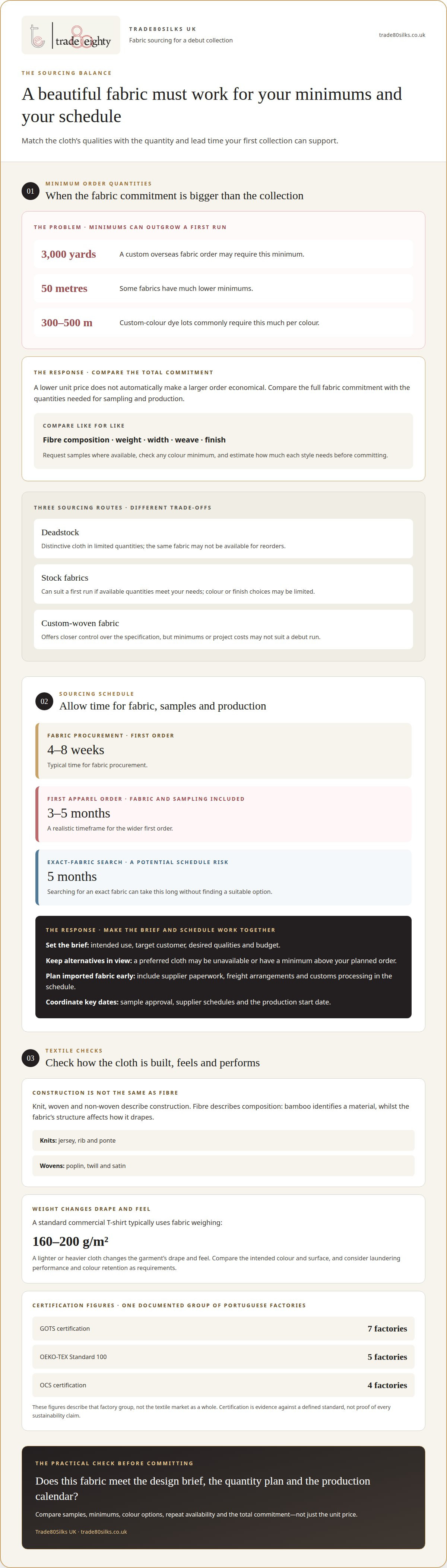
A fabric’s minimum order quantity (MOQ) shapes how much you must buy before production begins. A custom overseas order may require a minimum of 3000 yards, while some fabrics have minimums of 50 metres. A fabric-sourcing partner compares these thresholds with your planned styles and quantities, so a visually appealing cloth doesn’t commit the collection to more running stock than it needs.
Compare fabrics on like-for-like qualities: fibre composition, weight, width, weave and finish. Request samples where available and compare the quoted fabric cost with any stated minimum order or colour minimum. A lower unit cost can still mean greater outlay if the minimum leaves you with excess fabric, so estimate the quantity each style needs before deciding.
Colour can have its own threshold. Custom-colour dye lots commonly require 300 to 500 metres per colour, so a small collection may be better suited to an existing shade. Trade discounts may depend on order volume, but a lower unit price doesn’t automatically make a larger purchase economical. The useful comparison is the total commitment against the quantities needed for sampling and production.
Deadstock can offer distinctive cloth in limited quantities, but the same fabric may not be available for reorders. Stock fabrics can suit a first run when the available quantity meets your needs, although colour or finish choices may be limited. Custom-woven fabric offers closer control over the specification, but bespoke development may not suit a debut run if its minimums or project costs do not fit your budget.
When looking for a UK fabric supplier, compare available stock, sample access, colour options and the potential for repeat supply. Match these factors to your budget and planned quantities rather than treating the lowest minimum order as the only priority. Trade Eighty sells silk and natural fabrics by the metre and in bulk. If a standard fabric does not meet your design brief, its bespoke commissions include custom weaving, jacquards, embroidery and digital printing.
2. How Long Does Fabric Sourcing Take?
Fabric procurement for a first order typically takes four to eight weeks. A realistic first apparel order, including fabric and sampling, takes three to five months. These timelines allow for selecting cloth, receiving samples, approving quality and arranging production. Searching for an exact fabric can take five months without finding a suitable option, so flexibility helps protect the collection schedule.
Use the planned retail price to guide fabric selection from the outset. Compare fabric cost per garment with your target margin, while also accounting for construction, trims, labour and overheads. A richly finished textile may suit a higher-priced design, but could narrow the margin if the retail price stays fixed. Comparing fabrics with different weights or finishes can help balance appearance, hand-feel and cost.
A clear fabric brief makes supplier conversations more useful. Set out the garment’s intended use, target customer, desired qualities and budget, then compare samples against those requirements. Keep alternatives in view if a preferred cloth is unavailable or its minimum quantity is greater than your planned order. Trade Eighty’s curated silk and natural fabrics and bespoke development services can support briefs that call for a distinctive material.
For imported fabric, allow time to coordinate supplier paperwork, freight arrangements and customs processing. Confirm that the shipment documentation is prepared and that dispatch and delivery fit the production calendar. Treating these steps as part of the sourcing schedule, rather than leaving them until after fabric selection, helps keep the wider plan realistic.
A partner manages lead times by aligning sample approval, supplier schedules and the production start date. They can compare available stock with made-to-order options, flag where a fabric may be difficult to reorder, and match minimum quantities to the collection plan. For a tailored sourcing discussion, explore bespoke fabric planning.
3. Understanding textile types, dyeing and finishing
Start with construction, since knit, woven and non-woven textiles behave differently. Jersey, rib and ponte are knits; poplin, twill and satin are woven examples. Fibre describes composition, not construction: bamboo identifies a material, while the fabric’s structure determines how it drapes. A sourcing partner matches construction, weight and composition to the garment’s purpose, then assesses swatches by touch and appearance.
Weight helps clarify how a textile may perform. A standard commercial T-shirt typically uses fabric weighing 160 to 200 grams per square metre, whilst a lighter or heavier cloth changes its drape and feel. Dyeing and finishing also affect appearance and handle: compare the intended colour and surface against the design, and consider laundering performance and colour retention as requirements. A reference garment’s care label can help identify its composition.
Certification can offer evidence against a defined standard, but it should not be treated as proof of every sustainability claim. In a documented group of Portuguese factories, 7 hold GOTS certification, 5 hold OEKO-TEX Standard 100 certification and 4 hold OCS certification. These figures describe that factory group, not the textile market as a whole. A sourcing partner can relate a certificate to the material or production claim being considered.
Textile trade fairs bring mills, wholesalers and designers together, making it easier to compare cloth in person. DG Expo Fabric and Trim Show is one example, offering vendors with low minimum requirements and educational seminars for design entrepreneurs. A sourcing partner can use fair conversations to explore alternatives, feel different finishes and collect samples for review. Comparing those tactile references helps turn visual inspiration into a textile choice suited to the collection’s construction and intended use.
4. Sourcing fabrics through supply-chain partners
For fabric sourcing for a debut collection, a supply-chain partner can connect the material brief with the people and processes needed to bring it into production. UK designers may source through wholesalers and mills, while a partner coordinates conversations about samples, production yardage and the fabric’s intended use. This joined-up approach helps keep creative choices and manufacturing requirements in view together.
Coordination can also mean finding fabrics that work together without matching exactly. A partner considers texture, colour and drape across the collection, then aligns those choices with the garment plan. This can create a coherent material story while allowing different suppliers or production routes to serve different designs. The practical benefit is a collection shaped by compatible fabrics, rather than a single textile being forced into every role.
Sample yardage gives production teams a chance to assess the material before ordering production quantities. Designers selling wholesale are advised to source sample yardage first, then return to the vendor for production yardage. A partner can organise that sequence and carry the approved fabric details into supplier discussions, helping reduce the risk of a sample and production order being treated as separate decisions.
Supply continuity deserves attention, too. A print selected for a collection may no longer be available to reorder four months later, so a partner can consider repeat-order prospects alongside the design’s appeal. Once rolls arrive, prompt inspection matters: a designer who waits 45 days to discover flaws may find the vendor will no longer take action.
In fabric sourcing for a debut collection, the strongest partner coordinates the brief, samples, supplier communication and production needs as one process. That approach is especially useful when a custom material or several complementary fabrics must work within the same collection. To discuss your sourcing requirements, talk through your fabric brief.
Trade80Silks UK: Bespoke Fabric Commissions
Trade80Silks UK offers Bespoke Fabric Commissions for designers whose collection calls for a more individual textile. They can be suited to a brief shaped by a particular weave, jacquard, embroidery or digital print, bringing material character into the sourcing conversation alongside production requirements.
For designers exploring existing silk options, the range includes Crinkle Silk Satin ( #167 ), Printed Silk Organza ( PS PEG 5 ) and Printed Tulle ( PS PET 3x ). These provide distinct textures and surfaces to consider against a collection’s intended silhouette and finish. A bespoke commission may be the natural next step when a standard fabric does not express the design direction.
Share your fabric brief and collection requirements with Trade80Silks UK to discuss the next step.
Shape a considered fabric direction
Thoughtful fabric sourcing for a debut collection can shape the creative direction as well as production. A textile’s surface, movement and finish influence how a silhouette is imagined and how the collection feels as a whole. Start by writing a clear brief: note the qualities you value and the role each fabric should play. Trade Eighty’s fabric range and bespoke commissions offer options for bringing that brief to life.
Trade80Silks UK offers Crinkle Silk Satin ( #167 ), Printed Silk Organza ( PS PEG 5 ) and Printed Tulle ( PS PET 3x ), alongside Bespoke Fabric Commissions for a more individual material direction. These options can help inform a distinctive fabric story, whether you are developing an existing idea or exploring a new one. Share your plans and contact Trade80Silks UK about sourcing. A considered choice of cloth is a promising foundation for the collection ahead.
Frequently Asked Questions
How Can a Fabric-Sourcing Partner Help You Choose the Right Fabric Weight?
Match fabric weight to the garment’s purpose, silhouette and intended wearer. A lighter cloth may support movement in a flowing layer, while a structured piece may need more body. Compare swatches alongside the design and consider how weight affects drape, opacity and handling. This helps the chosen material support the design rather than dictate it.
How Does a Fabric-Sourcing Partner Test Fabric Before You Commit to Bulk?
A partner can assess sample fabric against practical requirements before a larger order, including colour, surface, drape and shrinkage. For shrinkage, the swatch can go through five wash cycles using the intended care-label method. Shrinkage above 5% indicates a need for pre-shrinking, which may add cost. Testing this early helps identify whether the fabric’s behaviour suits the garment and its care expectations.
How Long Does Fabric Sourcing Take?
Fabric procurement for a first order typically takes four to eight weeks, while a first apparel order including fabric and sampling can take three to five months. The schedule depends on sample approvals, supplier response, stock status and production planning. A sourcing partner can map these stages against the collection calendar, so fabric selection and approvals are built into the production schedule.
What Does a Factory Need to Quote on Fabric?
A factory needs a clear description of the garment and its material requirements to prepare a useful quote. A tech pack can specify fabric type, weight and composition, and include the design, intended construction, colour and finish where relevant. Include planned order quantities and sample requirements so the factory understands the scope. Clear details help align fabric selection with production.
Which Fabrics Suit Which Garment?
The garment’s construction and intended movement guide the choice. Jersey, rib and interlock are knitted examples that can suit designs requiring stretch; poplin, twill and satin are woven options with different structure and drape. A sourcing partner considers the silhouette, weight and composition together, then assesses samples against the desired feel. The right textile is the one that supports the garment’s function and finish.
Why Does Fabric Decide Your Minimum Order?
Suppliers set minimums according to how a material is stocked or produced. An existing fabric may be available in smaller quantities, while custom production or dyeing can require a larger commitment. For example, custom overseas fabric orders may require 3000 yards, and custom-colour dye lots commonly require 300 to 500 metres per colour. A partner compares these thresholds with the collection’s planned requirements.


