

The most luxurious fabric choice isn’t always the quietest: unexpected colour palettes, large-scale prints and distinctive, less predictable motifs can give a design a more elevated character. Knowing how to choose fabric for a luxury brand starts with the garment itself, because each silhouette calls for a different balance of drape, texture and structure.
That balance matters as much as a fibre’s reputation. A rare material may offer exceptional softness or distinction, but its weight, weave and finish still need to suit the garment’s intended look and feel. Colour consistency matters too, particularly when a design moves from sample to production.
This guide explores fabric directions in luxury fashion and explains how to assess fibres such as vicuña, cashmere and Sea Island cotton. You’ll also learn how GSM, construction and colour consistency inform a considered choice, helping your materials support both the collection’s character and the design’s practical demands.
Key Takeaways
- Match fabric texture, print and colour to the garment’s silhouette, using distinctive choices to give a collection its own character.
- Assess rare fibres for their qualities and provenance, rather than treating rarity alone as a measure of suitability.
- Use GSM as one guide to weight, then consider how the fabric’s drape and structure will serve the design.
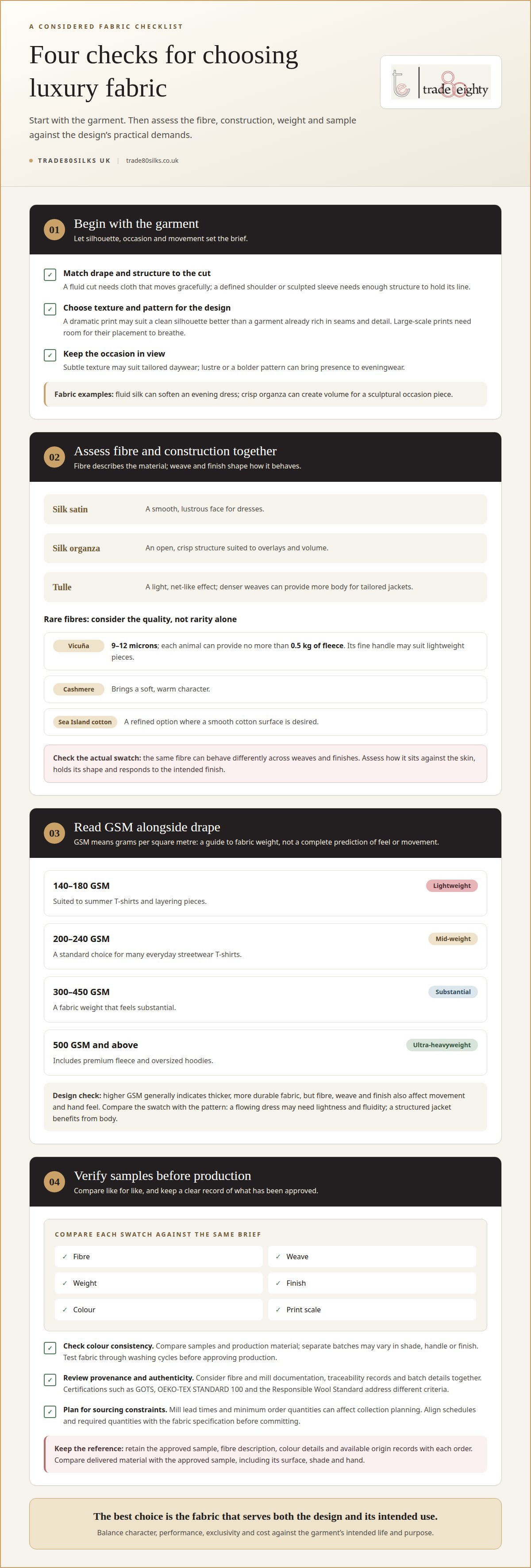
- Examine weave and colour consistency across samples, and test fabric through washing cycles before approving production.
What luxury fabrics are currently in vogue ?
Luxury fashion is embracing unexpected colour palettes, large-scale prints and motifs with unusual details. The garment remains the starting point: its silhouette, occasion and intended movement should guide the fabric choice. When considering how to choose fabric for a luxury brand, begin with the design, then decide which texture and pattern will give it distinction.
Texture, pattern and garment choice
Texture, pattern and intended use together shape a garment’s visual character and movement. Fluid silk can soften an evening dress, while crisp organza can create volume for a sculptural occasion piece. For jackets, consider whether the cloth holds its shape. A dramatic print may suit a clean silhouette better than a design already rich in seams and detail.
Large-scale prints can feel luxurious when the garment’s cut gives their placement room to breathe. An unconventional colour pairing or asymmetrical floral arrangement can make a familiar motif feel individual. Occasion matters, too: subtle texture may suit tailored daywear, while lustre or a bolder pattern can bring presence to eveningwear. This is central to how to choose fabric for a luxury brand: let the textile complement, rather than compete with, the design.
Fibres and weaves for luxury products
Fibre describes the material; weave describes how its threads interlace. Together, they shape a fabric’s surface, drape and structure. Silk satin has a smooth, lustrous face for dresses, while silk organza’s open, crisp structure lends itself to overlays and volume. Tulle creates a light, net-like effect; a denser weave can provide more body for tailored jackets.
Match construction to the design’s demands rather than choosing by fibre name alone. A fluid cut needs cloth that moves gracefully; a defined shoulder or sculpted sleeve needs enough structure to hold its line. The same fibre can behave differently across weaves and finishes, so assess the actual swatch against the garment’s shape.
Request swatches or mill sample books, then compare fabrics against the same brief: fibre, weave, weight, finish, colour and print scale. Wholesale cost per metre depends on these specifications, including fibre, construction, finishing and order volume. Compare like for like rather than relying on a single benchmark.
Certifications such as GOTS, OEKO-TEX STANDARD 100 and the Responsible Wool Standard can support relevant sourcing claims, though each addresses different criteria. For provenance and authenticity, consider fibre and mill documentation, traceability records and batch details together.
Balance sustainability, performance, exclusivity and cost against the garment’s intended life and use. A rare fibre may bring distinction, while a carefully developed print or weave can create exclusivity through design. Choose the combination that supports the product’s character and practical purpose.
Rare fibres including vicuña, cashmere and Sea Island cotton
Rare fibres can lend a collection a distinctive hand, but their qualities must suit the finished garment. Vicuña fibre measures 9 to 12 microns, and each animal can provide no more than 0.5 kg of fleece. Its fine handle may suit lightweight pieces, while cashmere brings a soft, warm character. Sea Island cotton offers another refined option, particularly where a smooth cotton surface is desired.
Rarity alone doesn’t make a material right for every design. Consider how it will sit against the skin, hold its shape and respond to the intended finish. A delicate fibre may suit a refined layer, whereas a structured piece needs cloth with enough body. Assess the fabric as supplied, since spinning, weaving and finishing influence its appearance and performance.
Cotton’s character varies with construction. Voile is lightweight and suited to airy summer dresses; poplin has a crisp surface for shirts, while denim and twill offer more substance for jackets or everyday pieces. Durability depends on construction, finish and care, not simply cotton content. Viscose can provide fluid drape, while leather and suede offer distinct tactile surfaces for different design details.
Sourcing rare materials carries practical risks. Counterfeit claims can misrepresent fibre content or origin, and separate batches may vary in shade, handle or finish. Mill lead times and minimum order quantities can also affect collection planning, so align production schedules and required quantities with the fabric specification before committing.
For considered sourcing, retain the sample reference, fibre description, colour details and available origin records alongside each order. Compare delivered material with the approved sample, paying attention to surface, shade and hand. These records help identify inconsistencies early and support clearer decisions about whether a fibre suits the collection.
Understanding fabric weight in GSM
Fabric weight, measured in grams per square metre (GSM), helps compare textile substance. Read it alongside composition and construction, since weight alone can’t predict how a garment will move or feel.
Weight and drape
Weight describes the mass of fabric across a set area, while drape describes how it falls around the body. A higher GSM generally indicates a thicker, more durable fabric, but fibre, weave and finish also affect movement and hand feel.
As a guide, 140-180 GSM fabrics are lightweight, suited to summer T-shirts and layering pieces. At 200-240 GSM, fabric is mid-weight, a standard choice for many everyday streetwear T-shirts. Fabrics at 300-450 GSM feel substantial; 500 GSM and above is ultra-heavyweight, including premium fleece and oversized hoodies.
These ranges describe broad uses, not a formula for every luxury garment. A flowing dress may need lightness and fluidity, while a structured jacket benefits from body. Compare the swatch with the intended pattern: hold it, gather it and see whether its folds support the desired silhouette.
Comparing fabric categories
Natural fibres such as cotton, regenerated fibres such as viscose, and synthetics such as polyester differ in origin and character. Composition can influence softness, surface, resilience and how colour appears, while weave and finish further shape the result. No category alone determines luxury or performance.
For a useful comparison, assess samples intended for the same garment and finish. Feel each against the skin, examine the surface for evenness, and let the cloth fall from your hand to judge its drape. Consider the intended season and temperature: a lightweight layer and a winter piece have different requirements.
GSM is one part of quality assessment, not a complete durability test. Compare the sample’s weight and composition with its intended use, then inspect its construction and finish under consistent light. A heavier textile may feel robust yet hang too stiffly for a fluid dress; a lighter fabric may suit that silhouette better but need careful handling. Choose the balance that serves the design.
Assessing construction and colour consistency
Construction determines how a fabric holds together, while colour consistency shapes how a collection reads as a whole. Examine the weave for irregularities, check the selvedges and inspect the surface under steady light. This can reveal loose threads or uneven dyeing before the material is cut into garments.
Compare several parts of a sample, not just its centre. Check the face and reverse, then view the colour in daylight and indoor lighting. A subtle shift between fabric lengths can become more visible across matching pieces, particularly where panels meet at seams. Record the approved shade and sample reference for comparison during production.
UK testing should address the fabric’s intended use and relevant properties, such as colourfastness, shrinkage, pilling and abrasion. Specify a suitable test method for each property: a breathable summer blouse and a hard-wearing jacket have different performance priorities. Wash a fabric or finished sample through several cycles before approving bulk production.
Composition and construction influence durability together. A cotton blend, for example, may feel different from pure cotton, while weave density affects the textile’s surface and ability to withstand wear. Inspect stitching on a finished sample, including a French seam where the design calls for an enclosed edge. Each test should relate to the garment’s use, care and finish.
Keep a record of the approved sample, colour reference, composition and test results for each collection. If the design needs a specific construction, finish or print, a bespoke fabric commission can bring those requirements into the material brief.
Fabric selection should account for the garment style, and a collection may use different materials across its styles. This means material choices can be considered against each style rather than treating the collection as if every piece requires the same fabric. For core pieces, bridge brands typically consider fabrics of 280 GSM and above, alongside the checks for construction, colour and intended performance.
Trade80Silks UK: Bespoke Fabric Commissions
Trade80Silks UK offers Bespoke Fabric Commissions for designers and manufacturers shaping a distinctive material brief. This is a natural next step when an existing fabric needs a particular print, weave or finish to support a collection’s identity.
For a softer, fluid surface, Crinkle Silk Satin ( #167 ) offers a considered option; Printed Silk Organza ( PS PEG 5 ) and Printed Tulle ( PS PET 3x ) bring print into lighter, more dimensional cloth. The right direction depends on the garment’s silhouette and the effect you want the fabric to create.
Bring your design intent into a conversation about a bespoke fabric commission, including the desired hand, colour and construction. Contact Trade80Silks UK to discuss your fabric brief.
Shape your next material brief
Develop the fabric brief alongside the design, rather than waiting until the silhouette is settled. When considering how to choose fabric for a luxury brand, treat material decisions as part of the creative direction: define the character each piece should express, then make the textile’s role clear to everyone involved in its development.
Bring together the design reference, intended garment, desired surface and finish, and the qualities that matter most in wear. This gives a fabric commission a clear creative foundation while leaving room for specialist interpretation and refinement. A distinctive material can become a defining signature when its details feel deliberate, cohesive and true to the collection.
Whether you’re developing a new concept or refining an established direction, discuss your material brief with Trade80Silks UK. Give your next collection a considered starting point, and let its fabric help carry the design forward.
Frequently Asked Questions
What fabrics are commonly used by luxury fashion brands, and what are their properties?
Luxury fashion commonly uses wool, linen, silk and cotton, each with a distinct character. Fine wool can provide warmth and structure for tailored coats and suits, while linen is breathable and naturally textured for lighter clothing. Silk brings lustre and fluid movement to occasionwear; cotton offers versatility, from crisp shirting to sturdy denim. The weave, finish and garment design shape how each fabric performs.


