

The broadest catalogue isn’t always the best fit for a stage or costume brief. A silk that looks compelling in a photograph may fall differently under lights, move differently on the body or need a particular finish to achieve the intended effect. Choosing a fine silk fabric supplier is about more than comparing colours and patterns: fabric behaviour and the scope for development matter just as much.
Silks with different weaves, surfaces and finishes can be difficult to assess from a catalogue alone, especially when a production calls for distinctive prints, embroidery or woven detail. This guide explains what to compare across supplier models and how to match fabric qualities and sourcing support to your design brief. Trade80Silks UK supplies fine silk and natural fabrics by the metre and in bulk, including crinkle silk satin, printed silk organza and printed silk devoré. For projects that need a more individual textile, bespoke commissions can include custom weaving, jacquard, embroidery and digital printing. Use the guidance below to connect fabric selection with the visual and practical needs of your production.
Key Takeaways
- Choose a fine silk fabric supplier by how well its materials and project support align with your production brief, not by catalogue size alone.
- Compare catalogue-led, curated and bespoke-development supplier models to identify the sourcing route that suits your project.
- Assess silk by surface, structure, opacity and drape, with the intended costume effect guiding your choice.
- Build a practical sourcing brief around the production purpose, design reference, garment quantity, colour direction, surface treatment and fabric format.
- Discover how Trade80Silks UK’s curated silk and natural-fabric selection, metre and bulk purchasing, and bespoke textile development can support stage and costume projects.
What makes a fine silk fabric supplier right for stage and costume work?
A fine silk fabric supplier for stage and costume work should offer more than an extensive catalogue. Look for a useful match between the fabric range, purchasing format and any development support your brief needs. A costume may need to catch light from a distance, move freely through a performance and retain its character through repeated handling. Those demands make fabric behaviour as important as first impressions.
Silk’s different weaves and finishes create distinct effects, from lustrous surfaces to softer, more textured finishes. A grounding in the history and types of silk can help you describe what you’re seeking, but the production context should guide the final choice. A broad catalogue can support early exploration. A curated selection can make it easier to compare relevant qualities, while bespoke textile development offers a route when the design depends on a distinctive detail.
Translate the costume brief into fabric requirements
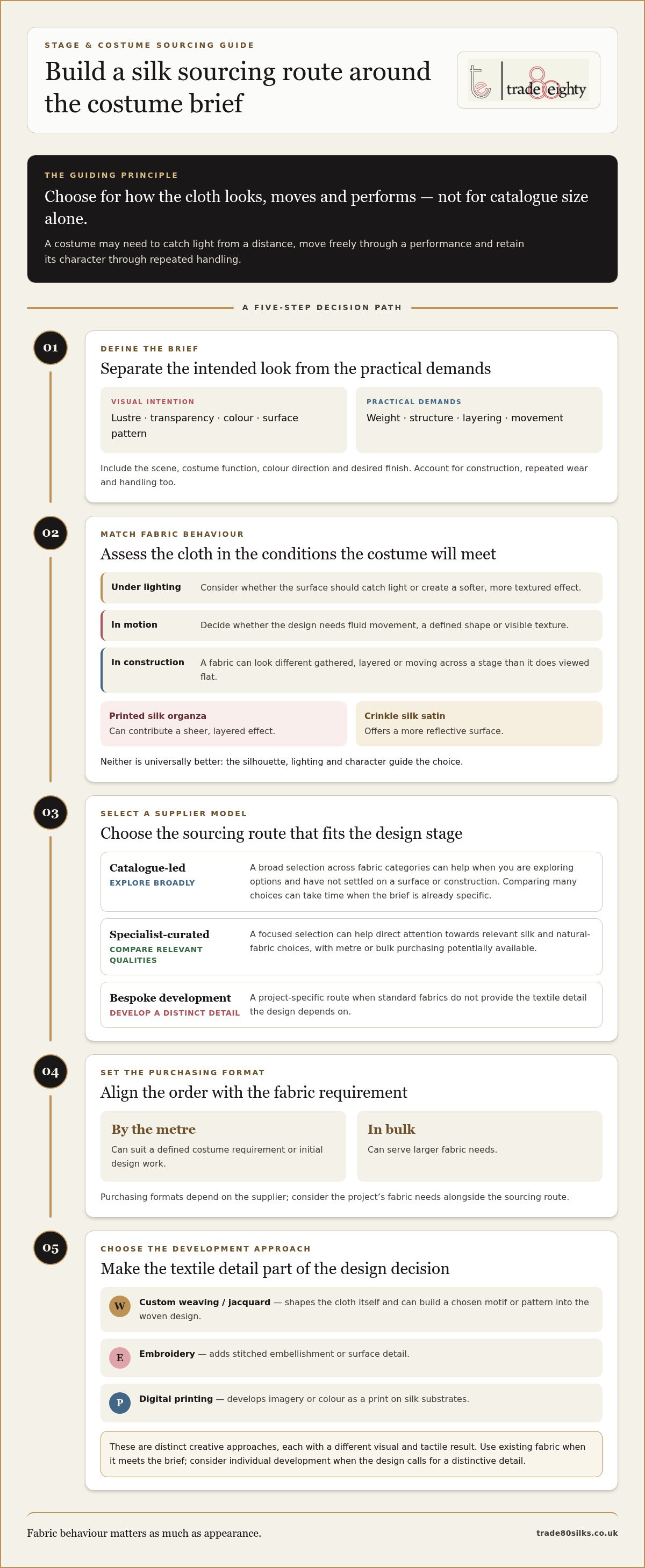
Separate the visual intention from the practical demands. Lustre, transparency, colour and surface pattern describe the look; weight, structure, layering and movement help determine whether a fabric will work for the scene and performer. For example, printed silk organza can contribute a sheer, layered effect, whilst crinkle silk satin offers a more reflective surface. Neither is universally better. The right choice depends on the silhouette, lighting and character you want to create.
Consider how the cloth will behave in motion and under the production’s lighting. A fabric viewed flat may look different when gathered, layered or moving across a stage. Decide whether the design needs fluid movement, a defined shape or visible texture, then assess options against that requirement. Include repeated wear, handling and construction in your brief too. These affect what the costume asks of the cloth, while the appropriate choice depends on how the finished piece will be used and cared for. Finally, decide whether an existing fabric can meet the brief or whether the design calls for individual development.
What a specialist silk supplier can contribute
Clear references help turn an aesthetic idea into material choices. Share the scene, costume function, colour direction and desired finish so the fabric can be considered in context, rather than judged from a catalogue image alone. Comparing different silk and natural-fabric categories can also broaden the design conversation. Raw silk, sand-washed silk and printed silk devoré each offer a distinct starting point for visual and tactile exploration.
Trade80Silks UK supplies curated silk and natural fabrics by the metre and in bulk. Where standard materials don’t express the full concept, bespoke textile development offers distinct routes: custom weaving shapes the cloth itself, embroidery adds stitched surface detail, and digital printing develops imagery on silk substrates. For costume, fabric behaviour matters as much as appearance: the way silk moves, catches light and responds to wear helps determine whether it belongs in the production.
Compare fine silk fabric supplier models before choosing a sourcing route
Start with the production brief, not a league table of suppliers. A fine silk fabric supplier may work from a broad catalogue, a focused curated range or a bespoke-development model. Each route serves a different stage of the design process. Consider how much exploration the costume requires, whether the cloth needs an individual treatment and whether your project calls for fabric by the metre or in bulk.
| Supplier model | Range | Project flexibility | Purchasing format | Customisation |
|---|---|---|---|---|
| Catalogue-led | Broad selection across fabric categories | Useful for browsing established options | Depends on supplier | Varies by supplier |
| Specialist-curated | Focused selection of relevant fabrics | Supports considered material comparison | May include metre or bulk purchasing | May be complemented by bespoke services |
| Bespoke-development | Developed around a defined design direction | Centres on project-specific requirements | Shaped around the commission | Can include woven, embroidered or printed design |
Catalogue-led and specialist-curated fabric sourcing
A broad catalogue can be valuable early in a production, when you’re exploring different textile categories and haven’t settled on a surface or construction. Its range can encourage discovery, though comparing many options takes time if the brief already points towards a particular silk quality. A curated selection narrows the field and helps focus attention on relevant silk and natural-fabric choices. Buying by the metre can suit a defined costume requirement or initial design work, whilst bulk purchasing can serve larger fabric needs.
When bespoke textile development is relevant
Choose a bespoke route when the design depends on a distinctive textile detail that standard fabrics don’t provide. Custom jacquard weaving builds a chosen motif or pattern into the woven design. Embroidery adds stitched embellishment to a surface, whilst digital printing applies imagery or colour as a print. These are separate creative approaches, each with a different visual and tactile result. For sheer printed cloth, explore this guide to printed silk organza as part of your fabric research.
Trade80Silks UK combines a curated silk and natural-fabric range with bespoke textile development, offering fabrics by the metre and in bulk. This brings established materials and individually developed designs into one sourcing conversation, from custom weaving and jacquard to embroidery and digital printing. Explore the curated silk and natural-fabric selection to see how its materials may inform your production brief.
Compare silk fabric qualities against the demands of the production
Silk isn’t a single look or behaviour. Weave, surface treatment, opacity and pattern all influence how a fabric reads as part of a costume. Assess these qualities against the character, silhouette and staging rather than searching for a universally “best” silk. Start with the effect you want the audience to see, then consider how the cloth will be cut, layered and viewed under the production’s lighting.
Fabric structure and finish shape the way light, texture and movement are perceived on stage. Use the table as a starting point for comparing material categories, not as a technical specification. The final effect depends on the particular fabric and how the costume is made and presented.
| Fabric category | Surface and structure | Opacity and drape considerations | Possible design direction |
|---|---|---|---|
| Crinkle silk satin | Satin finish with a crinkled surface | Consider how the surface looks when gathered or moving | A costume where sheen and texture are part of the visual language |
| Raw silk | A less uniform, more textured appearance | Assess its fall in the intended cut and construction | A look that calls for a visibly tactile surface |
| Printed silk organza | Printed design on a sheer fabric category | Consider layering, underlying colours and transparency | Light overlays or a patterned veil effect |
| Printed tulle | Open, net-like structure with a printed design | Plan how layers affect visibility and pattern | Costume details that use transparency and print together |
| Printed silk devoré | Printed silk devoré surface treatment | Consider how the pattern and surface read at viewing distance | A distinctive patterned surface for a character or scene |
Match weave and finish to the intended look
Start with the garment’s visual role. A satin finish may support a lustrous impression, whilst a textured surface brings another quality to the design. Neither guarantees a particular drape, because construction and the specific cloth also matter. Crinkle silk satin and raw silk offer contrasting points of comparison. Assess the actual material against the intended cut and movement, and use the crinkle silk satin guide for more material-specific advice.
Account for transparency, pattern and stage lighting
Sheer fabrics invite choices about layering. The colour beneath an overlay can change the overall impression, and a veil may need to remain legible against both costume and set. Printed silk organza, printed tulle and printed silk devoré each combine pattern with a different fabric category or surface treatment. Consider print scale and colour at the distance from which the audience will view the costume, then review them in lighting that reflects the production. Use the design context to make the final choice, comparing the material’s transparency, pattern and surface against the intended stage effect.
Build a practical silk sourcing brief for a costume or stage project
A concise sourcing brief turns a visual idea into information that can guide fabric selection and development. Begin with the production purpose and design reference, then describe how the cloth must look and function in the finished costume. A fine silk fabric supplier can use those details to understand whether an existing silk or natural-fabric category suits the work, or whether the design calls for a bespoke textile.
Set out the creative and practical requirements
Record the creative intention alongside the making requirements. A reference image is useful, but explain what matters in it: the silhouette, colour, surface, transparency or way the garment moves. Note whether the fabric will be used alone or layered, and describe the finish you want the audience to perceive under stage lighting. Clear descriptions distinguish essential qualities from details that can evolve during development.
- Describe the production purpose. Name the scene, character or costume role, and include a design reference such as a sketch, image or palette that conveys the intended mood.
- Outline the garment and movement. Note the silhouette, areas of gathering or layering, and whether the costume needs to flow, hold a defined shape or create a particular stage effect.
- Set the colour direction. Provide colour references or describe the relationship to other costume pieces and the set. Mention how the colour should read under the production’s lighting.
- Specify the surface treatment. State whether the design calls for a plain, printed, embroidered or woven surface. Describe the motif, placement or texture that matters to the concept.
- Give the quantity and fabric format. Estimate the number of garments and the fabric required for the planned use, then indicate whether purchasing by the metre or in bulk best reflects the project’s scale.
- Identify the sourcing route. Say whether an existing fabric category can meet the brief or whether an individual weave, embroidery or print is central to the design.
Decide whether standard sourcing or custom development fits
Use an existing silk or natural-fabric category when its colour, surface and structure serve the design. If a costume calls for patterned netting, the guidance on printed tulle can help clarify the visual qualities to include in your brief. Bespoke development is relevant when the intended motif needs to be woven into the cloth, stitched as embroidery or created as a print on silk.
Connect the purchasing format to the production plan rather than choosing it in isolation. A metre requirement may relate to a single costume or a defined part of a design; bulk purchasing may suit a larger wardrobe requirement. State what the fabric will be used for and how many garments are planned, so the requirement is clear without assuming a particular order quantity. Explore silk and natural fabrics for your production brief as you shape the material direction.
How Trade80Silks UK supports fine silk fabric sourcing
Trade80Silks UK is an independent fabric merchant supplying fine silk and natural fabrics to designers and makers. For stage and costume projects, its work addresses two connected needs: selecting from a considered range of fabrics and developing a textile when the design calls for something more individual. It supplies fabric by the metre and in bulk, and undertakes project-based bespoke textile development.
A curated source for silk and natural fabrics
The curated selection includes raw silk, sand-washed silk, printed silk organza and printed silk devoré, alongside other silk and natural-fabric categories. Each can offer a different starting point for a costume brief, whether the design centres on a textured surface, a printed motif or a sheer layer. The most suitable direction depends on the intended costume effect and production use, not a fixed hierarchy of fabric qualities.
Fabric is supplied by the metre and in bulk, supporting different scales of work, from a defined costume requirement to a larger production need. Set out the garment quantity, intended use and visual direction to relate the fabric choice and format to the project. This gives designers a practical basis for comparing material options without losing sight of the character, scene or overall wardrobe concept.
Bespoke development for distinctive design briefs
Some designs call for a textile whose surface or pattern is integral to the concept. Bespoke development offers several distinct routes: custom weaving can bring a specific design into the cloth’s structure; jacquard creates woven patterning; embroidery adds stitched detail; and digital printing applies imagery to silk substrates. These approaches serve different creative intentions, allowing the textile itself to be shaped around the brief rather than relying solely on an existing surface design.
For example, a production might use a selected silk for one costume whilst developing a coordinated woven motif or printed design for another. The brief can guide the choice by specifying the desired appearance, how the textile relates to the wider design and which surface treatment is central to the effect. The aim is a considered material direction, not simply more options.
Trade80Silks UK brings its curated fabrics and bespoke capabilities together, so designers can explore established silk and natural-fabric categories alongside custom weaving, jacquard, embroidery and digital printing. Whether your production calls for a particular existing fabric or a more distinctive textile expression, explore fine silks and bespoke fabric services as you develop your project brief.
Give your next costume concept a considered material direction
A strong fabric decision begins with a clear creative intention. Before moving from design reference to material selection, identify the quality the audience should notice first: a shifting surface, a patterned layer, a particular colour impression or a distinctive textile detail. Keep that intention in view as the costume develops, so the fabric remains part of the storytelling rather than a choice made on appearance alone.
The right fine silk fabric supplier can help connect that direction to suitable materials and, where the design calls for it, a more individual textile. Trade80Silks UK brings together fine fabrics and bespoke development for designers shaping stage and costume work. Explore Trade80Silks UK’s fine fabrics and bespoke services to develop a textile direction for your production.
Frequently Asked Questions
How do I choose a fine silk fabric supplier for stage costumes?
Choose a fine silk fabric supplier whose materials and development capabilities suit your production. Consider how you’ll assess colour and surface, and whether the design may need printing, embroidery or a woven detail. Match the fabric range and purchasing format to the wardrobe plan, whether you’re sourcing for one character or several coordinated looks.
Is fine silk suitable for costumes that need to move under stage lighting?
Fine silk can suit a moving stage costume, but the result depends on the specific fabric, garment construction and lighting. Consider how it looks when gathered or layered, then assess the effect against the costume’s intended movement. If you have a fabric sample, review it alongside the costume colours and under lighting that resembles the production, rather than judging it only in daylight.
Can a silk fabric supplier develop custom prints or embroidery?
Yes. Bespoke textile development at Trade80Silks UK can include digital printing on silk substrates and custom embroidery, as well as woven designs such as jacquard. To shape a clear direction, prepare artwork or visual references and note the intended motif, colour relationships and placement on the garment. A print creates a different surface effect from stitched embellishment, so choose the approach that suits the costume design and how closely the detail will be seen.
How much silk fabric should I plan for a costume project?
Estimate fabric needs from the pattern pieces and the number of costumes, rather than relying on a single allowance for every garment. Include the fabric’s usable width, the direction of the design, pattern placement and any matching across pieces. Sheer overlays or gathered sections may also affect the requirement. A toile or test layout can help clarify the cut before you finalise the quantity for the full production.
What is the difference between buying silk by the metre and in bulk?
Buying by the metre suits a defined, smaller fabric requirement, such as one costume or a design sample. Bulk purchasing can be more appropriate when a production needs fabric across several garments or for a coordinated wardrobe. Estimate total use first, including cutting and pattern placement, then choose the format that reflects the project’s scale. The distinction is the quantity planned, not a different type of silk.
Can silk fabric be used for both costumes and interior projects?
Silk fabric can be selected for costume work and some interior design applications, but the right choice depends on the intended use and how the finished piece will be handled. A fabric suited to a lightweight costume detail may not meet the needs of a frequently used interior item. Trade80Silks UK supplies fabric to designers and makers; it supplies fabric rather than finished curtains or upholstery.
How should fine silk be cared for after a production?
Follow the care instructions for the specific fabric and any print, embroidery or other surface treatment, as these details can affect appropriate cleaning. Before a production, record the care guidance so wardrobe teams can handle the costume consistently after use. Avoid assuming that all silk can be cleaned in the same way. For a valuable or intricately worked piece, seek advice from a textile-care professional experienced with silk.


