

Sand-washed silk fabric has a softer, more muted character than many familiar silk finishes. But its name alone won’t tell you how it feels in the hand, how it falls or how much light it reflects. If you’re assessing texture, drape and opacity from a screen, you’ll need more than a product photograph to make a confident choice.
Start with what the fabric needs to do in your design. This guide explains what the sand-washed finish contributes, how the fabric compares with silk satin and organza, and which qualities to assess before cutting. You’ll also find practical ways to review a swatch for surface, movement and construction. Trade80Silks UK’s curated selection includes sand-washed silk alongside other silk and natural fabrics, helping you compare materials in the context of your project.
Key Takeaways
- Assess sand-washed silk fabric by its surface, drape and opacity, rather than relying on the name or a product photograph alone.
- Consider how the fabric’s softer, more muted appearance works with your design’s shape and construction.
- Compare silk satin and organza according to the qualities your project needs, including lustre, structure and movement.
- Define your design, inspect and handle a swatch, then review its colour and surface under lighting similar to the finished piece’s setting.
- Explore Trade80Silks’ sand-washed silk and wider fabric selection, or consider bespoke development if your project calls for a tailored textile.
What Is Sand-Washed Silk Fabric, and What Does the Finish Change?
Sand-washed silk fabric is silk given a surface finish intended to change its look and feel. Silk is the fibre base; “sand-washed” describes a finish, not a separate fibre or a particular weave. The term is often associated with a softer handle and a more subdued appearance than silk with pronounced sheen, although the exact effect varies between fabrics.
That distinction matters when you’re selecting cloth for a design. The finish may soften the impression of the surface, but it doesn’t tell you how fluid the fabric will be, how much light it will reflect or how it will behave in a garment. Those qualities depend on the fabric’s construction and weight as well as its finish.
How does sand-washing influence silk’s surface and handle?
A sand-washed surface may feel less sleek and more softly textured beneath your fingertips. Visually, it can appear quieter than highly lustrous silk, with less emphasis on sharp reflections. This can give a design an understated character, but “matte” shouldn’t be taken to mean the surface reflects no light.
The exact hand and appearance vary. One fabric may feel gently peach-like, while another may be smoother or retain more lustre. View the cloth from different angles, since its surface can look different as it moves or catches the light.
What should the name tell you, and what should it not?
The name points to a surface treatment, but it doesn’t establish the silk’s weave, weight, fibre composition or exact finishing method. Understanding silk as the base material helps put the finish in context; What is Silk? offers a general overview of the natural fibre, its production and uses. For the particular fabric you’re considering, treat the name as a starting point rather than a full specification.
A swatch gives you a more useful basis for judgement than a label or screen image alone. Examine it in lighting similar to the setting where the finished piece will be seen. Tilt and drape it to see how the colour and surface change, and handle it gently to assess whether the texture suits the intended use.
- Fibre composition: check whether the fabric is silk or a blend.
- Weave and weight: treat these as separate details, not implications of the finish name.
- Finishing method: don’t infer a specific process from the term “sand-washed”. The term alone doesn’t describe how a particular fabric was treated.
Read the finish as one part of the fabric’s character, then judge the cloth on its own merits. This helps you decide whether its surface complements the design, rather than relying on a name that can’t describe every quality that matters.
How Does Sand-Washed Silk Behave in Clothing and Design?
A fabric’s character becomes clearer when it is shaped, gathered and set in motion. With sand-washed silk fabric, assess how the particular cloth’s drape and surface work with your design. Don’t assume the finish determines how the garment will behave. The same muted impression can read very differently in a fluid silhouette and a structured design with seams, pleats or carefully placed volume.
Fabric behaviour depends on the specific cloth and design, so test the chosen material in a form that reflects the project before committing to a full cut. A swatch can show how the cloth hangs, responds to movement and looks alongside other materials. This is especially helpful when the design depends on balancing fluidity with shape.
Which design details can complement a softer silk surface?
A subdued surface may suit a design where texture and movement should take precedence over strong reflections. Depending on the fabric’s weight and drape, it could work in a loose sleeve, a softly gathered panel or a flowing layer. These are possibilities, not rules: a lighter, more fluid cloth will create a different effect from one with greater body.
Consider the garment as a whole. Seaming, pleating and silhouette all influence how the surface reads. The surrounding design can emphasise its quiet finish or create contrast. For context on how different silk types vary, Comparing Different Silk Fabrics offers a point of reference, including silk options with distinct structures and visual qualities.
What should designers assess before planning construction?
Before settling the pattern or construction details, handle a swatch of the actual fabric. Observe whether it shifts as you position it, how the cut edge behaves and whether the cloth falls as the design requires. Don’t assume that another silk, or another sand-washed fabric, will respond in the same way.
Try a discreet stitch test and check how the stitching looks on the right side, particularly where seams or gathers will be visible. A small pressing test can show how the surface responds, but follow guidance suited to the specific fabric rather than assuming a setting. If a test changes the appearance, decide whether that result is acceptable for the finished design.
- Drape: hold or pin the swatch as a panel to see how it hangs.
- Movement: handle it as the garment might move, checking folds and shifting highlights.
- Construction: test cutting, stitching and pressing on a small piece before finalising your approach.
These checks turn a first impression into practical decisions about the design. Consider Trade80Silks’ sand-washed silk selection alongside your project brief, then assess the fabric’s individual character before construction begins.
Sand-Washed Silk vs Silk Satin and Organza: Which Suits Your Project?
Choosing between these fabrics is about identifying the effect your design needs, not deciding which is universally best. Sand-washed silk fabric may offer a softer, more subdued surface. Silk satin gives a useful contrast when you want more visible lustre, while organza is often considered for sheerness and a more structured impression. The result depends on the construction and specification of the fabric you choose.
| Fabric | Surface impression | Structure and drape | Possible design role |
|---|---|---|---|
| Sand-washed silk | Often softer-looking and less reflective | Varies by weave and weight; may fall softly | Designs seeking a quieter surface and tactile character |
| Silk satin | Typically chosen for a more visibly lustrous face | Depends on construction; may create fluid folds | Pieces where sheen is part of the intended effect |
| Silk organza | Often sheer, with a light-catching quality | Can hold a more defined shape, depending on its specification | Layers or details where transparency and form matter |
Use the comparison as a starting point, not a performance guarantee. Weave, weight and finishing vary, so compare actual swatches when the relationship between surface and silhouette is important.
When might sand-washed silk be preferable to silk satin?
Start with the mood you want the surface to establish. If the design calls for a gentler visual effect, a particular sand-washed silk may suit it better than satin with a stronger sheen. If reflected light is central to the look, satin could be a better fit. Neither is inherently superior; the choice depends on how the surface works with the silhouette, colour and finishing details.
For example, a softly draped shape may benefit from a restrained appearance, while smooth panels or accents can make satin’s lustre more prominent. Compare the fabrics under similar lighting and alongside the design’s other materials. Trade80Silks’ crinkle silk satin fabric offers a relevant satin comparison when surface character is part of the decision.
How does sand-washed silk differ from silk organza?
The design question is often whether softness or sheerness should lead. Consider sand-washed silk when you want a tactile, visually subdued impression. Organza may be more suitable when transparency or a defined, airy layer is important. These are broad design considerations, not fixed rules for every cloth sold under either name.
Think about the fabric’s role in the design. Does it need to fall close to the form, or create a distinct layer? A swatch can show how much light passes through and how readily the fabric holds the shape you have in mind. Trade80Silks’ silk organza fabric provides a useful point of comparison.
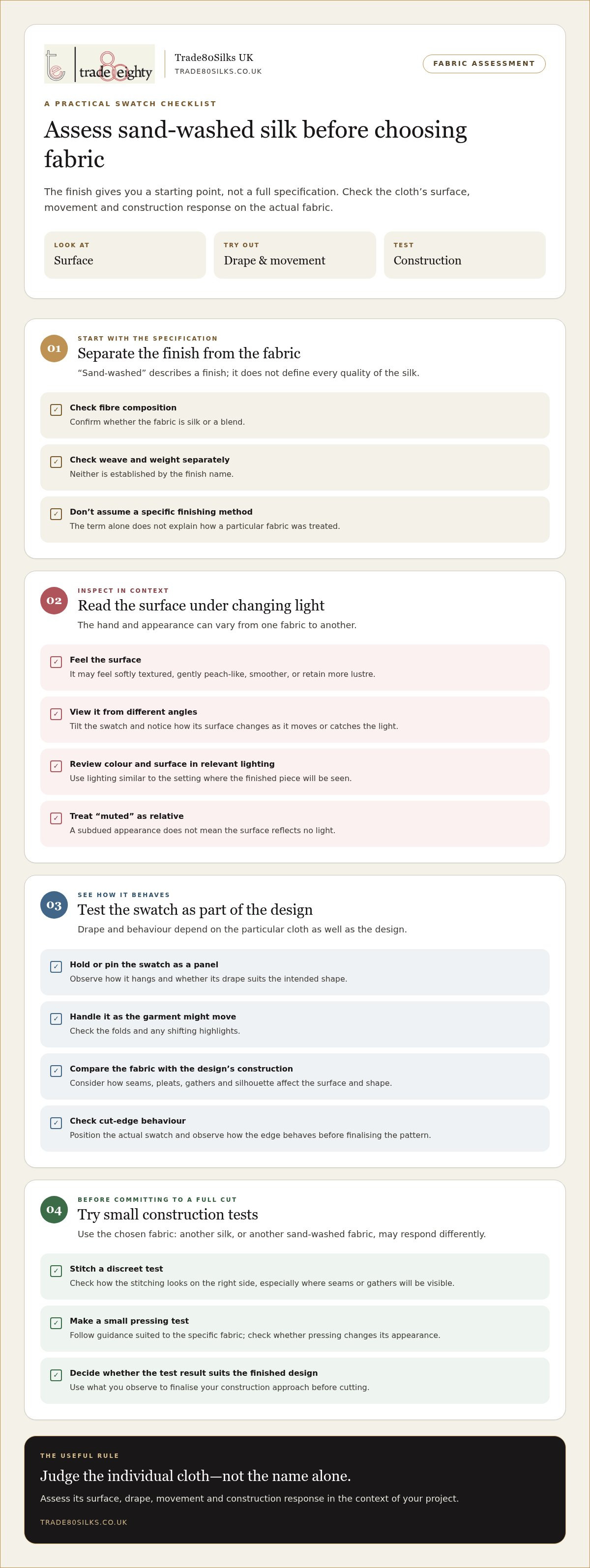
How to Assess Sand-Washed Silk Before Choosing Fabric
A considered fabric choice begins with the work the cloth must do. Before selecting sand-washed silk fabric, turn the design into practical priorities: the desired surface, how the fabric should move, how it will be constructed and the setting where it will be worn. These priorities give you a clear basis for assessing a swatch instead of relying on a first impression or a colour viewed on screen.
Define the design, inspect the swatch, test its handling and review construction on a separate piece before cutting. This sequence helps connect the fabric’s observed qualities to the demands of the finished piece.
- Define the brief. Decide what matters most, such as a subdued surface, fluid movement, a particular silhouette or visible seam details. Note the pattern and intended wear, too.
- Inspect the swatch. Look across the surface for consistency, then assess colour and sheen in lighting similar to the finished garment’s setting.
- Test handling. Drape and move the swatch as the design would, observing how it falls, folds and responds to handling.
- Review construction. Use a separate piece to assess stitch appearance and pressing before settling your approach or cutting the main fabric.
What should you look for in a fabric sample?
Begin with the surface. Check whether its appearance is consistent across the swatch, and notice how the colour shifts as the angle or lighting changes. Then hold or pin the cloth to approximate the intended silhouette. A swatch that looks appealing when flat may create a different impression once folded or allowed to hang.
Keep construction tests separate from the swatch you want to preserve. Try stitching and pressing on an offcut, following suitable guidance for that fabric, and inspect the result from the right side. Avoid assuming that a setting or method that worked on another silk will suit this one.
How can you match the fabric to the project brief?
Compare what you observe with the pattern and finishing details. A design with gathers, seams or shaped panels may reveal the fabric differently from a simple, flowing cut. Consider how those elements interact with its weight and movement. If weight selection is central to a bridalwear project, consult a dedicated silk-weight guide alongside your swatch assessment; no single weight suits every silhouette or construction.
A sound decision is one you can explain in terms of the brief: the surface supports the intended mood, the drape works with the shape, and your tests support the construction plan. If those priorities are still in tension, pause before cutting and compare the fabric against them again.
Explore Trade80Silks’ sand-washed silk as part of a considered fabric selection, then assess the material against your project before finalising your choice.
Explore Sand-Washed Silk Fabric with Trade80Silks UK
A confident fabric choice follows a considered sequence: begin with the project brief, compare how different materials could serve its visual and construction needs, then assess the chosen cloth before cutting. For sand-washed silk fabric, judge the particular material’s surface and behaviour against your design instead of expecting its name to describe every quality you need to understand.
Trade80Silks UK brings more than 35 years of industry experience to a curated selection of silk and natural fabrics, including sand-washed silk. The business supplies designers and manufacturers with fabrics sourced from premier silk mills. Compare materials according to the purpose they need to serve, then let the fabric’s own character inform decisions about the design.
A useful brief identifies the qualities that matter most, such as surface, movement, structure or construction details. A swatch gives you something tangible to assess against those priorities. Consider its colour and surface in suitable lighting, observe how it drapes, and test relevant construction details on a separate piece before planning the full garment or textile.
How can material expertise support a considered fabric choice?
Experience is most useful when it helps put materials in context. A curated selection gives designers and manufacturers silk and natural fabric options to compare against a project’s purpose. Trade80Silks’ more than 35 years of industry experience informs its understanding of textile character, while assessment of the individual fabric connects that knowledge to your brief.
When might a bespoke fabric commission suit the brief?
If your design calls for a textile developed around particular requirements, bespoke fabric development may be a relevant route. Depending on the brief, this can involve custom jacquard weaving, embroidery or digital printing onto silk. These are tailored development options, not inherent features of sand-washed silk; their relevance depends on what the project needs from the finished textile.
Begin with what the design must achieve, compare suitable materials, then test how the chosen cloth looks and behaves. If a standard fabric option doesn’t align with the brief, consider whether bespoke development better serves its specific requirements. This approach makes room for both the material’s qualities and the designer’s intention.
Explore Trade80Silks’ sand-washed silk alongside its wider selection of silk and natural fabrics. If your project calls for a more tailored textile, explore bespoke fabric development with Trade80Silks UK.
Let the Fabric Inform Your Next Design Decision
A fabric choice can do more than fulfil a brief; it can help refine it. As you develop a design, consider how sand-washed silk fabric sits within the wider composition, alongside trims, linings or contrasting textiles. Viewing these elements together can show whether its surface brings the balance and character you imagined, or whether the concept would benefit from a different material direction.
Make this judgement before committing to the final design. A considered selection lets the textile contribute to the creative process instead of being chosen at the end to fit a completed plan. Trade80Silks UK offers a curated selection of silk and natural fabrics, as well as bespoke development for projects that call for a tailored textile.
Let your design brief guide the next step, then explore sand-washed silk fabric from Trade80Silks UK as you shape your material choices. Choose the fabric that best supports the design’s intended surface, movement and construction.
Frequently Asked Questions
What is sand-washed silk fabric?
Sand-washed silk fabric is silk finished to give its surface a changed, often softer and more subdued character. “Sand-washed” describes the finish, not a set weave or weight, so fabrics carrying the term may behave differently. Treat it as a clue about surface appearance, then check composition details and assess the actual cloth. This distinction is useful when matching fabric to a particular pattern.
Is sand-washed silk real silk?
It can be, but the term alone doesn’t establish the fibre content. “Sand-washed” refers to a finish, so check the fabric’s composition details to see whether it is pure silk or a blend. Composition matters when comparing materials and planning care because the finish doesn’t specify fibre content. If you’re assessing an existing garment, use its care label rather than relying on a general description of the finish.
Does sand-washed silk have a matte or shiny finish?
It is commonly associated with a more muted, less reflective appearance, but it isn’t necessarily completely matte. The exact surface depends on the fabric and its construction, and some cloth may retain visible lustre. If the finish is important to your design, view a swatch under more than one light source. A fabric that looks subdued in a photograph may show more sheen when tilted or gathered.
Is sand-washed silk suitable for dressmaking?
It can be suitable for dressmaking if the specific fabric’s weight, drape and construction support the design. A pattern with soft folds may call for different behaviour from one relying on crisp volume or precisely shaped panels. Before cutting, check how the cloth works with the pattern pieces and seam details, then test it on a small piece to see whether the result matches the intended finish.
Can sand-washed silk be washed at home?
Don’t assume it can be washed at home simply because it has a sand-washed finish. Care depends on the particular fabric’s composition and any care instructions supplied with it. Check those instructions before cleaning, and avoid applying a method tested on a different silk. If you’re making a garment, consider its intended care as part of the fabric decision, since a finish name alone doesn’t determine suitable cleaning.
How can I tell whether sand-washed silk is suitable for my sewing pattern?
Compare a swatch with the pattern’s key requirements: how the fabric hangs, whether it supports the intended shape and how it handles details such as gathers or fitted seams. Pin or drape the swatch to approximate a pattern piece, then make a small test seam. If the cloth collapses where the pattern needs form, or feels too firm for a fluid line, reconsider the pairing before cutting.
Does sand-washed silk fray when cut?
Fraying depends on the fabric’s weave and construction, so the finish name can’t tell you exactly how a cut edge will behave. Test a small offcut from the chosen fabric and observe the edge after handling it. If it begins to unravel, account for that when planning seam allowances and edge finishes. Test your proposed construction on a separate swatch before working on the main pieces.


