

A heavy mid-gold silk crepe-backed satin can weigh 30 momme, or 129 gsm, and measure 114 cm wide, showing how much the specification can vary between golden silk fabrics for sale. The right choice depends on more than its colour: weight, width and weave all affect how the cloth will drape and suit your project.
Before choosing golden silk fabric by the metre, consider how its colour, weight and width will work in your finished design. This guide explains how to compare those details, understand what affects the metre price and assess fabric for its intended use. Use these practical checks to compare golden silk options, from fluid, light-catching cloth to more substantial weaves, and make a considered choice for your project.
Key Takeaways
- Compare silk by weight and weave as well as colour, since these qualities shape its drape, structure and suitability for your design.
- Use the stated fabric width to plan pattern pieces and estimate how much cloth your project requires.
- Assess price per metre in context: fibre, weave, finish and embellishment all influence the value of a golden silk fabric.
- Match the fabric’s surface and handle to its intended use before settling on a particular gold tone.
- Consider Crinkle Silk Satin (#167) as one of the silk options available from Trade80Silks UK.
Fabric weight
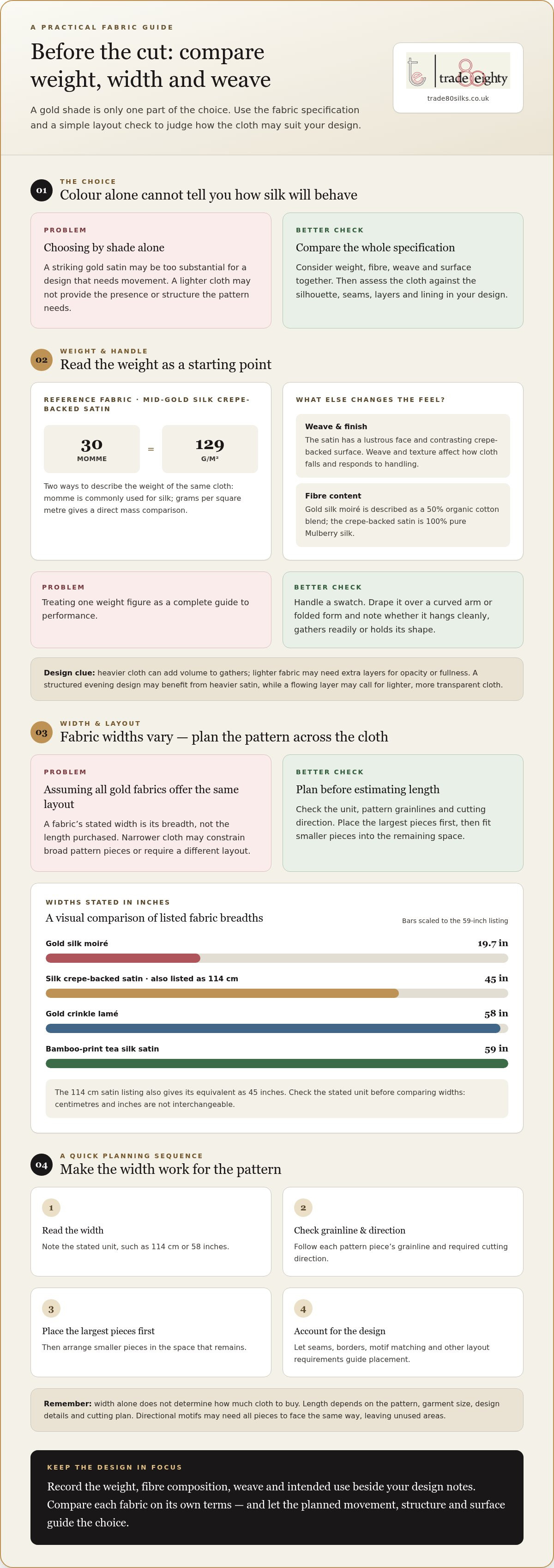
Weight helps predict how golden silk will behave in a design. A useful example is Silk Crepe backed Satin Heavy - Mid Gold. It weighs 30 momme, equivalent to 129 grams per square metre. Those figures describe the same cloth using different measurement systems. Momme is commonly used for silk, whilst grams per square metre gives a direct mass comparison. Neither figure describes the colour or finish. Together, they offer a practical starting point when comparing fabric options.
For a garment, consider how the fabric needs to move. A 30-momme satin has more substance than a delicate, sheer silk. Its weight can support a smoother, more defined silhouette. The satin construction also presents a lustrous face and a contrasting crepe-backed surface. This combination makes the named mid-gold example distinct from lightweight organza or tulle. Those fabrics create different visual effects and need different handling. Weight, weave and finish should therefore be considered together, rather than treating one figure as a complete specification.
Momme provides a useful silk-specific comparison, but it isn’t a complete guide to performance. Two fabrics at the same weight can feel different. A satin weave, a crepe texture and an embroidered surface each change how cloth falls and responds to handling. Fibre content matters, too. Gold silk moiré is described as a 50% organic cotton blend, unlike the 100% pure Mulberry silk crepe-backed satin. Their composition and surface treatments contribute to different fabric character.
Use the weight to narrow your options, then assess each fabric against its purpose. A structured evening design may benefit from the body of heavier satin, while a flowing layer may call for a lighter, more transparent cloth. Heavy mid-gold satin is listed as suitable for bridal and evening wear, but its suitability depends on the design’s construction, lining and desired drape. A fitted bodice, for example, needs a different balance of support and movement from a softly falling skirt.
Before choosing, work through these practical checks:
- Match the listed weight to the silhouette: consider whether the design needs fluid movement or more body.
- Compare the fibre content and weave, not just the gold shade.
- Think about the fabric’s surface, including sheen, texture and any raised detail.
- Consider how seams, layers and lining will affect the finished garment.
These checks help avoid a common mismatch: choosing by colour alone. Bright gold satin may look striking on a swatch but feel too substantial for a design built around movement. A lighter cloth, by contrast, may lack the presence or structure a particular pattern needs. Handle a swatch to assess its flexibility and surface. Drape it over a curved arm or folded form, then note whether it hangs cleanly, gathers readily or holds its shape.
Weight also affects fabric use during construction. Heavier cloth can add volume to gathers, while lighter fabric may need extra layers for opacity or fullness. The pattern, garment size and cutting layout determine the actual quantity, so don’t estimate consumption from weight alone. Fold and layer the fabric to see how it behaves, then consider whether its body suits the planned seams and finish.
For a considered purchase, record the specification beside your design notes. Include the stated weight, fibre composition, weave and intended use. The 30-momme, 129-gsm mid-gold satin is a clear reference point, not a universal standard for golden silk. Compare each option on its own terms. That approach makes golden silk fabric for sale easier to assess, whilst keeping the finished design’s movement, structure and surface in focus.
Fabric width
Width affects how pattern pieces fit across a length. A mid-gold silk crepe-backed satin measures 114 cm wide, also listed as 45 inches. That figure gives a useful starting point for planning. It describes the fabric across its usable breadth, not the length purchased. A narrow cloth may require careful pattern placement. A wider cloth can offer more layout choices. The best option depends on garment shape, pattern pieces and cutting direction. Compare those needs before choosing golden silk by the metre.
Other golden fabrics show why width deserves attention. A bamboo-print tea silk satin listing gives 59 inches. Gold silk moiré is listed at 19.7 inches. Gold crinkle lamé measures 58 inches. These examples span a considerable range. Their widths aren’t interchangeable, even when each fabric suits a gold-toned design. Check the stated unit as well as the number. Comparing inches directly with centimetres can mislead. The 114 cm satin listing helpfully includes its 45-inch equivalent.
Pattern layout translates width into practical cutting possibilities. Place the largest pattern pieces first, then position smaller pieces around them. A full skirt panel may need more crosswise space than a narrow sleeve. If a piece exceeds the fabric’s breadth, the pattern may require a seam or a different layout. A 19.7-inch moiré width could constrain broad pieces more than the 58-inch lamé. The pattern’s grainline and construction requirements still guide placement.
Width alone doesn’t determine how much cloth to buy. Length depends on the pattern, garment size, design details and cutting plan. A wide fabric may allow pieces to sit side by side. A narrower width can require additional length. Directional details matter too. For a design with a one-way motif, all pieces may need to face the same direction. This can leave unused areas, even across the 59-inch tea silk satin.
Before ordering, make a simple layout plan:
- Read the fabric width in its stated unit, such as 114 cm or 58 inches.
- Check each pattern piece’s grainline and required cutting direction.
- Arrange the largest pieces first, then fill remaining spaces.
- Allow the design’s seams, borders and matching requirements to inform placement.
Printed or patterned cloth needs careful layout. A motif may have a clear direction, so turning pieces around can change the finished appearance. Bamboo-print tea silk satin is one example where the print should guide placement. With plain gold fabric, matching a repeated motif may not be necessary, but the weave or sheen can still look different when pieces are turned. Check the fabric in its intended orientation before arranging the pattern.
Selvedges also matter during cutting. They are the finished edges running along the fabric’s length. Pattern pieces usually need to sit within the usable area, rather than relying on the selvedge as part of a seam. This distinction matters when a width is already modest, as with the 19.7-inch gold silk moiré. Keep the selvedge outside the pattern layout, and measure the space available between the edges. That gives a more realistic view of fitting pieces.
Consider the finished design, not just the roll measurement. A wide 58-inch gold crinkle lamé may suit layouts that need broad placement. The 45-inch mid-gold satin offers a different working breadth. Meanwhile, 59-inch tea silk satin may accommodate a different pattern arrangement. These figures describe listed fabrics, not a universal standard for gold silk. Compare the actual width with your pattern pieces, motif direction and desired seam placement. A paper layout can reveal constraints before cutting begins.
Price per metre
Price per metre gives a starting point, not the whole budget. Pale gold silk Duchesse satin typically ranges from £14 to £79 on the market, with a median of about £45. This range reflects four price samples from two sources, collected on 21 October 2026. It is valid until 20 November 2026. Treat it as a market snapshot, not a quote for every gold silk.
Fabric prices vary because silk is not a uniform material. Fibre content, weave, finish and embellishment all affect its character and cost. Plain silk satin differs from embroidered fabric or sequinned georgette, and a silk blend differs from pure silk. These distinctions affect appearance and construction, so compare like with like before judging prices per metre.
Compare specifications as well as price. A listed figure is difficult to assess without the fabric’s width and composition. Narrower cloth may require more length for a pattern layout, while a heavier weave may suit a different design from sheer fabric. Duchesse satin and silk organza, for example, have distinct surfaces and structures. A lower price per metre isn’t necessarily better if the fabric doesn’t suit the garment.
Work out the material budget in stages:
- Identify the fabric’s price per metre and stated width.
- Estimate required length from the pattern and cutting layout.
- Multiply the metre price by the length required.
- Account separately for delivery or other order charges.
Keep the fabric cost separate from the full order total. A project that needs more cloth will cost more at the same price per metre. Pattern matching, directional motifs and generous gathers can all affect the required length. Plain gold satin may allow a simpler layout than patterned or embellished cloth. Estimate from the actual design, not the colour alone.
Check how the price is presented. Some listings show a sale price, while others display a standard price or a quantity-based discount. A listed figure applies to that product, not to gold silk generally. Before comparing prices, confirm that the amount shown is per metre.
Discounts can change the unit cost for larger quantities. These are specific listing terms, not universal market prices. Compare your required quantity with the stated threshold before counting a discount as a saving.
Delivery can also affect the final cost. A price per metre doesn’t automatically include postage. Delivery charges are specific to each listing and help explain why the checkout total may differ from the fabric price. Include delivery when comparing project costs, rather than relying on headline prices alone.
For a reliable comparison, record each option’s fibre content, width, finish, metre price and delivery charge. Then compare fabrics serving the same purpose. The £14-£79 market range for pale gold Duchesse satin offers context, but doesn’t describe every golden silk. An embroidered design, a blend and a smooth satin are different materials. Choose by specification and intended use, then use price to compare suitable alternatives.
These figures refer to different fabrics, not equivalent alternatives, so they don’t establish a general price for gold textiles. Embellishment, pattern and fibre blend can each make comparisons less direct. Check that the listed width and composition suit your design before treating a lower price as a saving.
Other silk listings offer further context. Their prices apply to those products, not to pale gold silk Duchesse satin, and they may not be directly comparable with other weaves. When prices differ, review each fabric’s description and intended use, then calculate the required length from the pattern layout. This keeps the comparison focused on the actual cloth and project, rather than the words gold or silk alone.
Trade80Silks UK: Crinkle Silk Satin ( #167 )
Trade80Silks UK offers Crinkle Silk Satin ( #167 ) for designers considering silk fabrics for a project. If your design calls for a different surface, Printed Silk Organza ( PS PEG 5 ), Printed Tulle ( PS PET 3x ) and Printed Silk Devore' ( PS CP8 ) provide further material options. For a bespoke fabric direction, a commission may help bring a specific creative brief into focus. Consider these options after assessing the weight, width and price that suit your intended use. Share your design requirements and preferred qualities when discussing the next step. Contact Trade80Silks UK to discuss your fabric requirements.
Shape your next fabric choice
The right cloth should serve the design’s character, not simply its palette. As you develop your next project, consider how its surface will work with the silhouette, construction and overall visual balance. A clear design brief can help you compare golden silk fabric for sale with other materials, and identify the qualities that matter most to your finished piece.
Trade80Silks UK offers Crinkle Silk Satin ( #167 ), Printed Silk Organza ( PS PEG 5 ) and Printed Tulle ( PS PET 3x ), each suited to a different creative direction. Whether you’re refining a particular look or exploring a new material, let your intended use guide the conversation. Share your project requirements through contact Trade80Silks UK and take the next step towards a considered fabric choice. Your next design begins with the material you choose.
Frequently Asked Questions
Where can I buy golden silk fabric in the UK?
If you’re looking for golden silk fabric for sale in the UK, Trade80Silks UK offers Golden Silk for fabric projects. It supplies fabrics by the metre or roll, serving designers and makers who need material for their own work. Before choosing, consider the intended use and the surface you want, such as a smooth finish or a more textured effect. That helps narrow your selection.
How much does golden silk fabric cost per metre in the UK?
Market prices vary by fabric type and specification. For pale gold silk Duchesse satin, observed offers typically range from £14 to £79, with a median of about £45. This market snapshot was collected on 21 October 2026 and is valid until 20 November 2026; it isn’t a Trade80Silks UK price. Compare equivalent fabrics, and include delivery when planning your project budget.
Which UK retailers sell golden silk fabric by the metre?
Trade80Silks UK sells silk and natural fabrics by the metre or roll, including Golden Silk. Its fabric options also include Crinkle Silk Satin ( #167 ), Printed Silk Organza ( PS PEG 5 ) and Printed Tulle ( PS PET 3x ). These are materials for designers and makers to use in their own projects. Choose according to the fabric’s intended purpose, rather than colour alone.
What fabric width and quantity should I buy for a dress, curtains, or upholstery?
For a dress, compare the fabric width with your pattern pieces and cutting layout; the mid-gold satin is 114 cm wide. The required length depends on the pattern, garment size, design details and layout, so plan the pieces before buying. No specific width or quantity is given for curtains or upholstery.
How can I verify that golden fabric is real silk before buying online?
Check the stated fibre composition in the product listing: the mid-gold crepe-backed satin is listed as 100% pure Mulberry silk, while the gold silk moiré is a 50% organic cotton blend.


