

The finish matters as much as the fibre: sandwashed silk crepe de chine has a softened, subtly textured surface that suits blouses, tops and occasionwear. Its fluid drape gives garments elegant movement, while the finish creates a more understated look than smooth silk.
Choosing silk is only part of the decision. The fabric’s feel, weight and colour all affect how it works in a design. This guide explains the composition and finish of sandwashed crepe de chine, suggests garment uses and shows how to assess colour when choosing fabric.
You’ll also find a clear comparison with regular crepe de chine and other silk fabrics, helping you understand the differences before selecting a material for your project.
Key Takeaways
- Assess the silk’s composition, weight and width against your pattern and the finish you want.
- Match the cloth’s fluid drape and soft handle to garments such as blouses, tops or occasionwear.
- Consider how colour will influence the garment’s mood, versatility and place in your collection.
- Understand how the sandwashed finish affects texture and drape before comparing it with other silk fabrics.
- Use the comparison to decide which qualities matter most for your design, from surface character to movement.
Sandwashed crepe de chine composition
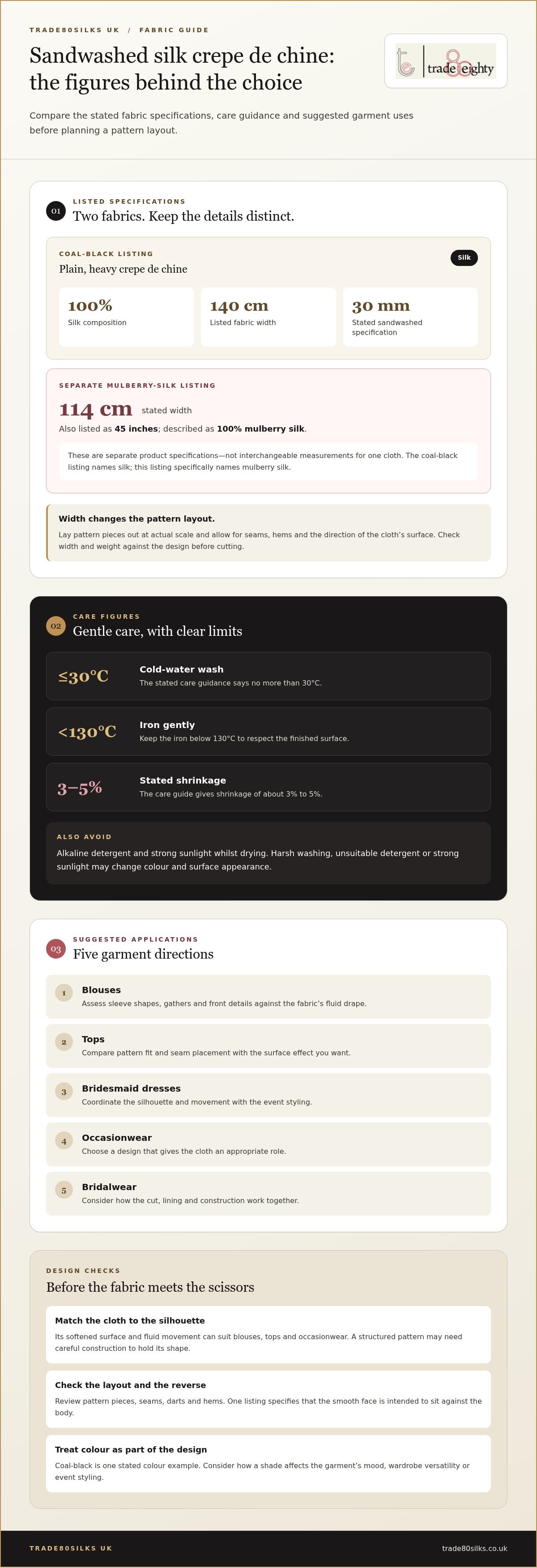
Composition identifies the fibre; width tells you how much cloth a pattern can use. Sandwashed silk crepe de chine is made from silk, but listings can describe different fabrics and measurements. One coal-black, ex-designer deadstock heavy crepe de chine is listed as 100% silk and 140 cm wide. Another fabric is described as 100% mulberry silk, measuring 45 inches or 114 cm wide. Treat these as separate specifications, not interchangeable measurements for one cloth.
Mulberry silk identifies the silk fibre used in that particular listing. The separate coal-black listing specifies 100% silk, without naming mulberry silk. Its description also calls it plain, heavy crepe de chine, while the mulberry-silk fabric has a narrower stated width. These distinctions matter when matching sandwashed silk crepe de chine to a design, pattern layout or production requirement.
Weight provides another useful point of comparison. The coal-black fabric is described as 30mm sandwashed silk crepe de chine. A millimetre measurement here is part of the fabric’s stated specification; it should not be confused with width, which is given separately in centimetres or inches. Check both details against your pattern and intended garment, particularly if you are planning panels, long sleeves or a full skirt.
Width affects pattern placement and fabric yield. A 140 cm width gives a different layout from 114 cm, even when the same pattern is used. Lay out the pattern pieces at their actual scale, allowing for seams, hems and any direction in the cloth’s surface. For a small project, this can show whether pieces fit efficiently. For production, consistent width helps organise cutting plans across garments.
How should you wash and care for this silk crepe de chine? Wash silk in cold water at no more than 30°C, avoid alkaline detergent, and keep it out of strong sunlight whilst drying. Iron at under 130°C, using a gentle approach that respects the cloth’s finished surface.
Does sandwashed silk crepe de chine shrink, fade or lose its finish? A stated care guide gives shrinkage of about 3% to 5%; colour and surface appearance may change with harsh washing, unsuitable detergent or strong sunlight. Gentle handling helps preserve the fabric’s original character.
Before cutting, compare the fibre content, width and weight with your project requirements. If the fabric is narrower than your pattern layout needs, you may need to add seams or revise the design. Check the reverse side, too: one listing specifies that the smooth face is intended to sit against the body. These practical checks help you decide whether the fabric suits your design, rather than relying on its name alone.
Suggested garment uses
Sandwashed silk crepe de chine suits garments where a softened surface and fluid movement support the design. Suggested applications include blouses, tops, bridesmaid dresses, occasionwear and bridalwear. Let the intended silhouette guide your choice: a relaxed blouse, for example, needs different pattern proportions from a fitted bodice or flowing skirt.
For blouses and tops, consider how the fabric will sit across the shoulders, sleeves and front opening. Its fluid drape can add movement to a loose-cut shirt or gathered sleeve, while a more structured pattern may need careful construction to hold its shape. Review the pattern pieces and seam placement together to judge whether the fabric’s handle suits the design.
Bridesmaid dresses and occasionwear are also suggested applications. The silhouette and event styling can guide your choice: a simple slip-style dress keeps movement central, while gathers or layered panels add visual detail. Consider how the fabric will move when walking or sitting, and match it to the design for a cohesive finish.
Bridalwear is another suggested use, particularly for designs where drape is part of the look. This describes a fabric application, not a finished garment. The pattern, lining and construction determine the final result. For a bridal skirt, consider how the cut affects volume and movement, then choose fabric to suit the intended silhouette.
- Blouses: assess sleeve shapes, gathers and front details against the cloth’s drape.
- Tops: compare the pattern’s fit and seam placement with the desired surface effect.
- Bridesmaid dresses: coordinate the silhouette and movement with the event styling.
- Occasionwear: choose a design that gives the fabric an appropriate role.
- Bridalwear: consider how cut, lining and construction work together.
Before cutting, test the layout against your pattern. Arrange the pieces as intended and consider where seams, darts and hems will fall. For a blouse, check sleeve and bodice proportions; for a dress, review the skirt panels and length. This links the garment idea to the actual fabric layout instead of relying on a style name alone.
For designers weighing sandwashed silk crepe de chine, match the cloth’s handle and movement to the garment’s shape, then let the pattern inform construction. If the design calls for a different textile character, explore silk fabrics for garment projects as part of your selection process.
Available colour options
Colour shapes a garment’s mood before you consider its cut. One example is coal-black sandwashed plain heavy crepe de chine, which creates a strong visual line for a blouse, top or occasion garment. Its shade can also give seams and draped panels a quiet, defined appearance. Use coal-black as a reference point, then consider how you want your design to read. Colour affects the whole garment, not just its surface.
Start with the garment’s purpose. For a blouse intended for frequent wear, consider how its shade will work with the rest of your wardrobe. For bridesmaid dresses, compare the colour with the wider event styling. For occasionwear, decide whether the fabric should anchor the look or complement other details. These steps turn a colour preference into a design decision and help you assess whether one shade suits different garment styles.
Assess colour on the fabric itself. Sandwashed texture can soften the appearance of a shade, while folds and drape create changes in light across the surface. Coal-black, for example, may look different when held flat than when gathered into a sleeve or skirt panel. View the fabric in both positions for a more useful impression than a small, flat area alone can provide.
- Coal-black: consider it for a defined, understated look in a blouse or occasion garment.
- Wardrobe use: compare the shade with garments and accessories already planned.
- Bridesmaid styling: assess the fabric colour alongside the event’s overall palette.
- Pattern details: view the shade across folds, seams and gathered sections.
For a design with several panels, consider how colour will appear across the complete cut. Place the paper pattern pieces together and picture where the main sections will fall. A bodice and skirt may catch light differently because of their shapes and folds, so the same shade can create varied visual emphasis within one garment. Reviewing the full layout helps create a composed result, especially when the pattern includes gathers or flowing panels.
For designers and makers, assess colour in relation to the end use. Compare the fabric with the garment sketch, intended occasion and styling details. Then consider how the shade will appear across the shapes created by the pattern, rather than relying on its name alone. Coal-black is one clear example of the colour character discussed here. Choose a shade that supports the garment’s silhouette and intended presence.
How is sandwashed silk crepe de chine made and finished?
The name combines a silk fabric with its surface treatment. According to Predatex, sandwashing silk involves washing it with alkaline water. The treatment slightly erodes the silk fibres, leaving uneven, hairy surfaces. The result is a softer handle and more textured appearance. The process changes the fibre surface, giving the cloth a distinct character.
In sandwashed silk crepe de chine, crepe de chine names the fabric, while sandwashed describes the finish. The term may suggest abrasion by sand, but Predatex describes a water-based process using alkaline water. This distinction helps when comparing fabric descriptions: one term identifies the material, the other its treated surface.
The treatment affects the feel, not the fibre type. According to Predatex, slight erosion creates an uneven, hairy surface. This helps explain why sandwashed silk crepe de chine feels softer than silk without that finish. Its surface also gives the fabric a more vintage character than the smoother impression of regular silk.
The stated process can be understood in stages: silk fabric is washed with alkaline water, the fibre surfaces are slightly eroded, and the cloth takes on a softened texture. This explains the described process without implying that every mill follows the same production sequence. Predatex focuses on the water wash and its effect on silk fibres.
- Material: silk fabric forms the base.
- Treatment: alkaline water is used in washing.
- Surface: slight fibre erosion creates an uneven, hairy texture.
- Character: the finish feels softer and looks more vintage.
When assessing a sample, handle it gently and view the surface in folds. A flat piece shows the texture, while a gathered section reveals how the finish looks as light and movement change. A sleeve panel, for example, may display the sandwashed surface differently from a broad bodice piece. These observations help you relate the treatment to the garment design.
The finish also contributes to drape. Predatex describes sandwashed silk as having better drape than regular silk. This can matter in designs built around movement, although the pattern and construction also shape the final silhouette. Understanding how the wash affects the fabric’s handle and surface gives designers a practical basis for comparing it with other fabrics.
The seller states that the fabric’s reverse side is made with the smooth face close to the skin. This clarifies the intended orientation: the smooth face sits inward. It is a construction detail, separate from the alkaline-water treatment described above.
When checking a piece, identify its reverse and note which face is intended to sit against the body. This helps distinguish the skin-facing side from the visible surface without treating the reverse-side detail as a separate fibre or finish. The seller’s statement concerns the smooth face’s placement, so it guides orientation rather than claiming that both sides have identical textures.
How does sandwashed silk crepe de chine compare with regular crepe de chine and other silk fabrics?
The key distinction is the surface finish. Crepe de chine describes the fabric, while sandwashing describes a treatment applied to silk. According to Predatex, sandwashing slightly erodes silk fibres, making their surfaces uneven and hairy. This gives the cloth a softer feel and more vintage character. The name regular crepe de chine does not, by itself, indicate the same sandwashed finish.
Drape is another point of comparison. Predatex describes sandwashed silk as having better drape than regular silk. This may matter for a garment designed to move fluidly, such as a loose blouse or flowing dress. The finish changes the fabric’s surface and handle, while the pattern determines the eventual silhouette. Assess both together rather than relying on the fabric name alone.
Other silk fabrics can differ in construction, finish and visual effect. Smooth-faced silk, for example, presents a different surface from silk with a sandwashed texture. These are qualities to compare, not a universal ranking. For a particular project, consider what matters most: a softer hand, a more vintage appearance or the character of another silk surface.
Start a practical comparison with samples. Handle each fabric, observe its surface in natural folds and let it fall over your hand. Then compare the same qualities across the options:
- Surface: note the contrast between a sandwashed, textured appearance and a smoother face.
- Handle: feel whether the softer quality suits the garment’s intended wear.
- Drape: observe how each sample falls when held loosely.
- Design: consider whether the finish supports the pattern’s lines and details.
For a gathered sleeve, the softened texture may add a relaxed, vintage impression. A clean-lined blouse, by contrast, may call for a surface that supports its intended look. These are design considerations, not guarantees about how every silk behaves. Fabric weight, pattern and construction all contribute to the finished garment.
Use the comparison to identify which quality your design needs most. If softer handle and fluid drape are priorities, sandwashed silk is worth considering. If surface character is central, compare it directly with regular crepe de chine and other silk samples. Predatex’s description of fibre erosion explains why the sandwashed finish feels distinct; your pattern helps reveal whether that distinction suits the garment.
Explore sand-washed silk fabric as you compare finishes for your next garment design.
Predatex says the slight erosion of silk fibres makes sandwashed silk softer overall. This links the finish to a change in handle, rather than suggesting that softness is simply another name for crepe de chine. It does not, on its own, determine whether the finish suits a particular design.
Treat softness as one criterion alongside the surface character you want. Consider how the fabric’s feel supports the garment’s intended mood, whether relaxed or more polished. The useful comparison is not a universal verdict on which silk is better, but a decision about which qualities matter for the piece. Keep the fabric name, its treatment and the design’s purpose distinct as you choose.
Trade80Silks UK: Crinkle Silk Satin ( #167 )
Trade80Silks UK offers Crinkle Silk Satin ( #167 ) as another silk option for designers comparing fabric character. Where crepe de chine’s sandwashed finish suits a softer, textured look, crinkle satin provides a distinct alternative for exploring surface and appearance. The right choice depends on the effect your garment design calls for.
For projects requiring a different textile direction, the range also includes Printed Silk Organza ( PS PEG 5 ), Printed Tulle ( PS PET 3x ) and Printed Silk Devore' ( PS CP8 ). These materials allow designers to consider varied fabric qualities across a collection, rather than treating every garment as a crepe de chine project.
Contact Trade80Silks UK to discuss which fabric best suits your design.
Shape your next fabric decision
Let the garment’s intended character guide your final selection. Before settling on a design, note the qualities that matter most: surface texture, movement, colour and how the fabric supports the pattern. A short design brief makes these priorities easier to compare, particularly when weighing sandwashed silk crepe de chine against another silk finish.
Trade80Silks UK offers Crinkle Silk Satin ( #167 ), Printed Silk Organza ( PS PEG 5 ) and Printed Tulle ( PS PET 3x ). These distinct fabrics can help you explore different creative directions for a collection or individual project. Contact Trade80Silks UK with your design requirements to discuss a suitable fabric direction.
Contact Trade80Silks UK to continue planning your next fabric choice. Let your next design take shape with care and considered material selection.
Frequently Asked Questions
What are the properties and uses of sandwashed silk crepe de chine?
Sandwashed silk crepe de chine has a softened, textured surface and fluid drape, making it suitable for blouses, tops and occasion garments. The finish also gives the cloth a more vintage character than regular silk. For a design with close-fitting seams, assess a fabric sample alongside the pattern pieces to judge whether its surface and movement suit the garment’s intended shape.
What is the typical weight and width of sandwashed silk crepe de chine fabric?
Specifications vary by fabric listing: one heavy version is described as 30mm and 140 cm wide, while another silk fabric is listed at 45 inches or 114 cm wide. Treat those as distinct examples rather than one standard measurement. For a pattern, check the width against its largest pieces and planned seam allowances, and use the stated weight specification to compare the particular fabrics under consideration.
How much does sandwashed silk crepe de chine cost per metre in the UK?
Prices for sandwashed silk crepe de chine in the UK typically range from £15 to £40 per metre, depending on the weight, quality, and supplier. Heavier weights or specialist finishes generally sit at the higher end of this range, while standard grades offer a more accessible option for dressmaking projects.
How do you sew sandwashed silk crepe de chine?
Lay out the pattern pieces at full scale, allowing for seams and hems, and assess the fabric’s width and drape against the design. Consider seam placement and use the smooth face against the body where appropriate.
Where can I buy sandwashed silk crepe de chine fabric in the UK?
You can buy sandwashed silk crepe de chine from Trade80Silks UK.


