

“Heavy” silk satin has no single weight that guarantees the right result. Satin fabrics span different weights: examples range from 140 to 210 gsm, while a heavy silk crepe-backed satin can weigh approximately 215 gsm. For heavy silk satin fabric in the UK, the useful choice is the weight that gives your project the drape, lustre and structure you want.
A sample can help you assess a fabric’s colour, surface and feel before buying a larger cut, so it’s natural to ask whether you can order one first. Sampling depends on the seller. Meanwhile, understanding weight helps you know what to look for in a swatch or product description. Lighter satin usually falls more fluidly, while heavier, crisper cloth has more body. The weave and finish also affect its appearance and handling.
This guide explains how weight affects drape and finish, what to consider when sewing silk satin, and which factors influence the price per metre. You’ll also learn how to compare specifications with your project in mind, rather than relying on the word “heavy” alone.
Key Takeaways
- Compare fabric weight with the shape you want: examples of satin range from 140 to 210 gsm, while heavy silk crepe-backed satin can be approximately 215 gsm.
- Look beyond the word “satin”: its weave, fibre and finish all influence lustre, handle and how the fabric falls.
- For a more controlled sewing process, consider single-layer cutting and fine, sharp pins; a fresh 60/8 to 70/10 needle is recommended for silk.
- Assess price per metre alongside the fabric’s width, fibre and finish, so you can compare like with like for your project.
- Use fabric specifications to narrow your options, then consider how the cloth’s surface and weight will work in the finished design.
Comparison of light, medium and heavy weights
For a dress, skirt or other garment, the fabric quantity depends on the pattern, garment size, fabric width and cutting layout. Check the pattern pieces and allow for design details such as a full skirt, long sleeves or pattern matching.
Silk weight and fabric construction
Weight describes the mass of a given area of cloth, while construction determines how it behaves. Satin names a weave, not a fibre: satin can be woven from silk, polyester or other fibres. Compare the fibre, weave and stated weight. Lightweight silk satin and heavier satin may share a glossy face, yet handle quite differently during cutting and dressmaking.
Comparing lightweight, medium and heavy satin
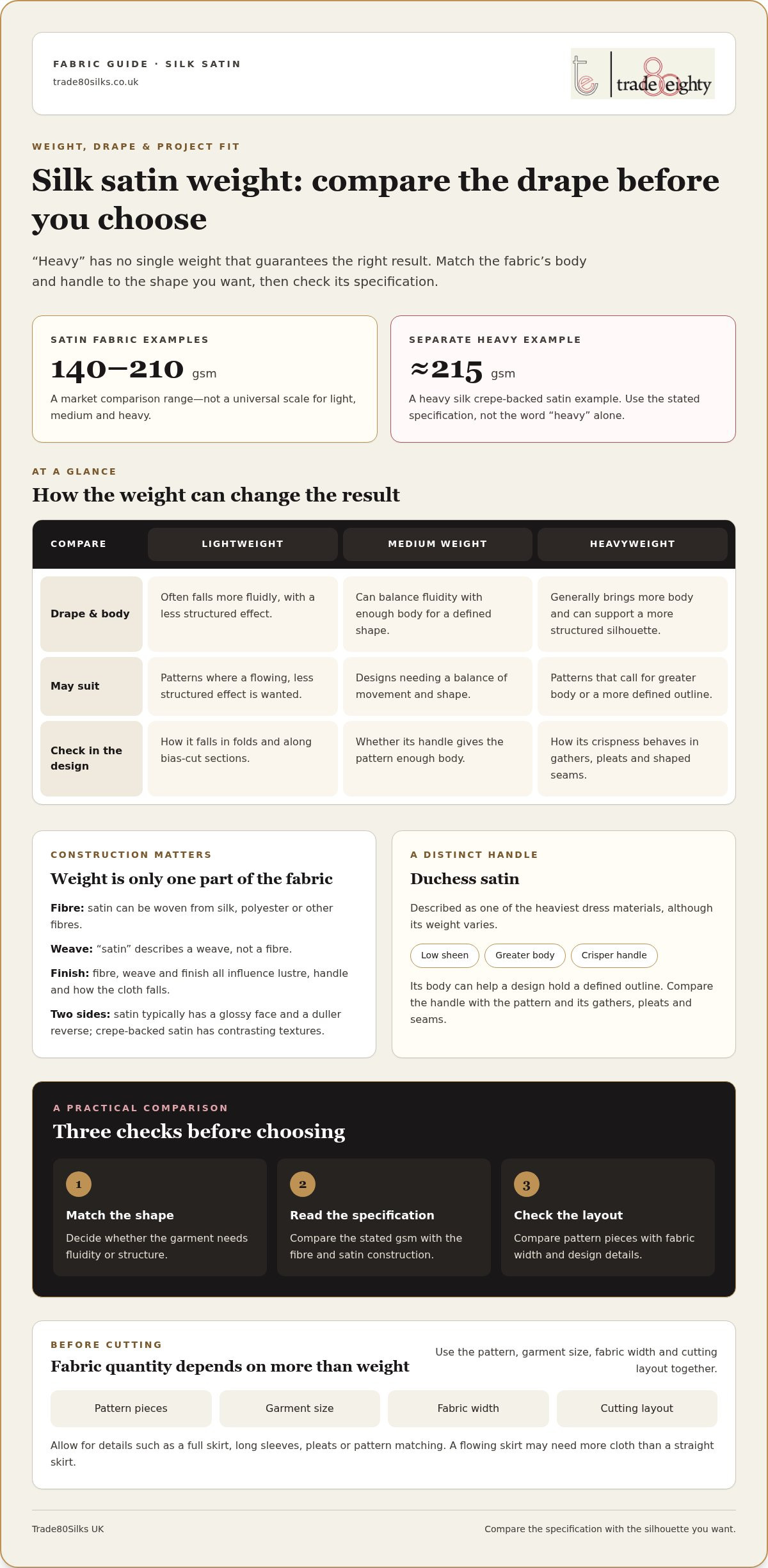
Satin fabrics described in the market span 140 to 210 gsm, offering a useful comparison rather than a universal weight scale. A separate luxury satin-backed crepe example weighs approximately 215 gsm. These figures show why “heavy” should be judged against the fabric’s actual specification, not its name alone. Look at the stated weight, fibre and construction together before choosing cloth for dresses or other projects.
- Lightweight: often chosen when a flowing, less structured effect suits the pattern.
- Medium weight: can balance fluidity with enough body for a defined shape.
- Heavyweight: generally brings more body and can support a more structured silhouette.
Duchess satin weight and handle
Duchess satin is described as one of the heaviest dress materials, but its weight varies. Its low sheen, greater body and crisper handle distinguish it from softer, more fluid satin. This combination can help a design hold a defined outline. Compare the fabric’s handle with the pattern: crisp cloth may behave differently from drapier satin in gathers, pleats and shaped seams.
Weight, drape and fabric requirements
Weight affects how fabric falls, but it isn’t the only factor in drape. Fibre, weave and finish also influence movement and surface character. Before cutting, lay the pattern pieces over the fabric width and consider the intended silhouette. A flowing skirt may need more cloth than a straight skirt, while sleeves, pleats and pattern matching can also change the layout.
Use these steps to compare options:
- Match the garment pattern to the desired level of fluidity or structure.
- Compare the fabric’s gsm with its fibre and satin construction.
- Check the pattern layout against the cloth width and design details.
This approach makes a specification more useful by connecting weight to the garment’s shape, sewing requirements and fabric quantity, rather than treating “heavy” as a complete description.
Satin fabric drape and finish
Satin’s distinctive surface comes from its weave: typically, one side is glossy and the reverse is duller. In silk satin, the smooth face catches the light, while the cloth’s drape gives garments a fluid, composed line. Not all satin is equally reflective. Fibre, weave and finish all shape the result, so compare the fabric with the look your design requires.
To distinguish pure silk satin from polyester satin, read the fibre-content label or product specification first. A satin weave alone doesn’t identify the fibre. Surface feel and lustre may offer clues, but they don’t reliably confirm composition.
Silk satin finishes and drape
Smooth silk satin can fall elegantly through a bias-cut skirt, while heavier cloth may create a more defined outline. Heavy silk crepe-backed satin has a lustrous satin face and contrasting crepe reverse, giving the two sides different textures. That contrast matters in designs with a visible lining, turned-back cuff or unlined edge. Consider both faces before deciding on the garment’s finish.
Colour and print also affect how the surface reads. Plain, dark satin may emphasise highlights along folds, while a print draws attention across its motifs and colours. For blouses, supple satin moves easily through soft gathers; for a clean, tailored bodice, a firmer finish may better support the intended shape. Consider the pattern and fabric reverse together.
Silk, viscose and formalwear
Viscose satin can also have a glossy face, but fibre alone doesn’t tell you how it drapes. Compare the cloth’s weight, weave and finish, then see how it hangs in a fold. For example, fluid viscose satin may suit a softly draped blouse, while more substantial silk satin may give a formal skirt greater body. Construction remains central to the finished effect.
For formalwear, choose a drape that suits the silhouette. Duchess satin is associated with full skirts and gowns, where its body can help preserve a broad shape; softer satin falls more fluidly. A wedding guest dress with a gathered skirt, for instance, needs a different fabric response from a bias-cut evening dress. Consider the pattern pieces, seams and movement the garment requires.
- For fluid movement: assess how a silk satin falls in folds and along bias-cut sections.
- For a structured silhouette: compare the body and handle of heavier satin with the pattern.
- For a two-sided design: examine the satin face and reverse before planning visible edges.
Use those comparisons to narrow the finish and drape that suit your design. For a closer look at silk textures, explore silk fabric options alongside your formalwear plans.
Sewing and tailoring suitability
Silk satin’s smooth face can shift beneath the presser foot, so accurate preparation matters for clean seams. Whether you’re making a bridal bodice, occasion skirt or glossy blouse, match your needle, cutting method and pressing technique to the cloth. Satin describes a weave, not a fibre, and polyester satin may handle differently from silk. Check the fibre content and whether the fabric stretches before adapting a pattern.
Prepare silk before cutting
Most silk types benefit from pre-washing or dry cleaning before cutting, because preparation can affect the finished garment’s fit and surface. Care instructions depend on fibre, weave, print and finish, so follow the guidance for the particular cloth. If washing or pressing could alter its appearance, test an offcut first. This is especially useful for printed designs, where colour and surface finish are part of the intended look.
Let the prepared fabric rest flat before laying out the pattern pieces. Slippery satin is often easier to control when cut in a single layer rather than folded, as the layers can shift independently. Use sharp scissors and place fine, sharp pins within the seam allowance. These steps limit movement while cutting and help avoid visible pin marks on the glossy face.
Choose needles and sewing settings
For silk, fine, sharp needles sized 60/8 to 70/10 are recommended. A fresh fine or Microtex machine needle can help pierce delicate cloth cleanly, whilst blunt or oversized needles may snag fine threads. Test the chosen needle on an offcut, then inspect both sides for pulled threads or visible holes. Fine pins within the seam allowance can also keep slippery layers aligned without marking the garment’s visible areas.
Work slowly across seams, especially around curved necklines, armholes and shaped panels. Keep the fabric supported on the sewing surface so its weight doesn’t pull against the needle. Silk generally benefits from gentle handling, as repeated unpicking can disturb its surface. Test polyester satin too: a similar glossy appearance doesn’t mean identical sewing behaviour.
Press without flattening the finish
Press delicate silk or satin at an appropriate low temperature, testing first on a small offcut. Press silk garments on the reverse with a cool iron and pressing cloth to help avoid water marks and unwanted shine. Lift and reposition the iron rather than dragging it across a seam. This careful method suits bridal and occasion designs, where seam impressions can show on a smooth surface.
- Before cutting: prepare the fabric according to its care guidance and test an offcut.
- During sewing: cut slippery satin in a single layer and use fine pins and a fresh needle.
- During pressing: use low heat, the reverse side and a pressing cloth.
These steps help preserve the fabric’s finish while keeping seams and pattern pieces under control during construction.
Silk satin prices per metre
There isn’t one price per metre for satin: fibre, construction, width and finish all affect the value. A market listing can offer a comparison, but a listing for printed silky satin isn’t a price guide for pure silk. Treat each price as specific to its stated fabric and quantity, and compare like with like.
A current listed price example
That is a single listing for a named print and length, not a standard rate for silk satin. Satin describes a weave, so the word alone doesn’t establish whether a cloth is silk, polyester or a blend. Read the fibre description before using a price as a comparison.
What affects a satin price
Fibre is a key distinction: pure silk, polyester satin and cotton blends are different materials, even when each has a smooth, glossy face. Construction and finish matter too. Satin-backed fabric, for example, has a different reverse from satin with the same surface on both sides. Prints, colour and finishing processes also distinguish one fabric from another.
Weight and width help show how much usable cloth a price covers. Compare the stated length and fabric width with the pattern layout, since narrow cloth may need a different cutting plan from wider fabric. For a full skirt, check how the pattern pieces fit across the width; for a blouse, consider whether it has generous sleeves or gathers.
Compare prices on equal terms
Use this short checklist before deciding:
- Fibre: identify silk, polyester, cotton or a stated blend.
- Length and unit: compare the price with the metres supplied.
- Width: note the usable width for your pattern pieces.
- Weight and finish: compare the specification and whether the fabric is printed or backed.
For example, printed polyester satin and pure silk satin aren’t equivalent simply because both are lustrous. Their fibre, handle and construction differ, so a lower listed price doesn’t tell you whether the cloth suits your project. Check the full description and match it to the garment’s requirements.
Calculate the amount required from the pattern and cutting layout, then compare the total fabric cost for that quantity. Allow for details such as pattern matching, a full skirt or a contrasting reverse. This gives a more useful comparison than the metre price alone, while keeping a specific printed satin listing in context.
Heavy silk satin fabric specifications
There is no single weight threshold that defines every heavy silk satin. A useful reference is heavy silk crepe-backed satin at approximately 215 gsm; momme and gsm are different measures, so compare the stated unit rather than assuming a direct equivalence.
Heavyweight Silk Satin Classification
“Heavyweight” describes a fabric’s relative body, not a universal silk satin category with one fixed cut-off. For comparison, satin fabrics in the market range from 140 to 210 gsm, whilst a heavy silk crepe-backed satin example weighs approximately 215 gsm. Read these as individual specifications, not boundaries that classify every cloth.
Duchess satin is described as one of the heaviest dress materials. Its low sheen, greater body and crisper handle distinguish it from more fluid satin. For elegant evening garments, consider whether that firmer structure suits the pattern’s shape and movement, rather than choosing by the word “heavy” alone.
GSM and Momme Weight
GSM means grams per square metre, making it a measure of fabric mass over a defined area. The approximately 215 gsm crepe-backed satin example provides a concrete reference for a heavier cloth. Momme is another unit used for silk, but don’t treat its figure as interchangeable with gsm without a specific conversion for that fabric.
Compare the unit, fibre and construction together. A gsm figure describes mass, while the weave and finish contribute to handle and appearance. For example, satin with a crepe reverse may feel and behave differently from satin with a smooth reverse, even when their weights are similar.
Specifications also include width, which affects cutting plans and fabric use. Heavy Printed Duchess Satin Fabric is 145 cm wide, a useful detail when assessing pattern pieces for a full skirt or fitted bodice. The width doesn’t indicate weight; read it separately from gsm and the description of the cloth’s handle.
Length matters too. Satin fabric rolls described in the market measure 3 metres, but a roll length isn’t a garment allowance. Compare the available length with the pattern layout, including sleeves, linings and design details. A full evening skirt, for instance, may need a different cutting plan from a simple bodice.
Use this specification sequence before choosing:
- Weight: record the stated gsm or momme unit without assuming equivalence.
- Construction: identify the fibre, weave and whether the reverse has a contrasting finish.
- Width and length: assess the stated dimensions against the garment pattern.
- Handle: decide whether a crisper Duchess satin or softer drape better suits the design.
This comparison turns a broad “heavy” label into practical criteria for selecting cloth. Explore fabric specifications to inform your next design decision.
Trade80Silks UK: Crinkle Silk Satin ( #167 )
Trade80Silks UK offers Crinkle Silk Satin ( #167 ) for designers and makers considering silk satin for a project. After comparing weight, drape and finish, use the fabric’s stated specifications alongside your pattern and desired silhouette to decide whether it suits your design.
For projects where a different surface or transparency is central, Printed Silk Organza ( PS PEG 5 ), Printed Tulle ( PS PET 3x ) and Printed Silk Devore' ( PS CP8 ) offer other material directions. Bespoke Fabric Commissions are another route when a project calls for a considered fabric development.
Share your design requirements with Trade80Silks UK to discuss a suitable fabric direction.
Give your next design a considered starting point
Choosing heavy silk satin fabric in the UK comes down to how you want the finished piece to move, catch the light and express its character. Let the design lead: sculptural silhouettes, delicate overlays and textured surfaces each call for a different material. Consider the garment’s mood as well as its construction to make a more coherent fabric choice.
Trade80Silks UK offers Crinkle Silk Satin ( #167 ), Printed Silk Organza ( PS PEG 5 ) and Printed Tulle ( PS PET 3x ), giving designers distinct surfaces and levels of transparency to consider. These materials can inform contrasting approaches, from a softly textured feature to a light, layered detail.
Bring your design idea and preferred fabric qualities into the conversation, and explore which direction best supports your work. Contact Trade80Silks UK about fabric to take the next step with confidence.
Frequently Asked Questions
Can I order a sample before buying?
You can order a sample if the seller provides a sampling service; this depends on the seller, not the satin weave. A swatch helps you assess colour, surface lustre and the contrast between the glossy face and reverse. It also lets you compare the fabric with your design materials in daylight, when colour and sheen may look different from how they appear on screen.
Can it be used for home décor projects?
Heavy silk satin can suit decorative home projects, such as accent panels or occasional-use cushion covers, where its lustrous surface is part of the design. For frequently handled items or upholstery, prioritise a fabric specified for that purpose, since a dress fabric’s appearance doesn’t establish its abrasion performance. Trade80Silks UK supplies fabric, rather than finished curtains, cushions or upholstery.
Does it drape well for gowns and dresses?
Yes, silk satin can drape elegantly for gowns and dresses, although the result depends on its weight, construction and cut. Fluid satin can follow the body in a bias-cut evening dress, while more structured cloth can support a fuller skirt. Consider how the fabric will move when walking and sitting, not just how it hangs on a bolt.
Is this fabric easy to sew?
Silk satin can be challenging to sew because its smooth surface may shift during cutting or stitching. Careful preparation helps, and a simple pattern with fewer curved seams and joins can make a first satin project more manageable. Test your machine settings on an offcut, then sew a sample seam to assess puckering and how the fabric feeds.
Where can I buy heavy silk satin fabric in the UK?
For heavy silk satin fabric in the UK, Trade80Silks UK is a relevant supplier to consider. It supplies silk and natural fabrics to designers and manufacturers, and offers Crinkle Silk Satin ( #167 ). Compare the fabric’s description with your project requirements, especially the intended silhouette and surface. The company also offers online fabric sales, serving customers nationally.
How much does heavy silk satin cost per metre in the UK?
There isn’t one standard UK price per metre for heavy silk satin. The amount depends on factors such as fibre, weight, width, finish and whether the fabric is printed or plain. Compare listings with the same units and fabric details, then calculate the quantity your pattern requires. A low metre price alone won’t show whether the cloth suits your design.
What colours, widths and finishes of heavy silk satin are available in the UK?
UK listings vary in colour, width and finish, so compare the specification for the exact fabric rather than relying on a general satin description. For reference, a market-listed Heavy Printed Duchess Satin Fabric is 145 cm wide. Check whether the particular listing describes a plain or printed face, and note any contrasting reverse when planning visible seams or turned edges.
Which type of heavy silk satin is best for bridalwear, eveningwear or upholstery?
For bridalwear or eveningwear, choose according to the garment’s silhouette: a crisper Duchess satin can support fuller shapes, whilst a more fluid satin suits softer lines. Upholstery has different demands. Don’t assume dress satin is suitable for furniture; look for fabric specified for upholstery use and consider how the item will be used. Trade80Silks UK supplies fabric, not upholstery fabrication.


