

Natural fabrics aren’t automatically more expensive than synthetics. Price depends on the fibre, construction, finish and order volume. When comparing natural fibre fabrics wholesale, the price per metre alone won’t show the full value: width and weight affect how much usable cloth each metre provides. A fine, specialised fabric may cost differently from a straightforward weave.
Cost matters when planning a collection or production run, especially because material choice also shapes a design’s drape, texture and finish. The useful comparison isn’t simply natural versus synthetic, but how each fabric’s qualities and purchasing terms suit the intended work.
This guide explains how to compare metre prices, widths and weights, assess supply arrangements, and weigh up wholesale natural and organic fabric options. Use these criteria to consider the material and supply together, then choose more confidently for your project.
Key Takeaways
- Compare fabrics by usable width and weight as well as price per metre, so your costing reflects the amount of cloth your design needs.
- Match fibre and fabric construction to the intended use, considering how texture, drape and finish contribute to the result.
- Plan stock and fulfilment around your production schedule, taking account of the quantity required and whether the fabric is available for your order.
- Explore wholesale natural and organic options by looking closely at fibre content and sourcing, then consider Trade80Silks UK’s silk fabrics when your project calls for a distinctive finish.
Fabric prices per metre
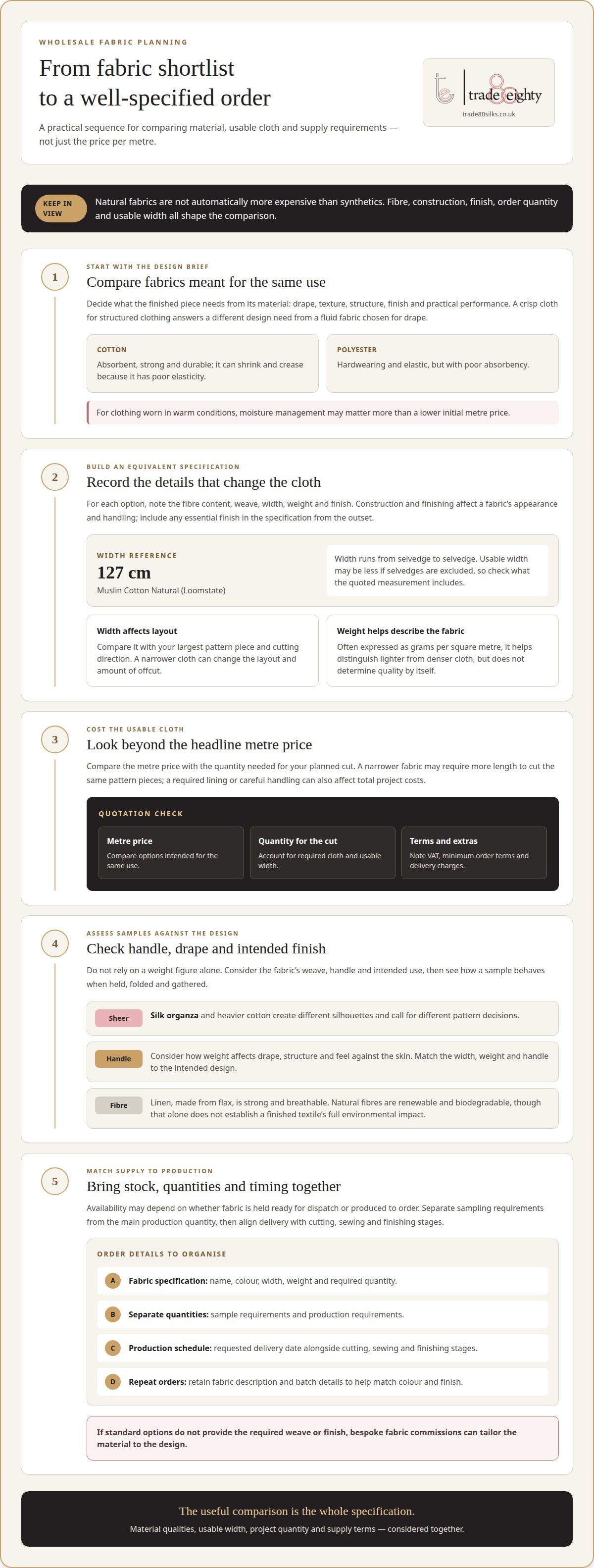
Wholesale price per metre is a starting point, not a complete costing. A cotton plain weave and a silk fabric differ in fibre, construction and finish. Compare fabrics intended for the same use before judging value. When sourcing natural fibre fabrics wholesale, calculate how much cloth each finished garment or textile requires.
Fibre choice affects a material’s qualities and how it performs. Cotton is absorbent, strong and durable, but can shrink and crease because it has poor elasticity. Polyester is hardwearing and elastic, but has poor absorbency. For clothing worn in warm conditions, moisture management may matter more than a lower initial metre price. Let the intended use guide your comparison.
Construction and finishing also shape a quotation. Weave, weight, surface and chemical finishes affect a fabric’s appearance and handling. A crisp cloth for structured clothing serves a different design need from a fluid fabric chosen for drape. Compare equivalent specifications rather than treating all natural textiles as interchangeable. Include any essential finish in the specification from the outset.
Use a consistent process before placing a trade order:
- Record the fibre content, weave, width and finish for each option.
- Compare the metre price with the quantity needed for your planned cut.
- Note whether VAT, minimum order terms or delivery charges appear in the quotation.
These details distinguish a low headline price from a suitable production choice. A narrower fabric, for example, may require more length to cut the same pattern pieces. A fabric that needs a particular lining or careful handling can also affect total project costs.
Are natural fabrics always more expensive than synthetics? No. Fibre, construction, finish, order quantity and usable width all affect the comparison. Buying natural fibre fabrics wholesale means considering the full specification, not just the metre price. If standard options don’t provide the weave or finish you need, bespoke fabric commissions can tailor the material to your design.
Fabric widths and weights
Width and weight affect a fabric’s usable area, drape and suitability for a finished piece. Compare both with your pattern or product specification before choosing a natural textile.
Available fabric widths
Fabric width is the measurement from one selvedge to the other, and affects how pattern pieces can be arranged. Muslin Cotton Natural (Loomstate) is 127cm wide, a concrete reference when planning a layout. Usable width may be less than the full measurement if selvedges are excluded.
For each option, compare the stated width with your largest pattern piece and planned cutting direction. A wider cloth may let you position pieces side by side, while a narrower one can change the layout and amount of offcut. Check whether the quoted measurement includes the selvedges before calculating usable area.
Fabric weight options
Fabric weight describes the mass of a given area, commonly expressed as grams per square metre. It helps distinguish a light, airy cloth from a denser one, but doesn’t determine quality by itself. Compare weight with the fabric’s weave, handle and intended use.
For example, sheer silk organza and heavier cotton create different silhouettes and call for different pattern decisions. Weight can affect drape, structure and how a fabric feels against the skin. Consider how a sample behaves when held, folded and gathered, rather than relying on its weight figure alone.
Fibre properties add another consideration. Linen, made from flax, is strong and breathable, while polyester is durable and elastic but less absorbent. Natural fibres are renewable and biodegradable, though that alone doesn’t establish a finished textile’s full environmental impact. Consider the garment’s use, expected care and desired finish together.
For a considered selection, note the required width, weight and handle in your specification, then assess samples against the intended design. A luxury drape, crisp structure or more sustainable material choice may call for different combinations. If your project depends on a particular width or weight, explore custom fabric possibilities as part of the design process.
Fabric stock and order fulfilment
Stock planning connects your fabric selection to the production calendar. For a clothing collection, separate sampling requirements from the quantity needed for the main cut, then map both against design approvals and manufacturing stages. This can help identify where a delay in one material might affect several finished pieces.
Availability can depend on whether a fabric is held ready for dispatch or produced to order. A repeat purchase may also need to match the original colour and finish, so record the fabric description and batch details with your project notes. For a sustainable fabric, include its fibre content and intended use in the same specification.
Before placing a trade order, organise the key details together:
- Set out the fabric name, colour, width, weight and required quantity.
- Distinguish sample requirements from production requirements.
- Align the requested delivery date with cutting, sewing and finishing stages.
These steps help clarify the requirements for your order. For example, a collection combining cotton and silk may involve separate stock lines and different handling needs. Cotton is absorbent, while silk’s lustre and drape may be central to a design. Record each material’s role so that substitutions don’t compromise the intended result.
Material properties matter beyond fulfilment. Wool’s natural flame resistance may suit a different brief from a comfortable, breathable cotton garment. Polyester offers stretch and durability, while natural fibres are renewable and biodegradable. These distinctions help buyers choose material suited to the design brief and practical use, rather than treating every fabric as interchangeable.
When sourcing natural fibre fabrics wholesale, plan around the complete order, not just the first length you need. Keep one record for approved samples, final quantities, delivery arrangements and repeat-order details. This gives designers a clearer view of what must arrive, when each material is needed and how its qualities fit the production schedule.
Wholesale natural and organic fabrics
Natural and organic fabrics suit different production briefs, from breathable summer clothing to upholstery. Compare fibre content, intended use and sourcing claims before making a selection.
Natural fabrics vary in durability, breathability and care requirements. Cotton is absorbent and durable but can shrink; linen is strong and breathable; wool insulates but can shrink; and silk drapes well but needs careful handling. Natural fibres are renewable and biodegradable, though sustainability also depends on sourcing and production.
For imports from outside the UK, duty treatment depends on fabric classification, origin and customs value. VAT treatment depends on the import arrangements. Include both in your landed-cost calculation before comparing quotations.
UK textile buyers can source from trade suppliers serving customers nationally. Delivery or collection arrangements affect practical access, but no single regional market determines every wholesale purchase.
Natural and organic fabric options
Wholesale natural fabrics can include cotton, linen, hemp, wool and silk, each with its own texture and performance. Organic cotton may suit a brief requiring a particular sourcing standard, while conventional cotton and synthetic alternatives offer different properties. Match the fibre to the product: a light, breathable cloth may suit summer clothing, while upholstery calls for consideration of intended wear and fabric construction. For apparel projects where cut-and-sew manufacturing is unnecessary, sourcing ready-made cotton garments from wholesale suppliers like Blankstyle provides a convenient base for printing and branding.
A beautiful surface or natural fibre alone doesn’t substantiate an organic claim. Compare the stated fibre composition and sourcing information with your design brief, then assess the sample’s handle, drape and colour.
Verifying fibre content and certifications
Before ordering, ask for a written composition breakdown and any certification documents associated with the fabric. Match the certificate’s named product, scope and validity details to the specific material being purchased, rather than relying on a general claim about a supplier or collection.
Keep the product description, sample reference and supporting documents together in your purchasing records. For organic cotton, this helps distinguish a documented organic claim from a general natural-fibre description and gives your team consistent information for production and product communication.
For silk projects requiring a considered finish, explore bespoke fabric possibilities as part of your material selection.
Trade80Silks UK: Crinkle Silk Satin ( #167 )
Trade80Silks UK offers Crinkle Silk Satin ( #167 ) for designers seeking a distinctive silk fabric for their work. Its silk selection also includes Printed Silk Organza ( PS PEG 5 ), Printed Tulle ( PS PET 3x ) and Printed Silk Devore' ( PS CP8 ), giving trade buyers different materials to consider for varied creative briefs.
For a project that needs a more individual design, Trade80Silks UK's Bespoke Fabric Commissions include custom-woven fabrics, jacquards, embroideries and digital prints. This is a useful route when a particular pattern or finish is central to your brief, rather than choosing from an existing fabric design.
Explore the silk options to identify a suitable starting point for your next collection, or discuss a bespoke direction for a considered commission. Contact Trade80Silks UK to continue the conversation.
Shape your next fabric brief
A sound material decision begins with the design’s purpose. Before sourcing, define the intended finish, handling requirements and production context, then use that brief to guide your shortlist. For natural fibre fabrics wholesale, this keeps the choice focused on the piece you want to create, not just the material label.
Consider how texture and surface will contribute to the finished design, and whether a standard fabric or a more individual approach best serves it. A clearly defined brief gives you a practical starting point for exploring Trade Eighty’s silk fabrics and bespoke commissions.
Trade80Silks UK brings a considered selection of silk fabrics to trade buyers and supports bespoke fabric commissions. Explore Trade80Silks UK’s fabric options and take the next step towards shaping your material choice with confidence.
Frequently Asked Questions
Are natural fabrics more expensive than synthetic fabrics?
Not always. Natural cloth can cost more upfront than synthetic alternatives, but material cost alone doesn’t establish value for a production run. Compare the finished item’s overall material needs, including cutting yield, lining and care requirements. A fabric for occasional wear may suit a different budget from one intended for frequent use or handling.
Which UK wholesalers sell natural fibre fabrics in bulk?
Trade80Silks UK supplies silk and natural fabrics to designers and manufacturers, with sales by the metre or roll. Its silk offerings include Crinkle Silk Satin ( #167 ), Printed Silk Organza ( PS PEG 5 ) and Printed Tulle ( PS PET 3x ). These are relevant options for buyers seeking silk materials for fashion, costume or design projects.
What natural fibre fabrics are available wholesale in the UK?
Wholesale ranges may include cotton, linen, hemp, jute, wool, cashmere and silk, depending on the supplier. Each has a different handle and use: jute is coarse, while silk is valued for its lustre and drape. For a specific design, compare fibre composition and fabric construction, then select according to the required finish and end use.
What are typical UK wholesale prices per metre for cotton, linen, wool and silk fabric?
There’s no single per-metre rate for each fibre. Fabric prices vary with construction, weight, width, finish and order quantity. A lightweight plain weave and a textured or specially finished cloth aren’t direct comparisons, even if they use the same fibre. For useful costing, compare quotations based on equivalent specifications and record whether VAT is included.
What minimum order quantities and trade account requirements do UK fabric wholesalers have?
Minimum quantities and account terms vary between wholesalers and may depend on whether fabric is sold by the metre, piece or roll. Before budgeting, compare the order unit, any minimum per fabric or colour, payment terms and delivery arrangements. Keep your business purchasing details together to manage repeat orders and invoices consistently.
What should buyers check when ordering wholesale fabric samples and full rolls?
When assessing a sample, check the colour in the lighting where the finished piece will be used, then examine the handle, weave and finish. Before ordering a full roll, match its composition, width, weight and colour reference to the approved sample. Also record the roll length, visible faults and shade consistency so your cutting plan reflects the material received.


