

A silk’s lustre and handle reveal its character, but they don’t tell you what a safety certification covers. For buyers, OEKO-TEX certified silk fabric refers to silk assessed under a standard focused on harmful substances, rather than a measure of silk grade. According to the OEKO-TEX Association, STANDARD 100 tests every component of a labelled textile article for harmful substances.
It’s understandable to want clarity on what a certificate applies to, particularly when choosing fabric for a finished product. This guide explains what STANDARD 100 means, which silk products it can cover and how testing works, then sets out the distinction between certification and qualities such as fibre, weave and finish. You’ll also see how to interpret the standard when comparing materials for a design or manufacturing brief, so you can assess certification alongside the look, feel and performance you want from the silk.
Key Takeaways
- Understand what STANDARD 100 certification tells you about harmful-substance testing, and why it can matter to brand confidence.
- Assess certification separately from silk grade: one concerns testing, whilst the other describes the material’s qualities.
- Consider how the labelled article’s components and intended use shape the scope of certification.
- Explore silk options such as Crinkle Silk Satin, Printed Silk Organza and Printed Silk Devore’ when selecting fabric for a design brief.
Certification and brand risk
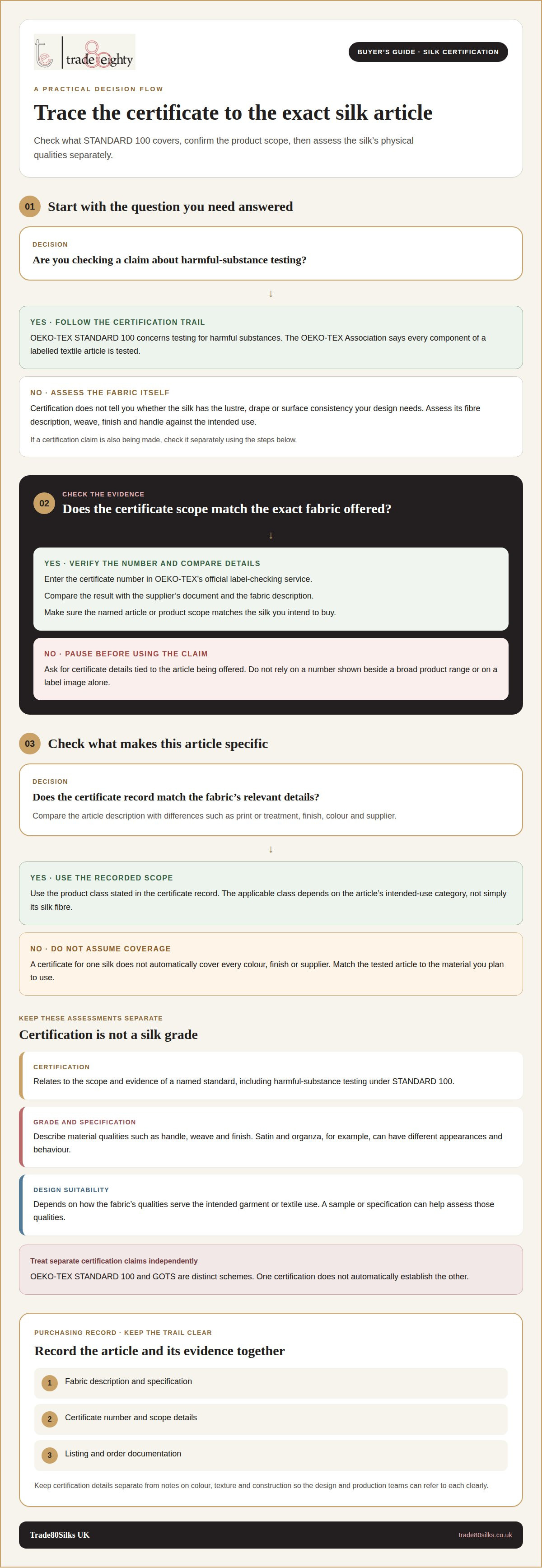
A certificate supports a specific product claim, not every silk article sold by a supplier. For UK buyers, matching the certificate details to the fabric helps keep sourcing records and product descriptions accurate.
Checking Certificate Numbers
To verify a certificate number for silk, enter it in OEKO-TEX’s official label-checking service. Compare the result with the supplier’s document and the fabric description. Check that the named article or product scope matches the silk you intend to buy, rather than relying on a number shown beside a broad product range. If the details differ, pause before using the certification claim in product information.
Recognising Genuine Labels Online
An image of an OEKO-TEX label alone does not show that the fabric in a listing is covered. Look for a readable certificate number, then use OEKO-TEX’s label-checking service to compare its record with the seller’s description. For example, a listing for printed silk should match the product scope in the certificate details. Keep the listing and supporting documentation together in your purchasing records.
Before ordering in the UK, compare the certificate’s scope with the exact fabric specification, including its finish or print where relevant. Ask for certificate details tied to the article being offered, rather than relying on a general statement about a supplier’s materials. Record the fabric description, certificate number and order documentation together. This gives your design and production teams a clear reference if the material is later described as OEKO-TEX certified silk fabric.
For a brand, the distinction matters at every stage: sourcing, product descriptions and customer-facing claims. A certificate number belonging to another article could create a mismatch between the claim and the material selected. Add a simple review step to purchasing: match the number, certificate scope and fabric description before approving copy or sending specifications to production. This makes certification evidence easier to trace across a collection, without treating a label as a guarantee about every aspect of the finished product.
Certification versus silk grade
Certification and grade describe different things about a length of silk. STANDARD 100 concerns testing for harmful substances, while grade relates to the material’s characteristics. A certificate cannot tell you whether a silk has the lustre, drape or surface consistency your design requires. Equally, a high-grade description does not establish that the article has been tested under STANDARD 100.
Assess the fabric on two tracks. First, consider its physical qualities against your pattern, finish and intended use. Then check whether the certification evidence matches the specific article. For example, a silk’s hand and drape may suit delicate loungewear from contemporary labels such as ELSE or a fluid blouse, while its certificate addresses a separate purchasing consideration. Neither assessment replaces the other.
Descriptions such as weight, weave, finish and handle can help you compare silk options, but read each term in context. Lustrous satin and crisp organza have different appearances and behaviour, even when both are silk. Identify the qualities your design needs, then assess them using a fabric sample or specification. Keep certificate information separate from notes on colour, texture and construction.
OEKO-TEX STANDARD 100 and GOTS are distinct schemes. One certification does not automatically establish the other, so compare the scope and evidence stated for each claim. For a purchasing decision, identify whether you need harmful-substance testing, a particular fibre description, or other criteria associated with a separate certification. Treat each claim independently rather than using “certified” as a general quality grade.
- Certification: relates to the scope and evidence of a named standard.
- Grade and specification: help describe qualities such as handle, weave and finish.
- Design suitability: depends on how those fabric qualities serve the intended garment or textile use.
For instance, printed silk organza may be chosen for its sheer appearance and crisp structure. Those characteristics guide fabric selection, not certification status. A careful buyer records the article description, relevant certification details and performance requirements separately. This makes it easier to compare silk on its merits and communicate precise requirements to the design or production team.
Certified silk product scope
For silk buyers, the certificate’s scope matters as much as the label. Read it alongside the intended use and exact fabric description.
The applicable OEKO-TEX STANDARD 100 product class depends on the article’s intended use category, not simply its silk fibre. Use the class stated in the certificate record; don’t infer it from the material name alone.
Silk Product Safety
STANDARD 100 addresses harmful substances in a labelled textile article. According to the OEKO-TEX Association, it tests every component of that article for harmful substances. For silk, the relevant article could be plain fabric, printed cloth or a finished textile item. The certificate’s scope helps show which article the assessment concerns.
Certification is one part of a purchasing decision, not a description of every quality. A silk’s drape, weave, colour and finish remain separate considerations. For example, printed silk and unprinted silk may have different specifications. Match the tested article to the material you plan to use, rather than treating a standard’s name as evidence of unrelated performance qualities.
Certificate Scope by Fabric, Colour and Supplier
Read OEKO-TEX certification against the certificate record and the fabric being offered. Don’t assume a certificate for one silk automatically covers every colour, finish or supplier. Compare the listed article details with the purchase description, especially when a print or treatment distinguishes the material.
For a colour variation, check whether the relevant article or range falls within the stated scope. If the supplier changes, compare the certificate holder and article details rather than transferring the claim between businesses. A matching description gives you a clearer basis for your records and product wording.
Before placing a UK order, record the fabric type, colour, print or finish, supplier and certificate details together. For example, note whether the selected cloth is printed organza or plain silk, then compare that description with the certificate scope. Keep the product listing and supporting certificate information with the order record. This gives purchasing and production teams a consistent reference as materials move from selection to sampling and manufacture.
Testing for harmful substances
OEKO-TEX® STANDARD 100 examines the labelled article, not silk fibre in isolation. According to the OEKO-TEX Association, STANDARD 100 tests every component of a labelled textile article for harmful substances.
The certificate’s scope matters for dyed or finished silk. Dyes and finishing agents form part of the article being assessed, so relate the certification claim to the actual fabric and its treatment. Certification does not mean a textile contains no chemicals; its stated focus is harmful substances. Nor does a certificate describe every quality or performance characteristic of the silk.
For example, plain silk and a printed version may have different components. A finish that changes the fabric’s surface also forms part of the specific article to consider. A claim attached to one version should not automatically carry over to another colour, print or finish. Keep the named article and certificate details aligned in your purchasing records.
For buyers, a practical review can follow three steps:
- Match the fabric description to the labelled article, including any print or finish.
- Compare the certificate information with the article covered by the claim.
- Keep the relevant product description and certification record together for purchasing and production teams.
This approach separates evidence about harmful-substance testing from broader claims about silk quality. A lustrous surface, soft handle or precise colour remains a separate design consideration. A fabric’s visual appeal cannot establish its certification status, either. For an OEKO-TEX certified silk fabric claim, ask whether the evidence relates to the exact article, including its dyes and finishing components.
For a bespoke textile brief, specify the silk, colour, print and finish you have in mind, then discuss your fabric requirements with the team. A precise description gives the material brief a clear starting point alongside any certification documentation.
Trade80Silks UK: Crinkle Silk Satin ( #167 )
Trade80Silks UK offers Crinkle Silk Satin ( #167 ) for buyers selecting silk for a considered design brief. Its fabric range also includes Printed Silk Organza ( PS PEG 5 ), Printed Tulle ( PS PET 3x ) and Printed Silk Devore' ( PS CP8 ), each giving designers a different material direction to explore.
Choose for the qualities your project calls for, such as the fabric’s appearance and structure, and consider certification separately in your sourcing decision. If your project calls for a particular combination of material and design, Bespoke Fabric Commissions provide a way to develop a tailored fabric brief.
Share your fabric requirements with Trade80Silks UK to discuss the right direction for your project.
Shape your next silk sourcing brief
As your next collection takes shape, consider material character and certification evidence together in your sourcing conversation. Define the intended use, desired handle and finish, then note the documentation your team needs alongside the fabric specification. This gives design and purchasing colleagues a shared framework for evaluating OEKO-TEX certified silk fabric, while keeping certification distinct from the creative qualities your project calls for.
A clear brief can also help you compare fabric directions consistently, from the first design concept through sampling and production planning. Set out the qualities that matter most in the finished textile, then use those priorities to guide selection and internal discussions. This creates a more deliberate starting point for your next material decision.
To develop your fabric brief with a specialist, contact Trade80Silks UK about your project. Bring your design intentions and sourcing priorities, and take the next step with confidence.
Frequently Asked Questions
What is OEKO TEX STANDARD 100?
OEKO-TEX® STANDARD 100 is a textile certification focused on testing for harmful substances. According to the OEKO-TEX Association, it tests every component of a labelled textile article. For buyers, the label relates to the article named in its certification details, rather than serving as a general endorsement of every product sold by a supplier. Match the documentation to the item being considered.
What does OEKO-TEX certification mean for silk fabric?
For silk fabric, certification indicates that the specific article is covered by the standard’s harmful-substance testing. It does not establish the silk’s grade, organic status or suitability for every end use. For example, if you plan to turn certified fabric into a separately labelled product, keep the fabric’s certification claim distinct from claims about the finished item. Make sure the wording accurately describes the material you sourced. This distinction is equally relevant in specialised fields like ceremonial attire; for instance, when organisations look to buy church vestments UK, the focus extends beyond fabric testing to the construction and provenance of the finished garments.
Which UK retailers sell OEKO-TEX certified silk fabric?
Trade80Silks UK supplies silk and natural fabrics, including Crinkle Silk Satin, Printed Silk Organza and Printed Tulle. A retailer’s fabric range alone doesn’t establish that a particular item carries OEKO-TEX certification. For a certification-led purchase, base any claim on documentation that matches the exact fabric being ordered, rather than assuming every silk in a supplier’s catalogue is covered.
What is the price per metre of OEKO-TEX certified silk fabric in the UK?
There isn’t one fixed UK price per metre for certified silk: the amount depends on the fabric’s construction, finish, print and order format. Certification itself doesn’t set a retail price. Trade80Silks UK sells fabrics by the metre or roll, so compare the exact material and purchasing format in your project brief before assessing supplier quotations. Don’t treat a price for one silk as a guide to another.


