

What if two lengths of silk, made from the same natural fibre, felt and behaved like entirely different materials? That’s the distinction behind silk cloth fabric: the fibre is only the beginning. Weave, weight and finish shape a fabric’s lustre, texture, drape and suitability for a particular design, so appearance alone may not tell the whole story.
If textile terms make it difficult to picture how a fabric will feel or perform, understanding how silk fibre becomes finished cloth can help you compare options and choose with greater confidence. The right qualities depend on your project, whether you’re planning a fluid garment, a sheer layer or another creative design.
This guide explains how fibre, weave and finish work together to give silk its character. You’ll learn what terms such as satin, organza, raw silk and sand-washed silk suggest, and what to look for when assessing weight, surface and drape. Use these details to turn your design requirements into a clearer material brief.
Key Takeaways
- Distinguish silk fibre from finished cloth to make fabric names more meaningful when comparing options.
- Consider how weave, weight and finish influence silk cloth fabric, rather than relying on fibre alone.
- Match fabric qualities to your project instead of looking for one silk that suits every creative use.
- Use touch, light and drape to assess a sample, while remembering these checks don’t establish its fibre content.
- Turn your design requirements into a clear material brief, then explore silk and natural fabrics or bespoke development to suit your creative direction.
What Is Silk Cloth Fabric? From Natural Fibre to Finished Textile
The word “silk” can suggest a smooth, luminous cloth, yet it names a natural fibre rather than one fixed texture or type of fabric. Silk satin and sheer silk organza may share the same fibre, but their construction gives them markedly different surfaces, body and movement.
Silk cloth fabric is a textile made from silk fibre that has been prepared as yarn or thread, formed into cloth by weaving or knitting, and sometimes treated with a finish that alters its surface or handle. Silk identifies the fibre; the cloth’s character also reflects how that fibre has been made into a textile.
For designers and makers, this distinction is practical, not merely technical. A fabric’s name or appearance can offer clues, but its structure helps explain why it may fall in soft folds, hold a defined shape or let light pass through. The wider account of Silk provides useful context on the fibre’s history, production and varieties.
How does silk fibre become cloth?
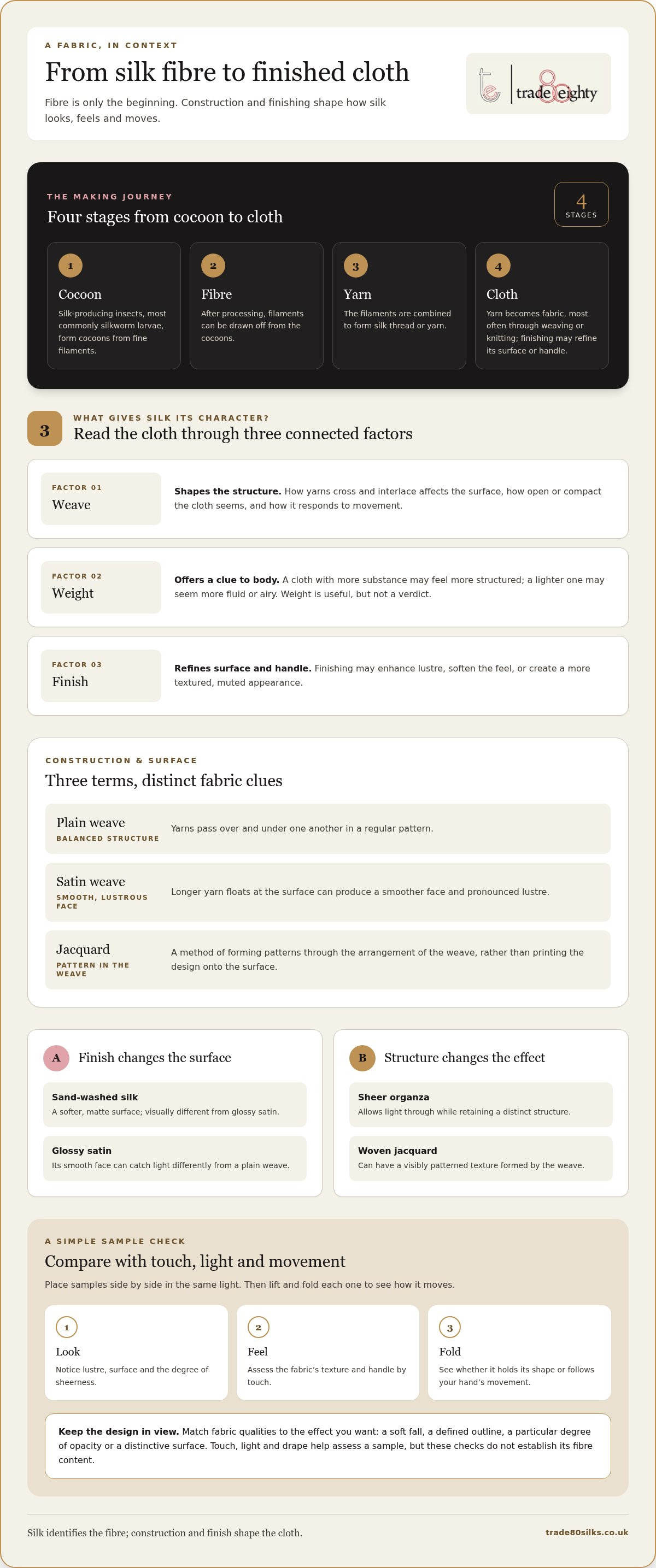
Silk production begins with silk-producing insects, most commonly silkworm larvae, which form cocoons from fine filaments. Sericulture is the cultivation and rearing involved in producing silk, including the care of silkworms and their cocoons. Once the cocoons are processed, filaments can be drawn off and combined to form silk thread or yarn.
The yarn is then made into cloth, most often by weaving or knitting. Weaving interlaces yarns in an organised structure; knitting forms cloth through interlocking loops. The method influences the textile’s surface and flexibility, while later finishing can refine its feel or appearance. The broad route is cocoon, fibre, yarn and cloth, with choices at each stage contributing to the result.
Why does the word silk cover different materials?
Silk yarns can differ in preparation and structure, and the cloth made from them can vary in weight, opacity, texture and drape. A woven silk with a compact structure may feel quite unlike a knitted silk, even though both use the same fibre. Finishing adds another distinction, changing how the surface reflects light or feels to the hand.
That is why “silk” alone cannot tell you exactly how a fabric will behave. Identify the fibre, then consider the construction and finish in relation to the intended design. A crisp, sheer cloth and a fluid, softly surfaced one may both be silk, yet suit very different creative briefs.
How Weave, Weight and Finish Change Silk Cloth Fabric
Once silk yarn has been made, the way it is assembled and finished helps determine how the cloth looks and moves. Weave shapes a fabric’s structure, while finishing refines its surface and handle. Together, they influence how the cloth behaves. These details matter whether you’re assessing a fabric for a tailored silhouette or a considered interior scheme.
Weight is another clue, but not a verdict. It contributes to a cloth’s body and how it falls, yet the weave, yarn and finish also affect its response. Assess these qualities together against your design, rather than relying on weight alone.
What can weave tell you about a silk fabric?
Weave describes how yarns cross and interlace to form cloth. In a plain weave, yarns pass over and under one another in a regular pattern, creating a balanced structure. Satin weave uses longer yarn floats at the surface, which can produce a smoother face and pronounced lustre. Jacquard describes a method of forming patterns through the arrangement of the weave, rather than printing the design onto the surface.
These structures influence more than appearance. They affect how light meets the surface, how open or compact the cloth seems, and how it responds to movement. A satin’s smooth face can catch light differently from a plain weave, while a woven jacquard can have a visibly patterned texture. For a closer look at one example, explore this crinkle silk satin fabric guide.
How do weight and finish affect the material?
Weight offers a useful first impression of body, but it doesn’t tell the whole story. A cloth with more substance may feel more structured in the hand, while a lighter one may seem more fluid or airy. Construction and finish can alter those impressions, so lift and fold the fabric to see whether it holds its shape or follows the movement of your hand.
Finishing influences surface and handle. It may enhance lustre, soften the feel or create a more textured, muted appearance. Sand-washed silk, for instance, has a softer, matte surface, giving it a different visual character from glossy satin. Sheer organza offers another contrast: it allows light through while retaining a distinct structure. The silk organza fabric guide explores that example in more detail.
For a practical comparison, place samples side by side in the same light, then lift and fold each one to see how it moves. Note the qualities that matter to your design, such as a matte surface, visible texture or a particular degree of sheerness. Trade80Silks UK supplies silk and natural fabrics by the metre or in bulk, including crinkle silk satin and printed silk organza, and offers bespoke fabric development for projects that need a specific direction. Explore silk and natural fabrics from Trade80Silks UK.
How to Assess Silk Cloth Fabric for Different Creative Uses
Choose by the demands of the design, not by a claim that one fibre or fabric is universally superior. The right silk cloth fabric depends on the effect you want and how the material needs to behave: a soft fall, a defined outline, a particular degree of opacity or a distinctive surface. A photograph can suggest colour and lustre, but it can’t show how a sample moves in your hands or responds to light.
Which fabric qualities matter for your project?
Begin with the finished design. Consider its shape, how much movement it needs, whether the cloth should reveal or conceal what lies beneath, and how its surface will read in the intended setting. Then examine a representative sample in conditions close to its eventual use. Hold it up to light, let it fall over your hand, and view the surface from different angles.
Separate the effect you’re seeking from assumptions about performance. A lustrous surface may suit your brief, but appearance alone doesn’t establish durability or care requirements. A cloth that feels substantial in a small sample may also behave differently when cut into a larger piece or shaped into a design. Consider the fabric’s construction and available product information alongside your observations.
| Project need | Qualities to assess | What to observe in a sample |
|---|---|---|
| Fluid movement | Flexibility, weight and surface | How it falls when lifted and released |
| Defined shape | Body, structure and recovery after folding | Whether it holds a crease or softens into folds |
| Sheer or layered effect | Opacity, surface and response to light | How clearly shapes and colours show through |
| Distinctive visual finish | Lustre, texture and colour appearance | How the surface changes as the angle of light shifts |
How can you compare silk with other cloth?
Compare the material’s fibre and construction, rather than relying on labels such as “luxury” or “natural”. Cotton and linen are plant-based fibres; silk is an animal-derived fibre, while synthetic fabrics are made from manufactured fibres. These categories don’t, on their own, tell you how a finished cloth will feel or perform. Yarn, weave or knit, weight and finish all contribute to its character.
Set samples alongside one another and judge them against the same brief. Cotton, linen, synthetic or silk cloth may each suit a project, depending on the desired surface, structure and movement. Assess opacity and drape under the same light, and consider care information relevant to the intended use. This gives you a grounded comparison instead of asking a fibre name to answer every design question.
How to Examine, Handle and Care for Silk Cloth Fabric
A considered inspection helps you judge whether a sample suits your design, but touch and appearance only reveal visible and tactile qualities. They don’t prove fibre content. Use them as observations, then refer to the fabric’s product information for details that can’t be established by sight or feel, including care guidance.
What should you observe when examining a silk sample?
Assess the sample in steady light, then handle it gently on a clean surface. Notice its surface character, translucency and movement, and look for consistency across the piece. These checks help you understand how the cloth presents itself without turning visual impressions into claims about composition.
- Look at the surface. Observe the texture, lustre and colour, turning the sample to see how its appearance changes with the angle of the light.
- Check translucency. Hold it against a light background, then a darker one, to see how much detail shows through.
- Feel the handle gently. Notice whether the surface feels smooth, textured, crisp or soft. Avoid pulling or rubbing the cloth to test it.
- Observe its movement. Lift and lower the sample, or let it fall over your hand, noting whether it hangs in fluid folds or keeps more shape.
- Inspect consistency. Look across the sample for variations in surface, colour or structure, bearing in mind that a small piece may not represent every part of a larger length.
These observations can guide a design decision, but they’re not definitive fibre-identification tests. If fibre content matters to your project, rely on the relevant product information rather than trying to identify it by touch alone.
How can you handle and store silk thoughtfully?
Careful handling begins before cutting or sampling. Keep your hands clean, clear the work surface of sharp or rough objects, and move the cloth without dragging it across tools or other materials. This helps reduce the chance of snags, marks and unnecessary friction while you assess or prepare the fabric.
For storage, protect the material from objects that could catch its surface and from prolonged direct light. Avoid placing it where it will be repeatedly rubbed or handled. These precautions don’t replace guidance tailored to the particular cloth.
Care instructions should match the fabric and its finish. Don’t assume every silk can be cleaned or pressed in the same way; follow the applicable product-care guidance before cleaning or applying heat. If care instructions are supplied for your fabric, use them as the reference for its ongoing care.
Record the qualities you’ve observed and the care information you’ll need, then compare the sample with your design brief. Explore silk and natural fabrics for your next creative project.
Exploring Silk Cloth Fabric for Your Next Design
Once you’ve considered how silk cloth fabric looks, feels and moves, translate those observations into a clear material brief. Rather than specifying a particular fabric name too early, describe the effect your design needs and the practical conditions it must meet. This gives you room to consider different constructions, whether you’re developing a bespoke piece or shaping a broader design direction.
What belongs in a useful fabric brief?
A thoughtful brief connects the intended use with the qualities you want to see and feel. Be specific about the finished design, while remaining open to different constructions that may achieve the desired character. Include reference samples or images where they help convey colour, texture, pattern or mood.
- Application: Explain what the fabric is intended for and how it will be incorporated into the design.
- Surface and visual character: Describe the texture, lustre, colour, pattern or overall impression you’re seeking.
- Movement and structure: Say whether the cloth should fall softly, hold a more defined form or balance the two.
- Opacity: Note whether you’re aiming for a sheer, translucent or more covering effect.
- Practical considerations: Record relevant care expectations, how the fabric will be handled, and any other requirements important to the finished work.
- References: Include samples, sketches or design details that make the intended result easier to picture.
This detail helps distinguish essential requirements from preferences. A particular surface might be central to the concept, while the exact construction could remain flexible. A well-framed brief describes the desired outcome without assuming one silk type is the only way to achieve it.
When might bespoke fabric development be relevant?
Sometimes a design calls for a textile character that is difficult to express through a ready-made fabric alone. Bespoke development offers a creative route: custom jacquard weaving, embroidery and digital printing can help shape a more individual textile direction. These techniques serve different intentions, from woven patterns to stitched detail or digitally printed imagery.
Clear references and priorities give the process a practical starting point. Identify the desired appearance, pattern scale, surface and intended application, while leaving room for considered material recommendations. Trade80Silks UK supplies curated silk and natural fabrics to designers and manufacturers. Fabrics are available by the metre or in bulk, and bespoke development includes custom jacquard weaving, embroidery and digital printing onto silk substrates.
Bring your references and design criteria together, then explore Trade80Silks UK’s fabrics and bespoke development for your project.
Let Your Next Design Begin with a Clear Material Brief
A fabric choice can shape the mood of a design from its earliest stages. Before settling on a particular silk cloth fabric, decide which qualities are essential and which can remain open to exploration. A concise brief gives your creative direction focus while leaving room for an unexpected texture, finish or construction to bring the idea into sharper view.
Gather a reference, note the qualities you’re drawn to, and describe how you want the material to contribute to the finished project. These details turn an initial impression into a purposeful starting point for selecting fabric or developing a distinctive textile direction.
Trade80Silks UK supplies silk and natural fabrics and develops bespoke textiles for more individual concepts. Explore fabrics and bespoke development for your next project.
Frequently Asked Questions About Silk Cloth Fabric
What is silk cloth fabric made from?
Silk cloth fabric is made from silk fibres produced by silkworms, which form cocoons from fine filaments. These filaments are processed into yarn, then made into cloth. Fibre content is only one part of the material description: a fabric may also be blended with other fibres, so check its composition details if pure silk is essential to your brief.
Is silk cloth always woven, or can it be knitted?
Silk cloth can be woven or knitted. Woven fabrics are formed by crossing yarns, while knitted fabrics are made from interlocking loops. A knitted silk may stretch and move differently from a woven silk, which can be useful if a design needs flexibility. Consider the distinction for close-fitting shapes or pieces that need to move with the body.
Can you identify real silk by touch or appearance alone?
No. Smoothness, lustre or a particular hand-feel may suggest qualities associated with silk, but they can’t confirm fibre content. Finishes and fabric construction also change how a textile looks and feels, while other fibres can resemble silk. For a purchasing or production decision, use reliable composition information rather than relying on an informal burn, touch or visual test.
How does silk weave affect the way fabric drapes?
Weave influences how closely yarns sit together and how freely the cloth can move, but the finished drape also depends on yarn and fabric weight. Pin or arrange a sample in the direction it will be used, rather than judging it only as a flat square. For a garment pattern, consider the grain direction and how the fabric falls on the bias.
Is silk cloth suitable for different types of design projects?
Silk can suit a range of creative applications when the chosen cloth meets the project’s visual and practical demands. A sample intended for a softly moving design may not be appropriate where a firmer structure is needed. For interior concepts, consider how the fabric will be positioned and handled, and review product information relevant to that use before making a final selection.
Can silk fabric be washed at home?
Some silk fabrics may have care instructions that permit home washing, while others may require different treatment. The fibre name alone doesn’t determine the right method, since dyes, construction and finishes can affect care. Read the instructions for the specific fabric before cleaning it, and don’t assume a method used successfully on one silk will suit another.
Does silk fabric need special storage?
Thoughtful storage helps keep fabric organised and ready for use. Keep samples together with their composition details and care notes, so you can identify each one accurately when developing a design. For larger lengths, avoid placing sharp tools or rough materials against the cloth, and don’t leave it where it may be handled or disturbed during other studio work.
Is silk a natural fibre?
Yes. Silk is a natural fibre of animal origin, produced by silkworms as they form cocoons. “Natural” describes the fibre source, not every detail of a finished textile: a cloth may also contain other fibres or undergo dyeing and finishing. If natural fibre content is a requirement for your project, check the fabric’s composition rather than inferring it from its name or appearance.


