

No single fibre makes a garment sustainable on its own. Choosing sustainable luxury fabrics for fashion means considering how a material is grown or made, how well it suits the garment, how long it will last and what can happen to it at the end of its life. Natural fibres can provide a refined, lasting foundation, but their sourcing and processing matter too.
It’s understandable to look for a clear “best” option when choosing fabric: a beautiful handle and a credible sustainability story should go together. But a fibre that works beautifully for a fluid occasion piece may not suit a garment designed for frequent wear. The intended use deserves equal attention.
This guide compares bamboo, cotton, linen, hemp, wool, silk, recycled fibres and lyocell, with practical notes on durability, recycling, sourcing and greenwashing. Learn how to match fibre qualities to a design, weigh sustainability claims against production realities, and make a more informed choice for the fabric and garment in front of you.
Key Takeaways
- Compare fibres by how they’re produced and processed, not simply by whether they’re natural or recycled.
- Consider a garment’s expected lifespan and end-of-life options alongside its fibre, since longer wear can reduce its impact per use.
- Match fabric qualities such as drape, breathability and durability to the garment’s purpose and care needs.
- Look beyond broad sustainability claims: certifications can cover different parts of a fabric’s production and impact.
- Weigh sourcing and availability against the design’s practical requirements to make a choice that is both considered and fit for purpose.
1. Fibre categories including bamboo, cotton, linen, recycled fibres, silk, and lyocell
Hemp is another strong plant fibre. It is described as three times stronger than cotton, which can suit designs intended for repeated wear. Bamboo begins as a plant-derived raw material, but the finished textile depends on how its cellulose is processed. Compare the fabric’s handle, durability and production information rather than relying on the word “bamboo” alone.
Organic cotton can offer breathability and durability, but the label needs context. The Global Organic Textile Standard (GOTS) covers the production chain for organic fibres and verifies organic status alongside responsible production. Look for the GOTS label when assessing organic cotton, then check whether the fabric’s weight and weave suit the garment. The Better Cotton Initiative supports farmers with water care, soil health and natural habitats, but it is distinct from organic certification.
Recycled cotton uses recovered fibre, while recycled polyester is made from recycled sources. These materials can be useful when a design needs familiar cotton or synthetic performance. Check the fibre blend and construction: mixed fibres can complicate later recycling, and the garment’s expected lifespan matters too. A recycled label alone does not describe every stage of production or end-of-life options.
Lyocell is made from cellulose derived from wood pulp. Its production process recycles wastewater and uses no toxic chemicals; the fibre is biodegradable and compostable. Silk is a renewable resource when ethically sourced, and its lustrous drape suits garments where movement and surface quality matter. For sustainable luxury fabrics for fashion, consider fibre origin and processing alongside appearance and wear.
How do organic silk, linen, hemp and cashmere compare in sustainability and quality? Ethically sourced silk is renewable and prized for its lustre; linen uses less water than cotton and softens with washing. Hemp is notably strong, while cashmere is lightweight and insulating, with durability depending on proper care.
Which innovative low-impact luxury fabrics are available, such as recycled cashmere or plant-based leather? Recycled cashmere reuses existing fibre, while Piñatex is a plant-based leather alternative made with 80% pineapple leaf fibre and requires less water than traditional leather production. These options suit different textures and product needs, so assess each against the intended design.
2. Textile recycling, biodegradability and garment lifespan
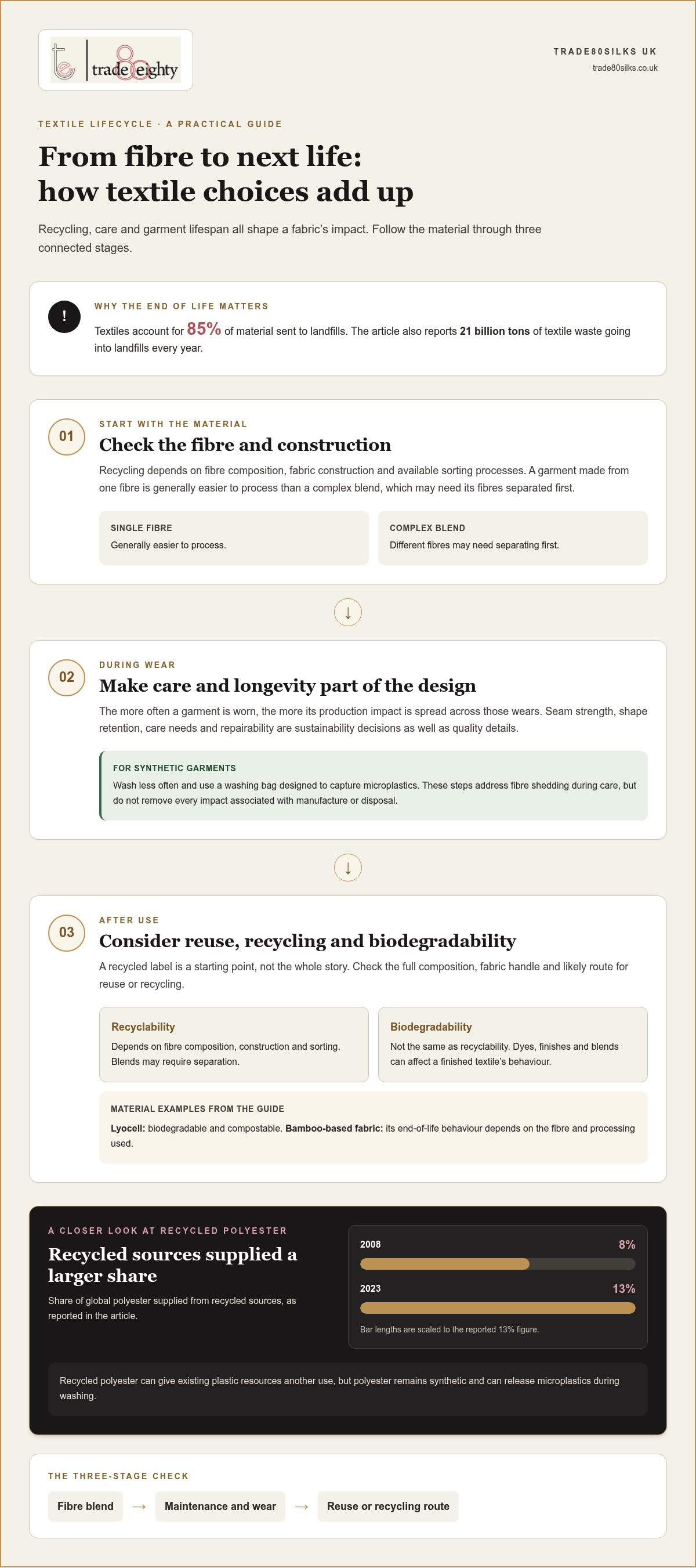
Recycling matters, but it doesn’t make every textile circular. Textiles account for 85% of material sent to landfills, and 21 billion tons of textile waste go into landfills every year. These figures underline why a fabric’s end-of-life route deserves attention alongside its origin. In practice, recycling depends on fibre composition, fabric construction and available sorting processes. A garment made from one fibre is generally easier to process than a complex blend, because different fibres may need separating first.
Recycled polyester illustrates both progress and trade-offs. Recycled sources supplied 13% of global polyester in 2023, compared with 8% in 2008. That material can give existing plastic resources another use, but polyester remains synthetic and can release microplastics during washing. Wash synthetic garments less often, and use a washing bag designed to capture microplastics. These steps address fibre shedding during care, although they don’t remove every impact associated with manufacture or disposal.
Recycled tweed and recycled denim show how recovered fibres can retain a distinctive surface. Tweed can combine reclaimed wool fibres with other yarns, while denim can be made with recycled cotton. In either case, check the full composition and handle the fabric: fibre length and blend influence strength, texture and future recyclability. A vivid colour, brushed finish or tightly woven structure may also affect how the fabric can be sorted or reprocessed. The recycled label is a starting point, not the whole story.
Biodegradability is another end-of-life consideration, but it is not the same as recyclability. Lyocell fibres are biodegradable and compostable, while bamboo-based fabric depends on the fibre and processing used. Natural fibres may also biodegrade, but dyes, finishes and fibre blends can change the finished textile’s behaviour. For a garment designed to last, prioritise construction that can be repaired and cared for, then consider whether its components can be reused or recycled after wear.
Longevity can reduce impact per use: the more often a garment is worn, the more its production impact is spread across those wears. Seam strength, shape retention and care requirements are therefore sustainability decisions, not just quality details. A recycled denim jacket worn repeatedly may deliver more value than a fragile item discarded quickly. Assess the intended wearer, expected frequency of use and repairability before choosing fabric. A considered care routine helps keep garments in use and materials out of waste.
For a practical comparison, trace a textile through three stages: identify its fibre blend, consider how the garment will be maintained, and assess likely reuse or recycling routes. Bamboo, recycled polyester and recycled cotton each have different properties and disposal considerations. Don’t assume a fabric is compostable simply because it contains plant-derived fibres. Likewise, recycled content does not guarantee the finished garment can be recycled again. Ask whether the material, construction and care plan support a longer life.
3. Matching fabric properties to product needs
Start with the garment’s purpose, then choose its fabric. A close-fitting top needs comfortable movement, while a tailored jacket needs shape and structure. A flowing evening layer calls for a different handle and drape. This practical order helps balance appearance, comfort, care and durability, and prevents a beautiful fabric from being selected for a design it cannot serve well.
For everyday shirts, prioritise a breathable handle and comfortable feel against the skin. Linen and cotton can suit warm-weather garments, while lyocell offers a fluid surface for relaxed silhouettes. A silk blouse may bring lustre and graceful movement, but its care needs should suit the wearer’s routine. Compare swatches in the intended garment shape, since a fabric’s drape changes across a pattern.
Consider movement before choosing stretch. Fitted trousers or a close-cut dress need ease for sitting, walking and reaching. A fabric with little give may work in a looser cut, but the seams and fit must allow movement. For a structured coat, stretch may matter less than weight, warmth and shape retention. Handle the fabric and observe how it recovers after gentle folding.
Care requirements affect whether garments stay in use. A delicate fabric may suit occasional evening wear, while a frequently worn piece benefits from manageable care and resilient construction. Cashmere is lightweight and insulating, and its durability depends on proper care. Match the fibre to the wearer’s habits, then consider seam strength, lining and closures as part of the garment’s service life.
- For fluid eveningwear: assess drape, opacity and how the fabric moves.
- For tailored pieces: compare weight, structure and crease behaviour.
- For close-fitting designs: check stretch, recovery and ease of movement.
- For regular wear: weigh breathability, durability and care demands together.
Production choices also shape a conscious design. A fabric’s finish, dyeing and blend can affect its feel, care and potential for future reuse. Ask how the chosen material supports the pattern rather than selecting by fibre name alone. Consider ethical sourcing alongside performance: responsible origins matter, but the garment must also be wearable and well made.
Review a sample before committing to a design. Drape the swatch over a form, check its opacity against light and handle its surface. Compare its behaviour with the garment’s intended fit and frequency of wear. For bespoke commissions, align fibre, weave and finish with the pattern from the outset. This helps the finished piece express the design with lasting comfort and refinement.
4. Sourcing costs, availability and greenwashing
Fibre choice shapes sourcing, but the finished fabric depends on more. A TENCEL™ lyocell fabric, for example, starts with wood-pulp cellulose. Weave, weight, colour, finishing and order size also influence sourcing decisions. Bespoke dyeing or a specialised finish adds production steps. Plan the collection around the garment’s needs, then compare fabrics with similar qualities. This makes cost discussions more meaningful without treating a fibre name as a price guide.
Sourcing can vary with fibre, finish and mill production schedules. A standard cotton weave may be easier to source than a complex blend or custom colour. Recycled fibres can also differ in shade and handle between batches. For repeat collections, consistency matters as much as the first sample. Set clear priorities: essential performance, preferred fibre content, colour range and acceptable alternatives. This gives designers room to adapt without losing the design’s character.
Certifications help clarify particular claims, but their scope matters. GOTS covers the production chain for organic fibres, verifying organic status and responsible production. The Better Cotton Initiative supports farmers with water care, soil health and natural habitats; it covers 12.5 per cent of the market. These approaches address different matters. A certified fibre or process should not be presented as proof of every environmental benefit across a finished garment.
OEKO-TEX Standard 100 tests finished products for harmful chemicals, according to the OEKO-TEX® Association. It does not assess production impact. That distinction helps prevent a chemical-safety test from being described as a complete sustainability certification. The EU Ecolabel sets environmental and quality criteria, according to the European Commission. Read each label in context, and connect its stated scope to the exact claim made about clothes.
Greenwashing often relies on broad words such as “eco”, “conscious” or “planet-friendly”. Replace them with precise descriptions: identify the fibre, explain whether it is recycled or organic, and state which certified standard applies. Animal-related claims need clarity too. Responsible Wool Standard coverage includes animal welfare and sustainable land use. Don’t imply that this certification applies to other fibres or guarantees every aspect of a garment’s production.
Which UK and EU regulations affect sustainability claims and textile labelling? Requirements depend on the product, market and wording, so distinguish fibre-composition information from environmental claims. Present each claim accurately and within the scope of its evidence, rather than implying that certification amounts to blanket legal approval.
5. Natural materials in luxury fashion
Natural fibres offer more than a soft handle or beautiful texture. Their value depends on how they are sourced, processed and worn. For luxury design, assess fibre origin alongside durability, finish and intended use. Silk voile, wool suiting and a leather accessory each have distinct production pathways. Their environmental considerations differ, so the label “natural” cannot describe their full global impact.
Silk is renewable when ethically sourced, and its lustre and fluid drape make it prized for refined garments. Its environmental impact depends on rearing and processing, as well as dyeing and finishing. Wool offers warmth, breathability and resilience; it naturally regulates temperature, resists odours and wrinkles, and biodegrades. Quality still relies on fibre selection and care, since a well-made, durable piece can stay in use longer.
What are the environmental impacts of luxury fabrics such as conventional silk, wool and leather? These depend on animal or fibre sourcing, land management and processing, including finishing chemicals. Wool production also raises animal-welfare considerations; leather tanning and finishing deserve attention alongside the hide’s origin.
For wool, examine both animal welfare and land stewardship. The Responsible Wool Standard covers animal welfare and sustainable land use in wool production. Some sheep farmers use techniques to sequester carbon from the atmosphere, though that does not make every wool fabric equivalent. Consider provenance, construction and expected wear together. A warm, breathable wool coat designed for repeated seasons has a different use profile from a delicate piece worn occasionally.
Leather presents another set of decisions. Its environmental profile is shaped by livestock systems and the tanning and finishing processes used to create the final material. Piñatex offers a plant-based alternative made with 80% pineapple leaf fibre, and its production requires less water than traditional leather production. Compare its texture, structure and suitability with the item’s function, rather than assuming one material suits every design.
A considered selection process starts with the finished piece. Identify the required drape, strength and surface, then trace the material’s origin and production. Ask whether the garment can be repaired and cared for, and whether its construction supports a long useful life. This approach respects natural materials without treating them as impact-free. For a design requiring a specific weave, handle or finish, shape a bespoke fabric brief around those requirements.
Trade80Silks UK: Crinkle Silk Satin ( #167 )
Trade80Silks UK offers Crinkle Silk Satin (#167) for designers seeking silk with a distinctive surface and refined finish. When a design calls for a different balance of transparency, texture or print, Printed Silk Organza (PS PEG 5), Printed Tulle (PS PET 3x) and Printed Silk Devoré (PS CP8) provide further fabric directions. Choosing between them starts with the garment’s intended drape, structure and visual character, alongside the fibre and sourcing considerations discussed above.
For a project with a particular weave, print or material brief, Bespoke Fabric Commissions offer a route to develop the fabric around the design. Share your fabric requirements with Trade80Silks UK to discuss the next step.
Make your next fabric choice with purpose
Turn your design priorities into a clear fabric brief. Note the intended silhouette, desired handle, colour, finish and expected wear, then decide which qualities matter most. This gives your material choice a practical foundation, so the finished fabric serves the creative vision and the garment’s purpose. Choosing sustainable luxury fabrics for fashion is not about finding one universal answer; it is about making a considered match for each design.
For a silk-led project, explore how Crinkle Silk Satin ( #167 ), Printed Silk Organza ( PS PEG 5 ) and Printed Tulle ( PS PET 3x ) might suit its surface, movement and structure. A precise brief can help shape a more confident conversation about the fabric direction for your collection.
Contact Trade80Silks UK to discuss your fabric requirements and take your next design idea forward with care.
Frequently Asked Questions
Which Textiles Are Actually Sustainable?
No textile is automatically sustainable; its impact depends on sourcing, processing, intended use and end of life. Compare a fabric’s origin and production with the garment’s expected lifespan and care. For example, a durable natural-fibre coat worn for years may be a considered choice, while a garment with a short useful life can waste its material’s potential. Look for specific evidence behind environmental claims, not broad labels alone.
What fabrics are considered sustainable luxury fabrics for fashion?
Sustainable luxury fabrics for fashion can include responsibly sourced silk, linen, hemp, organic cotton, lyocell and recycled fibres. The right choice depends on the design: silk can provide a lustrous drape, linen a crisp handle, and hemp is valued for strength. Assess the finished fabric, including its blend, dyeing and finish, since these details affect performance, care and potential reuse.
What certifications verify sustainable and ethical luxury fabrics, including GOTS, GRS, and OEKO-TEX?
Certifications address different aspects, so read their stated scope. GOTS covers the production chain for organic fibres and verifies organic status and responsible production. OEKO-TEX Standard 100 tests finished products for harmful chemicals, but doesn’t assess production impact. For GRS, examine the certificate and the claim it supports, including the material or product covered. No single label should be treated as proof of every sustainability or ethical claim.
How can shoppers assess fabric durability, care needs, and end-of-life recyclability?
Assess the fabric against the garment’s actual use. Handle a sample, observe how it recovers after folding, and consider seam stress points, lining and closures. Read the care instructions before buying, since specialist cleaning can affect how often a piece is worn. For end of life, check the fibre blend and whether components can be separated. A simple, repairable construction can make continued use more practical.
What do sustainable luxury fabrics cost in the UK compared with conventional alternatives?
There isn’t one meaningful UK price comparison across all sustainable and conventional fabrics. Cost varies with fibre, weave, finish, sourcing, order quantity and any custom development. Compare fabrics with similar weight, width and performance, rather than contrasting unlike materials. Include care and expected garment life in the decision. Trade80Silks UK offers fabrics including silk and tulle; request a current quotation for the specific material and project.
How can brands source traceable, ethically produced luxury fabrics?
Build a sourcing record for each fabric: fibre composition, mill or supplier details, production stage, relevant certificates and the exact claims those documents support. Keep records linked to the collection and product specification, so claims remain accurate as designs change. Trade80Silks UK supplies premium silk and natural fabrics sourced from premier silk mills. For a project, define the required fibre, finish and documentation before selecting material.
What are the risks of greenwashing in sustainable luxury fashion?
Greenwashing can make a narrow attribute sound like proof of complete sustainability. A recycled-content claim, for instance, does not explain garment durability, processing or end-of-life options. A chemical-testing label does not establish lower production impact either. Be precise: name the material, identify the certification and explain what it covers. Avoid vague terms such as “planet-friendly” unless clear, relevant evidence supports the wording.


