

A bespoke fabric commission UK designers can shape around a creative brief starts with a clear idea of what the textile needs to do. Is the design driven by a particular motif, woven pattern or surface effect? Does an existing fabric already meet the brief, or does the cloth itself need to be developed around the project? Answering these questions helps you choose a practical direction before the details are fixed.
Trade80Silks UK develops bespoke textiles through custom jacquard weaving, embroidery and digital printing onto silk substrates. Each technique creates a different effect, so the right choice depends on how you want the design to appear in the finished cloth.
This guide explains how to prepare a useful brief, compare the available approaches and plan the decisions that shape a commission. Whether you are developing fabric for fashion, bridal, film or interiors, clear priorities make it easier to discuss the design and its intended use.
Key Takeaways
- A bespoke fabric commission develops a textile around a project’s creative requirements, rather than adapting a design to an off-the-shelf cloth.
- Make the brief practical: explain the purpose, intended use, visual references and essential requirements, and identify where interpretation is welcome.
- Choose a technique to suit the effect. Custom jacquard weaving develops a woven pattern, embroidery adds stitched surface detail, and digital printing applies artwork to silk.
- Define the project scope, approximate fabric requirement and decision-making roles to give the development process a clear framework.
- Trade80Silks UK offers bespoke fabric development for designers and manufacturers, alongside silk and natural fabrics sold by the metre or roll.
What does a bespoke fabric commission mean for a UK design project?
In textile design, a fabric commission is a development process focused on the cloth itself. The design is shaped around a project’s creative purpose and practical requirements, rather than chosen from an existing range.
A bespoke fabric commission develops a textile to meet a project’s specific creative requirements, rather than selecting an existing fabric from a supplier’s range. It might involve a distinctive woven pattern, stitched surface detail or printed artwork on silk. For designers searching for a bespoke fabric commission uk, the key distinction is whether the project needs custom textile development or can be served by fabric already available.
Existing cloth can be a direct option when its colour, handle and pattern suit the design. Commissioning gives the textile concept a greater role in shaping the result. It may be worth exploring when an off-the-shelf fabric does not express the intended identity, or when the relationship between motif, ground and surface is central to the design. The decision is not simply whether custom is more special. It is whether adapting the project to available cloth or developing cloth around the project makes more sense.
Textile design brings visual decisions together with the development of woven, printed and other surfaces. The overview of Textile design describes how these disciplines inform fields including fashion and interiors, where both appearance and material qualities contribute to the final design.
When is commissioning fabric more useful than sourcing existing cloth?
Custom development may suit a project that calls for an original repeat, a particular surface treatment or a visual direction that existing fabrics do not provide. A couture or bridal designer might need a textile that gives a collection its own visual language. A fashion or film project may call for a pattern that supports a particular character or period. An interiors project may need a textile direction that works closely with a wider scheme.
For a straightforward colour or material requirement, selecting existing cloth can be more direct. A commission is more relevant when the textile itself is a defining part of the design and needs to be developed, rather than simply sourced.
What can a bespoke fabric commission include?
Different techniques create different kinds of textile character. Trade80Silks UK’s bespoke development includes custom jacquard weaving, embroidery and digital printing onto silk substrates:
- Custom jacquard weaving develops a pattern through the woven structure of the cloth.
- Embroidery introduces stitched detail to the textile surface.
- Digital printing onto silk places printed artwork on a silk substrate.
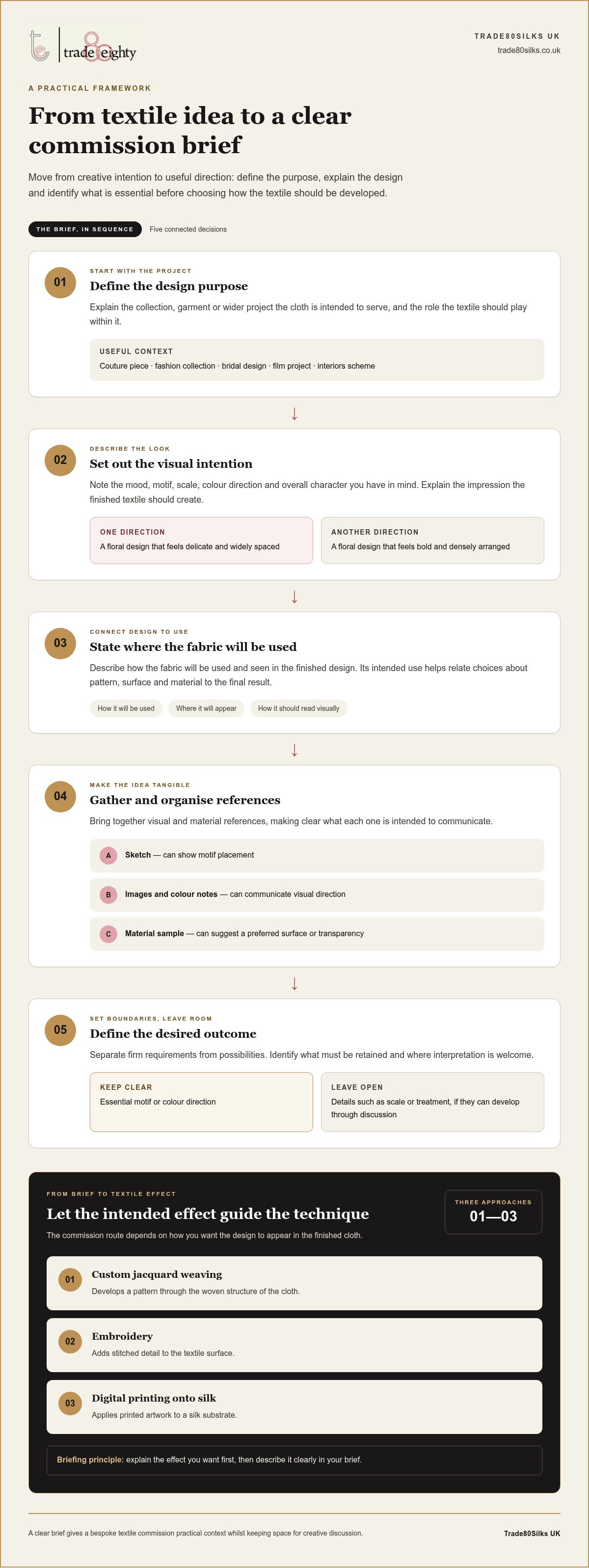
In brief: custom jacquard weaving develops pattern in the cloth, embroidery adds stitched surface detail, and digital printing applies artwork to silk. Use the intended effect to guide the choice, then describe that effect clearly in your brief.
How to turn a textile idea into a clear commission brief
A useful brief explains the creative idea and gives it enough practical context to guide development. Set out what the textile should express, where it will be used and which qualities are essential. You do not need to settle every detail at the outset. It is helpful to identify what is fixed and what can be explored.
Work through this framework in order:
- Define the design purpose. Explain the collection, garment or wider project the cloth is intended to serve, and the role the textile should play.
- Describe the visual intention. Note the mood, motif, scale, colour direction and overall character you have in mind. For example, a floral design could be delicate and widely spaced or bold and densely arranged.
- State the intended use. Explain how the fabric will be used and seen. This helps relate decisions about pattern, surface and material to the finished design.
- Gather references. Bring together sketches, images, colour notes and examples of material or surface qualities that communicate your thinking.
- Set out the desired outcome. Identify what must be retained and where interpretation is welcome, so the brief guides development without closing down creative discussion.
Describe the design intention and where the fabric will be used
Give the project context: is the fabric intended for a couture piece, a fashion collection, a bridal design or a film project? Describe the impression it should create, including its motif, scale and mood. A pattern’s visual presence can change according to how it is used, so explain where and how the textile will appear in the finished design.
Gather references and define the desired outcome
Organise references so it is clear what each one communicates. A sketch might show motif placement, while a material sample could suggest a preferred surface or transparency. If sheer cloth is relevant, the guide to silk organza fabric selection can help you consider how that material relates to your design.
Separate firm requirements from possibilities. A motif or colour direction may be essential, while its scale or treatment could remain open to development. This distinction helps keep the brief focused while leaving room for creative discussion.
For a bespoke fabric commission uk project, a concise, organised brief is more useful than a long list of assumptions. UKFT, the UK Fashion & Textile Association (UKFT), provides a wider view of the UK fashion and textile industry and its supply chain. To explore custom textile development, see Trade80Silks UK’s bespoke fabric commissions.
Jacquard, embroidery or digital print: which commission route fits the design?
Once the design direction is clear, decide how its pattern or surface character should be developed. Custom jacquard weaving, embroidery and digital printing each create a different visual quality. Ask whether the pattern should form part of the woven structure, appear as stitched detail on the surface or be expressed as printed imagery on silk. Choose according to the intended effect, not just the artwork in isolation.
Comparison at a glance
Custom jacquard weaving
Design intent: The pattern is intended to be woven into the textile.
Visual character: A pattern developed as part of the cloth’s woven structure.
Detail sought: A distinctive woven pattern rather than an image applied to the surface.
Embroidery
Design intent: The design calls for stitched detail on the textile surface.
Visual character: Surface treatment formed through embroidery.
Detail sought: Motifs or other details expressed as stitching.
Digital printing onto silk
Design intent: Custom imagery is to be applied to a silk substrate.
Visual character: Artwork presented as a printed surface design.
Detail sought: Imagery developed for digital print, rather than woven or stitched into the cloth.
When might custom jacquard weaving suit a design?
Consider this route when the pattern should form part of the woven textile, rather than appear as a separate printed image or stitched embellishment. It may suit a design whose identity depends on a woven motif or patterned ground. The central question is how the pattern should relate to the cloth. For a closer look at the technique, explore custom jacquard weaving.
How do embroidery and digital printing differ visually?
Embroidery creates detail through stitching on the textile’s surface. Digital printing applies custom imagery onto silk. Consider what the viewer should notice: a motif articulated through stitches, or artwork expressed as a print. This distinction helps you describe the desired surface effect without assuming the methods are combined in one commission.
Before choosing, compare the proposed route with the project’s purpose and visual references. If the pattern needs to be woven into the cloth, jacquard is the relevant direction. If the design calls for stitching or printed artwork on silk, embroidery or digital printing may be a closer fit. This gives the development discussion a clear creative starting point.
What should designers plan before progressing a bespoke fabric commission?
Before development moves forward, bring the creative direction together with the practical shape of the project. A clear scope helps define what the cloth needs to achieve, how much may be required and who will approve decisions. It also gives the discussion a useful framework without forcing every detail to be settled too early.
Use this checklist to organise the essentials:
- Design purpose: Describe the collection or project, and the role the fabric should play within it.
- References: Gather sketches, images, colour notes and material examples that communicate the intended look and feel.
- Intended use: Explain how the textile will be used and viewed, so the design direction relates to its application.
- Fabric requirement: Estimate the quantity the project may call for, distinguishing confirmed needs from early projections.
- Decision responsibilities: Identify who will review the direction, consolidate feedback and give approval.
This early clarity can help keep development focused. Project scope influences the work involved, and bespoke development is subject to project-based commissioning fees. A defined direction, intended requirement and approval process help frame the commission without making assumptions about quantities, production capacity or schedules.
Set project scope, intended quantity and decision responsibilities
Outline the project context and textile requirement as clearly as you can. An estimate is useful even if the final quantity is not yet decided, since it helps establish the scale of the brief. Agree internally who will gather comments and who will make the final decision. Consolidated feedback is easier to act on than conflicting revisions from several decision-makers.
Balance a bespoke commission against an existing fabric
Commissioning is worth considering when a particular pattern, surface or design identity is central to the project. If an existing cloth meets the brief, buying fabric by the metre may be the more direct route. Where silk satin is relevant, crinkle silk satin fabric guidance can help you assess whether a stocked textile suits the design.
Plan for the people involved to review the creative direction and provide consolidated feedback at key decision points. Rather than relying on an assumed production schedule, identify when approvals are needed within your wider project plan. Clear priorities also help distinguish essential changes from preferences that may evolve through discussion.
With your project scope and decision-making roles in view, discuss your bespoke fabric project with Trade80Silks UK.
Commission bespoke fabric with Trade80Silks UK
A bespoke textile starts with a clear creative purpose, then takes shape through decisions about pattern, surface and material. Trade80Silks UK supplies silk and natural fabrics to designers and manufacturers, and develops bespoke textiles through custom jacquard weaving, embroidery and digital printing onto silk substrates. The brief and intended design direction guide which approach to explore.
A fabric partner with a long-standing textile heritage
Founded in 1980, Trade80Silks UK brings experience in fabric sourcing and custom development. Its curated selection includes premium silk and natural fabrics sourced from premier silk mills. For designers, fabric supply and bespoke development offer two different ways to approach a textile: select an existing cloth or discuss a design that calls for custom development.
The designer’s vision remains central to a commission. A motif, surface effect or material reference can be considered in relation to the intended use, helping the project’s creative priorities shape the direction of development.
The bespoke routes each offer a distinct way to interpret a design:
- Custom jacquard weaving develops a pattern as part of the woven cloth.
- Embroidery creates stitched detail on the textile surface.
- Digital printing onto silk applies custom imagery to a silk substrate.
These are different development approaches, not interchangeable finishes. A clear sense of the desired visual character helps guide the discussion towards the route that best reflects the design intention.
Take the next step with a considered project brief
Before progressing a bespoke fabric commission UK designers can bring together three useful elements: the design intention, the context in which the fabric will be used, and references that communicate the desired mood or surface. Sketches, artwork and material inspiration can make an idea tangible. A note of what is essential and what may evolve leaves space for collaboration.
Bespoke development involves project-based commissioning fees, which relate to the work involved in the commission. Defining the project scope helps establish the creative direction and gives the discussion a practical foundation, without requiring every detail to be fixed before development begins.
For designers and manufacturers ready to explore a custom textile direction, explore bespoke fabric commissions with Trade80Silks UK.
Give your textile idea its next step
A bespoke fabric commission UK project can begin with a simple question: what should this textile make possible that an existing fabric cannot? Let the answer guide your first project note. It might be a visual identity to carry through a collection, a surface treatment that gives a design its character, or a particular relationship between motif and material.
Your idea does not need to be fully resolved before a conversation can begin. Set out what matters most alongside the details you are still exploring. That balance helps turn inspiration into a direction you can consider, refine and develop while keeping the project grounded in its purpose.
When you are ready to take the next step, explore bespoke fabric commissions with Trade80Silks UK and start shaping a textile around your creative vision.
Frequently Asked Questions
Is a bespoke fabric commission suitable for a small design project?
A smaller project may suit a commission if its design depends on a particular textile character that existing cloth cannot provide. Start by describing the intended use and approximate fabric requirement, then consider how the development route relates to the project’s scope. A one-off design and a larger collection may need different planning, so scale alone does not determine whether bespoke development is appropriate.
What should I prepare before starting a bespoke fabric commission?
Prepare a concise outline of the project, its intended use and the qualities you want the fabric to express. Annotated sketches or reference images can help: explain what each shows, such as a motif, colour relationship or surface quality. If your references suggest different directions, note which matters most. This makes it easier to distinguish firm requirements from ideas that could develop through discussion.
How much does a bespoke fabric commission cost in the UK?
The cost depends on the scope of the bespoke development, so there is no single figure for every commission. Trade80Silks UK applies project-based fees for this work. The development involved depends on the design direction and chosen route. For budgeting, separate textile development from the wider project costs, and do not use standard fabric-by-the-metre pricing as a guide to a custom commission.
How long does a bespoke fabric commission take?
There is no single timeframe for every commission. The development route, project scope and review process can all affect progress. Instead of building your wider project around an assumed duration, identify when the design needs to be reviewed and approved. Allow space for considered feedback, particularly if several people are involved in decisions, and keep the intended use and priorities clear as the work develops.
Is a bespoke fabric commission different from made-to-measure clothing?
Yes. A fabric commission concerns developing the textile itself, such as its pattern or surface treatment. Made-to-measure clothing concerns creating a garment to an individual wearer’s measurements. They address different stages of a design project: a fabric can be commissioned as a material for a designer or manufacturer to use, but the commission does not mean the finished garment is being made.
Do I need finished production artwork to discuss a fabric commission?
No. An initial discussion can begin with a developing concept rather than fully resolved production artwork. A rough sketch, mood board or written description can communicate the visual direction, especially if you explain which details are essential and which remain open. For example, you might have a clear motif in mind but still be exploring its scale. More developed artwork can help refine the direction as the project progresses.


